Cell Membranes: Controlling What Enters and Leaves
Students use a model to explain how the selectively permeable cell membrane regulates the movement of substances and helps a cell maintain stable internal conditions.

Illustrations are auto-generated and may be placeholders. They can be refreshed to match the narration.
The Cell’s Protective Boundary
Every cell is surrounded by a cell membrane, a thin, flexible boundary that separates the cell’s interior from its surroundings. The membrane protects the cell, but it does not form a solid, sealed wall. It allows the cell to exchange matter with its environment. The membrane is mainly made of two layers of phospholipids. Each phospholipid has a head that interacts with water and tails that avoid water. Proteins embedded in the membrane help move substances or receive signals. For example, a muscle cell takes in glucose and oxygen needed for cellular respiration while releasing carbon dioxide. By controlling these exchanges, the cell membrane helps the cell obtain resources, remove wastes, and respond to changes outside the cell.

Selective Permeability
The cell membrane is selectively permeable, meaning that some substances can cross it more easily than others. Small molecules such as oxygen and carbon dioxide can move directly through the phospholipid bilayer. Water also crosses the membrane, often through protein channels called aquaporins. Ions and many large or water-soluble molecules cannot pass easily through the membrane’s interior, so they may need specific transport proteins. This selectivity depends on characteristics such as molecule size, charge, and chemical properties. For example, glucose is important fuel for cells, but it is too large and water-soluble to pass freely through the bilayer. A matching transport protein helps glucose cross. The membrane therefore acts more like a controlled doorway than an open gate or an unbroken wall.

Diffusion Across a Membrane
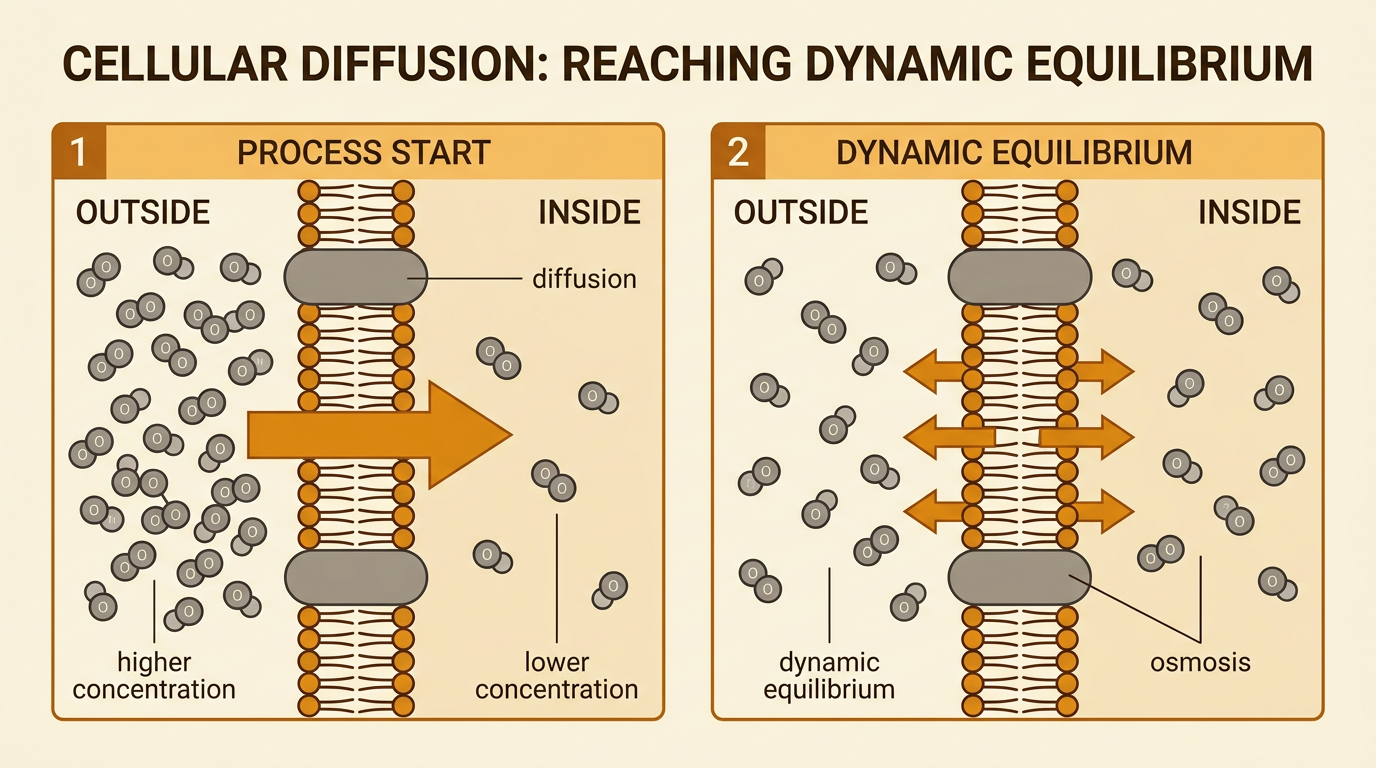
Diffusion is the net movement of particles from an area of higher concentration to an area of lower concentration. Particles move randomly, but when more particles begin on one side, their overall movement tends to spread them more evenly. Diffusion does not require the cell to use energy. If oxygen is more concentrated outside a cell than inside it, oxygen diffuses across the membrane into the cell. As oxygen enters, the difference in concentration becomes smaller. At dynamic equilibrium, particles still move in both directions, but there is no net movement because concentrations are equal. Water also moves across selectively permeable membranes; this diffusion of water is called osmosis. Both processes help cells exchange substances, although only materials able to cross the membrane can diffuse through it.
Modeling Substance Movement
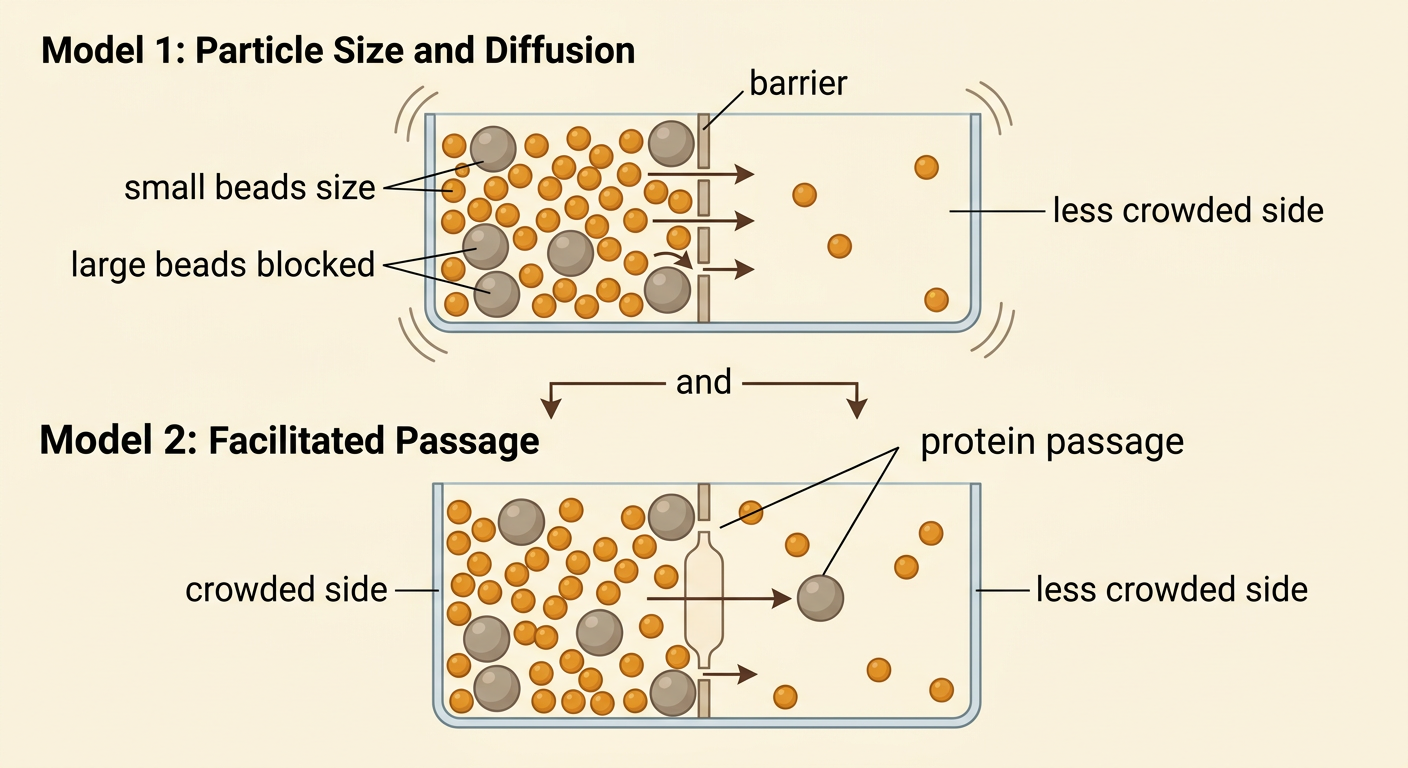
A model can help explain how a membrane controls movement. Imagine a clear container divided by a barrier with tiny openings. Small beads represent oxygen, large beads represent glucose, and the barrier represents a selectively permeable membrane. When the container is gently shaken, small beads can move through the openings and spread from the crowded side to the less crowded side. Large beads remain blocked unless the model includes a larger, protein-shaped passage. This pattern supports the claim that molecule size and membrane proteins affect transport. However, the model has limitations. Beads are not molecules, shaking is not the same as molecular motion, and a simple barrier does not show the membrane’s flexible phospholipid structure. A strong scientific explanation uses the model’s evidence while clearly recognizing these differences.
Explaining Cellular Homeostasis
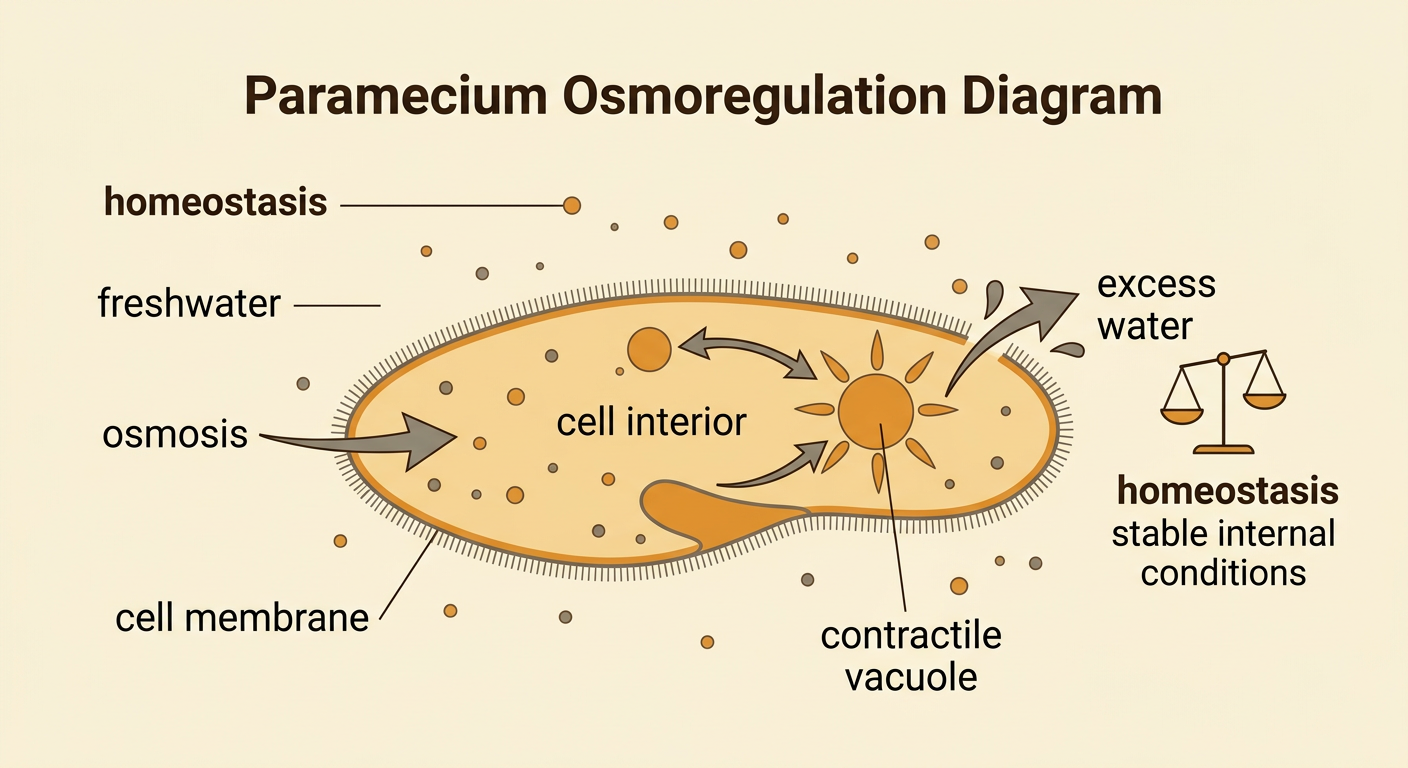
Homeostasis is the maintenance of relatively stable internal conditions even when the environment changes. The cell membrane contributes to homeostasis by regulating water, nutrients, gases, ions, and wastes. For example, a freshwater organism lives where the water outside its cells has fewer dissolved substances than the cell interior. Water tends to enter by osmosis. A single-celled paramecium uses a contractile vacuole to collect and expel excess water, while its cell membrane controls the surrounding exchanges. Evidence from diffusion models supports the argument that concentration differences drive passive movement and selective membranes limit what crosses. However, diffusion alone cannot explain every movement. Cells also use transport proteins and energy to move some substances against a concentration gradient. Together, selective permeability and cellular transport systems keep internal conditions within ranges that support cell function.