
Characters, Motivations, and Plot Events
Students describe a character’s traits, feelings, and motivations and explain how the character’s actions affect the plot.
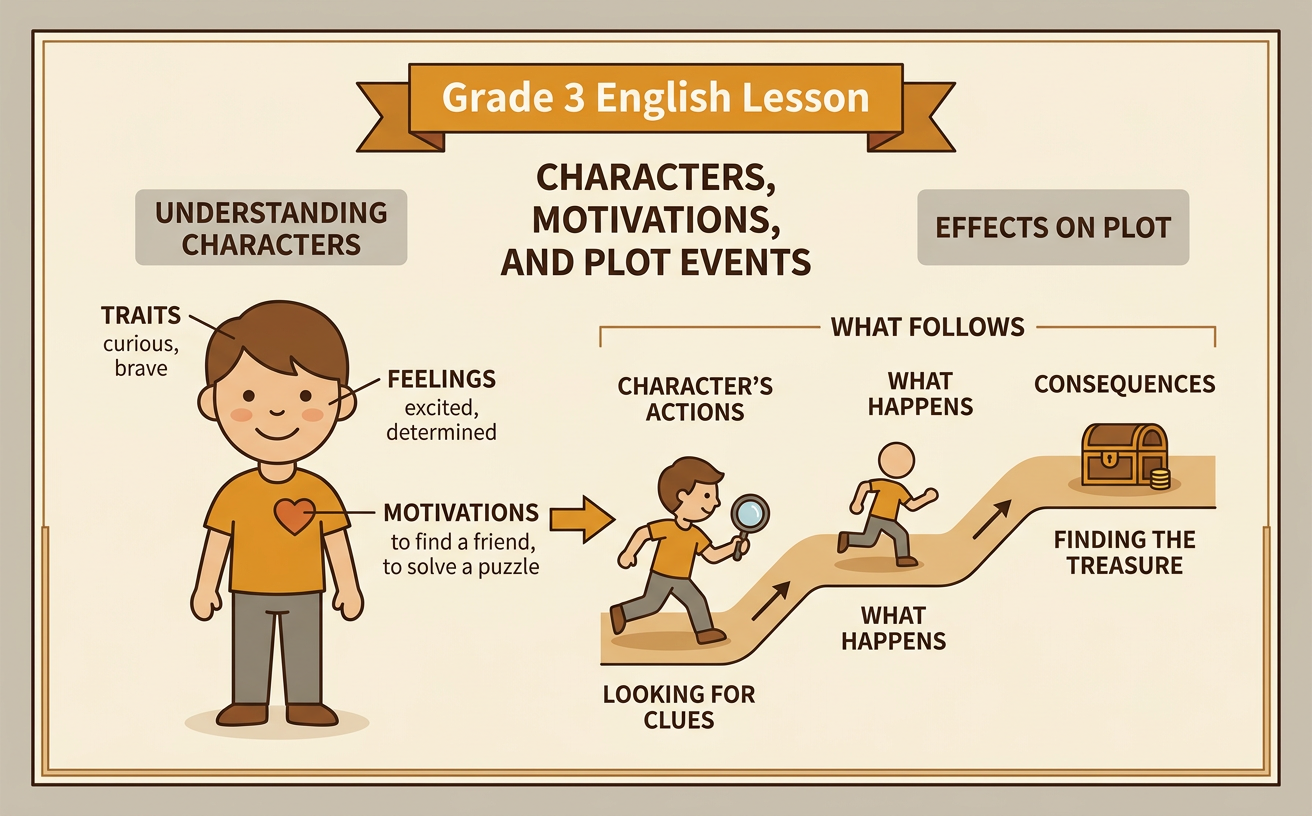
Illustrations are auto-generated and may be placeholders. They can be refreshed to match the narration.
Meet the Character
A character is a person or animal who takes part in a story. The main character is the person or animal the story focuses on most. Supporting characters interact with the main character and may help create problems or solutions. When you meet a character, notice what the narrator says, what the character says and thinks, and how other characters respond. In a story called “The Garden Rescue,” Maya is the main character. She discovers that the school garden is dry before the class picnic. Her friend Leo and their teacher are supporting characters. Maya appears in the most important events and faces the main problem. As you read, collect details about Maya. These details will help you understand her traits, feelings, motivations, and actions.
Identify Traits
A character trait is a word that describes what a character is usually like. Traits may include brave, patient, honest, curious, or determined. Do not choose a trait only because it sounds right. Use evidence from the character’s words, thoughts, and actions. In “The Garden Rescue,” Maya tries several ways to bring water to the dry plants. When a heavy watering can spills, she cleans up and tries again with smaller containers. These actions show that Maya is determined because she keeps working after a setback. They also suggest that she is responsible because she cares for the garden and cleans up the spill. A trait is different from a temporary feeling. Maya may feel worried for a short time, but determination describes how she behaves across several events.
Examine Feelings and Motivations
A feeling is an emotion a character experiences, such as joy, worry, anger, or relief. Feelings can change as events happen. A motivation is the reason a character wants or does something. Ask, “What does the character want, and why?” In “The Garden Rescue,” Maya feels worried when she sees the drooping plants. She wants the garden to look healthy for the class picnic, so her motivation is to save the plants before the guests arrive. Her worry and her goal lead her to search for water. Later, when the plants begin to stand upright, Maya feels hopeful and then relieved. Look for clues in dialogue, thoughts, facial expressions, and actions. Sometimes the author states a feeling or motivation directly. Other times, readers must infer it by combining story details with what they already know.
Sequence Key Actions
The plot is the sequence of important events in a story. To understand the plot, place a character’s key actions in the order they happen. Signal words such as first, next, then, and finally can help. Leave out small details that do not change the story. In “The Garden Rescue,” Maya first notices that the garden is dry. Next, she fills a large watering can, but it spills. Then she asks Leo for help and suggests using smaller containers. Finally, they water every garden bed before the picnic begins. Each action moves the story forward. The spill creates a setback, asking Leo introduces help, and using smaller containers leads toward the solution. Retelling these actions in order makes it easier to see how Maya responds to the problem and how the plot develops.
Connect Actions to Events
A character’s actions contribute to the plot when they cause or influence later events. To explain the connection, use a sentence such as, “Because the character did this, that happened next.” In “The Garden Rescue,” Maya asks Leo to help carry small containers. Because she asks for help, they move more water without spilling it. As a result, the plants receive water before the picnic. Maya’s action helps solve the main problem and leads to the ending. Imagine that Maya had walked away instead. The garden would have remained dry, and the ending would have changed. When explaining an action-event connection, name the action, the event it causes, and why the connection matters. This shows more than what happened; it explains how the character helped shape the sequence of events.