Choosing Materials by Their Properties
Students observe and measure properties such as hardness, flexibility, absorbency, and transparency to determine which material is best suited for a container.

Illustrations are auto-generated and may be placeholders. They can be refreshed to match the narration.
What Are Material Properties?
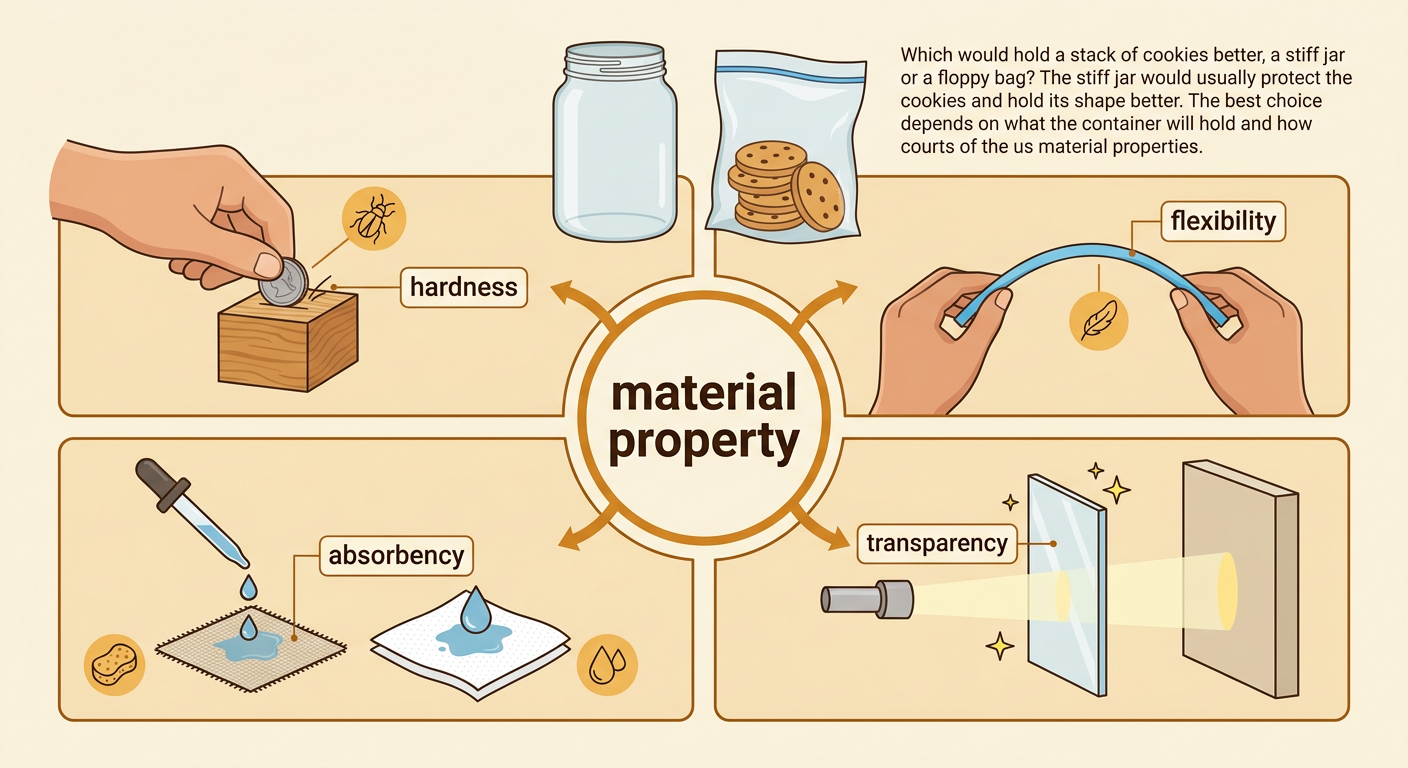
A material property is a feature that can be observed or measured without changing the material into something new. Hardness describes how well a material resists dents or scratches. Flexibility tells how easily it bends. Absorbency is the ability to soak up liquid. Transparency describes how much light passes through a material. A clear glass jar is transparent, hard, and not absorbent, but it can break if dropped. A soft plastic bag is flexible and not absorbent, but it does not hold its shape well. These properties help people decide which materials are useful for different containers. The best material depends on what the container must hold, how it will be used, and which properties are most important.
Observe the Sample Materials
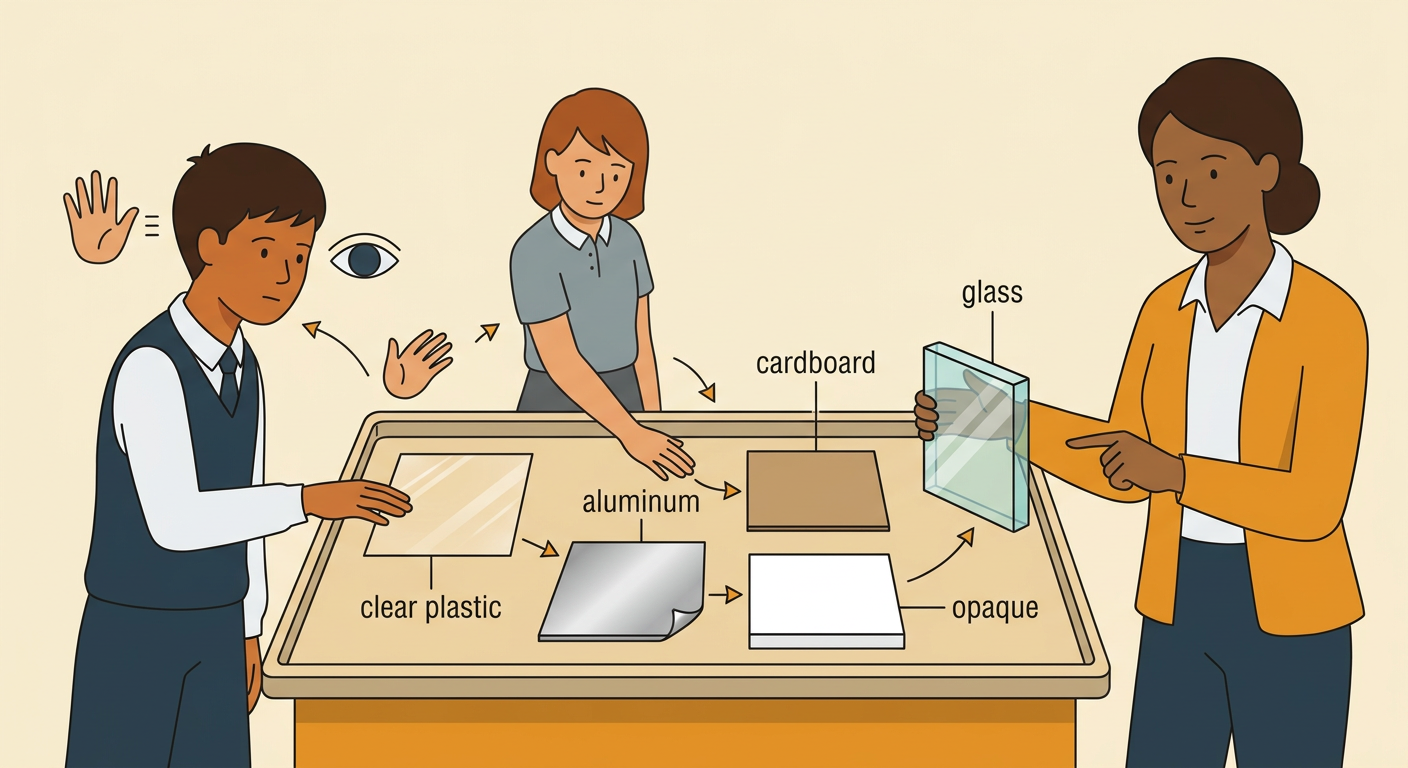
Begin by carefully observing samples such as clear plastic, aluminum, cardboard, and glass. Use only smooth, unbroken samples provided by the teacher. Look at each sample from different angles and gently touch its surface. Notice whether it looks shiny or dull, feels rough or smooth, and appears clear, cloudy, or opaque. Opaque materials block light. Record observations rather than guesses. For example, a clear plastic sheet may look transparent, feel smooth, and bend slightly. Cardboard may look opaque, feel rough, and seem stiff. An observation such as “the plastic bends” is more useful than an opinion such as “the plastic is good.” Careful observations provide evidence that can later be compared with measurements from fair tests.
Test and Measure Properties
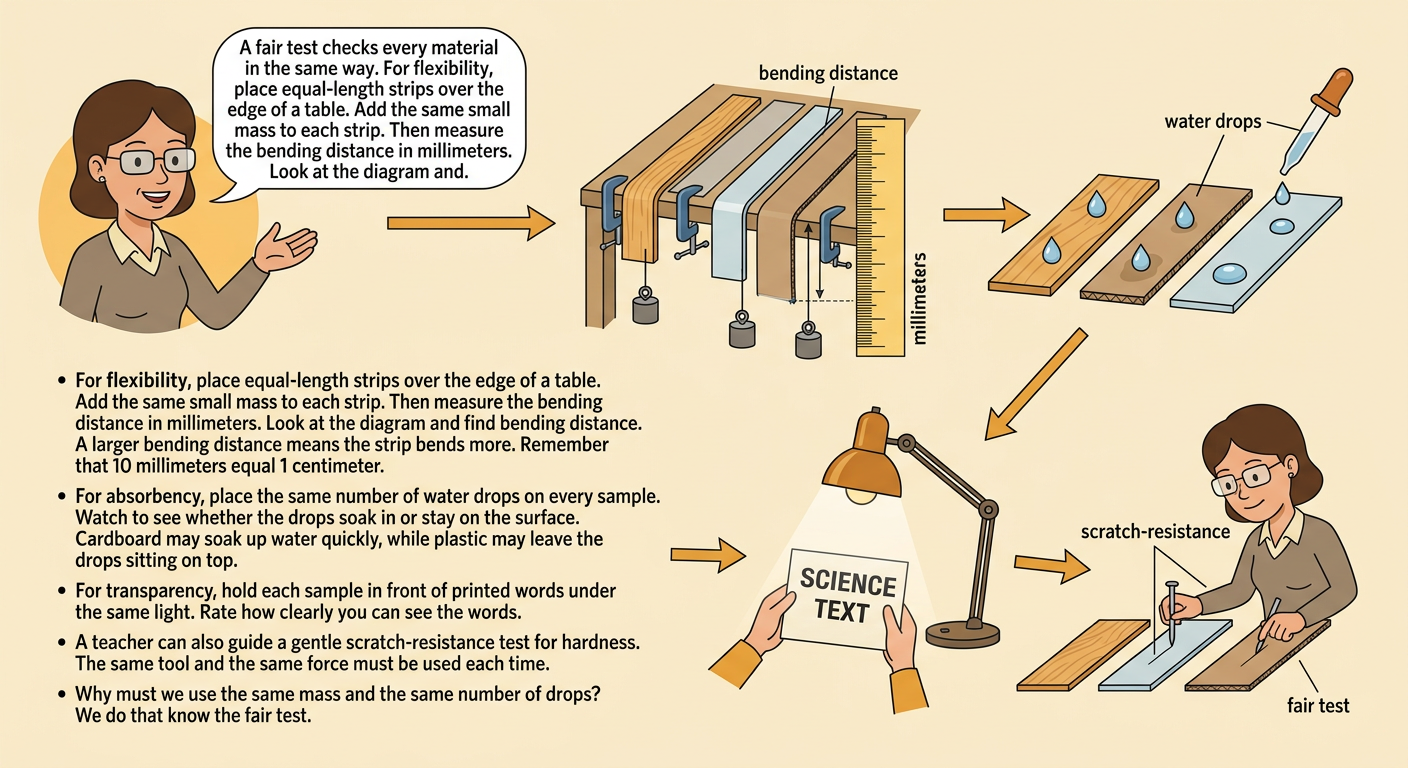
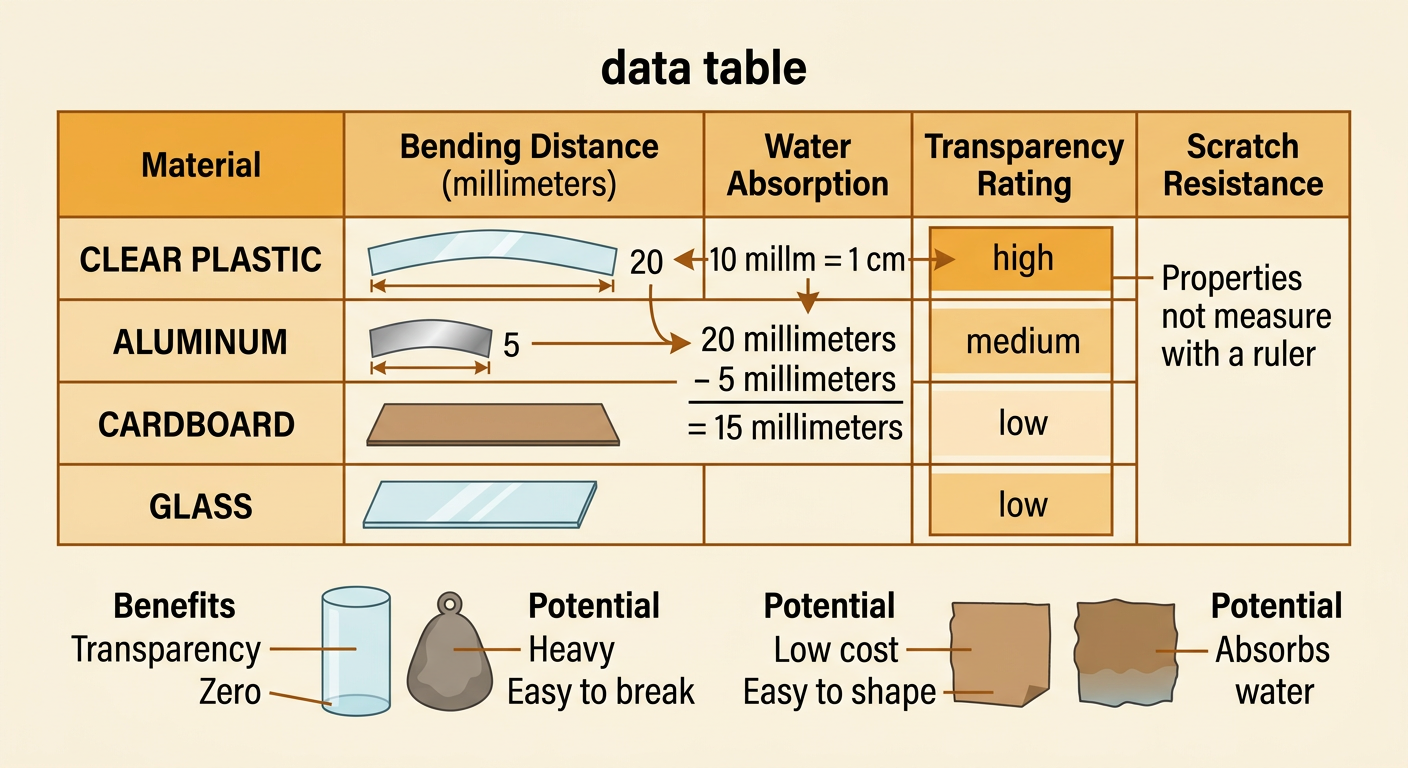
Test every material in the same way so the comparison is fair. To test flexibility, place equal-length strips over a table edge, add the same small mass, and measure how far each strip bends in millimeters. Remember that 10 millimeters equal 1 centimeter. To test absorbency, place the same number of water drops on each sample and observe whether the water soaks in. To test transparency, hold each sample in front of printed words under the same light and rate how clearly the words can be seen. A teacher can guide a gentle scratch-resistance test for hardness using the same tool and force on each sample. For example, cardboard may absorb water quickly, while plastic may leave the drops on its surface. Never taste materials or test broken glass.
Record and Compare Results
Organize observations and measurements in a data table. Give each material one row and each tested property one column. Include measurement units, such as millimeters for bending distance. If a plastic strip bends 20 millimeters and an aluminum strip bends 5 millimeters, the plastic bends 15 millimeters more. You can also state that 20 millimeters equals 2 centimeters because 10 millimeters equal 1 centimeter. Use consistent words or ratings for other results, such as high, medium, or low transparency. Then compare the benefits and costs of each choice. Glass may be transparent and nonabsorbent, but it can break and may be heavy. Cardboard may cost less and be easy to shape, but it can absorb water. Evidence in the table makes comparisons clearer than opinions alone.
Choose the Best Container Material
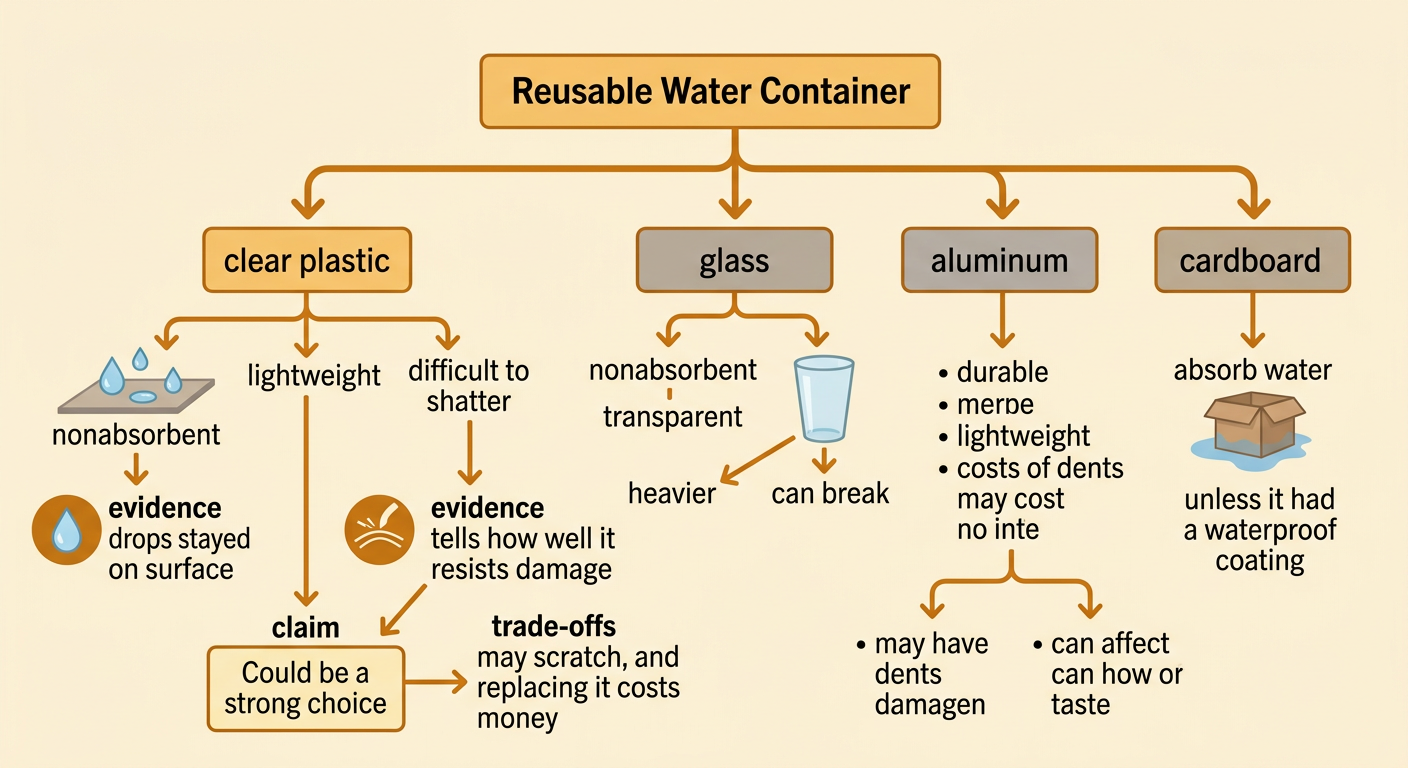
Choose a material by matching its properties to the container’s purpose. Suppose the class needs a reusable container for water. The material should not absorb water, should resist damage, and should be light enough to carry. Clear plastic might be a strong choice because it is nonabsorbent, lightweight, and difficult to shatter. However, it may scratch, and replacing it has a cost. Glass is also nonabsorbent and transparent, but its weight and risk of breaking are disadvantages. Cardboard would not work well unless it had a waterproof coating. State a claim, support it with test evidence, and explain the trade-offs. There is not always one best material for every container. A good decision considers performance, price, safety, reuse, and how much waste the choice may create.