Choosing Solutions to Protect Biodiversity
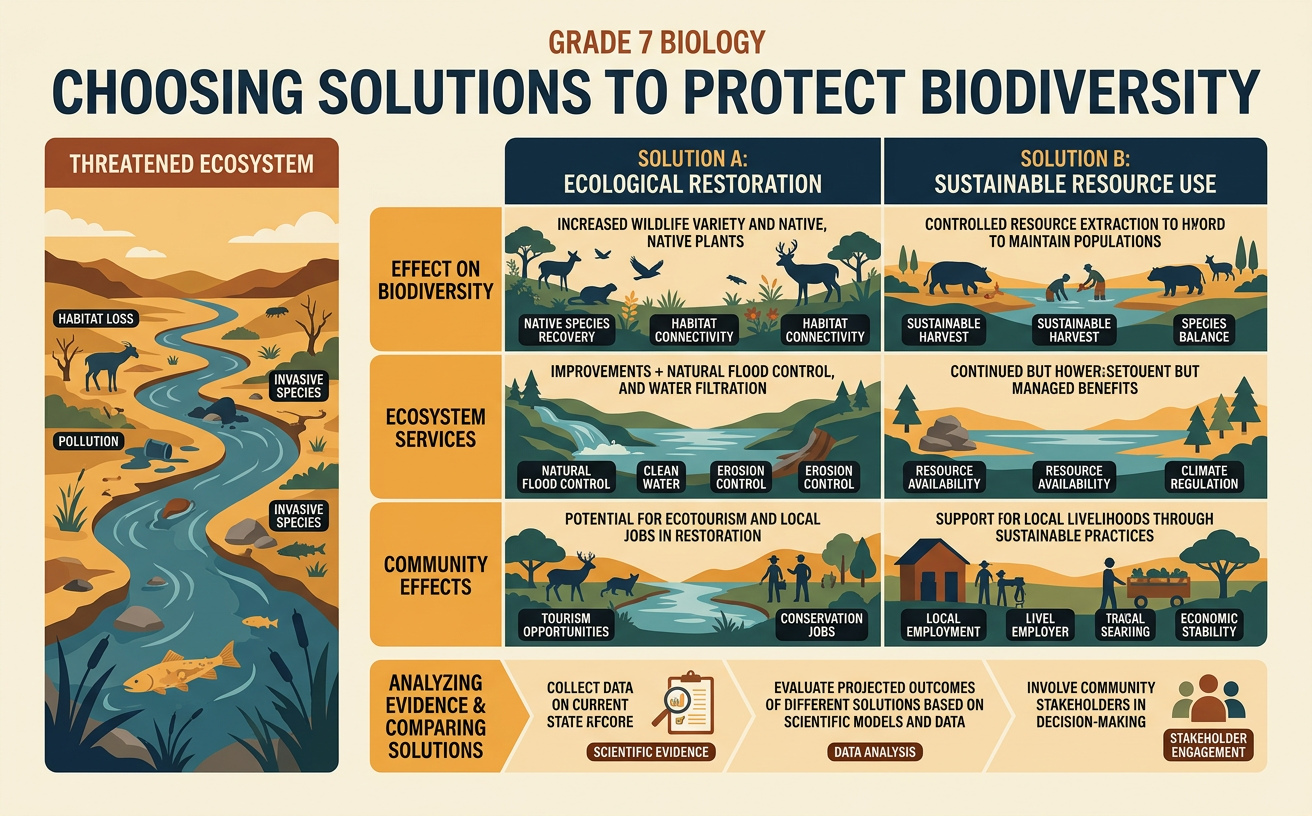
Students analyze evidence about a threatened ecosystem and compare possible conservation solutions based on their effects on biodiversity, ecosystem services, and communities.
Illustrations are auto-generated and may be placeholders. They can be refreshed to match the narration.
What Is Biodiversity?
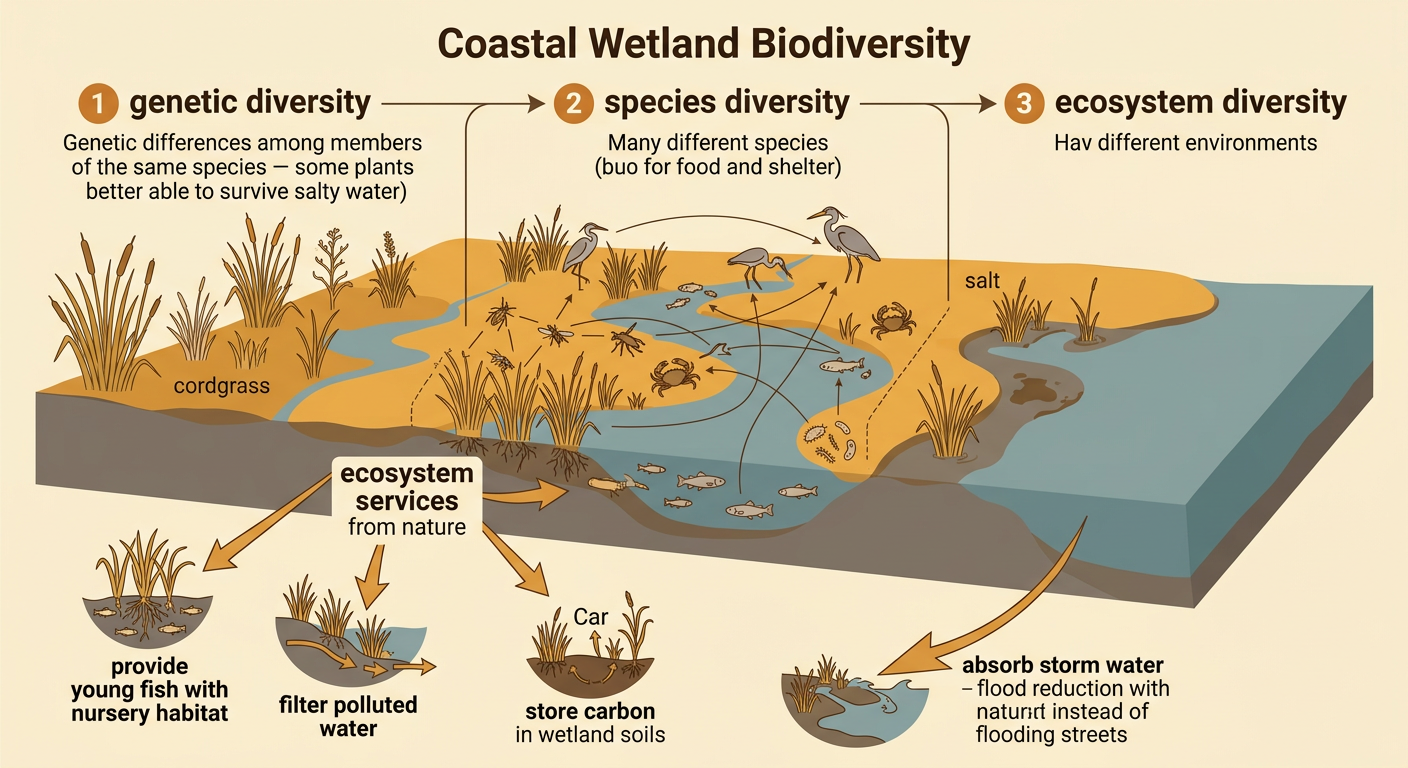
Biodiversity is the variety of life in an area. It includes genetic diversity within a species, the number of different species, and the variety of ecosystems. A coastal wetland, for example, may contain cordgrass, insects, crabs, fish, herons, and many microorganisms. These organisms interact in food webs and help the ecosystem function. Biodiversity also supports ecosystem services, which are benefits people receive from nature. Wetlands provide nursery habitat for fish, filter pollutants from water, store carbon, and reduce flooding by absorbing storm water. If several species disappear, food webs may become less stable and some services may weaken. Scientists therefore consider both the number of species and the ecological roles those species perform when evaluating biodiversity.
Identify the Ecosystem Threat
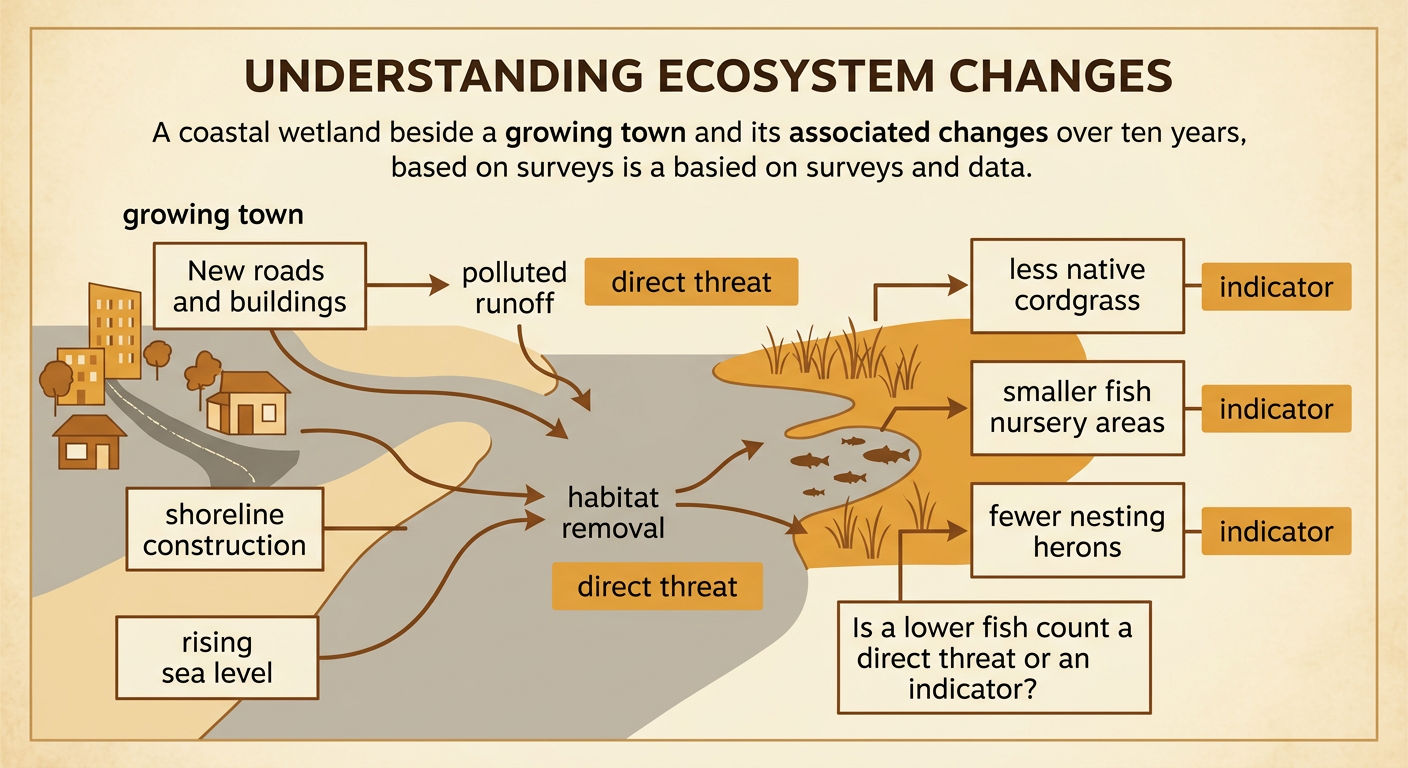
To protect an ecosystem, first identify what is changing and what is causing the change. Imagine a coastal wetland near a growing town. Surveys show that native cordgrass covers less area than it did ten years ago, fish nurseries are shrinking, and nesting herons are becoming less common. These observations are evidence of ecological change, but they do not automatically reveal the cause. A map and water tests might show that new roads and buildings increased polluted runoff, while shoreline construction removed wetland habitat. Rising sea level could add further stress. Students should separate direct threats, such as habitat removal and pollution, from indicators, such as declining fish counts. A clear problem statement connects the cause and effect: development and runoff are reducing wetland habitat, biodiversity, and flood protection.
Examine Evidence and Stakeholder Needs
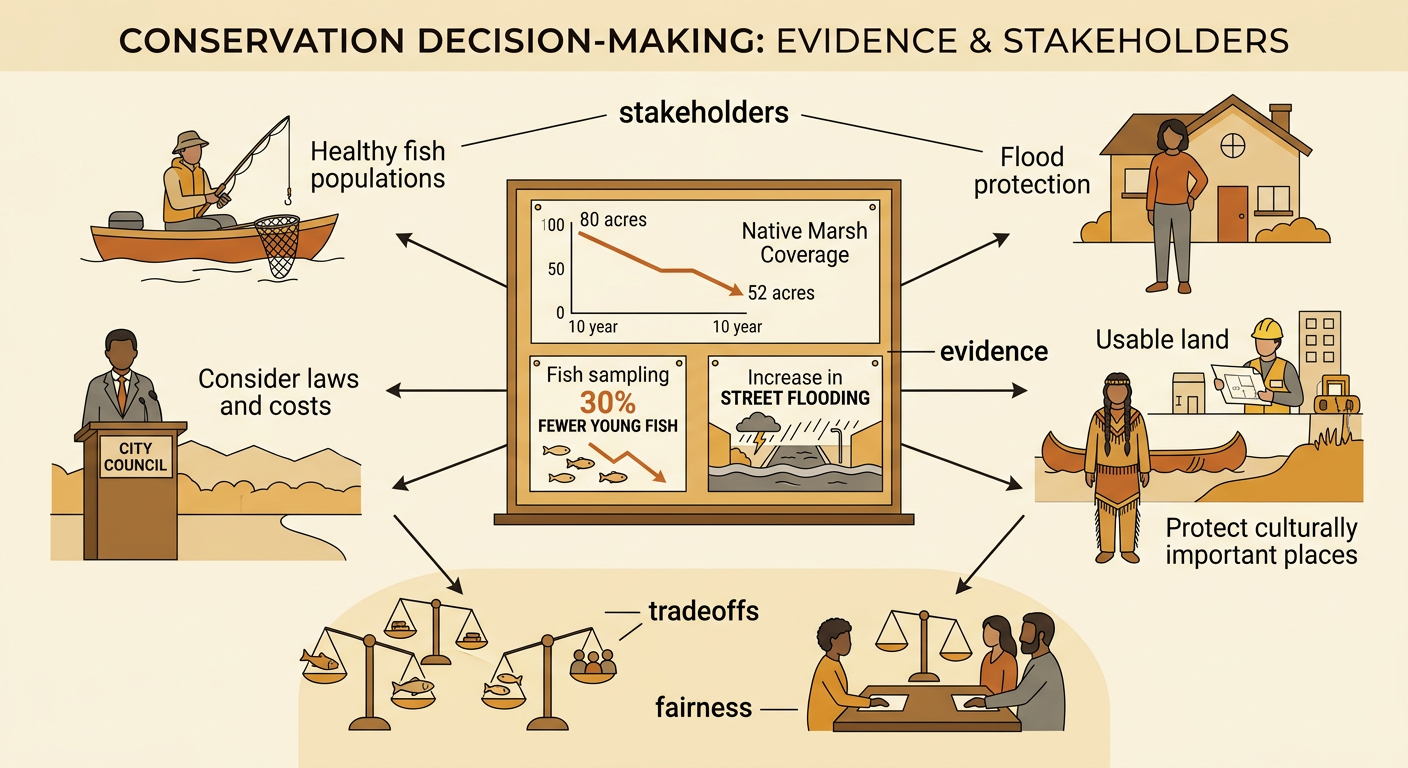
Good decisions use specific evidence and consider the people affected. In a sample wetland report, plant surveys show that native marsh coverage fell from 80 acres to 52 acres in ten years. Fish sampling found 30 percent fewer young fish, and flood records show that nearby streets now flood more often during storms. Students can cite these details when explaining why action is needed. They should also check who collected the data, how measurements were made, and whether results from several sources agree. Stakeholders may have different needs. Fishers want healthy fish populations, residents want flood protection, developers want usable land, Indigenous communities may seek protection of culturally important places, and local officials must consider costs and laws. Comparing these interests does not mean all claims have equal evidence; it helps reveal benefits, tradeoffs, and fairness concerns.
Compare Conservation Solutions
Competing solutions should be judged with the same criteria. One option is to restore native marsh plants and reconnect tidal channels. This could improve habitat, water filtration, and flood protection, but it requires land, money, and time. A second option is to create a protected shoreline buffer where construction and fertilizer use are limited. A buffer can reduce runoff and future habitat loss, although landowners may face restrictions. A third option is to build a concrete seawall. A seawall may protect buildings in one location, but it can prevent wetlands from moving inland and may reduce shoreline habitat. Students can use a decision matrix to rate each option for biodiversity, ecosystem services, cost, time, and community effects. Ratings must be supported by evidence rather than personal preference. Public policies also need clear purposes, funding, enforcement plans, and evaluation.

Recommend and Defend a Solution
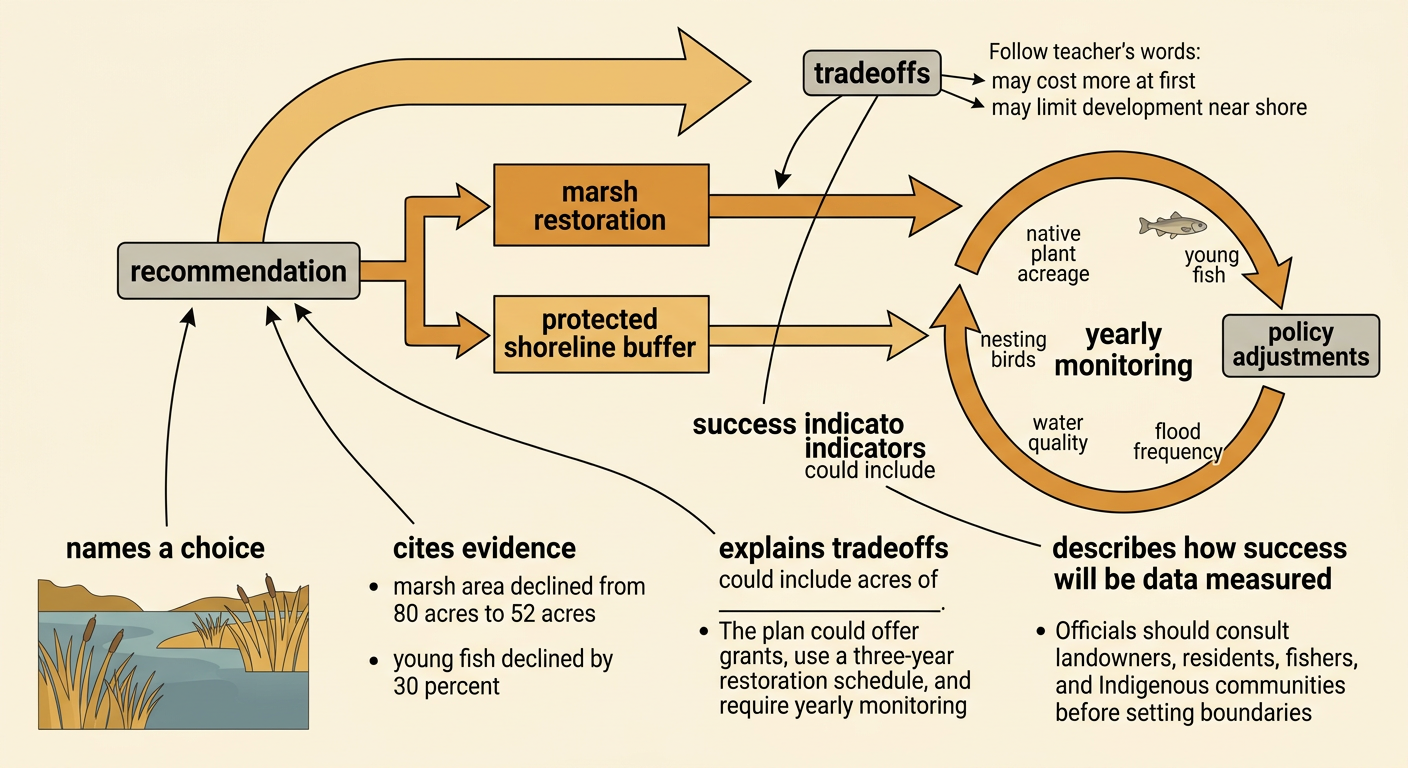
A strong recommendation states a choice, cites evidence, explains tradeoffs, and proposes a way to measure success. For the sample wetland, students might recommend marsh restoration combined with a protected shoreline buffer. The report shows that marsh area declined from 80 to 52 acres and young fish declined by 30 percent, so restoring habitat directly addresses two documented problems. The buffer would also reduce polluted runoff and prevent additional habitat loss. This plan may cost more at first and may limit development near the shore, so officials should consult landowners, residents, fishers, and Indigenous communities before setting boundaries. The policy could include grants, a three-year restoration schedule, and yearly monitoring. Success indicators might include acres of native plants, numbers of young fish and nesting birds, water quality, and flood frequency. New evidence should guide future adjustments.