
Citing Strong Textual Evidence in Literary Analysis
Students analyze a short literary passage and select strong textual evidence to support an inference about a character’s motivation.
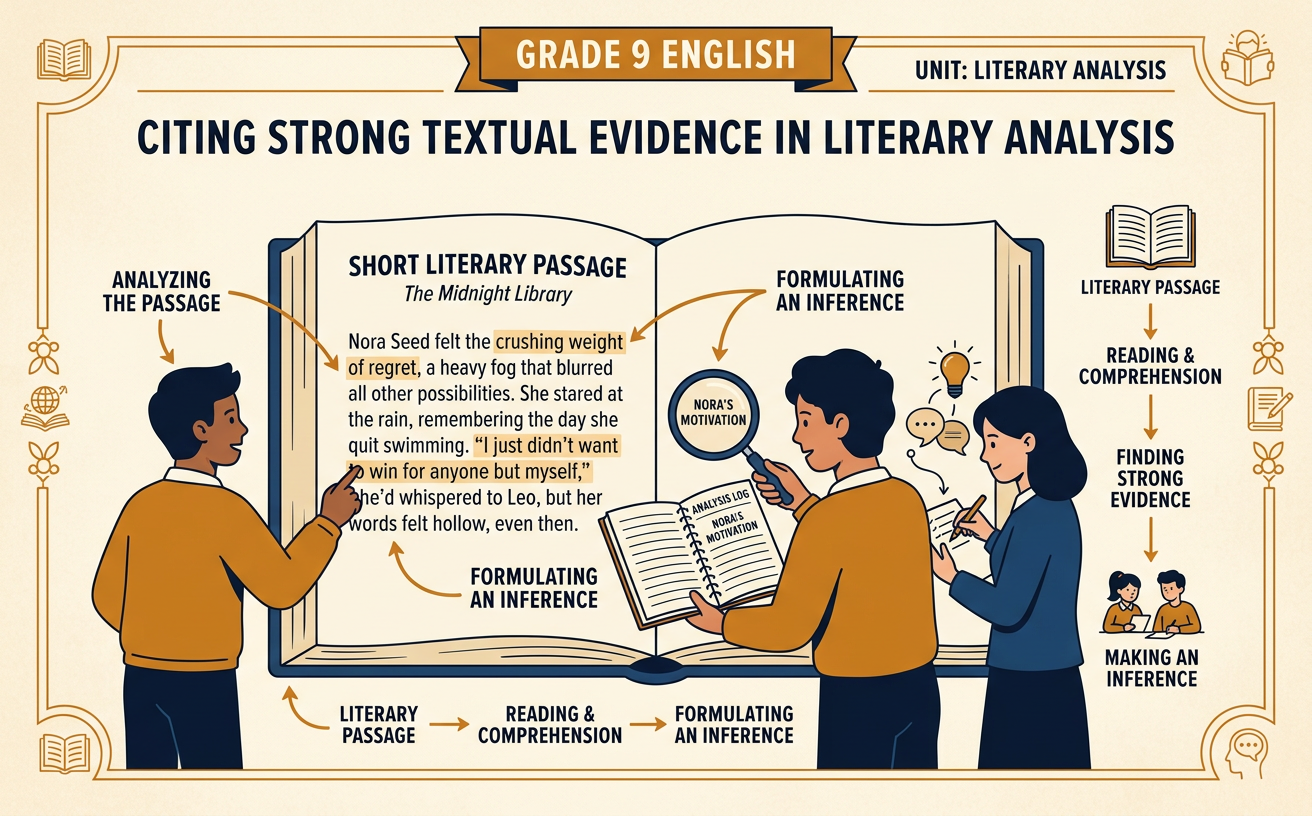
Illustrations are auto-generated and may be placeholders. They can be refreshed to match the narration.
Introduce Claims and Evidence
In literary analysis, a claim is a statement about a text that a reader can support. Evidence is a specific detail or quotation from the text that helps prove the claim. Strong evidence is relevant, precise, and sufficient. It should directly address the claim rather than merely describe the same character or event. For example, a reader might claim, “Nora puts her family’s needs before her own goals.” The fact that Nora is standing near a bus is not strong evidence because it does not reveal her priorities. However, her decision to miss the bus and help her mother would directly support the claim. Think of analysis as a structure: the claim states what you believe, the evidence provides textual support, and your reasoning explains how the evidence proves the claim.

Read the Literary Passage
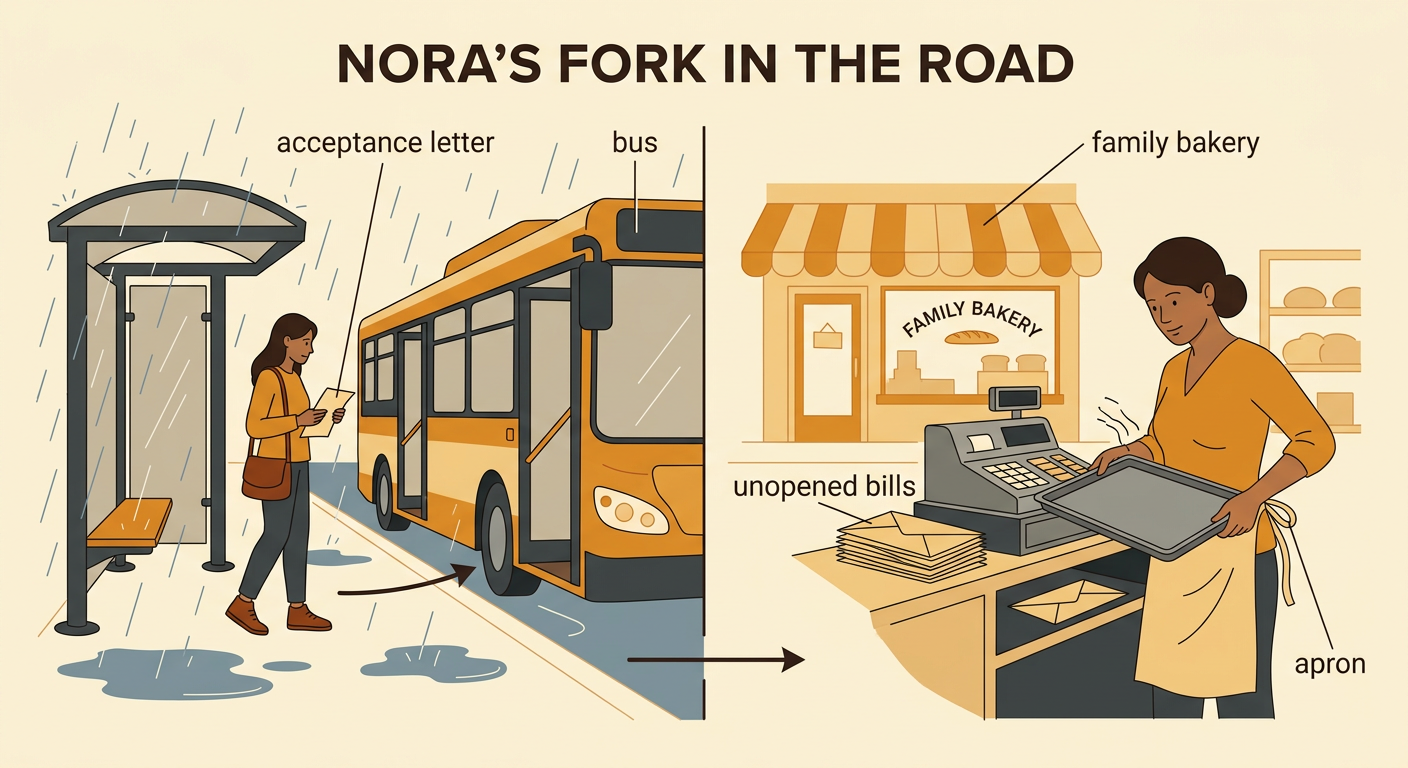
Read the passage carefully, noticing Nora’s choices and the details she observes. Rain tapped the bus shelter as Nora held the acceptance letter to the summer music academy. The bus that would take her to pay the enrollment deposit approached through the gray morning. Across the street, her mother worked alone in the family bakery. Since Nora’s father had injured his back, unopened bills had gathered beside the register. Through the window, Nora saw her mother rub her wrist before lifting another heavy tray. Nora checked the letter again: “Deposit due by noon today.” The bus stopped, and its doors opened. Nora looked from the letter to the bakery. Then she stepped away from the bus, crossed the street, and tied on an apron. “I can cover the morning rush,” she said, sliding the letter beneath the register.
Make a Character Inference
An inference is a reasonable conclusion based on textual details and what you already understand about human behavior. The passage never directly states why Nora walks away from the bus, so readers must infer her motivation. A strong inference is that Nora chooses to help because she is concerned about her family’s physical and financial strain, even though doing so may cost her a valued opportunity. This conclusion fits her attention to the bills, her mother’s sore wrist, and the deposit deadline. Another possible inference is that Nora simply dislikes the academy, but the text does not support that idea. She carries the acceptance letter and plans to pay the deposit, suggesting that the opportunity matters to her. A sound inference accounts for several details and avoids adding information that the passage does not provide.

Select Strong Textual Evidence
To select strong textual evidence, ask whether each quotation directly supports the inference and whether the evidence is specific enough to be convincing. One strong detail is, “unopened bills had gathered beside the register.” This supports the idea that Nora recognizes her family’s financial difficulty. A second strong detail is, “Nora saw her mother rub her wrist before lifting another heavy tray.” This shows that her mother is physically struggling. The most important evidence of Nora’s sacrifice is that she reads “Deposit due by noon today” but still “stepped away from the bus” and tied on an apron. Together, these details are thorough because they establish the family’s need, Nora’s awareness of it, and her response. By contrast, “Rain tapped the bus shelter” creates mood but does not directly explain Nora’s motivation.

Explain the Evidence-Claim Connection
Quoting evidence is not enough; analysis must explain how the evidence supports the claim. Begin with the claim, introduce the quotation, and then interpret the important words or actions. For example: Nora is motivated by concern for her family, even at personal cost. The letter says the deposit is “due by noon today,” yet Nora “stepped away from the bus” and tied on an apron. The deadline shows that missing the bus could cause her to lose the academy opportunity, while putting on the apron shows that she chooses to work instead. This contrast connects her action to her motivation: helping her overworked mother matters more to her in that moment than securing her own future plans. The explanation makes the logic visible. It does not merely repeat the quotation; it shows why the quoted details prove the claim.
