Cleaning Cloudy Water: Separating a Mixture
Students investigate how settling and filtering can separate solid particles from a water mixture and connect these methods to community water treatment.
Illustrations are auto-generated and may be placeholders. They can be refreshed to match the narration.
Examine a Cloudy-Water Mixture
A mixture is made when two or more materials are combined but keep their own properties. Imagine a clear cup containing 100 milliliters of water mixed with one teaspoon of clean soil. The water looks cloudy because tiny solid particles are spread through it. Some particles may float, while heavier ones may begin sinking. Observe the mixture without tasting or touching it. Record its color, cloudiness, liquid volume, and any particles you can see. Work with your group to share observations and listen to each person’s ideas. Cloudy water used in this investigation is a model, not drinking water. Even water that looks clear can contain germs or dissolved substances that are too small to see.

Predict How to Separate It
Before testing, predict how you might remove solid particles from the cloudy water. One idea is to let the mixture sit so gravity can pull heavier particles downward. Another idea is to pour it through a filter that traps some solids. Write a prediction using evidence: “I think filtering will make the water clearer because the filter may catch soil particles.” Plan a fair test by changing only the separation method. Start with equal mixtures, use 100 milliliters in each cup, and observe both after the same amount of time. Keep the cup size, soil amount, filter type, and pouring speed the same. Assign group roles, such as measurer, timer, pourer, and recorder, so everyone participates safely and fairly.

Observe Particles Settling
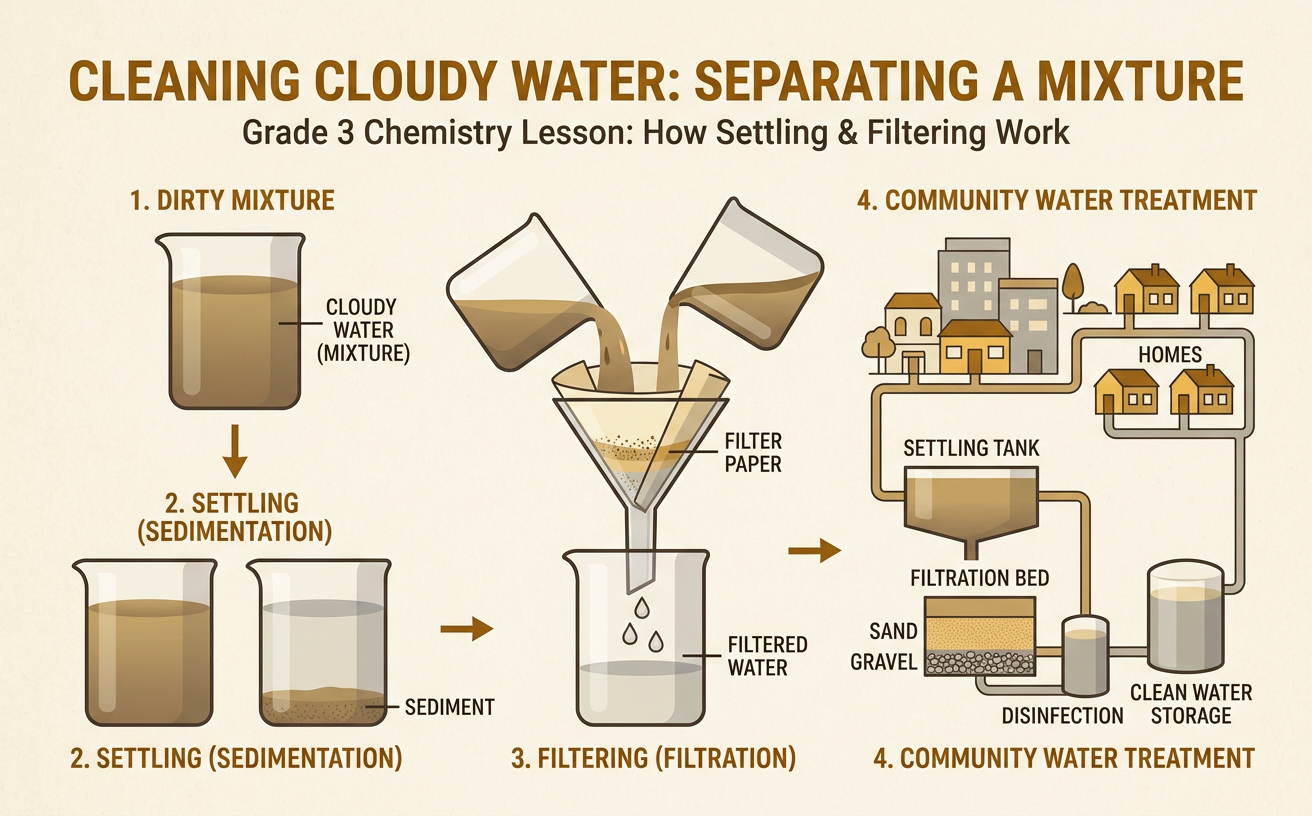
Place one cup of cloudy water where it will not be bumped. Start a timer and observe the cup after 1, 5, and 10 minutes. Gravity pulls many heavier soil particles toward the bottom. The collected material forms sediment, and the water above it may look clearer. Very small or light particles can remain suspended, so settling may not remove every solid. Measure the liquid volume in milliliters and sketch what you see at each time. After settling, you can carefully pour the upper water into another cup without disturbing the sediment. This step is called decanting. For example, if sand collects quickly but fine clay stays suspended, the top may become clearer while still looking slightly cloudy. Never drink the test water.

Test a Simple Filter
Set a funnel over an empty cup and place a clean coffee filter inside it. Measure 100 milliliters of the same cloudy mixture used in the settling test. Pour slowly so the liquid does not overflow. The water that passes through is called the filtrate. Larger soil particles remain on the filter as residue because they cannot pass through its tiny openings. Record how long filtering takes and measure the volume of filtrate collected. Some water may stay in the wet filter, so the collected volume can be less than 100 milliliters. Compare the filtrate’s cloudiness with the original mixture. A simple filter may remove visible solids, but it does not reliably remove germs or dissolved chemicals. The filtered water is not safe to drink.

Compare the Results
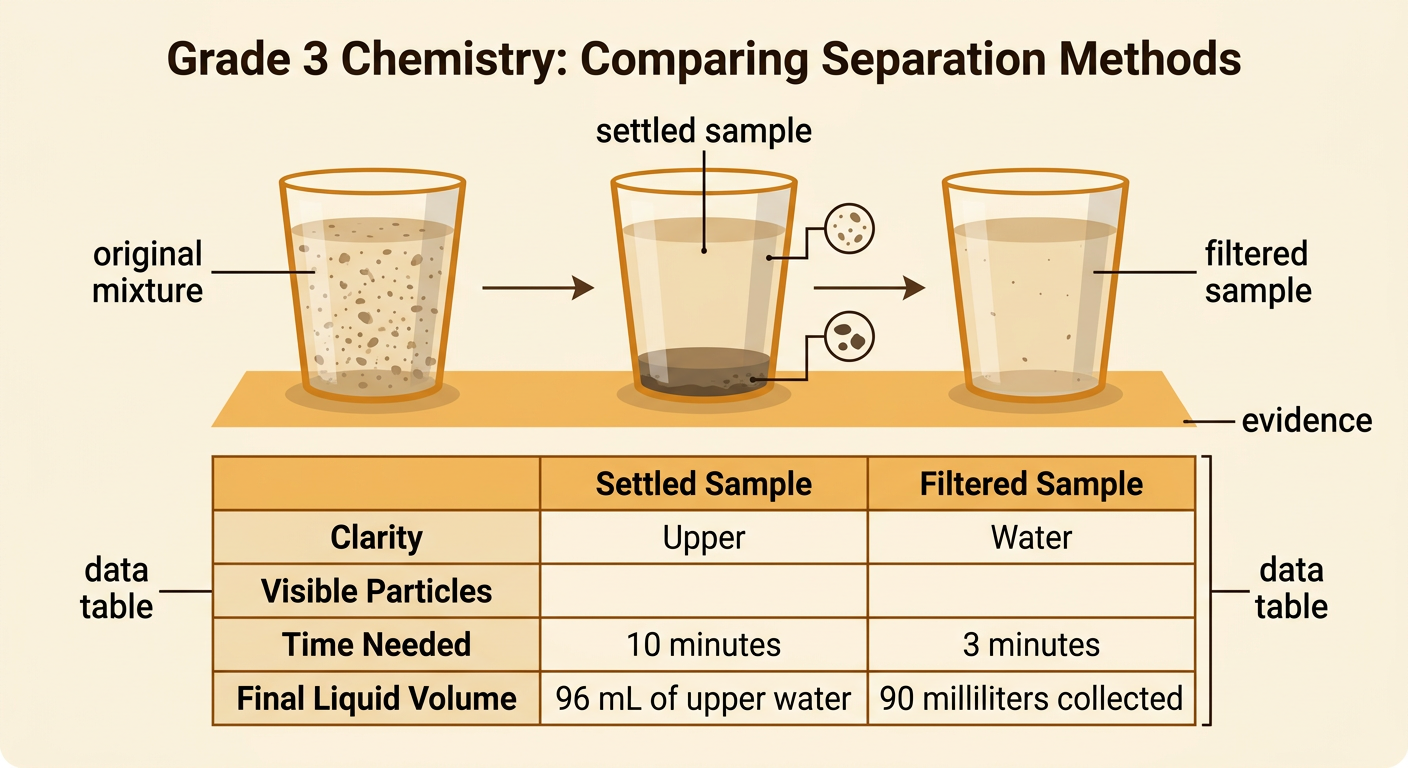
Place the settled sample and filtered sample beside the original mixture. Compare them using the same measures: clarity, visible particle amount, time needed, and final liquid volume. Record volumes in milliliters in a data table. For example, settling might leave 96 milliliters of upper water after 10 minutes, while filtering might collect 90 milliliters in 3 minutes. Those example results do not automatically prove that one method is always better. Repeat each test and look for patterns. Discuss whether the evidence supports your prediction. Settling may work well for heavy particles, while filtering may catch particles that would otherwise remain suspended. Using settling first and filtering second may produce clearer water than either method alone. Differences should come from the tested method, not from unequal starting mixtures.
Connect to Community Water Treatment
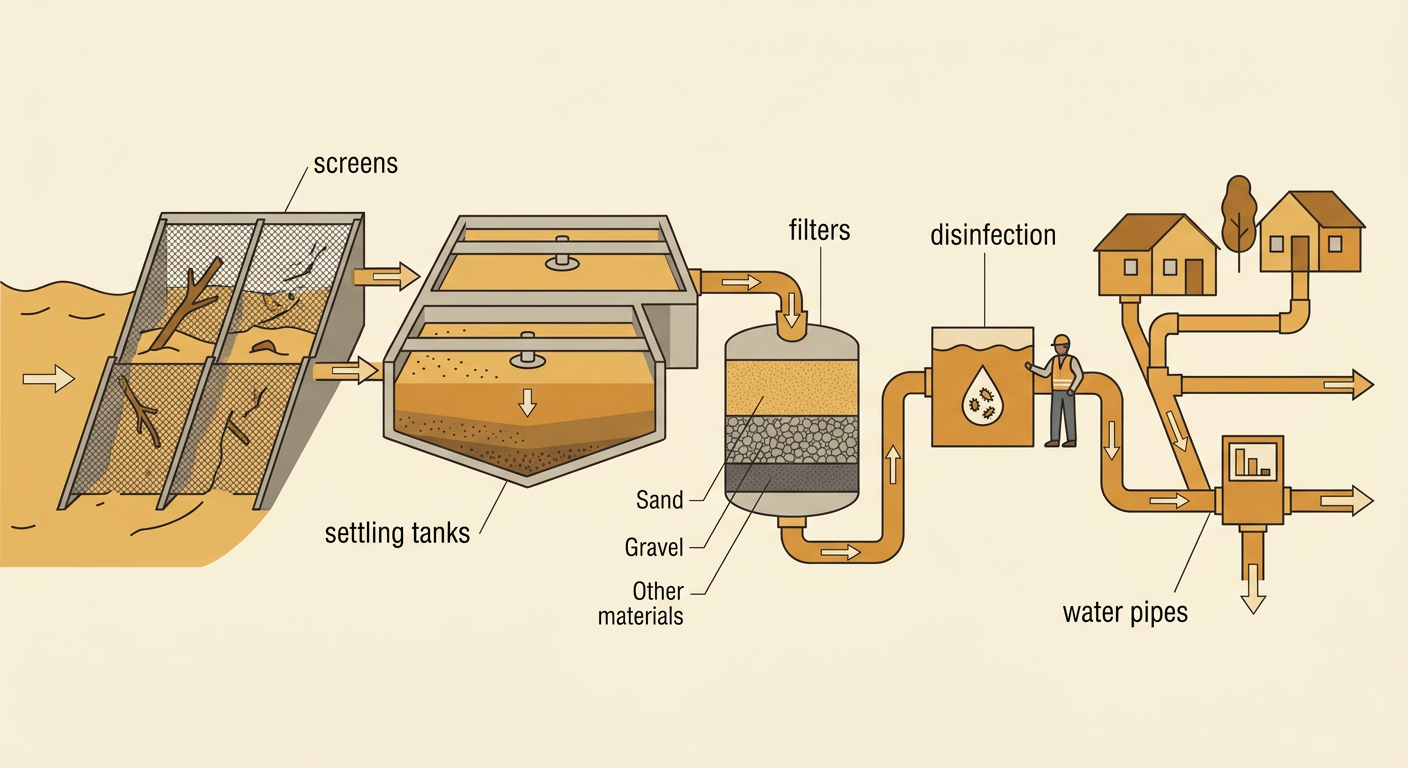
Communities use several steps to treat water, not just one classroom filter. At a treatment plant, screens first remove large objects. Chemicals may help tiny particles clump together so they settle in large tanks. Water then moves through filters that can contain sand, gravel, or other materials. Finally, workers disinfect the water to control harmful germs and test it before it enters water pipes. Local governments create rules for water quality, pay for treatment systems, inspect equipment, and inform people about problems. Citizens can attend meetings, ask questions, report leaks, and support policies that make safe water available to everyone. Classroom settling and filtering model only part of this process. They can improve appearance, but students should never drink investigation water or assume clear water is safe.