
Color-Changing Cabbage: Classifying Acids and Bases
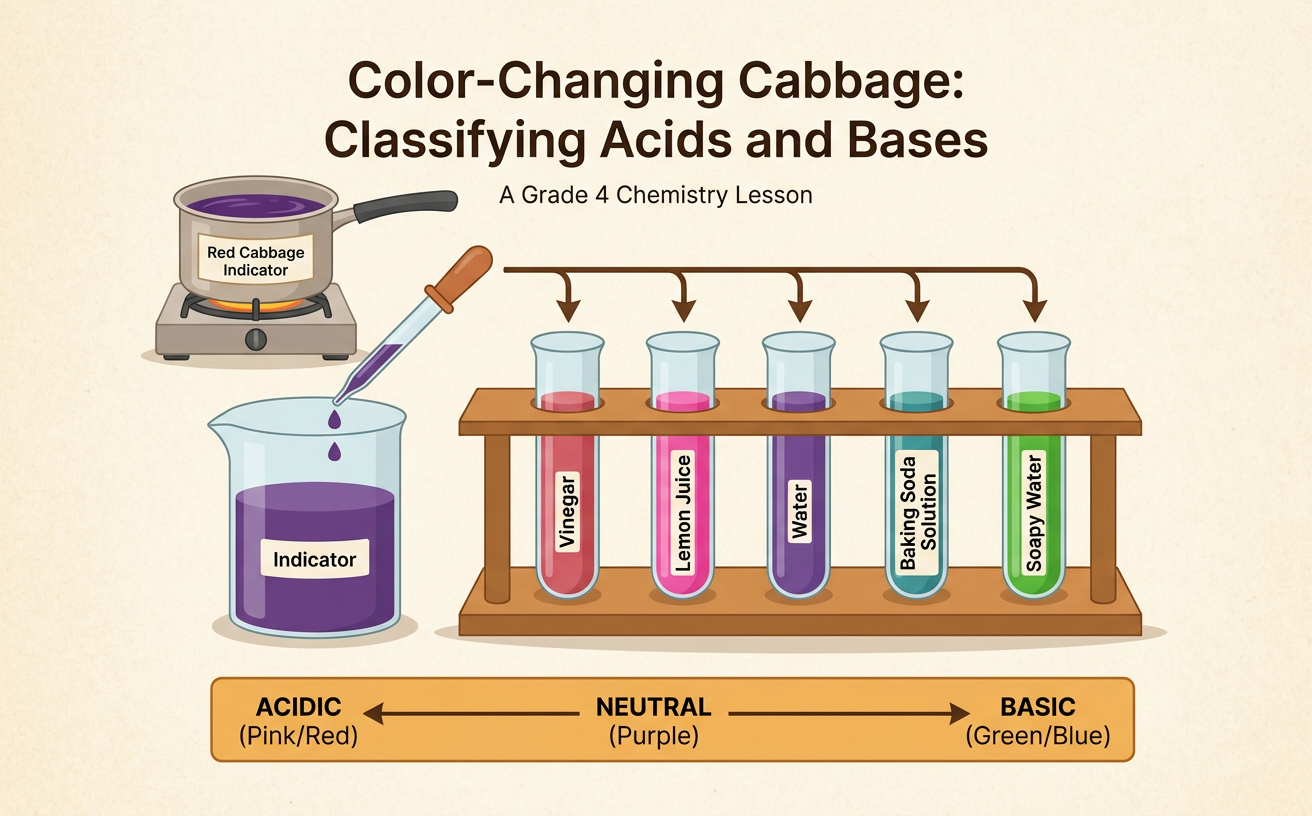
Students use red cabbage indicator and equal-volume samples to observe, measure, and classify familiar liquids as acidic, neutral, or basic.
Illustrations are auto-generated and may be placeholders. They can be refreshed to match the narration.
Ask: Why Does the Indicator Change Color?
Red cabbage contains pigments called anthocyanins. These pigments change color when they are mixed with liquids that have different chemical properties. In an acidic liquid, cabbage indicator often turns pink or red. In a neutral liquid, it usually stays purple. In a basic liquid, it may turn blue or green. The color change provides evidence that can help classify a liquid, but it does not tell us whether the liquid is safe to touch or drink. For example, lemon juice may turn the indicator pink because lemon juice is acidic. A baking soda solution may turn it blue-green because the solution is basic. Water may leave it purple because water is close to neutral. Scientists compare these observed colors with a reference color chart before making a classification.

Review Safe Testing Procedures
Wear safety goggles and work with an adult or teacher before testing any liquid. Use only approved samples in clearly labeled cups. Never taste a sample, and do not place your face over a cup to smell it. Use a separate, labeled dropper for each liquid so chemicals do not get mixed inside the original containers. Keep the samples away from your eyes, mouth, and skin. If a spill occurs, tell the teacher immediately and follow cleanup directions. Wash your hands when the investigation is finished. For example, if the class tests vinegar, students should pour only the teacher-approved amount into the vinegar cup and return the dropper to its labeled tray. Never test or combine household cleaners such as bleach and ammonia because mixing cleaners can produce dangerous substances.

Measure Equal Liquid Samples
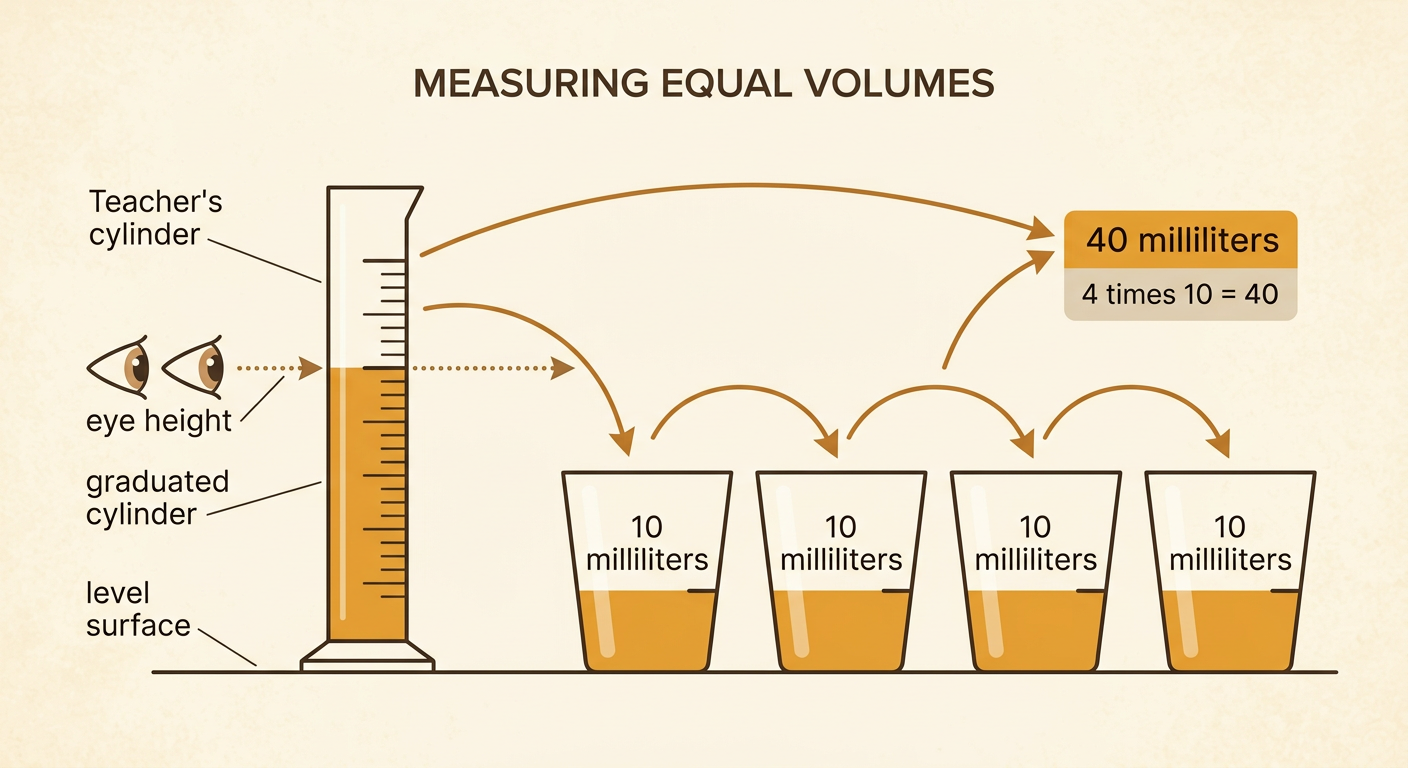
A fair comparison requires equal volumes of every test liquid. Volume is the amount of space a liquid fills, and milliliters are useful units for this investigation. Measure 10 milliliters of each approved liquid with a graduated cylinder or marked measuring tool. Place the tool on a level surface and view the liquid level at eye height. Then pour each sample into its labeled clear cup. Suppose four liquids will be tested. If each cup needs 10 milliliters, the class needs 4 × 10, or 40 milliliters, of sample liquid altogether. Equal volumes matter because a large sample and a small sample could produce colors with different strengths. Use the same type of cup for every sample and check that each cup begins at the 10-milliliter level.
Add Cabbage Indicator
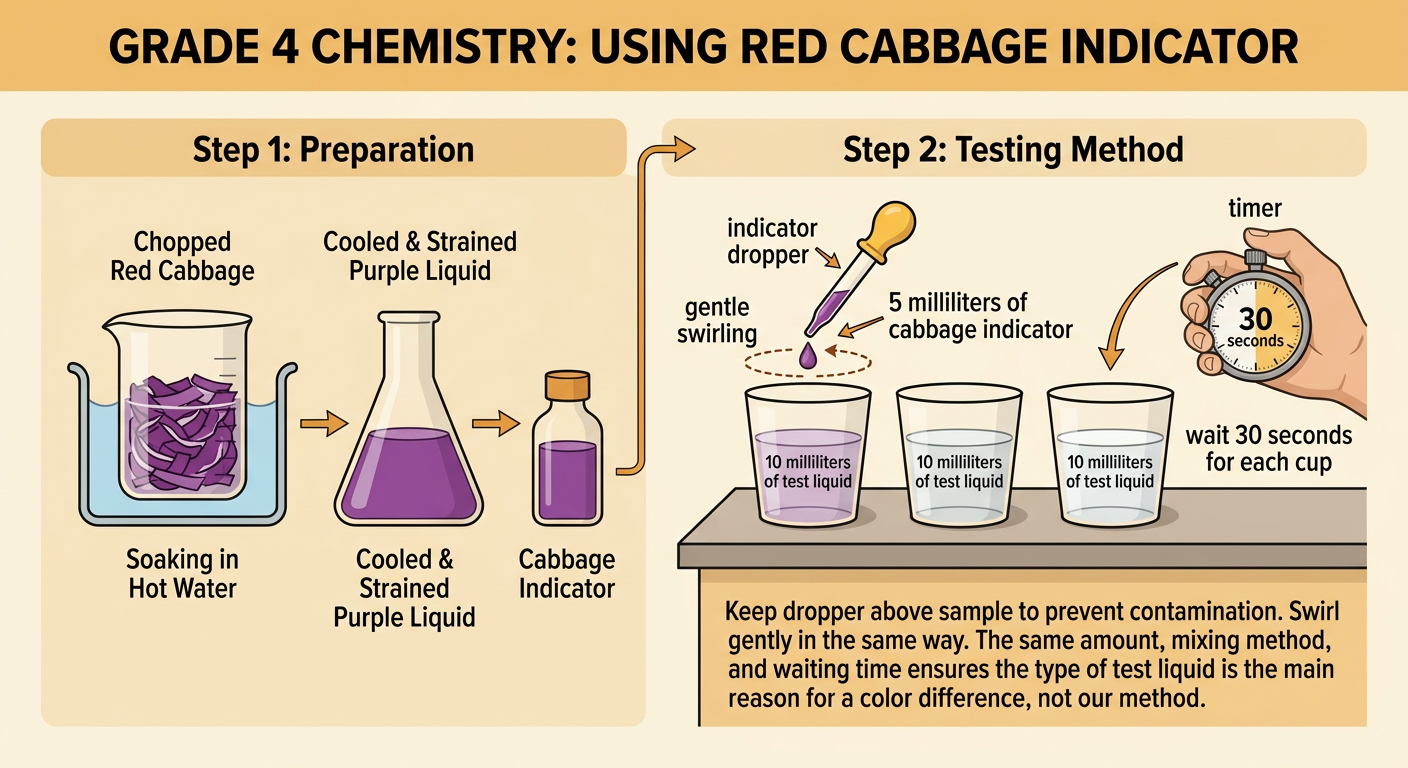
The teacher may prepare cabbage indicator by soaking chopped red cabbage in hot water and then cooling and straining the purple liquid. Students should use only the cooled, prepared indicator. Add the same amount of indicator to every sample. For example, place 10 milliliters of an approved test liquid in each cup, and then add 5 milliliters of cabbage indicator to each one. Use a clean indicator dropper or measuring tool, and do not touch it to the sample liquid. Swirl each cup gently in the same way and wait the same amount of time, such as 30 seconds. Keeping the sample volume, indicator volume, mixing method, and waiting time the same helps ensure that the type of liquid is the main reason for any color difference.
Record and Classify the Colors
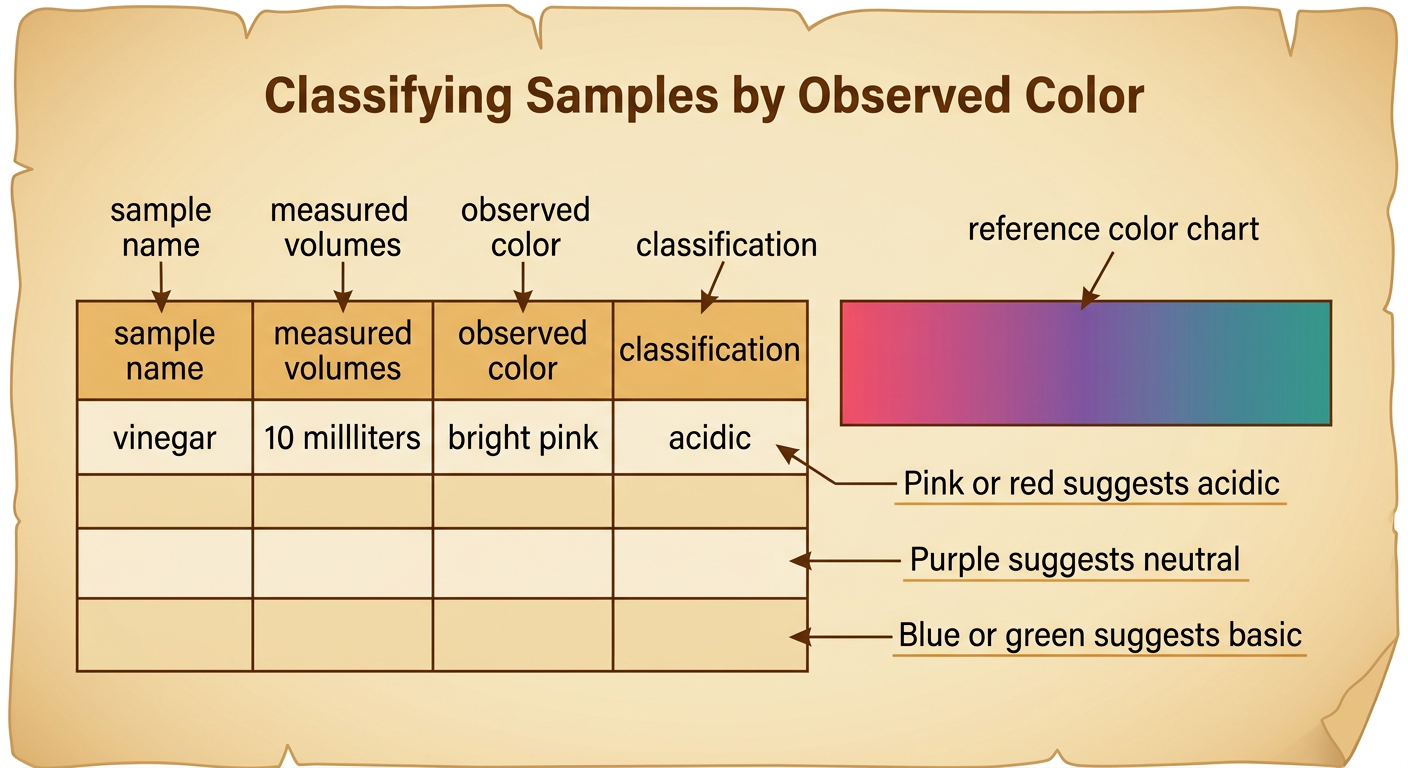
Observe each cup in good light and record the color you actually see. Do not change a result to match what you expected. Compare the color with the class reference chart: pink or red suggests acidic, purple suggests neutral, and blue or green suggests basic. Then write the classification beside the observation. For example, a student might record, “Vinegar became bright pink, so it is classified as acidic.” Include the sample name, measured volumes, observed color, and classification in a data table. If a color falls between two reference colors, describe it carefully, such as “purple-blue,” and repeat the test with fresh, equal samples. The cabbage indicator gives an approximate classification rather than an exact measurement. Repeated observations can make the evidence more dependable and help identify possible measuring or contamination errors.
Apply the Evidence to Household Choices
Acidic, neutral, and basic products can serve different household purposes. Evidence from the indicator test can help people compare choices, but color alone does not prove that a product is safe or effective. For example, acidic vinegar may help remove some mineral deposits and can cost less than a special cleaner. However, acid can damage materials such as marble, and vinegar should never be mixed with bleach. A mildly basic baking soda mixture may help scrub some surfaces, but its grains can scratch delicate finishes. Before selecting a product, compare benefits such as cleaning ability, price, and easy availability with costs such as possible damage, waste, packaging, and safety risks. Read the product label, follow adult directions, and use only the recommended amount. Choosing wisely means using both test evidence and reliable safety information.