Community Decisions: Protecting a Riverbank
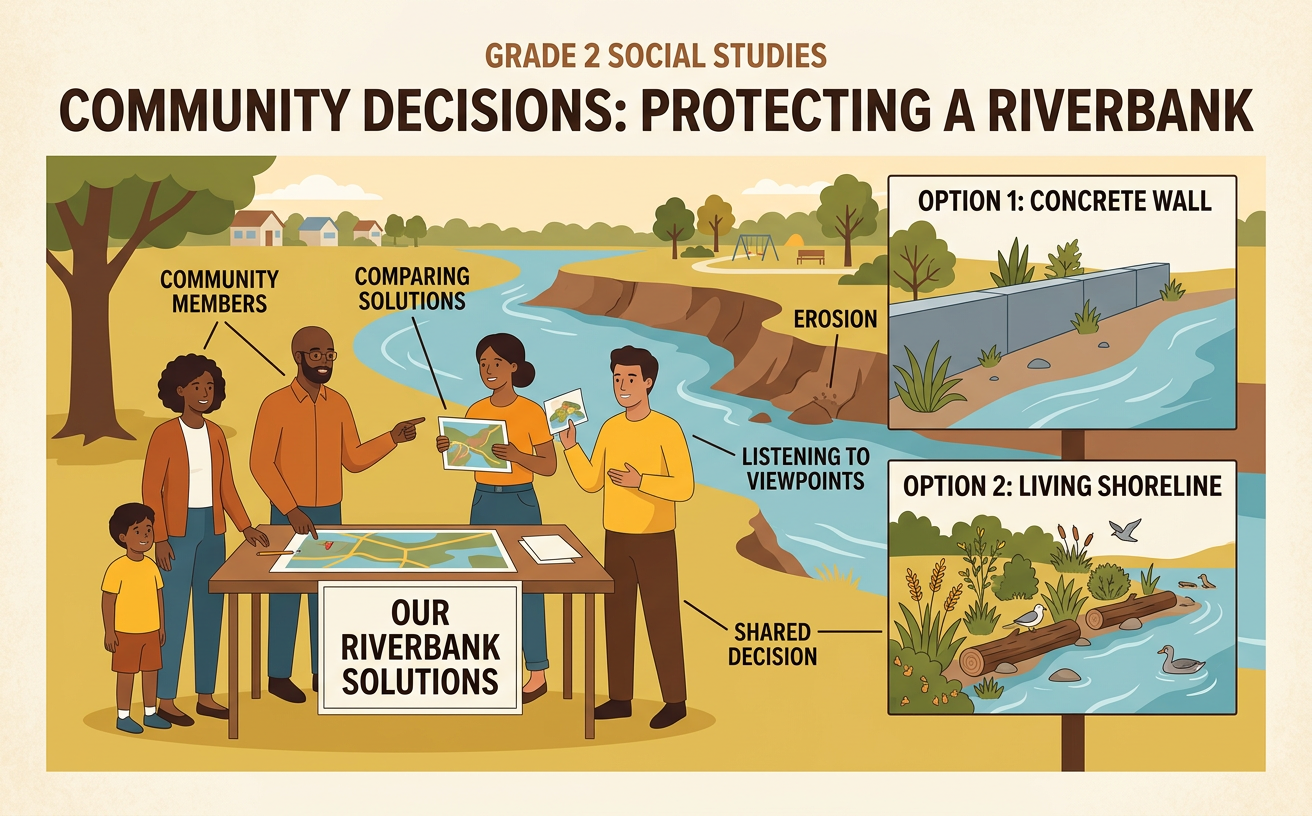
Students examine how a community can compare solutions, listen to different viewpoints, and make a shared decision about protecting a riverbank from erosion.
Illustrations are auto-generated and may be placeholders. They can be refreshed to match the narration.
The Riverbank Problem
A riverbank is the land along the edge of a river. In the town of Pine Bend, people notice that part of the riverbank is washing away. After heavy rain, the river flows faster and carries loose soil downstream. A walking path is getting closer to the river’s edge, and plant roots are becoming uncovered. The community needs to protect the bank before more land is lost. Town leaders share a short report about the problem. Careful readers can ask: What is happening to the riverbank? When does the most soil wash away? What places could be affected? They can answer with key details from the report, such as the heavy rain, fast-moving water, loose soil, and threatened path.

How Water Changes Land
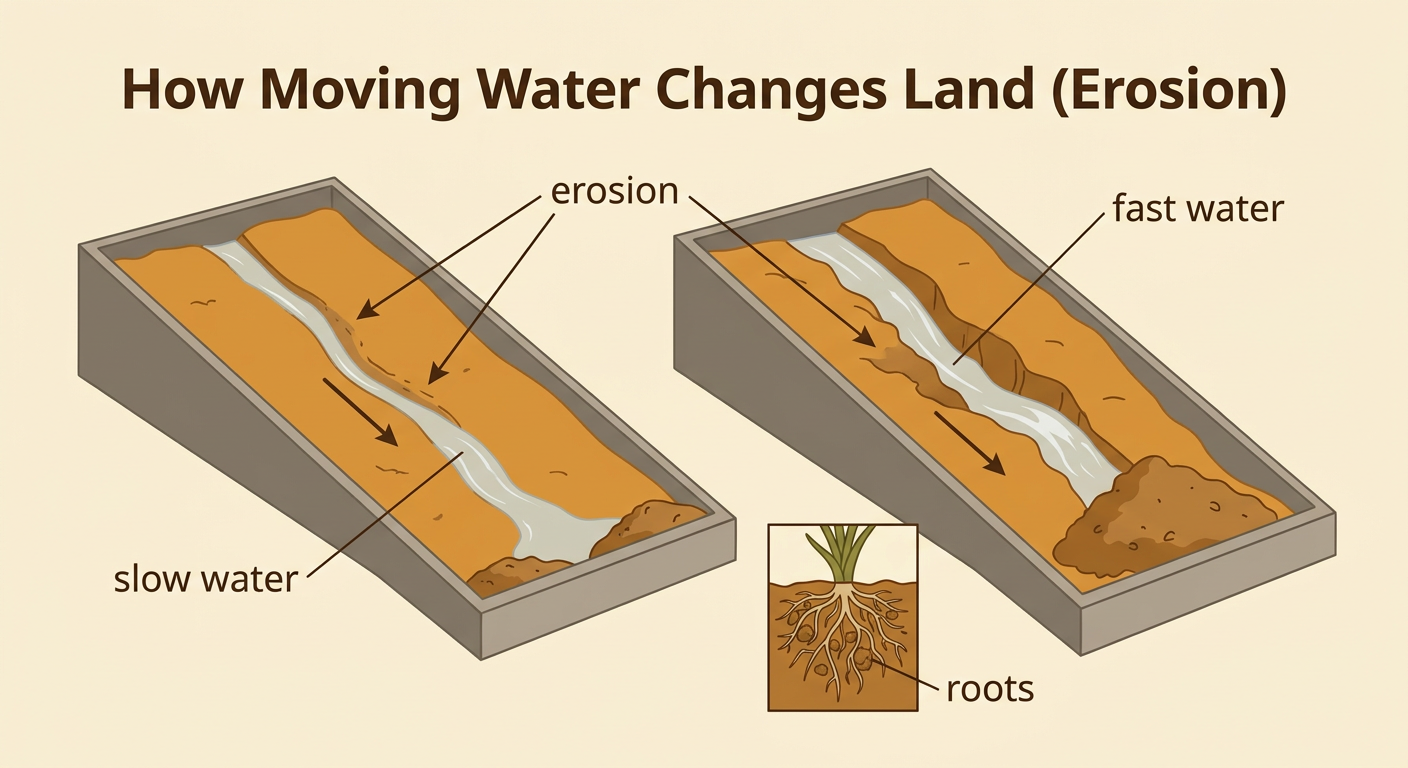
Moving water can change the shape of land through erosion. Erosion happens when water carries soil, sand, or small rocks from one place to another. A gentle river may move only a little material, while fast water after a storm may move much more. Imagine pouring water slowly and then quickly over two equal trays of bare soil. The faster flow may cut a deeper channel and carry more soil to the bottom of the tray. Plants can slow erosion because their roots help hold soil in place, and their stems and leaves can reduce the force of raindrops. The kind of soil, steepness of the bank, amount of plant cover, and speed of the water can all affect how quickly a riverbank changes.
Comparing Community Solutions
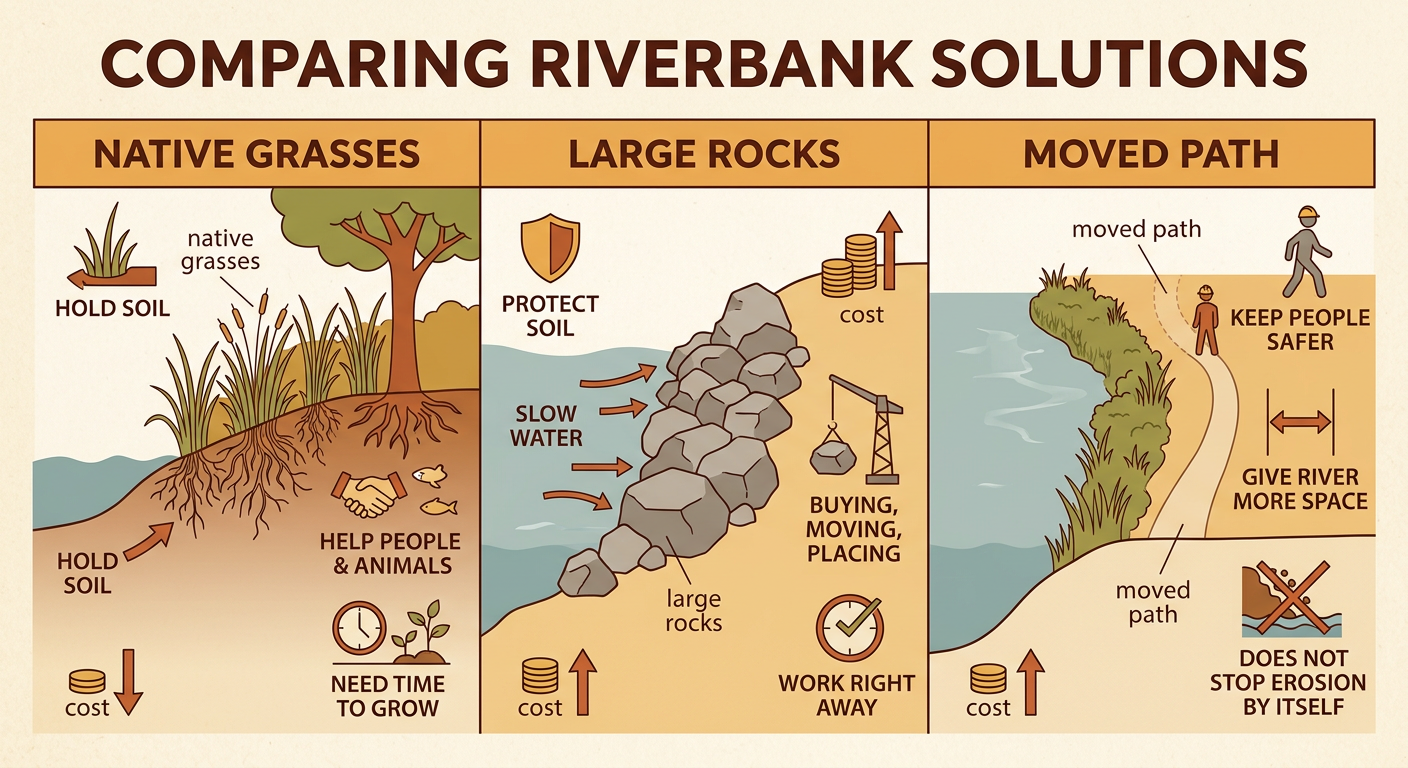
The Pine Bend community considers three solutions. One plan is to plant native grasses and shrubs. Their roots can hold soil, but the plants need time to grow. Another plan is to place large rocks along the bank. Rocks can slow water near the shore and protect the soil, but moving and placing them may cost more. A third plan is to move the walking path farther from the edge. This keeps people safer and gives the river more space, but it does not stop erosion by itself. Community members can compare each plan by asking the same questions: How well might it slow erosion? How much will it cost? How will it affect plants, animals, and people? They may also combine solutions, such as planting native grasses and moving the path.
Listening to Community Viewpoints
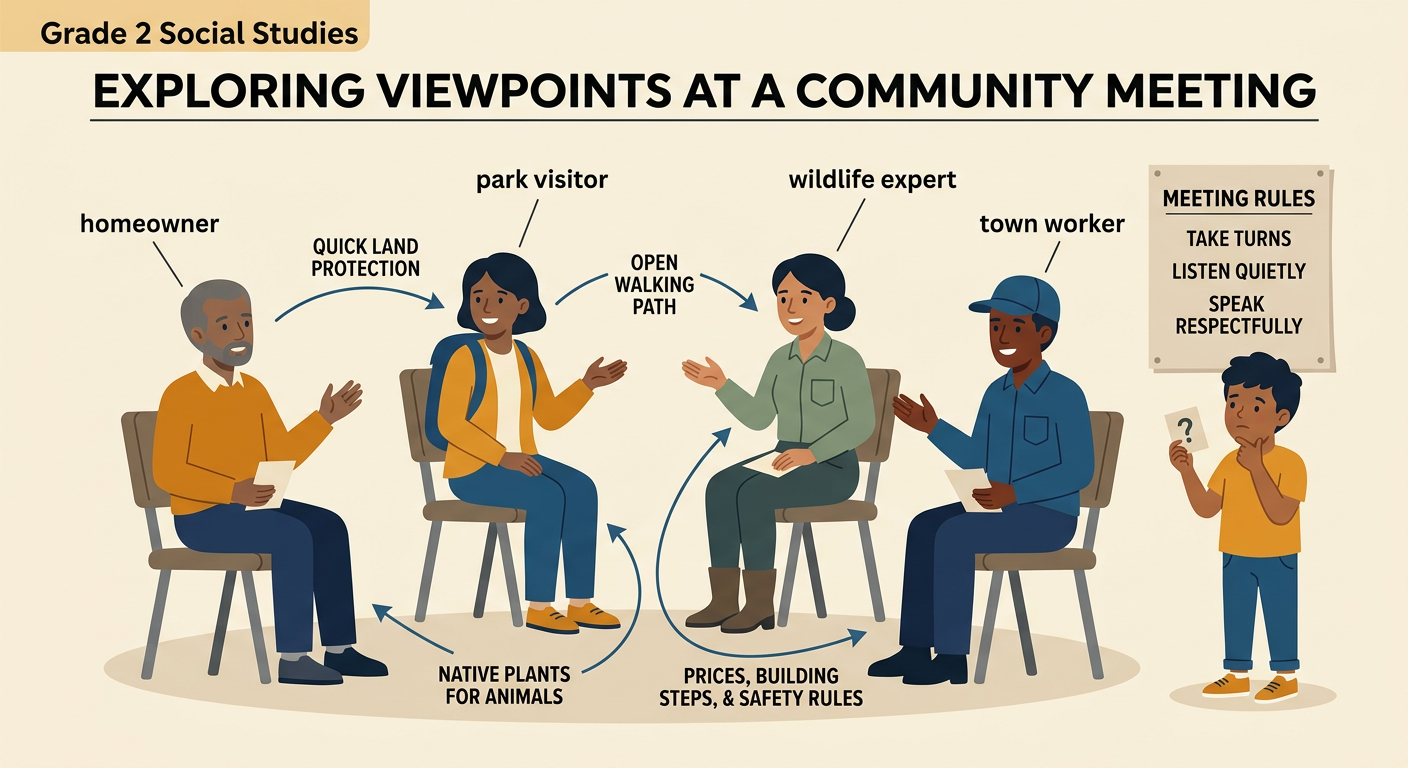
People may view the riverbank problem in different ways because they have different needs and experiences. A nearby homeowner may want quick protection for the land. A park visitor may want the walking path to stay open. A wildlife expert may support native plants that provide food and shelter for animals. A town worker may explain the cost and safety rules for each project. Listening respectfully means allowing each person to speak, paying attention, and asking helpful questions. For example, a student might ask the wildlife expert, “How long will the plants take to grow?” The student could then restate the answer to check understanding. Equal treatment does not mean every idea must be chosen. It means each person has a fair chance to share a viewpoint while following the same meeting rules.
Making a Fair Decision
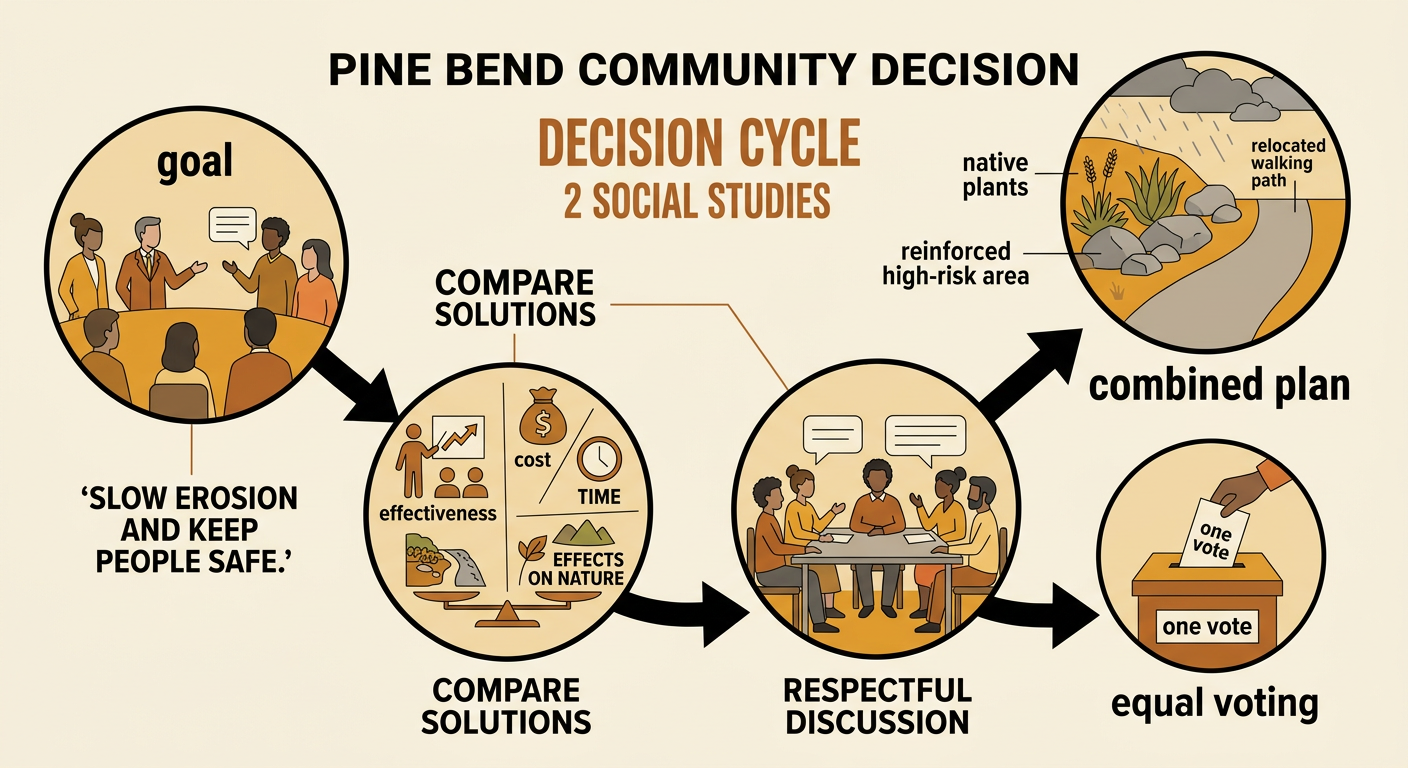
After gathering facts and hearing viewpoints, the community can make a shared decision. First, leaders clearly state the goal: slow riverbank erosion and keep people safe. Next, everyone uses agreed-upon measures, such as effectiveness, cost, time, and effects on nature. The group follows meeting rules, discusses evidence, and may vote. Each eligible member gets one vote, which supports equality. A majority vote could select a combined plan: plant native grasses, add rocks where the water is strongest, and move a short part of the path. Fairness also means explaining why the plan was chosen and respecting the final decision made under the community’s rules. Later, town workers can observe the bank after storms. If too much soil still washes away, the community can use new evidence to improve the plan.