Community Leaders Help Solve Problems
Students identify community leaders, describe their responsibilities, and explain how leaders help address community problems.
Illustrations are auto-generated and may be placeholders. They can be refreshed to match the narration.
Who Is a Community Leader?
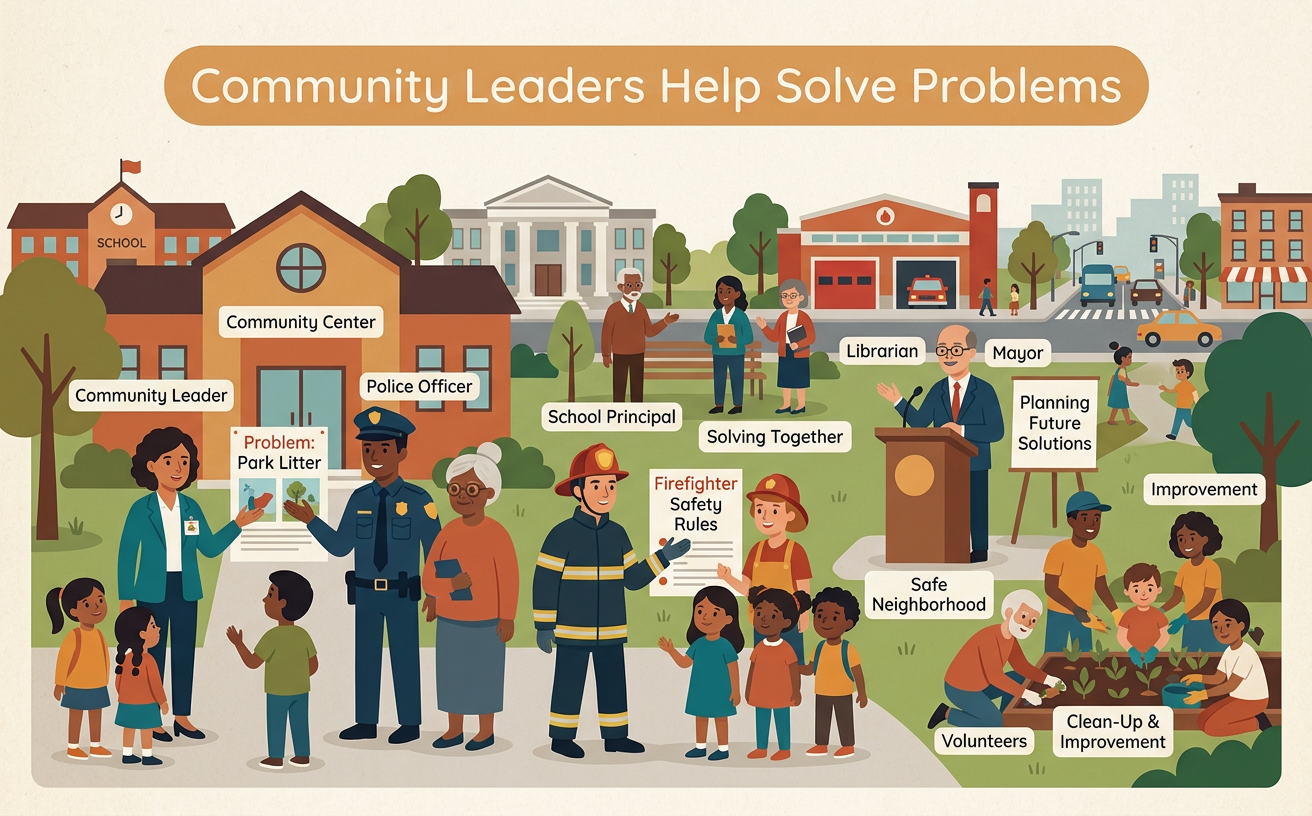
A community leader is a person who helps a group of people work together and make decisions. Some leaders have jobs in local government. A mayor helps guide a city or town. Other leaders are responsible for places people use each day. A school principal leads a school, and a fire chief leads a fire department. Community leaders listen to people, learn about problems, and help choose fair and safe actions. They do not do every job alone. They work with community members and other helpers. For example, if families want a safer park, they can tell a local leader. The leader can listen, gather information, and work with others to improve the park.

Leaders and Their Responsibilities
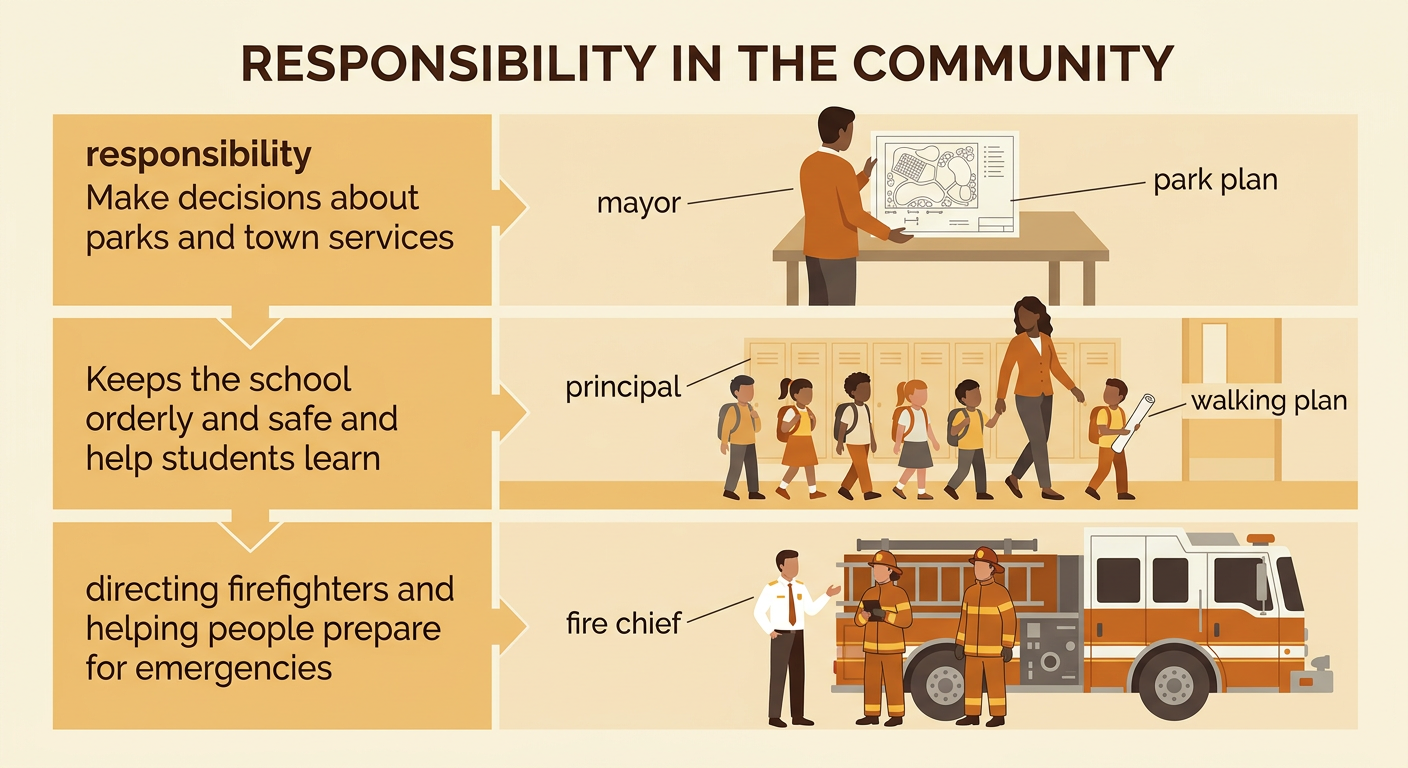
A responsibility is a job or duty that someone is expected to do. Different community leaders have different responsibilities. A mayor works with others to make decisions about town services, roads, parks, and safety. A principal helps students learn and makes sure the school is orderly and safe. A fire chief directs firefighters and helps the community prepare for fires and other emergencies. Leaders must listen carefully, follow laws and rules, explain decisions, and treat people fairly. They also ask trained workers and community members for help. For example, when a school hallway becomes too crowded, the principal may observe the hallway, talk with teachers and students, and create a safer walking plan. The principal then explains the plan to everyone.
A Community Problem
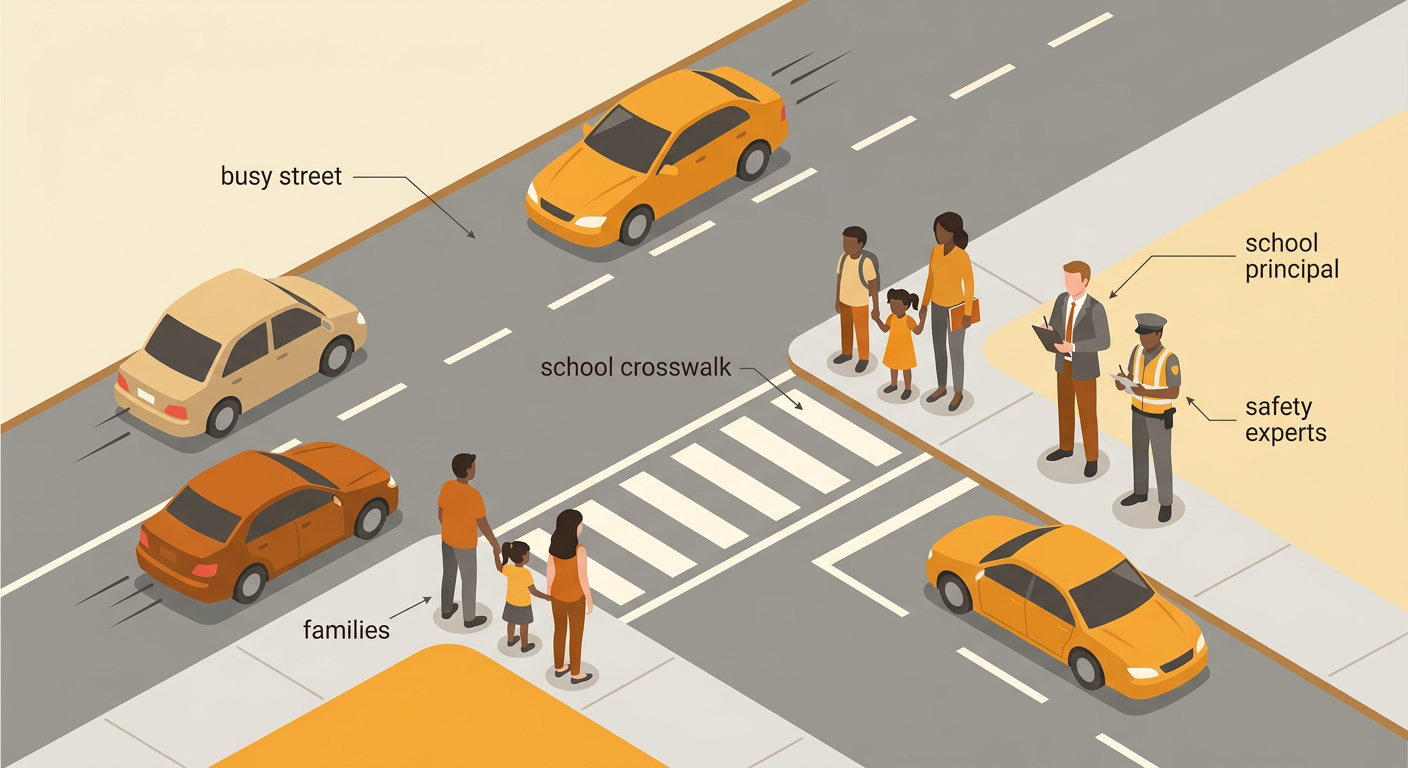
A community problem is something that makes life harder or less safe for a group of people. Before solving a problem, people must describe it clearly. They can observe what is happening and gather information from people who use the area. Imagine that cars move quickly near a school crosswalk. Students and families may not feel safe crossing the street. The problem is not simply that the street is bad. A clear problem statement is: People need a safer way to cross the busy street near the school. Families can share what they notice with the principal or a local government leader. The leader can visit the crosswalk, listen to concerns, and work with safety experts to learn more about the problem.
Questions Leaders Ask
Good questions help leaders understand a problem before they choose a solution. Leaders ask who is affected, what is happening, where and when it happens, and why it may be happening. They also ask what people need and what limits must be considered. For the busy school crosswalk, a leader might ask, “When is traffic busiest?” “How many people cross here?” and “What have families noticed?” The leader may watch traffic at arrival and dismissal times, count cars, and speak with crossing guards, families, and school workers. Students can ask questions too. They might ask, “Can drivers see the crosswalk clearly?” Answers and observations provide key details. These details help the leader define the problem and avoid making a quick guess.

Choosing a Helpful Solution
After leaders understand a problem, they work with others to think of possible solutions. A helpful solution should address the problem, keep people safe, follow rules, and fit the community’s needs. For the busy crosswalk, ideas might include adding a crossing guard, placing a warning sign before the crosswalk, or repainting faded crosswalk lines. Local officials must check each idea with trained safety workers because streets have important laws and design rules. They may compare the ideas by asking: Will it make crossing safer? Can it be done with the available time and money? Then they choose and test an approved solution. For example, the town might repaint the lines and assign a crossing guard during school arrival and dismissal. Leaders continue observing to see whether the solution helps.

Draw and Share
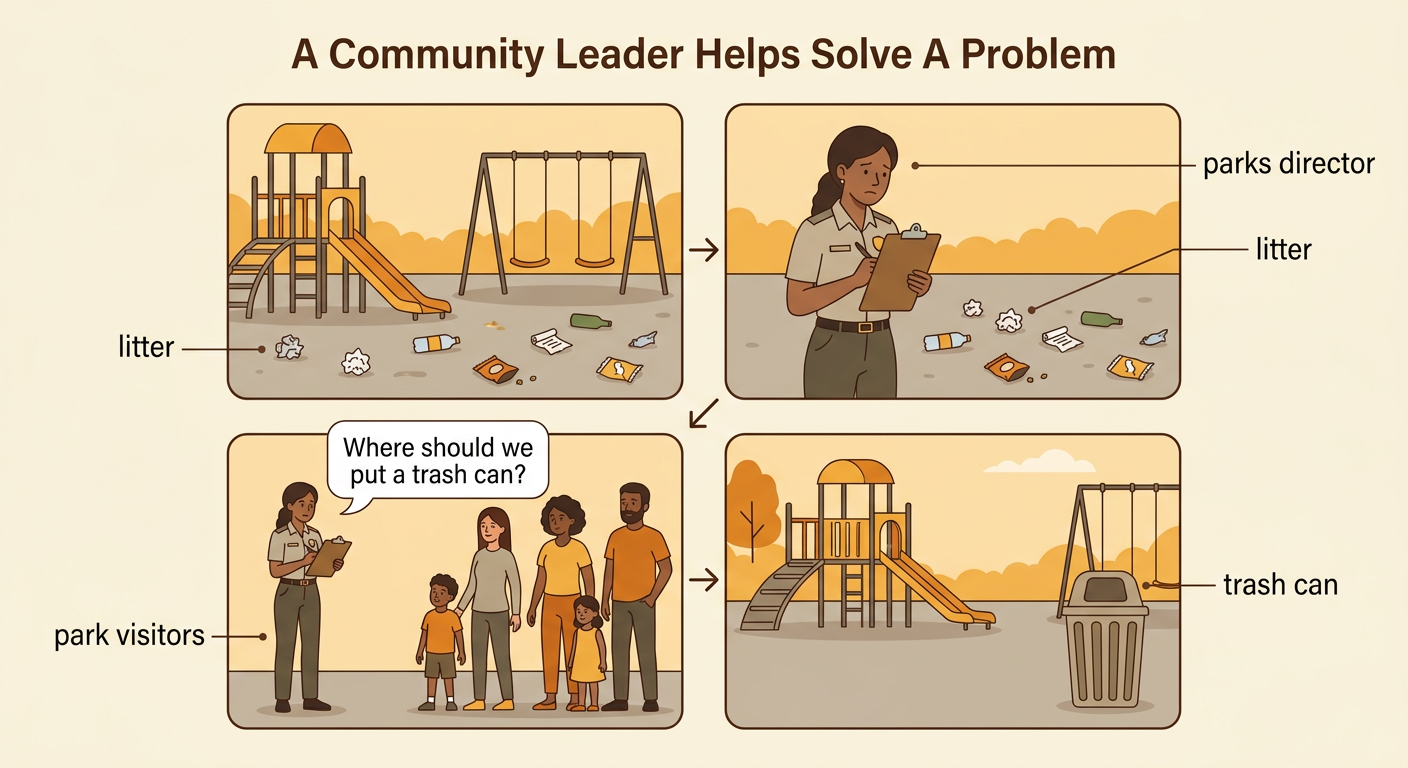
Now show how a community leader can help solve a problem. Think of a simple problem at school or in your neighborhood. You might choose litter on a playground, a broken park bench, or books left on a library floor. Draw the place, the problem, and a leader who could help. Add details that show what the leader observes or asks. Then draw one possible solution. For example, you could draw a parks director looking at litter, asking park visitors where trash cans are needed, and arranging for a trash can in an approved location. Share your drawing with a partner. Explain who the leader is, what responsibility the leader has, what question the leader asks, and how the solution may help. Listen to your partner’s ideas too.