
Comparing a Literary Scene Across Text and Film
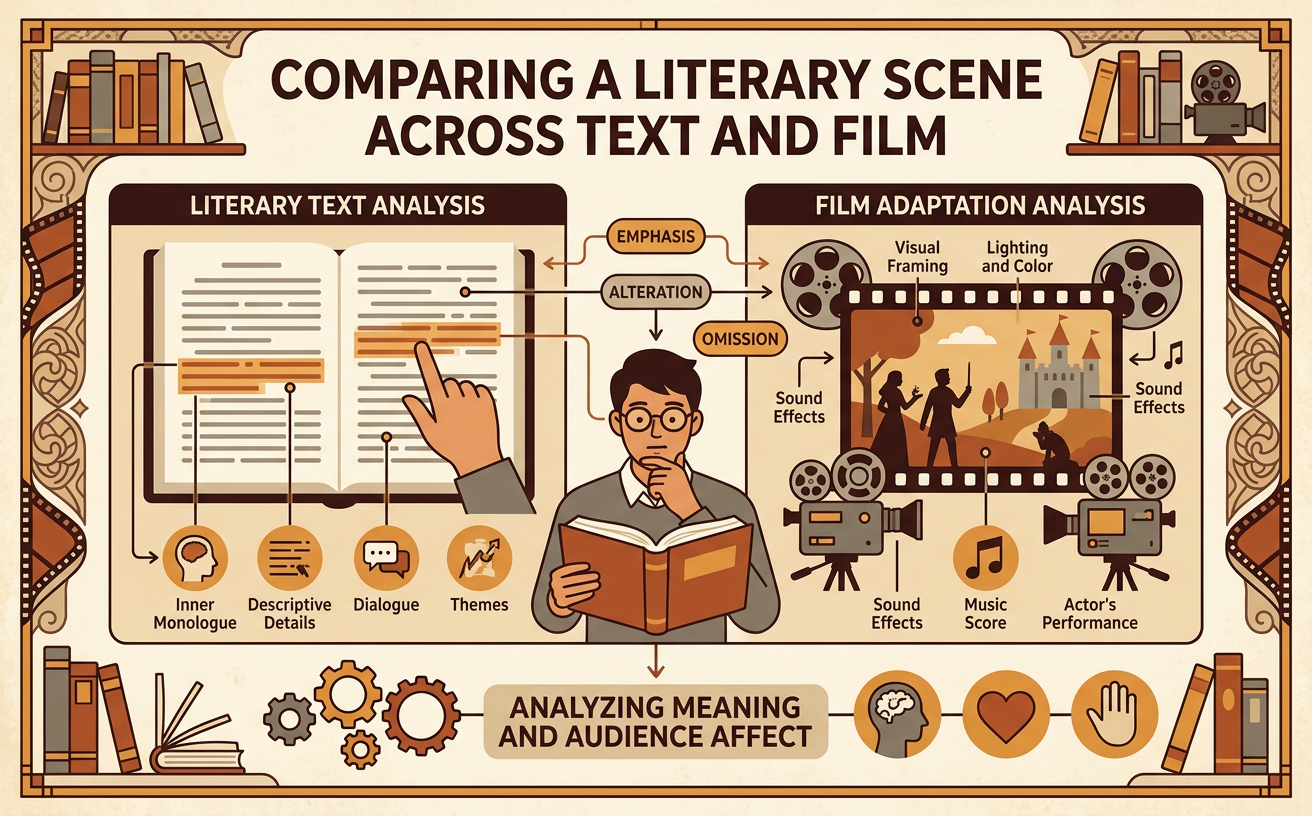
Students compare a key scene in a literary text with its film adaptation, analyzing how each medium emphasizes, alters, or omits specific details to create meaning and affect the audience.
Illustrations are auto-generated and may be placeholders. They can be refreshed to match the narration.
Identify Features of Text and Film
Literary texts and films use different tools to create meaning. A text relies on words, including dialogue, description, imagery, sentence structure, and point of view. Readers imagine the setting, characters, sounds, and pace from these details. A film communicates through acting, facial expressions, camera distance, camera angle, lighting, color, music, sound effects, editing, and setting. Viewers receive specific sights and sounds chosen by the filmmakers. For example, in the balcony scene from Romeo and Juliet, the play’s poetic dialogue reveals the characters’ intense feelings and their conflict about their family names. In a film adaptation, close-up shots can emphasize their expressions, while soft lighting and music may create a romantic mood. Neither medium is automatically better; each uses its own features to shape the audience’s understanding.

Read and View the Key Scene
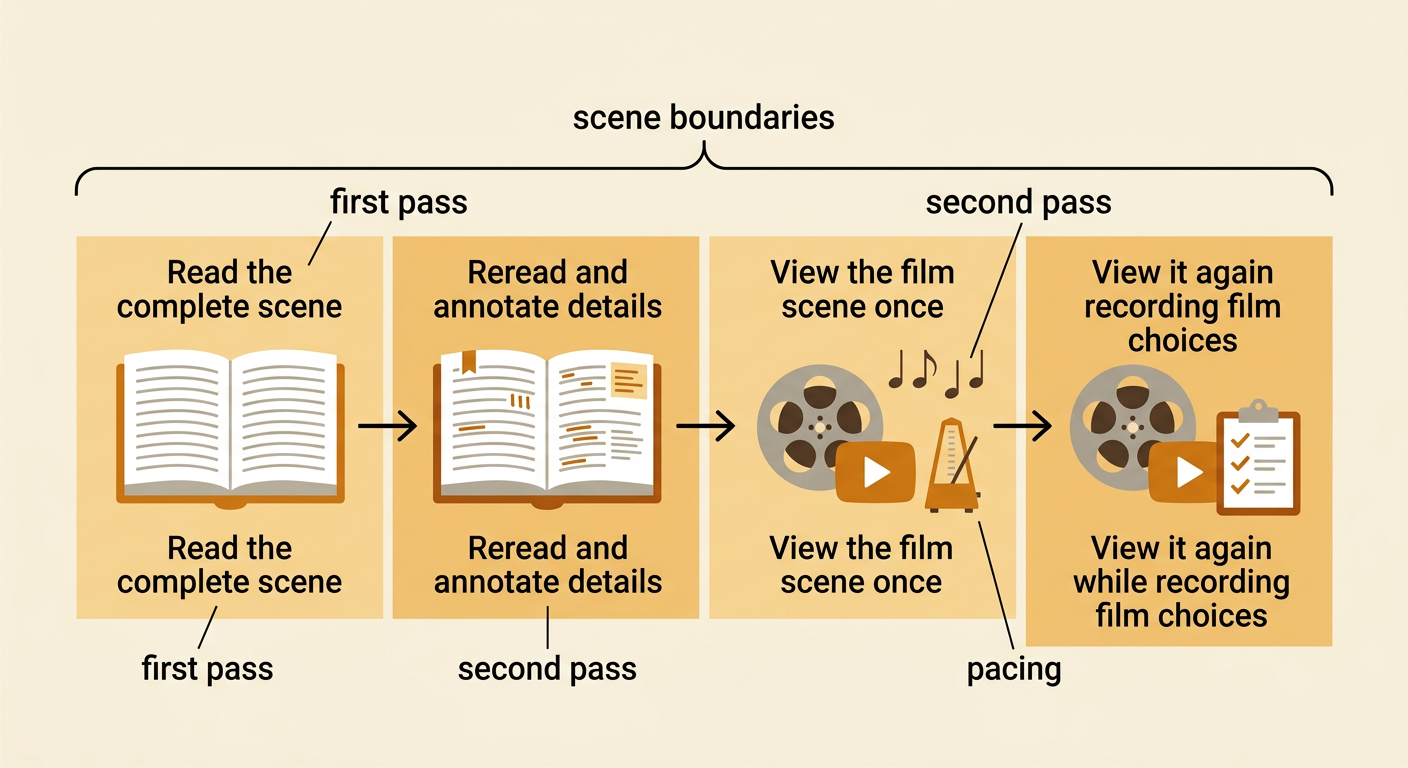
First, read the key scene closely and then view the matching film scene at least twice. During the first reading or viewing, focus on what happens and how the scene feels. During the second, pause to notice specific choices. In the text, underline important dialogue, descriptions, repeated words, and stage directions. In the film, note camera shots, acting, music, lighting, setting, and pacing. Keep the same scene boundaries so the comparison is fair. For example, when studying the balcony scene from Romeo and Juliet, begin when Romeo observes Juliet and end when the two characters separate. The written scene allows readers to pause over Juliet’s question about Romeo’s name. A film may slow the pace, use a close-up, or add silence at that moment, making the emotional conflict especially noticeable.
Record Emphases, Changes, and Omissions
Organize evidence into three categories: emphases, changes, and omissions. An emphasis is a detail that receives special attention. A change occurs when the film presents a detail differently from the text. An omission is a textual detail that the film leaves out. Record exact quotations from the text and precise observations from the film instead of making vague statements. For example, a film of Romeo and Juliet might emphasize the lovers’ reactions through close-ups, change the physical distance between them, and omit several lines from a long speech. For every observation, ask what the choice draws attention to and what viewers may understand differently because of it. An omission is not necessarily a mistake. Filmmakers often shorten dialogue to control pacing, update the setting for a new audience, or focus attention on a particular theme or relationship.

Analyze Each Medium’s Effects
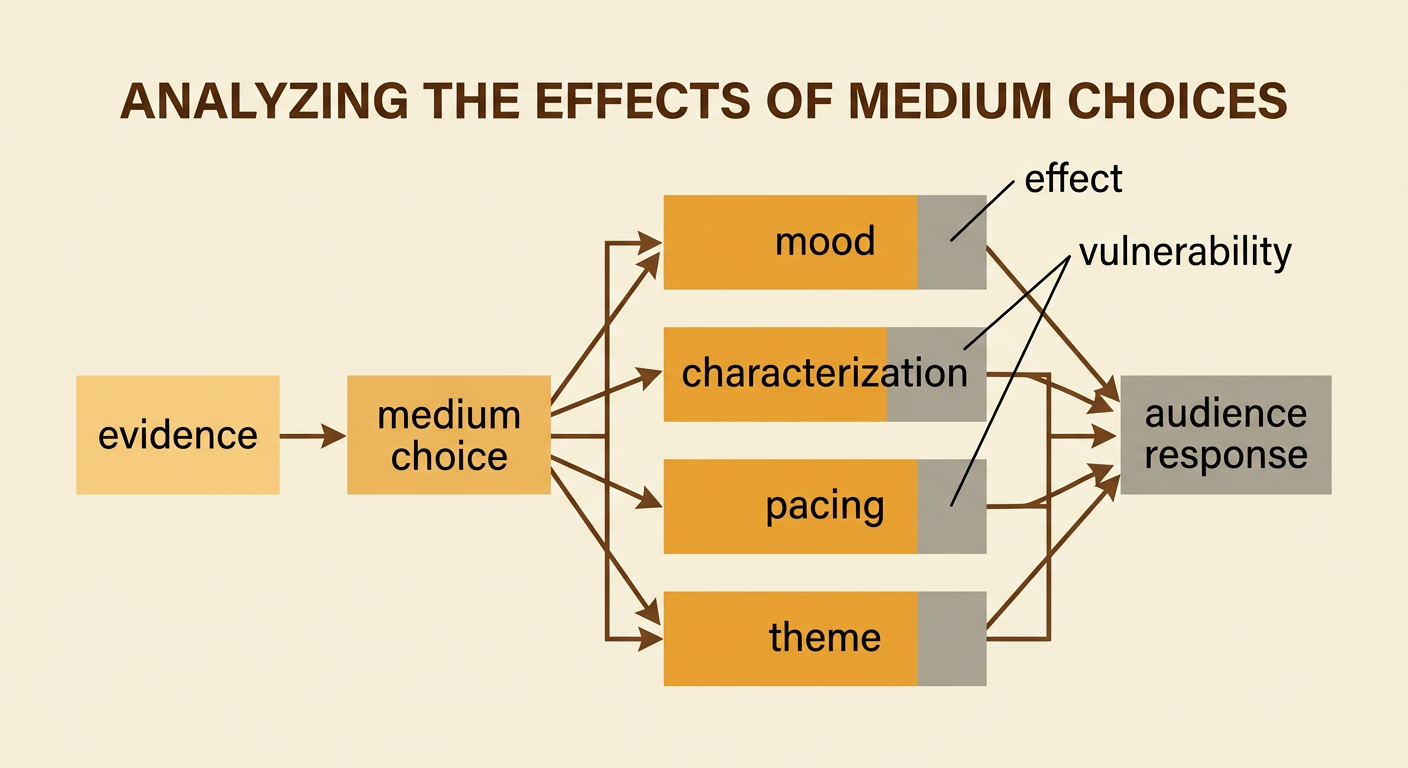
Analysis explains how a choice affects meaning, mood, characterization, pacing, or audience response. Do not stop after identifying a difference. Connect each piece of evidence to its effect and then to a larger idea in the scene. In Romeo and Juliet, the written dialogue about names develops the theme that social identity can conflict with personal love. If a film pairs those lines with close-ups and long pauses, viewers may focus more strongly on the characters’ vulnerability. If the film cuts part of the speech, the scene may feel faster and more urgent, but some of the play’s reflection on identity may be reduced. Consider the strengths and limits of each medium. Text allows readers to study language and imagine details, while film controls what viewers see and hear. Effective analysis describes these different effects without simply stating a personal preference.
Write a Comparative Analysis
A comparative analysis should make a clear claim about how the text and film represent the scene differently. Begin with a thesis that names the shared scene, the important adaptation choices, and their overall effects. Organize body paragraphs around meaningful points of comparison rather than summarizing each version separately. Each paragraph should include textual evidence, a specific film detail, and an explanation of how the difference shapes meaning. For example, a thesis might argue that the written balcony scene emphasizes conflict through extended poetic language, while the film emphasizes emotional intimacy through close-ups, pauses, and music. One paragraph could compare dialogue, and another could compare pacing and visual framing. Use transitions such as similarly, in contrast, and whereas. End by explaining what the audience gains or loses from the film’s treatment of the scene, not by declaring one version superior.
