Comparing a Literary Work with Its Source Material
Students compare a literary work with its source material to analyze how an author transforms characters, events, or ideas for a new purpose.
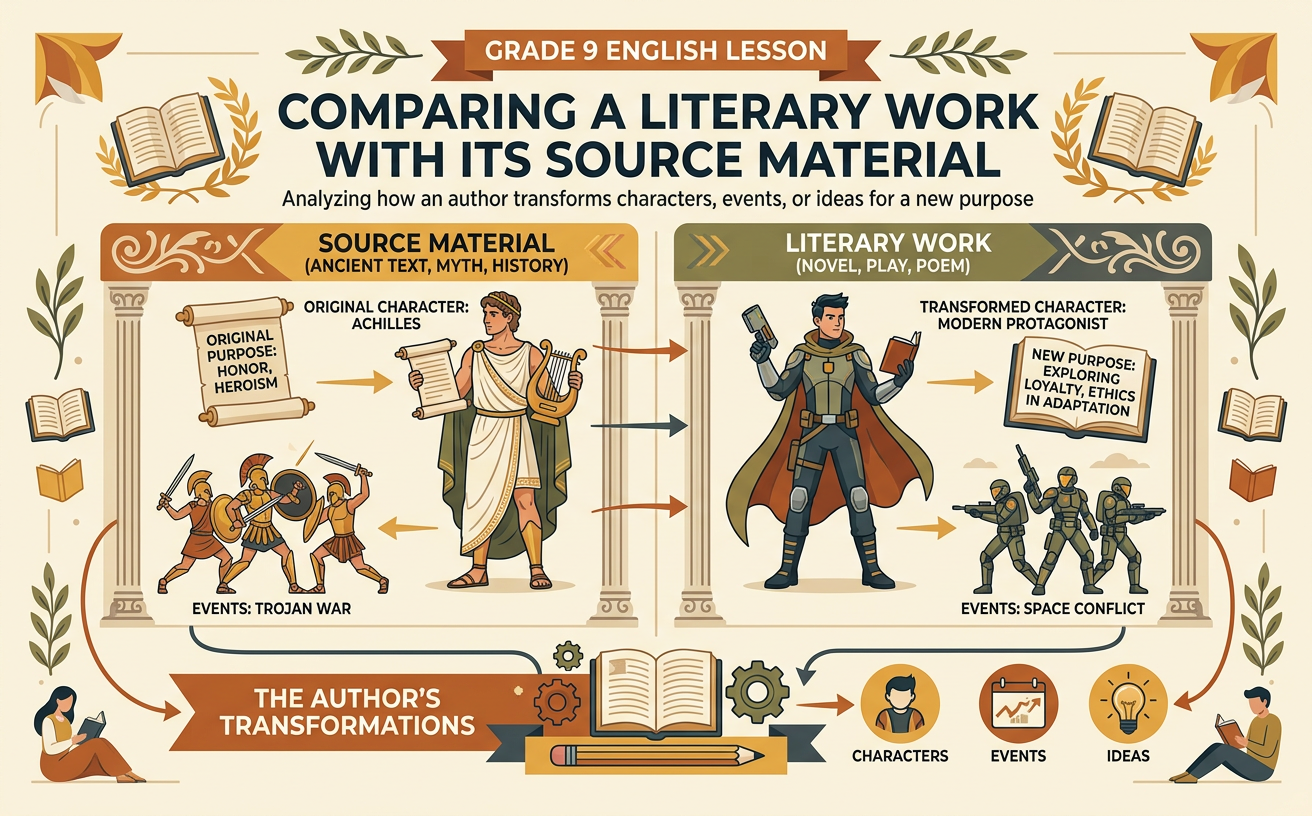
Illustrations are auto-generated and may be placeholders. They can be refreshed to match the narration.
Identify the Source and Adaptation
Source material is an earlier text, story, myth, historical account, or other work that an author uses when creating something new. An adaptation reshapes that material rather than simply copying it. Begin by recording each work’s title, author, genre, and date. Then look for evidence of a connection, such as shared characters, events, conflicts, or themes. For example, William Shakespeare drew on Arthur Brooke’s 1562 narrative poem The Tragical History of Romeus and Juliet when writing Romeo and Juliet around 1595. Both works tell of young lovers from feuding families whose secret relationship ends in death. However, Brooke wrote a long poem narrated as a warning, while Shakespeare created a stage play with dialogue, dramatic action, and complex supporting characters. Identifying this relationship provides the foundation for analyzing Shakespeare’s choices.

Review Key Elements in Each Text
Before comparing the works, review each one separately. Record its characters, setting, conflict, major events, themes, tone, genre, and point of view or method of presentation. This prevents details from the two texts from becoming confused. In Brooke’s poem, a narrator summarizes and comments on the lovers’ actions. The story unfolds over many months, and the opening presents their behavior as an example of disobedience and unwise desire. Shakespeare’s play presents events through dialogue and action over only a few days. It also gives greater importance to characters such as Mercutio, whose wit and Queen Mab speech add humor, imagination, and tension. Both works include the family feud, secret marriage, failed message, mistaken belief about Juliet’s death, and the lovers’ deaths. A careful review reveals what Shakespeare inherited before showing what he changed.

Compare Important Similarities and Changes
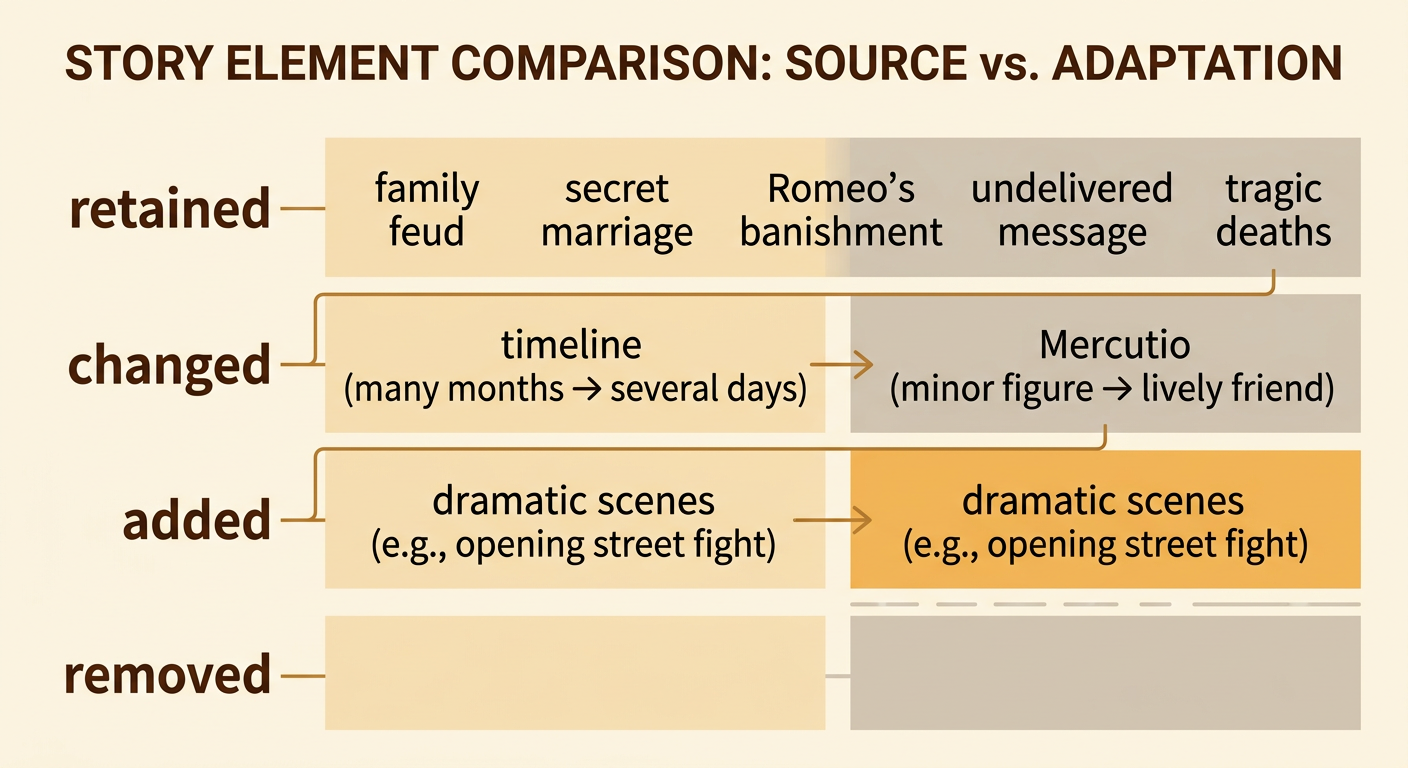
Next, place matching elements side by side and classify them as retained, changed, added, or removed. Focus on changes that affect the whole work rather than minor differences in wording. Shakespeare retains the central conflict between two feuding families, the secret marriage, Romeo’s banishment, the undelivered message, and the tragic deaths. However, he greatly shortens the action from many months to several days, making the romance and conflict feel urgent. He also expands Mercutio from a minor figure in Brooke’s poem into Romeo’s lively friend. Mercutio’s death becomes a turning point: Romeo kills Tybalt in anger and is banished. Shakespeare also adds dramatic scenes, including the opening street fight, that allow the audience to witness the feud directly. These comparisons show both the recognizable framework of the source and the adaptation’s distinctive choices.
Analyze the Author’s Transformations
To analyze a transformation, explain what changed, how it changed, and why the author may have made that choice. Support the explanation with specific evidence from both works. Consider the new genre, audience, historical setting, theme, or purpose. For example, Shakespeare transforms Brooke’s narrated tale into a drama performed before an audience. Instead of merely reporting violence, he stages confrontations between servants, Tybalt, Mercutio, and Romeo. This choice makes the feud visible and immediate. Shakespeare also expands Mercutio’s role and places his death at the center of the plot. Mercutio’s curse, “A plague o’ both your houses,” connects his death to both families’ hatred. The transformation shifts attention from only the lovers’ poor decisions toward the destructive effects of a divided society. This interpretation links Shakespeare’s structural and character changes to a broader purpose.

Explain the Effects of the Changes
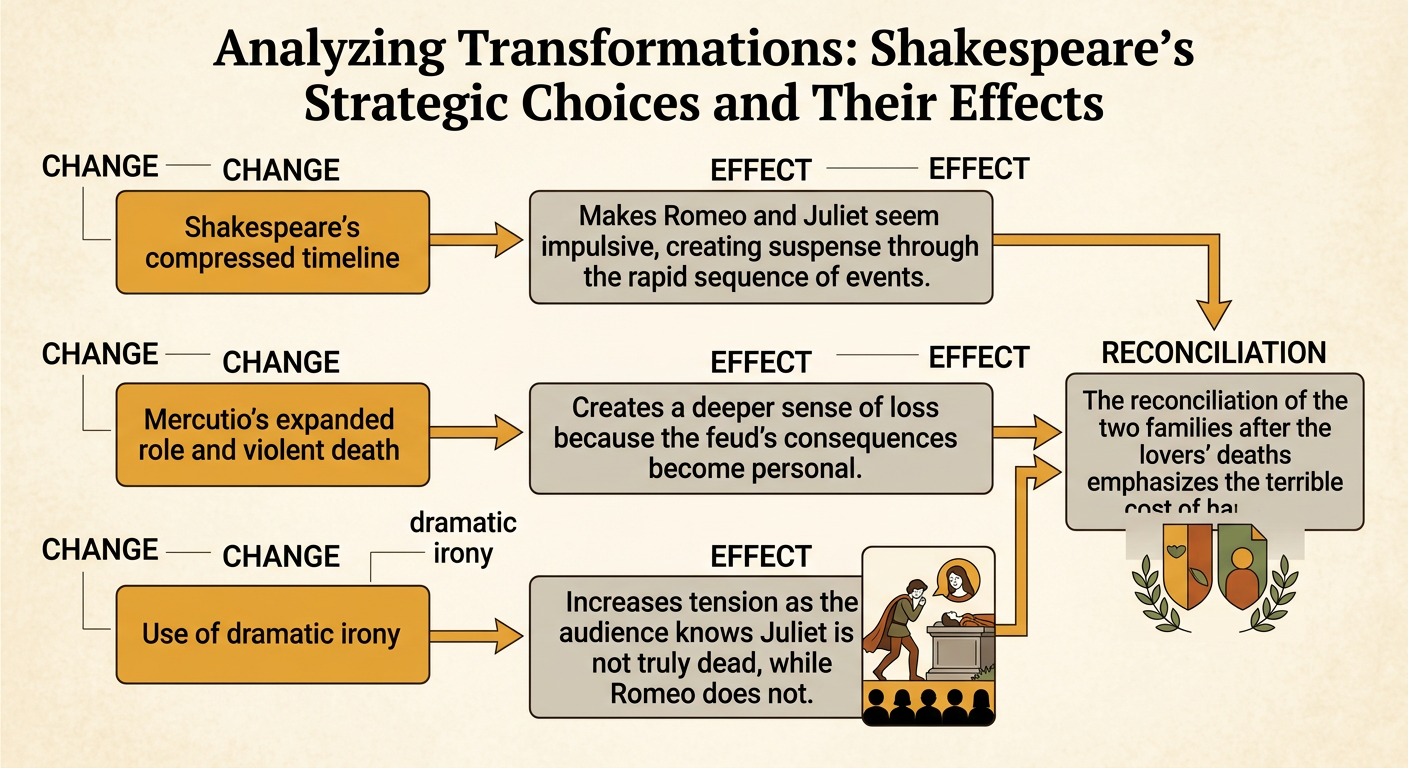
Finally, explain how the transformations affect the audience’s understanding, emotions, or interpretation of the work. An effect is not the same as a change: the change is what the author does, while the effect is what that choice causes. Shakespeare’s compressed timeline makes Romeo and Juliet’s decisions seem impulsive and creates suspense because events happen rapidly. The expanded role and violent death of Mercutio deepen the audience’s sense of loss and make the feud’s consequences personal. Dramatic irony also increases tension because the audience knows Juliet is not truly dead while Romeo does not. When both families reconcile after the deaths, the ending emphasizes the terrible cost of hatred. A strong explanation follows a clear chain: identify the source element, describe the transformation, cite evidence, and explain its effect. This completes the comparison by showing why the author’s choices matter.