Comparing a Written Story with Its Film Adaptation
Students compare a written scene with its filmed version and analyze how production choices change the audience’s experience of the story.

Illustrations are auto-generated and may be placeholders. They can be refreshed to match the narration.
Review the Written Scene
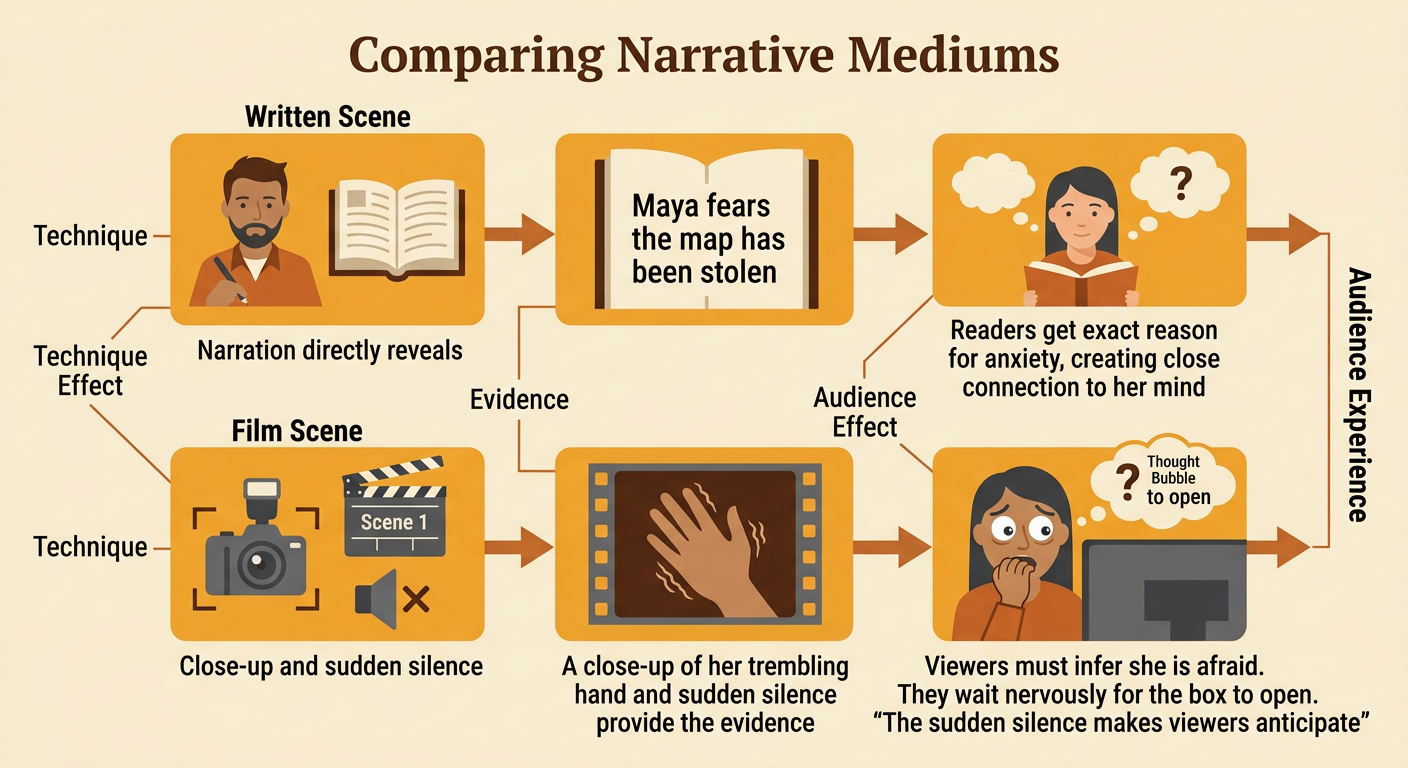
Read the written scene closely before comparing it with the film. Identify the setting, characters, actions, dialogue, and conflict. Also notice techniques unique to writing, such as word choice, imagery, pacing, narration, and a character’s private thoughts. For example, imagine a story in which Maya enters a dark attic during a storm to search for her grandfather’s missing map. The narrator states, “Maya’s hand shook as she reached for the dusty box. She feared the map had already been taken.” These sentences directly reveal Maya’s actions and thoughts. Underline important details and record the mood they create. The words “shook,” “dusty,” and “feared” help create a tense, mysterious mood. These details provide a clear basis for evaluating what the film keeps, changes, adds, or removes.

Watch the Film Adaptation
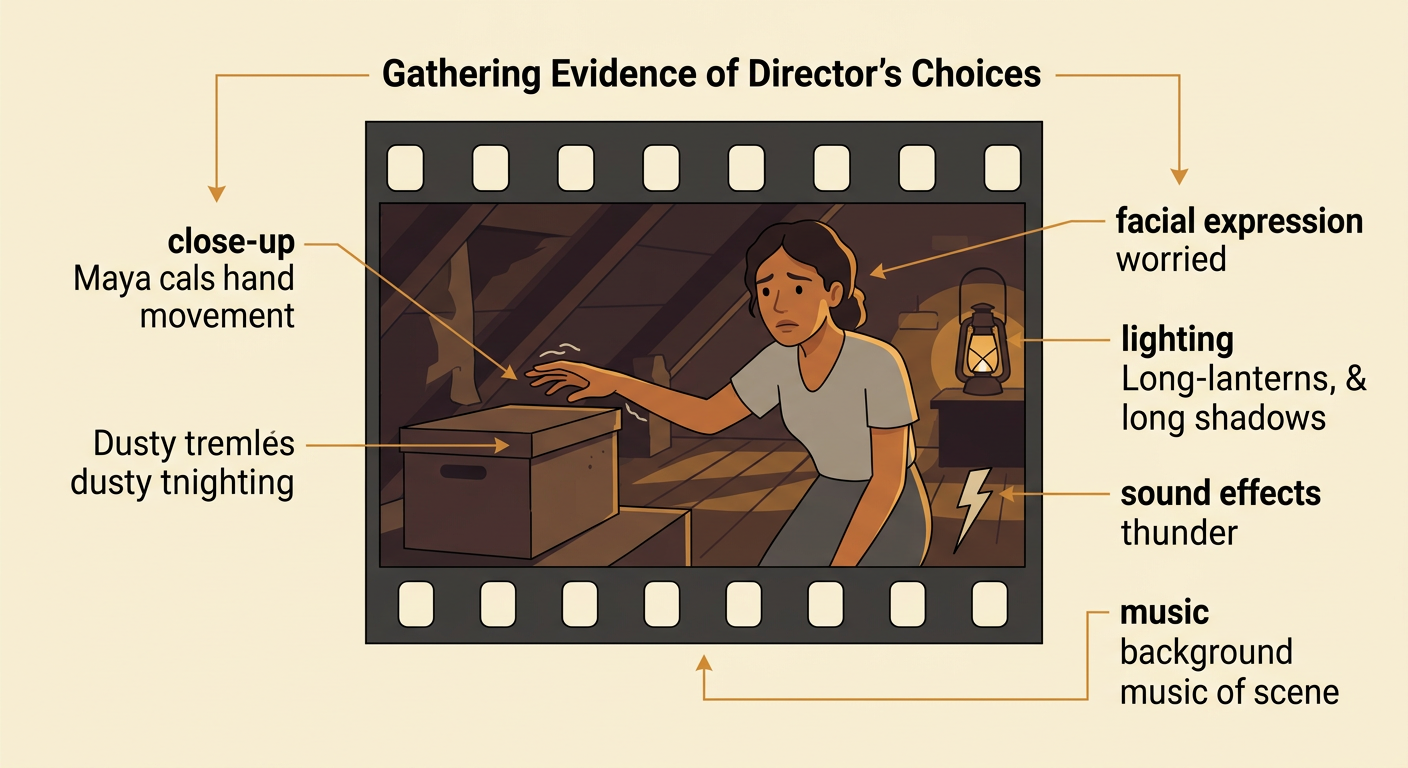
Watch the filmed scene carefully, focusing on what you can see and hear. Record details about the actors’ movements, facial expressions, costumes, setting, lighting, music, sound effects, camera angles, and editing. Avoid deciding immediately whether the film is better or worse than the story. Instead, gather evidence about the director’s choices. In the film version of Maya’s attic search, the camera might show a close-up of her trembling hand while thunder sounds outside. A dim lantern may cast long shadows, and quiet music may become faster as Maya approaches the box. The film does not need a narrator to say that Maya is afraid because the actor’s expression, the sound, and the close-up communicate her fear. If possible, watch the scene twice: once for the overall experience and once to take detailed notes.
Identify Similarities and Differences
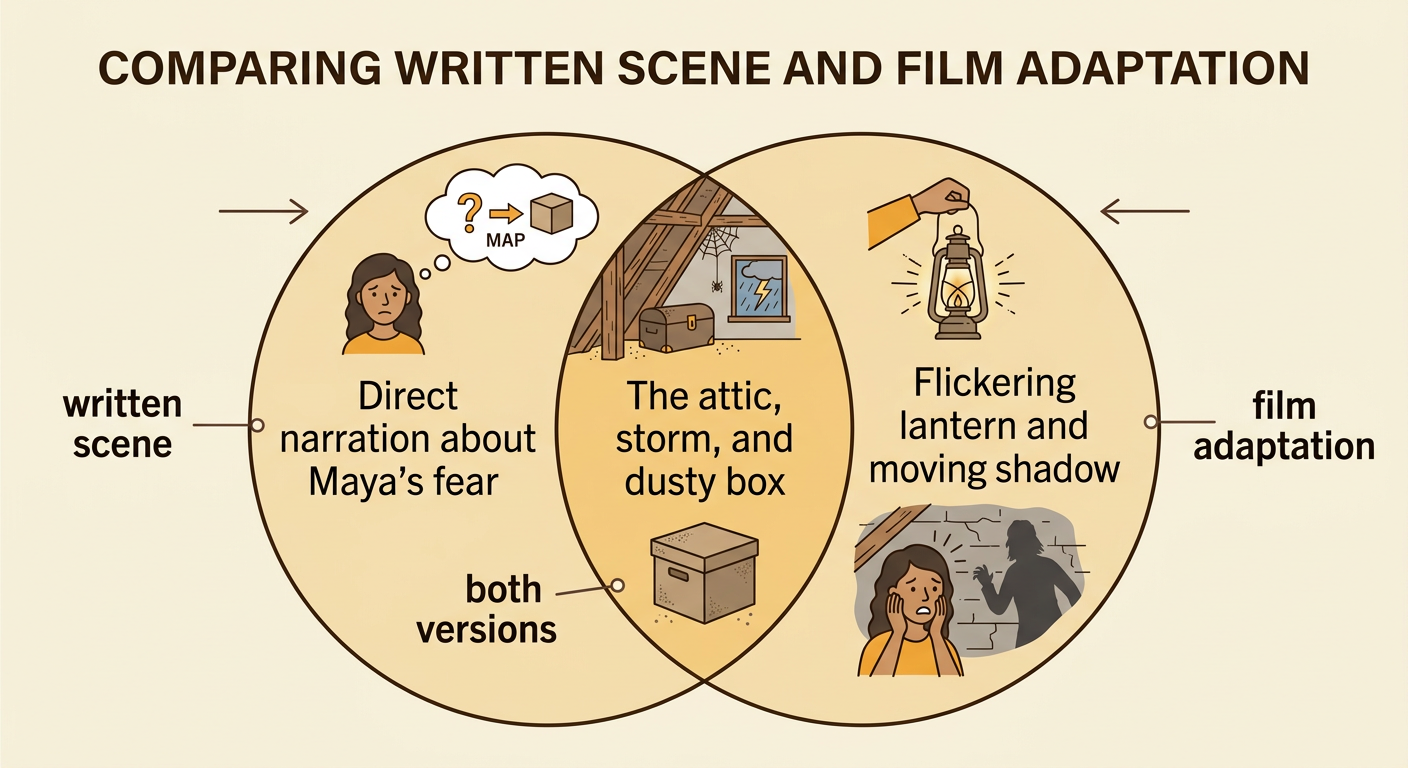
Organize evidence from both versions before analyzing the reasons for the changes. A Venn diagram or comparison chart can separate details found only in the written scene, details found only in the film, and details shared by both. Use specific evidence rather than broad statements. For example, both versions may show Maya entering the attic, hearing a storm, and finding the dusty box. Only the written version may directly explain that she fears someone stole the map. Only the film may add a flickering lantern and show a shadow moving behind her. Also notice changes in sequence, dialogue, setting, or character behavior. A difference is not automatically a mistake. Filmmakers often change details because a movie has time limits and uses images and sounds instead of narration. Accurate comparison prepares you to explain how each choice affects meaning and mood.
Analyze Film Techniques
Film techniques are deliberate tools that guide the viewer’s attention and emotions. Camera distance affects what viewers notice: a close-up emphasizes a face or object, while a wide shot reveals the setting. Camera angle can make a character appear powerful, weak, safe, or threatened. Lighting and color help establish mood. Music and sound effects create tension, excitement, calm, or surprise. Editing controls pacing by determining how long each shot lasts and how quickly shots change. In Maya’s attic scene, a low-angle shot of the tall shelves could make the room feel threatening. A close-up of the box could signal its importance. Rapid cuts between Maya, the box, and a moving shadow could increase suspense, while sudden silence before the box opens could make viewers anticipate danger. Name the technique, cite the exact moment, and explain its likely purpose.

Explain the Effects on the Audience
Complete the comparison by explaining how each medium shapes the audience’s experience. Connect a specific technique to an effect, then support the connection with evidence. You might use this structure: The creator uses a technique, which causes the audience to feel or understand something because of a specific detail. For example, the written scene directly states that Maya fears the map was stolen, so readers understand the exact cause of her anxiety. The film’s close-up of her trembling hand and the sudden silence do not explain her thoughts directly. Instead, they make viewers infer her fear and wait nervously for the box to open. The written version may create a closer connection to Maya’s mind, while the film may create stronger immediate suspense through sight and sound. A strong response compares both effects without simply saying that one version is better.