
Comparing Accounts Across Print and Multimedia
Students compare a written account and a multimedia account of the same subject to determine how each medium emphasizes different details.
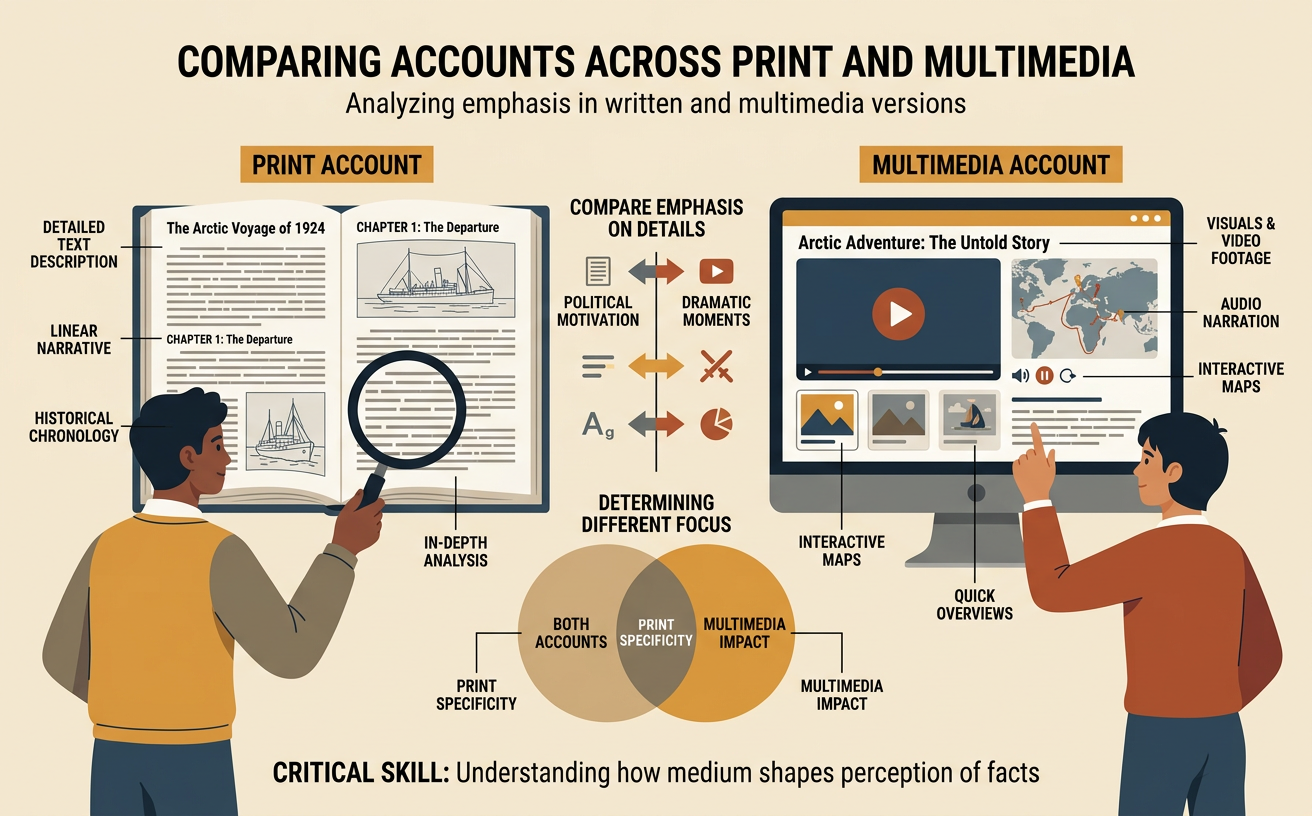
Illustrations are auto-generated and may be placeholders. They can be refreshed to match the narration.
Identify Each Medium’s Features
Begin by identifying how each account delivers information. A print account may use paragraphs, quotations, headings, photographs, and captions. Readers control the pace and can reread difficult passages. A multimedia account may combine narration, video, still images, music, sound effects, interviews, and on-screen text. Its creators control the sequence and timing. For example, consider a newspaper article and a documentary clip about the 1963 March on Washington. The article might explain the event’s goals, list participating organizations, and quote speakers. The clip might show the size of the crowd, play part of Martin Luther King Jr.’s speech, and include reactions from witnesses. Before comparing content, note these features. They reveal what each medium can present especially well and help explain why the two accounts may create different impressions.

Record Key Details
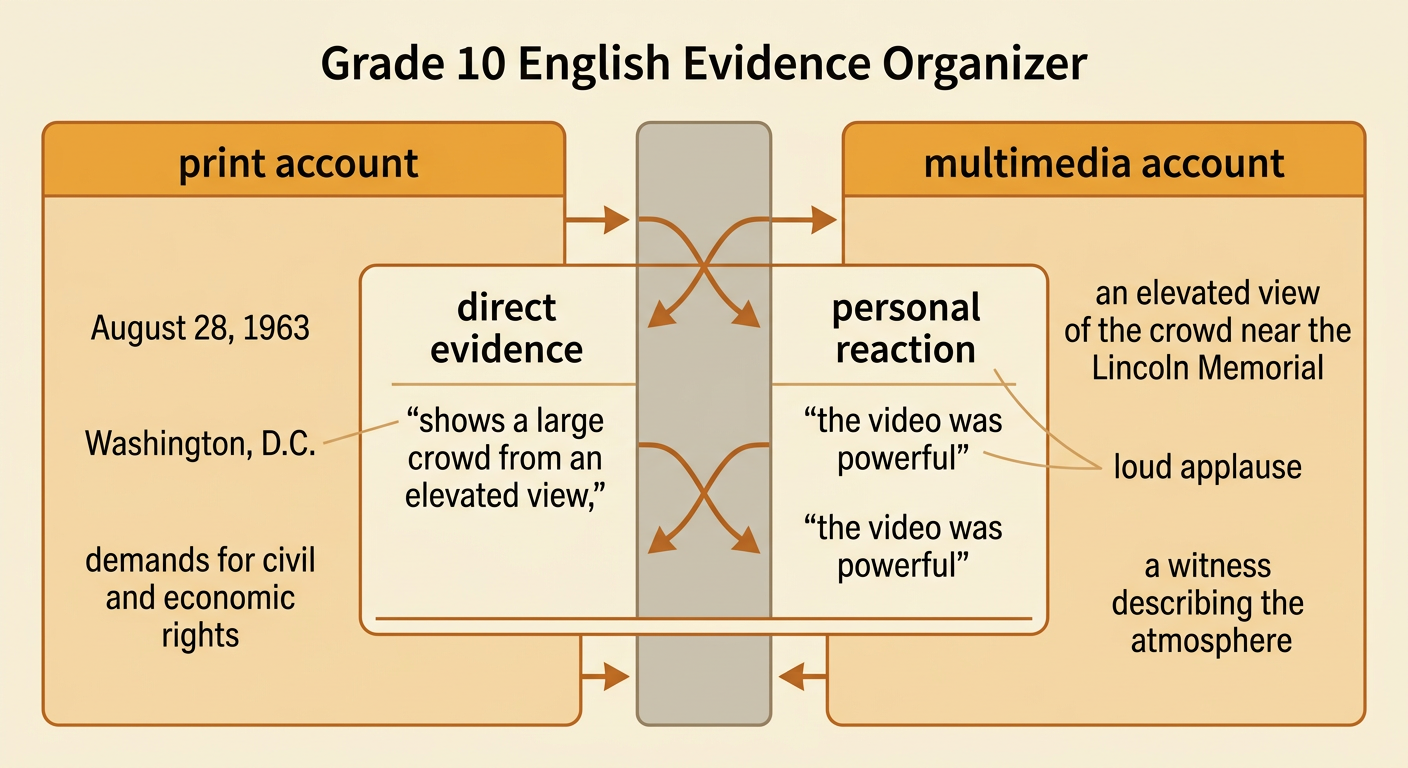
Next, record the important details in each account before judging their emphasis. Look for people, events, dates, places, causes, effects, statistics, quotations, and descriptions. Separate what the account states directly from your own reaction. A useful organizer has one column for the print account and another for the multimedia account. In an article about the March on Washington, you might record the date, August 28, 1963; the location, Washington, D.C.; and the demand for civil and economic rights. From a documentary clip, you might record images of the crowd near the Lincoln Memorial, the sound of applause, and a witness’s description of the atmosphere. Use precise notes rather than vague comments. Writing “shows a large crowd from an elevated view” is more useful than writing “the video was powerful.”
Compare Emphasis and Omissions
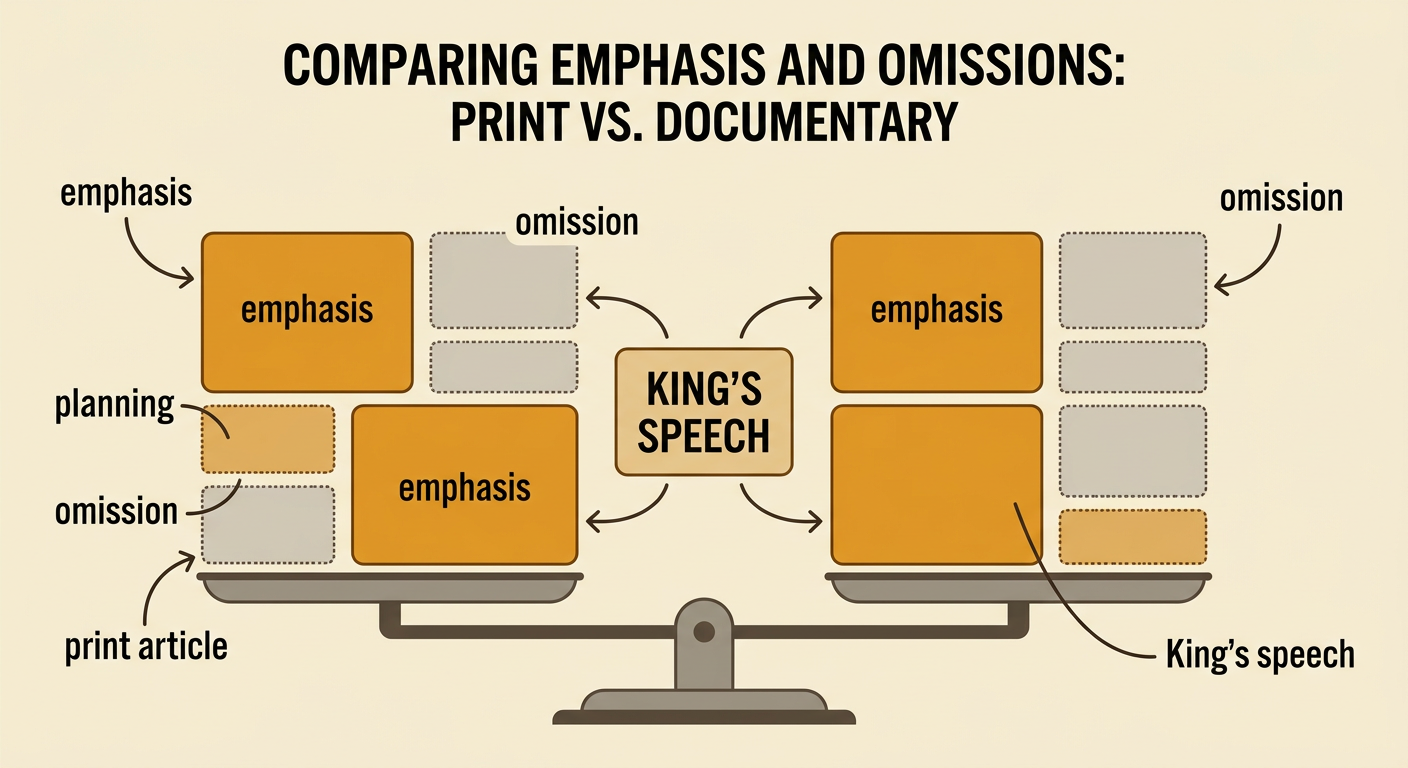
Emphasis is the extra attention an account gives to a detail through space, repetition, position, volume, imagery, or emotional intensity. An omission is a relevant detail that an account does not include. Omission does not automatically mean the account is inaccurate; time, space, purpose, and audience may limit what is presented. For example, a long article about the March on Washington might devote several paragraphs to planning, participating organizations, and policy demands. A short video might emphasize King’s speech by using archival footage, close-ups, and sustained audio while saying little about organizers who prepared the event. Compare the amount and type of attention each detail receives. Ask which people, ideas, or moments become most memorable and which remain less visible. Then describe the difference neutrally before deciding why it matters.
Analyze the Medium’s Impact
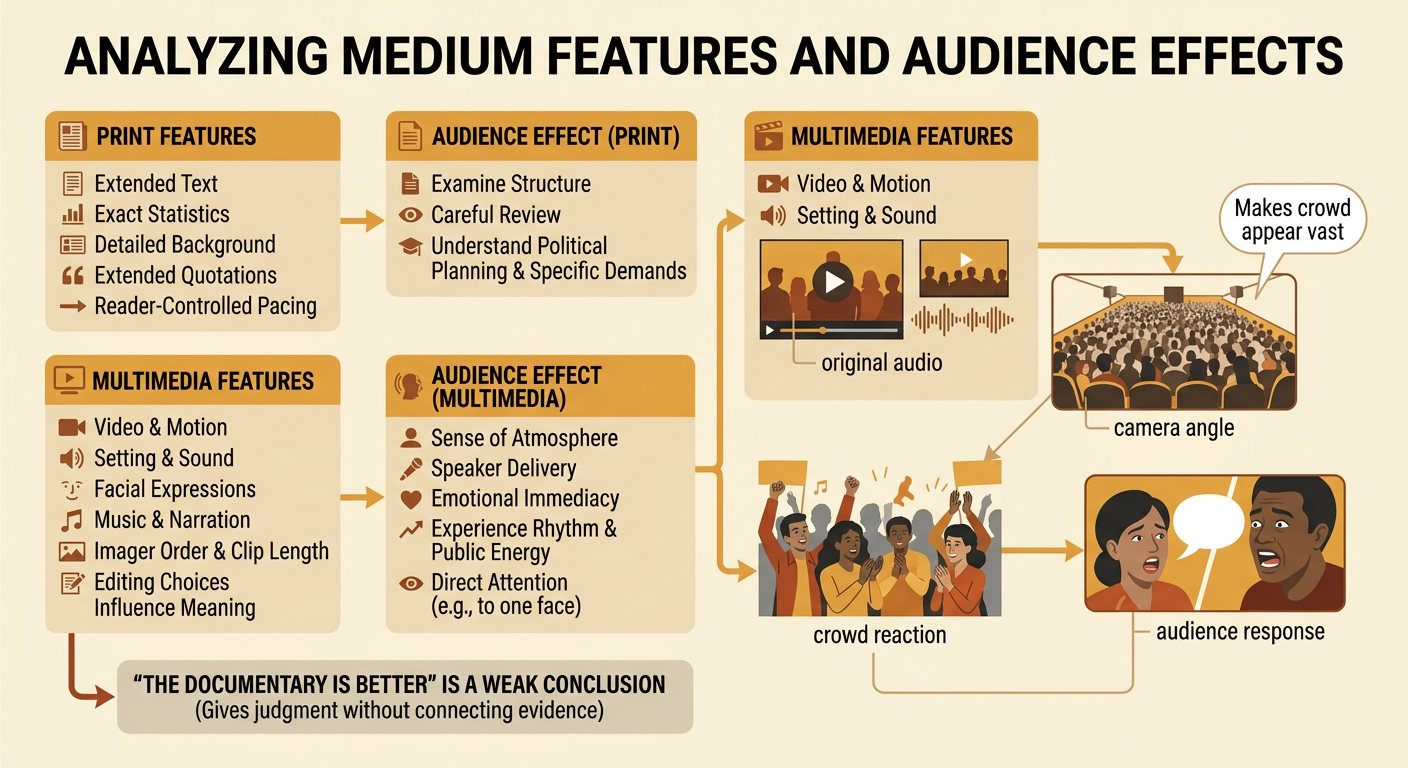
After identifying differences, explain how the medium shapes understanding and response. Print can provide detailed background, exact statistics, extended quotations, and a structure readers can examine at their own pace. Multimedia can make voices, movement, facial expressions, setting, and sound immediately noticeable. Editing choices also matter: camera angle, image order, music, narration, and clip length can make one detail seem central. For example, hearing King’s voice and the crowd’s applause may help viewers experience the speech’s rhythm and public energy. A written account, however, may better explain the political planning and specific demands surrounding the event. Do not claim that one medium is always superior. Instead, connect a feature to an effect: “Because the documentary includes original audio, it emphasizes the speaker’s delivery and the audience’s response.” This reasoning explains how presentation influences meaning.
Write an Evidence-Based Comparison
Write a comparison that makes a clear claim, supports it with evidence from both accounts, and explains how each medium creates its emphasis. Begin by naming the shared subject and the main difference. Then cite or describe specific evidence from the written and multimedia accounts. End by explaining the effect on the audience’s understanding. For example: “Both accounts present the March on Washington as a major civil rights demonstration, but the article emphasizes organization and goals, while the documentary emphasizes the experience of hearing the speeches. The article names participating groups and explains their demands. In contrast, the documentary uses archival footage, original audio, and crowd reactions. As a result, the article gives readers broader context, while the documentary makes the event’s public energy more immediate.” Use accurate verbs such as explains, shows, quotes, highlights, and omits. Avoid unsupported judgments such as “the video is better.”
