
Comparing and Contrasting Story Elements
Students compare and contrast two characters, settings, or events in a story using specific details from the text.
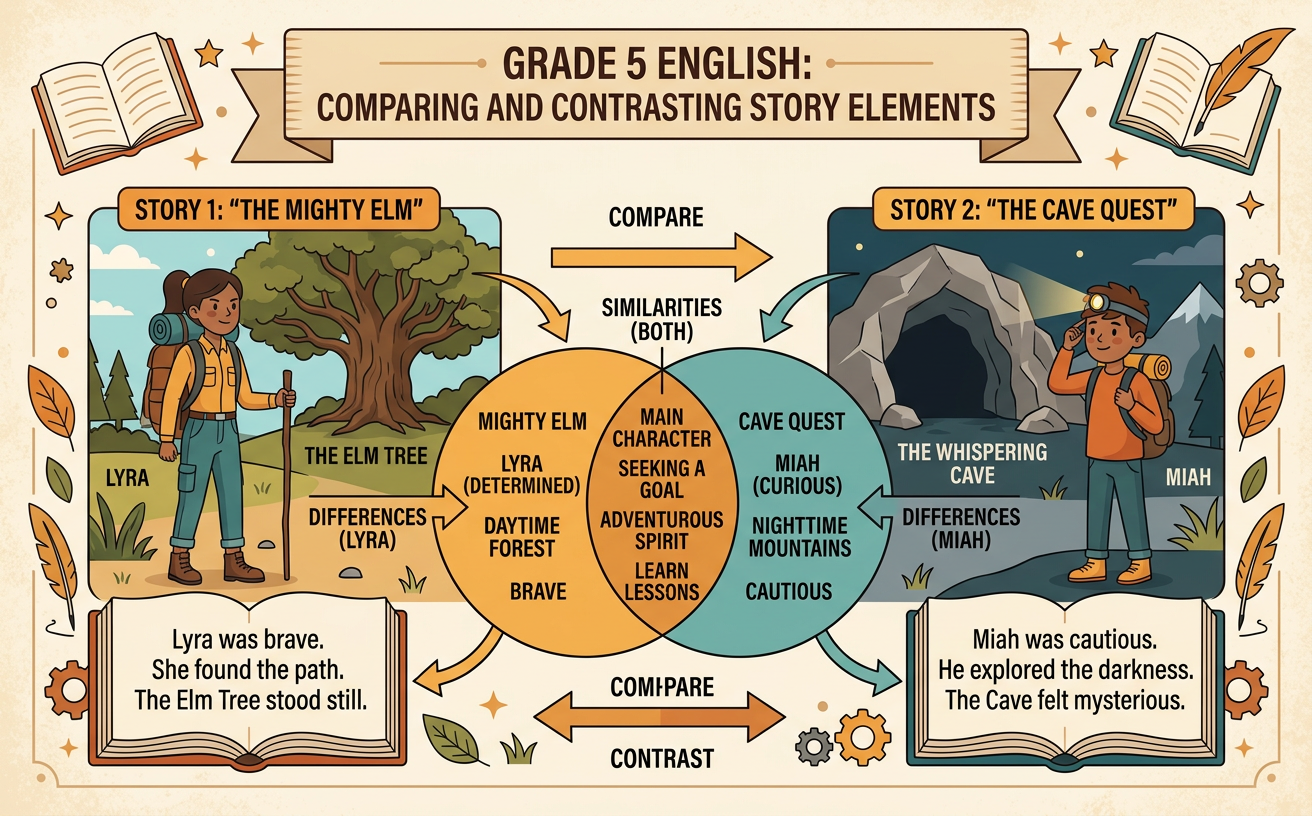
Illustrations are auto-generated and may be placeholders. They can be refreshed to match the narration.
Review Key Story Elements
Stories are built from characters, settings, and events. Characters are the people, animals, or imagined beings who act in the story. A setting is where and when the story takes place. Events are important actions that move the plot forward. When comparing, look for ways two elements are alike. When contrasting, look for ways they are different. For example, in a story about a community garden, Sofia and Malik are both volunteers. Sofia carefully makes a plan before planting, while Malik quickly begins digging. The garden is busy and sunny in the morning but quiet and shady in the evening. A comparison should name the elements clearly and describe meaningful similarities and differences, not minor facts such as the number of letters in each character’s name.

Read and Identify Text Details
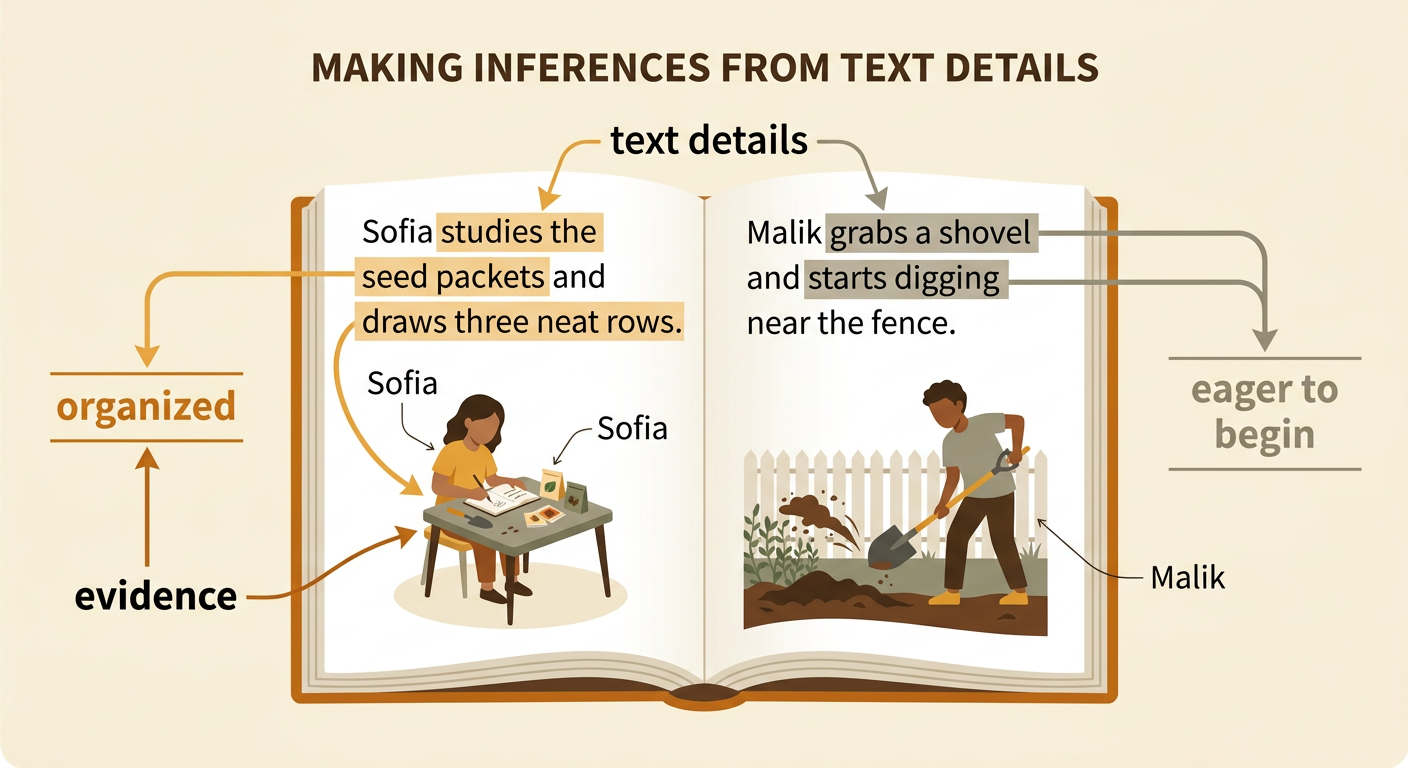
To compare story elements accurately, first read closely and identify specific details. Notice what characters say, think, feel, and do. Also note descriptions of the setting and explanations of important events. Imagine the text says, “Sofia studied the seed packets and drew three neat rows. Malik grabbed a shovel and started digging near the fence.” These details reveal that Sofia plans before acting, while Malik acts quickly. Underline or record the exact words that support each idea. Do not rely only on guesses or personal opinions. If you say Sofia is organized, connect that conclusion to her careful drawing of the rows. If you say Malik is eager, point to how he starts digging immediately. Strong comparisons are based on evidence the author includes in the text.
Choose Elements to Compare
Choose two or more elements from the same category so the comparison is clear. You might compare Sofia and Malik as characters, the garden in the morning and evening as settings, or planting seeds and repairing the fence as events. Then decide on useful points of comparison. For characters, consider goals, traits, actions, feelings, challenges, and interactions. For settings, consider place, time, mood, and how the setting affects the plot. For events, consider causes, steps, results, and character responses. For example, Sofia and Malik share the goal of improving the garden, but they approach the work differently. Sofia plans each step, while Malik learns by starting the task. Their shared goal and different approaches create a focused comparison supported by story details.

Complete a Comparison Chart
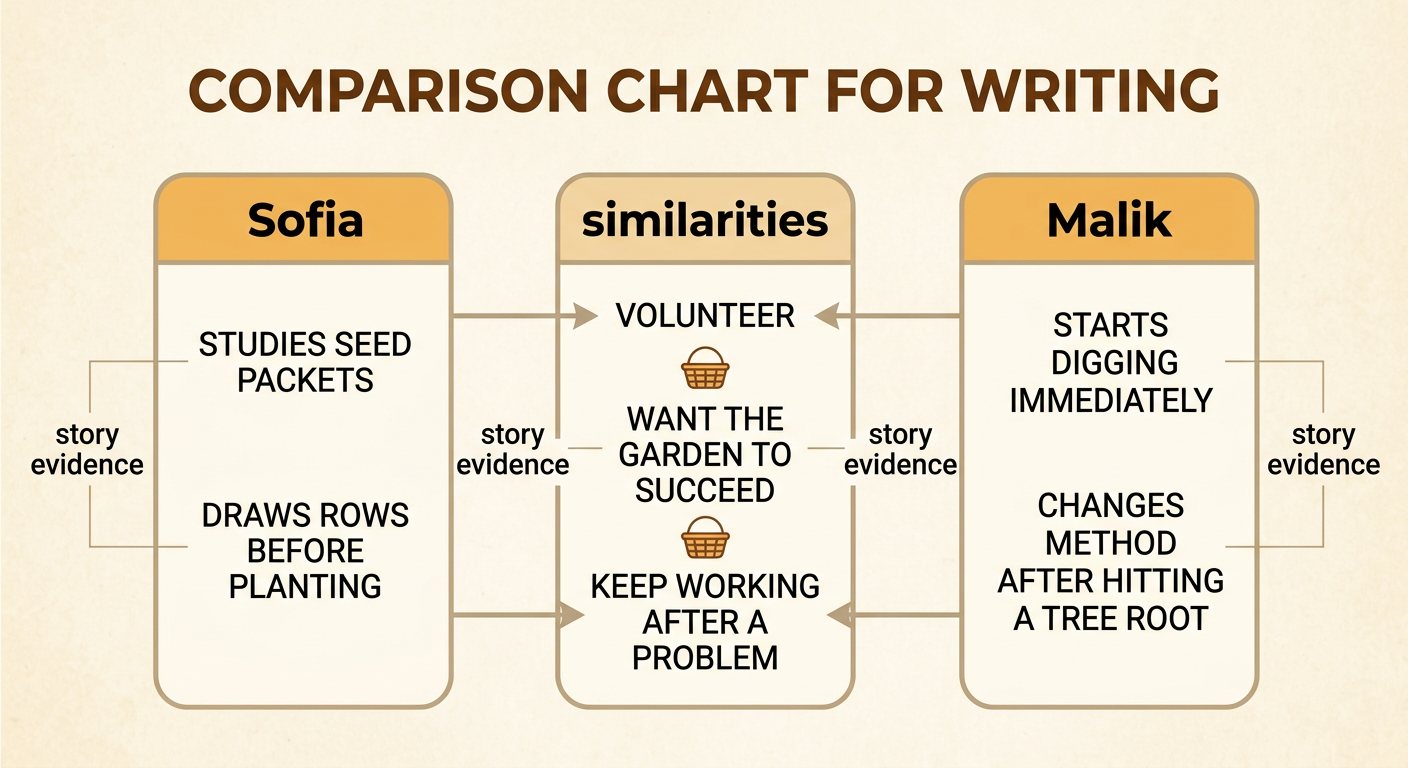
A comparison chart helps organize evidence before writing. Use three columns: one for the first element, one for similarities, and one for the second element. In Sofia’s column, record that she studies seed packets and draws rows before planting. In the middle, write that both characters volunteer, want the garden to succeed, and continue working after a problem occurs. In Malik’s column, record that he begins digging immediately and changes his method after hitting a tree root. Include specific actions rather than vague words. “Sofia plans by drawing rows” is stronger than “Sofia is good.” Check that every note is supported by the story. The middle column should contain only shared details, while the outside columns should show details that are different.
Write an Evidence-Based Comparison
Turn the chart into a paragraph with a clear claim, specific evidence, and an explanation. Begin by naming the elements and the main similarity or difference. Then use details from the text to support the claim. Linking words such as both, similarly, however, unlike, and while help show relationships. For example: “Sofia and Malik both want the community garden to succeed, but they approach work differently. Sofia studies the seed packets and draws rows before planting, showing that she is a careful planner. Malik starts digging immediately, showing that he prefers to learn by doing. However, both continue working when a tree root causes a problem. Their actions show that different working styles can still support the same goal.” End by explaining what the comparison helps readers understand about the characters or story.
