Comparing and Contrasting Two Stories
Students identify and explain similarities and differences in the themes, settings, and plots of two stories featuring similar characters.
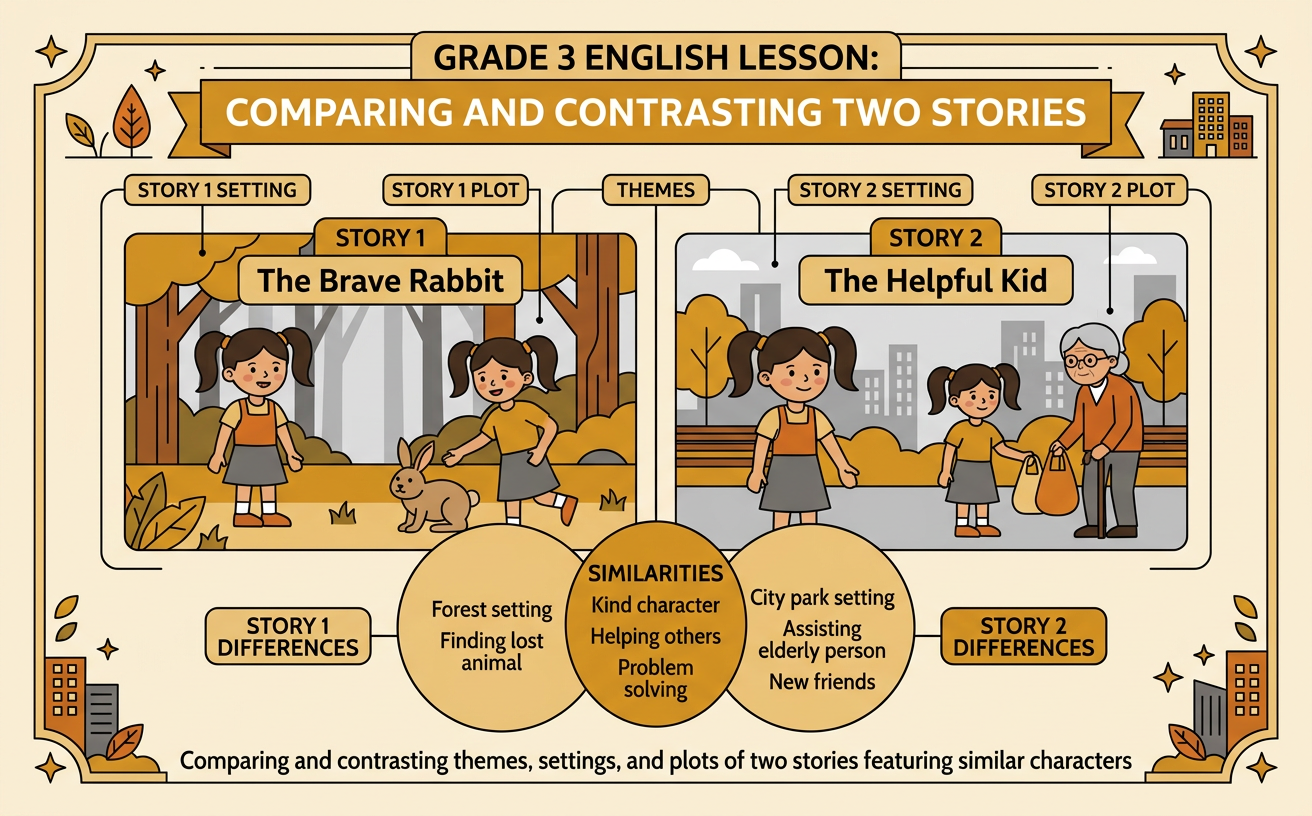
Illustrations are auto-generated and may be placeholders. They can be refreshed to match the narration.
Review Story Elements
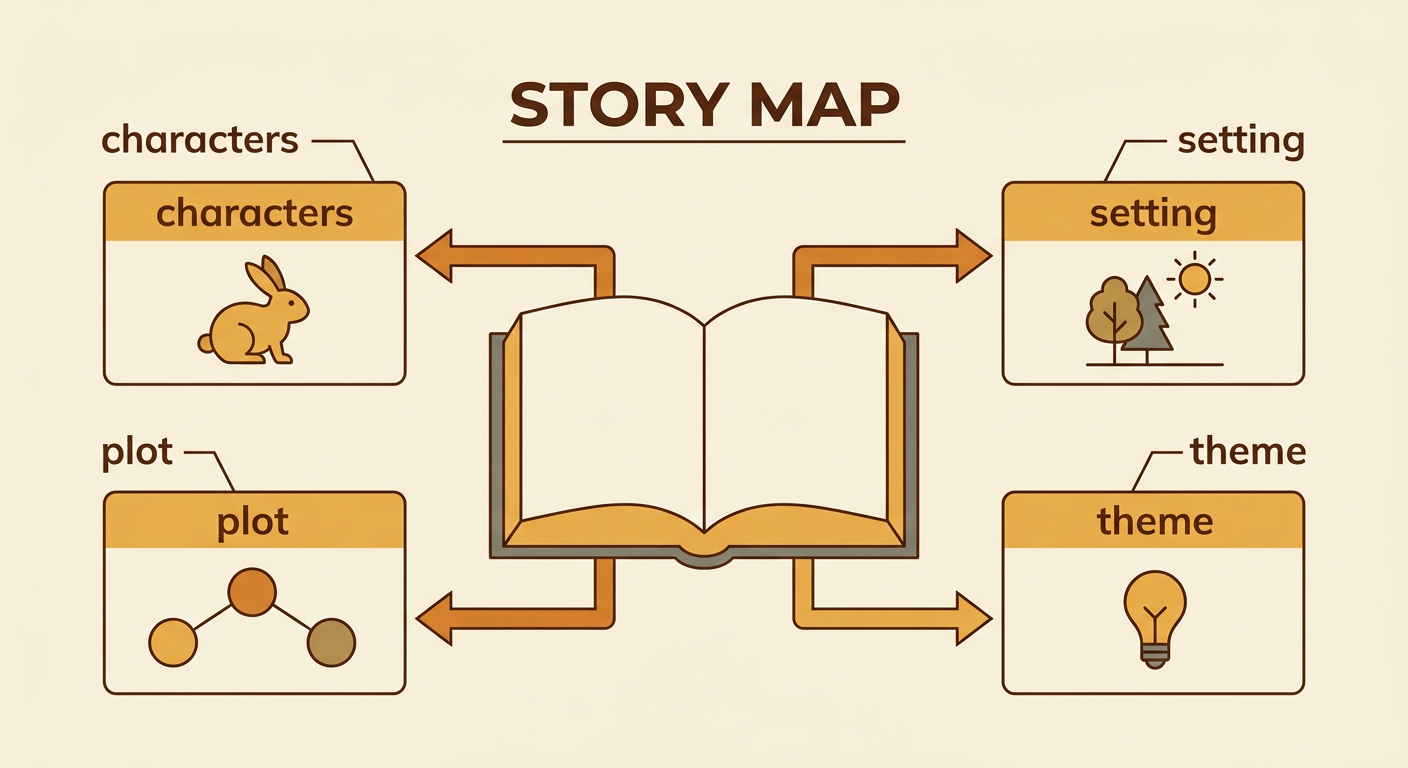
Before comparing stories, review three important story elements: theme, setting, and plot. The theme is the message or lesson the story suggests. For example, a story in which a rabbit keeps practicing until she wins a race may have the theme that effort helps people improve. The setting tells where and when the story happens, such as a sunny forest in spring. The plot is the series of important events. It usually includes a problem, the character’s attempts to solve it, and a solution. Characters are the people or animals who take part in those events. When you compare two stories, look for ways these elements are alike. When you contrast the stories, look for ways they are different.
Read Two Related Stories
Read these two story summaries by the same imaginary author, Lena Ortiz. In “Pip and the Windy-Day Kite,” Pip Rabbit enters a kite contest in a meadow. His kite falls twice, but Pip changes the tail and keeps trying. At last, the kite rises, and Pip finishes the contest proudly. In “Pip and the Wobbly Raft,” Pip builds a raft beside a pond. The raft tips over twice, but Pip adds wider logs and tests it again. Finally, the raft floats, and Pip crosses the pond safely. Both stories feature Pip facing a challenge. As you read, notice what Pip wants, what goes wrong, what he does, and how the problem is solved. These details will help you compare the themes, settings, and plots.

Identify Important Similarities
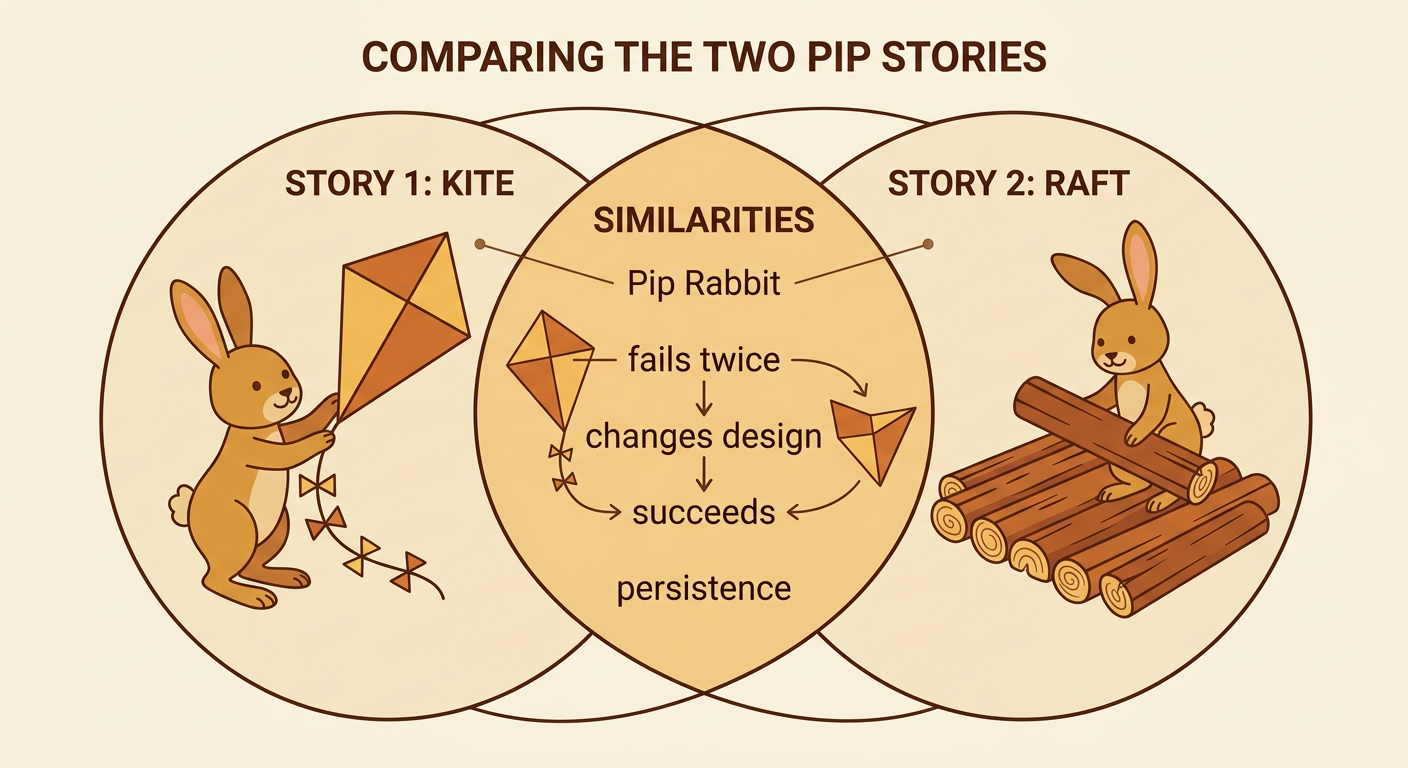
A similarity is something that is alike in both stories. Begin with the main character: Pip Rabbit appears in each story. Next, compare the plots. In both stories, Pip builds something, fails twice, changes his design, and finally succeeds. The problems are not exactly the same, but the pattern of events is similar. The stories also share a theme. Pip does not quit after his first failure, so both stories suggest that persistence and careful problem-solving can lead to success. Use evidence from each text to support the similarity. For example, Pip adjusts the kite’s tail in one story and adds wider logs to the raft in the other. These details show that he learns from mistakes instead of giving up.
Identify Important Differences
A difference is something that is not the same in the two stories. First, contrast the settings. The kite story takes place in a windy meadow during a contest, while the raft story takes place beside a quiet pond during Pip’s own project. Then contrast the plot details. In the first story, Pip wants to fly a kite and fixes the tail. In the second, he wants to cross a pond and makes the raft wider. The endings are also different: Pip completes a public contest in one story but crosses the pond safely in the other. Focus on meaningful differences rather than tiny details. The color of Pip’s shirt would matter less than the different problems, places, goals, and solutions because those elements shape each story.

Complete a Comparison Chart
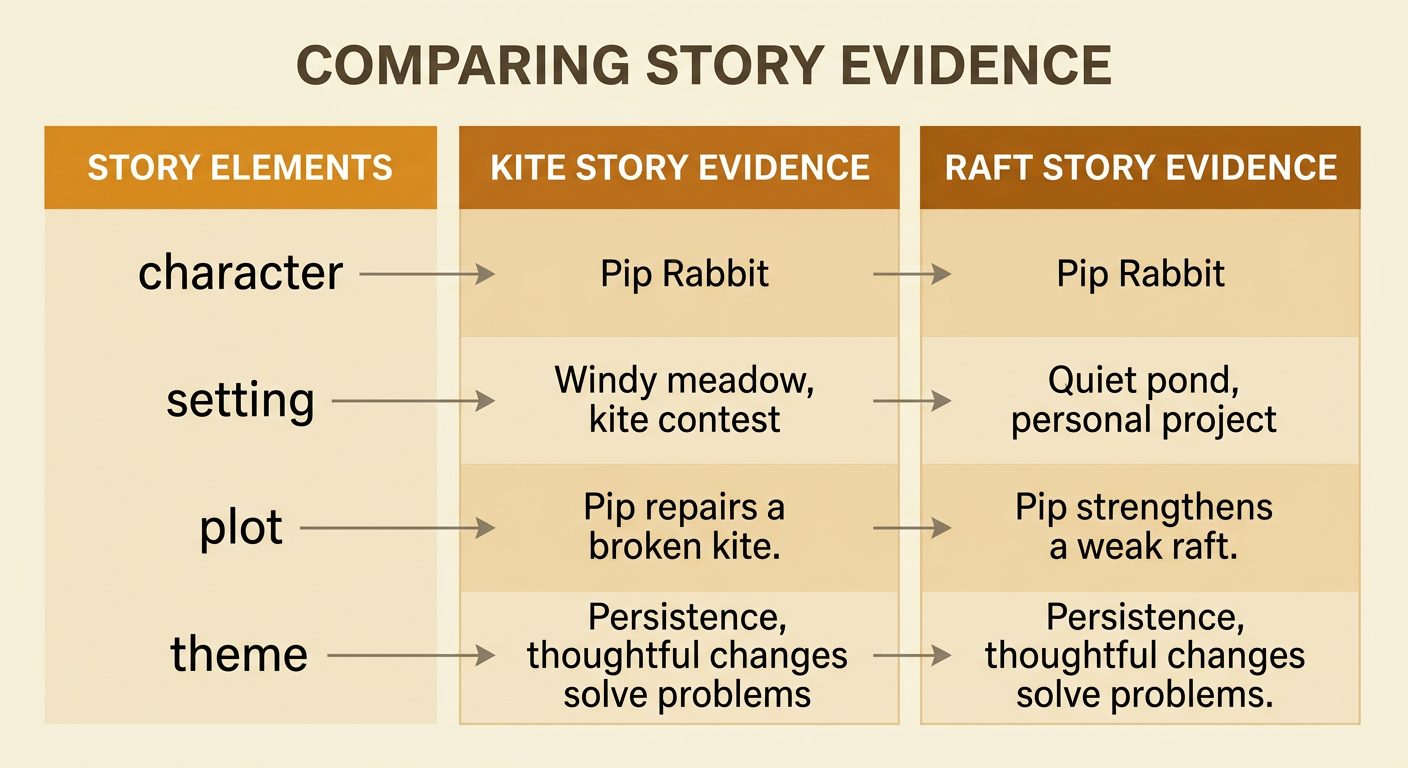
Organize your evidence in a comparison chart with rows for character, setting, plot, and theme. In the character row, write that Pip Rabbit is the main character in both stories. In the setting row, record “windy meadow during a contest” for the kite story and “quiet pond during a personal project” for the raft story. In the plot row, explain that Pip repairs a kite in one story and strengthens a raft in the other. In the theme row, write the shared message that persistence and thoughtful changes can solve problems. Keep details in the correct columns. A chart makes patterns easy to see and helps you choose strong evidence before writing. Include both similarities and differences rather than listing facts from only one story.
Write a Text-Based Comparison
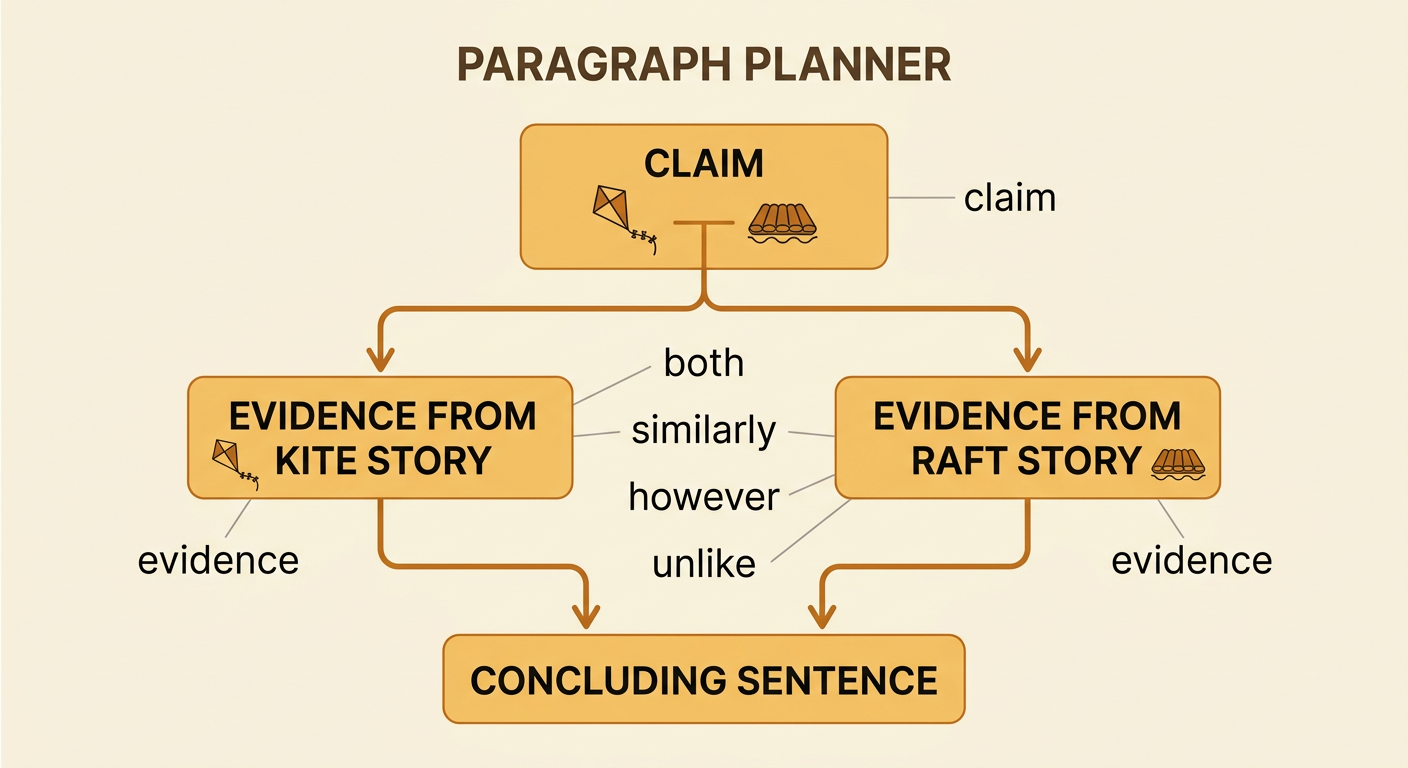
Turn the chart into a paragraph that states a comparison and supports it with details from both texts. You might write: “Lena Ortiz’s two Pip stories share a theme but use different settings and plot events. In both stories, Pip fails twice, improves his design, and succeeds, showing that persistence can solve problems. However, the kite story takes place in a windy meadow, where Pip fixes a kite tail for a contest. The raft story takes place at a quiet pond, where he adds wider logs and crosses the water. Therefore, both stories teach a similar lesson through different challenges.” Use linking words such as both, similarly, however, and unlike. Check that every claim matches the stories and that you explain themes, settings, or plots from both texts.