
Comparing Characters’ Adventures
Students compare and contrast what two characters experience in different stories using words and pictures as evidence.
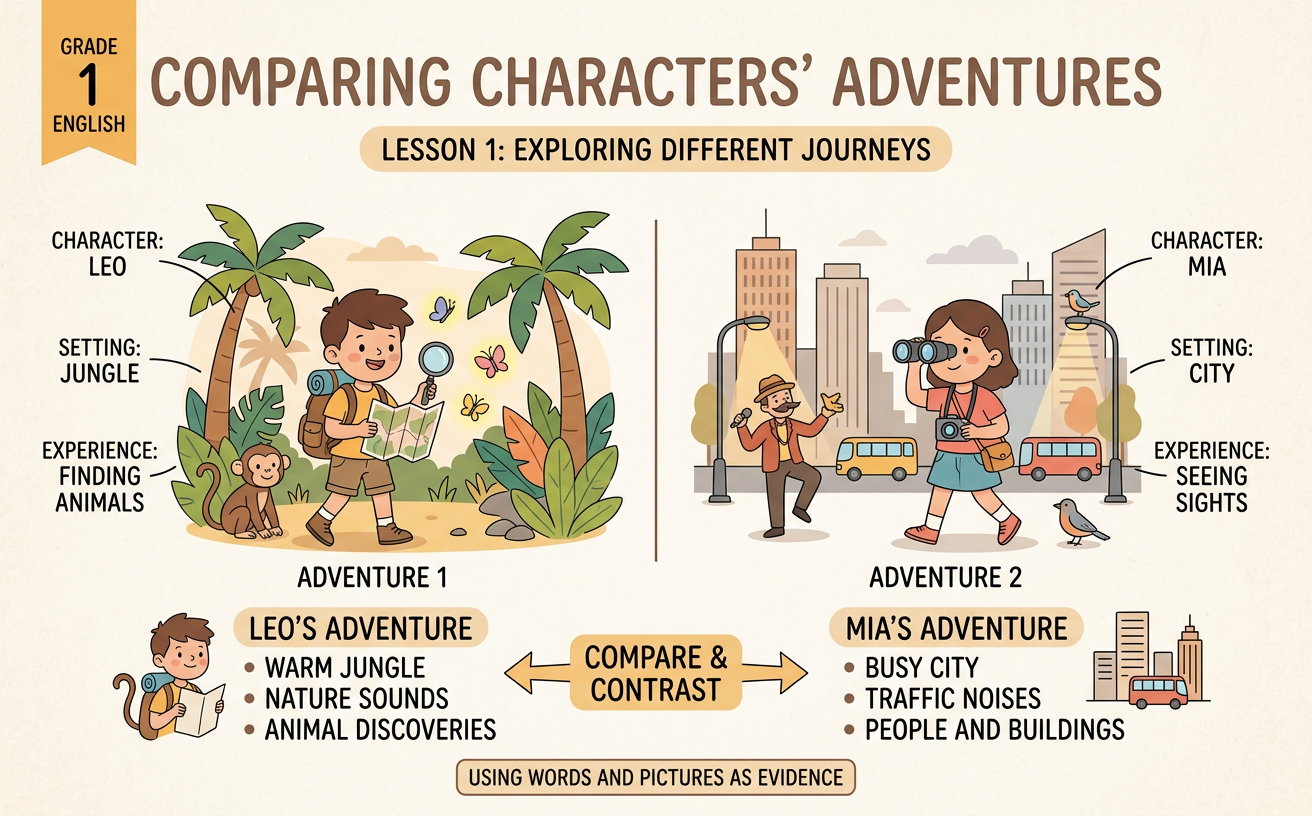
Illustrations are auto-generated and may be placeholders. They can be refreshed to match the narration.
Meet the Two Characters
To compare characters, first learn who they are and what story each one is in. Meet Mia from the story “Mia Climbs the Hill.” Mia wants to reach the top of a steep hill. Meet Ben from the story “Ben Crosses the Creek.” Ben wants to get across a creek. Look at the words and pictures in each story. Ask: Who is the character? Where is the character? What does the character want to do? The words tell us that Mia is on a hill and Ben is near a creek. The pictures can show Mia wearing hiking boots and Ben standing beside the water. These details help us get ready to compare their adventures.

Notice Each Character’s Adventure
An adventure is what a character does and experiences in a story. Read each story carefully to notice important events. In Mia’s story, she starts up the hill, slips on loose rocks, holds a strong branch, and reaches the top. In Ben’s story, he steps onto stones in the creek, sees that one stone is slippery, uses a long stick for balance, and reaches the other side. Put the events in order: first, next, and last. Use story words and pictures as evidence. A sentence may say, “Mia grabbed the branch.” A picture may show Ben placing his stick in the water. These details tell what happened during each character’s adventure.

Find What Is the Same
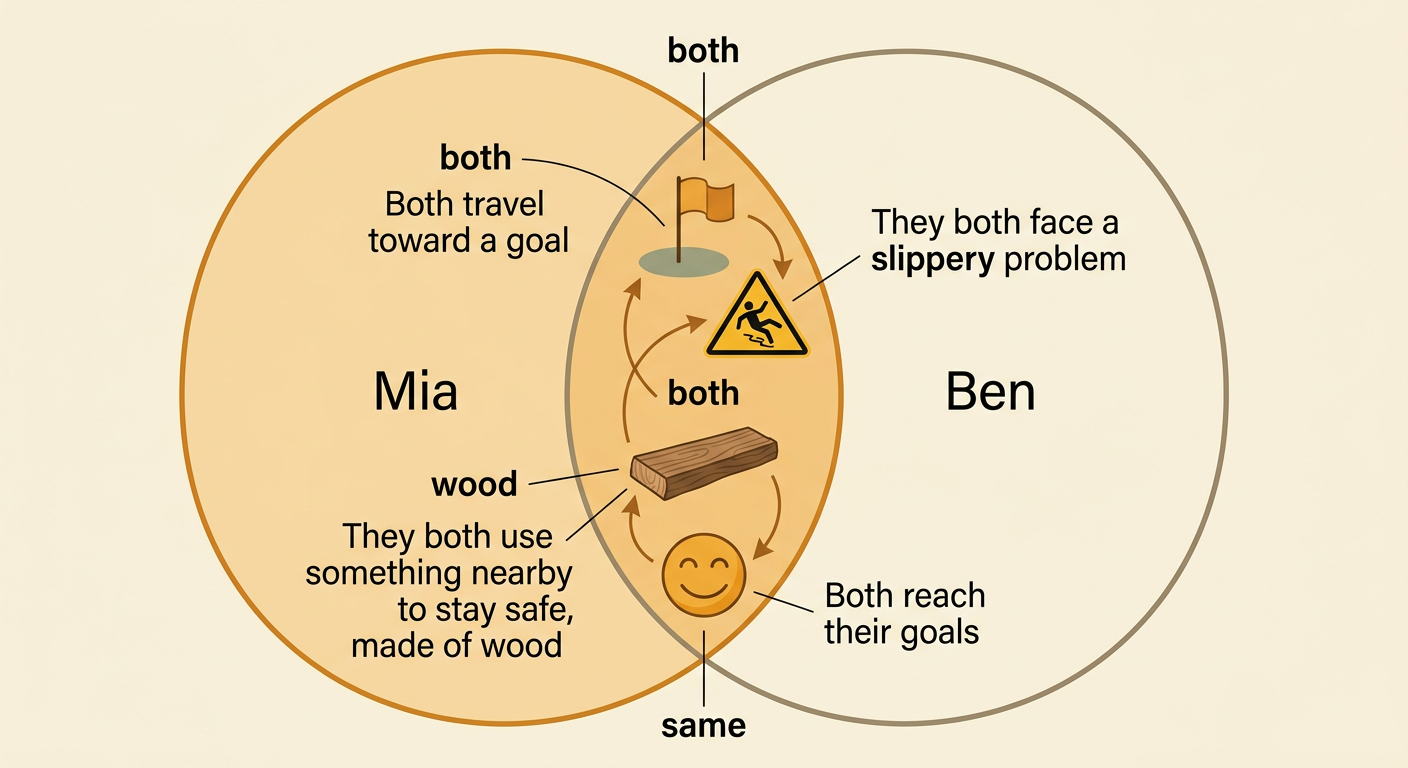
When we compare, we tell how characters or adventures are the same. Think about Mia and Ben. Both characters travel toward a goal. Both face a problem on the way. Mia slips on loose rocks, and Ben finds a slippery stone. Both use something nearby to stay safe. Mia uses a branch, while Ben uses a stick. Both keep going and reach their goals. Check the words and pictures for evidence before you name a similarity. You can say, “Both Mia and Ben have trouble with something slippery.” You can also say, “Both characters use wood to help them.” The word both is a helpful signal because it tells about Mia and Ben together.
Find What Is Different
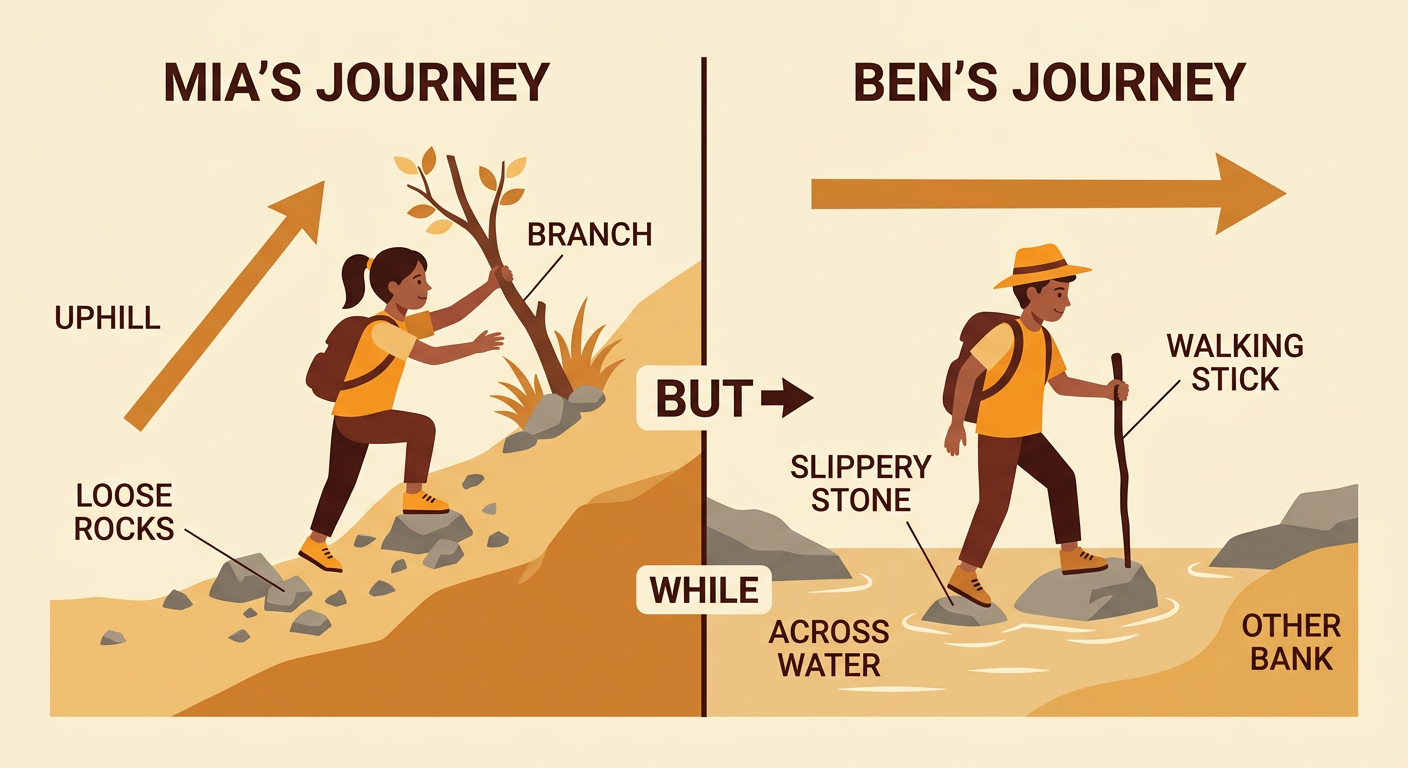
When we contrast, we tell how characters or adventures are different. Mia climbs up a hill, but Ben moves across a creek. Mia’s problem is loose rock on dry land. Ben’s problem is a slippery stone in water. Mia holds a branch that grows beside the path, but Ben carries a stick to help him balance. The pictures and words give evidence for each difference. Use the word but to connect two different details. For example, say, “Mia travels uphill, but Ben travels across water.” You may also use while: “Mia reaches a hilltop, while Ben reaches the other bank.” A difference does not mean one adventure is better. It simply tells how the experiences are not the same.
Share a Comparison
Now use your ideas to share a complete comparison. Name the characters, tell one way their adventures are the same, and tell one way they are different. Give evidence from the story words or pictures. You might say, “Mia and Ben both face a slippery problem and use wood for help. Mia climbs a hill, but Ben crosses a creek.” Then point to the details that support your ideas. The text says Mia grabs a branch. A picture shows Ben balancing with a stick. You can share your comparison by speaking, writing, or drawing. Use words such as both, same, but, and different. Finish by checking: Did I talk about both characters? Did I give a same detail, a different detail, and evidence?
