Comparing Firsthand and Secondhand Accounts
Students identify firsthand and secondhand accounts of the same event and compare how each account presents information.

Illustrations are auto-generated and may be placeholders. They can be refreshed to match the narration.
What Is a Firsthand Account?
A firsthand account is told or written by someone who experienced an event or saw it happen. The person shares observations, actions, thoughts, or feelings from that moment. Diaries, letters, interviews, speeches, and eyewitness reports can be firsthand accounts. For example, Maya helped open her school’s new garden. She wrote, “I pushed the first seed into the damp soil. When our principal cut the green ribbon, everyone cheered.” Maya was present, so she can describe what she saw, heard, felt, and did. Words such as I, we, and my may signal a firsthand account, but check the source too. A writer can quote another person using those words. Ask, “Did the person telling this account actually experience or witness the event?”

What Is a Secondhand Account?
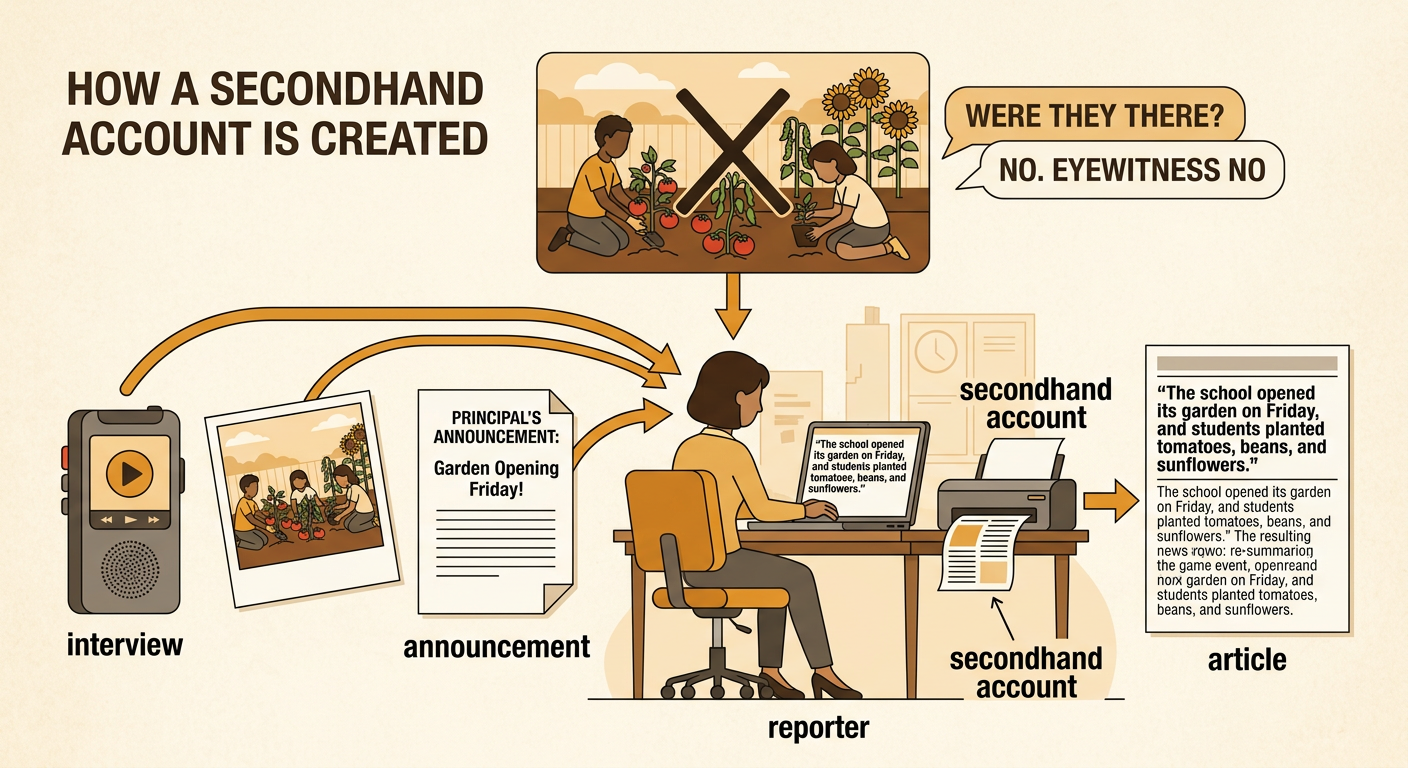
A secondhand account is created by someone who did not directly experience or witness the event. The author learns about it through interviews, photographs, records, or other firsthand and secondhand sources. Textbooks, biographies, encyclopedia entries, and many news articles are secondhand accounts. For example, a reporter who was not at the school garden opening later interviews Maya and reads the principal’s announcement. The reporter writes, “The school opened its garden on Friday, and students planted tomatoes, beans, and sunflowers.” This account may combine facts from several sources and give a broad overview. It usually includes fewer personal feelings from the author. To identify it, ask, “Did the author learn about the event from other people or materials rather than being there?”
Identify the Source of Each Account
To identify an account, first find the source: the person who told or wrote it. Then look for evidence showing how that person got the information. In Account A, Maya writes, “My gloves were muddy as I planted a tomato seedling.” The source is Maya, and her action shows that she took part in the garden opening. Account A is firsthand. In Account B, a textbook author explains, “According to student interviews, the garden opened in May.” The author uses interviews instead of personal experience, so Account B is secondhand. Do not decide from pronouns alone. A secondhand writer may include a quotation that uses I. Check the author’s connection to the event, the date, the title, and any notes that name interviews, documents, or other sources.

Compare Focus and Details
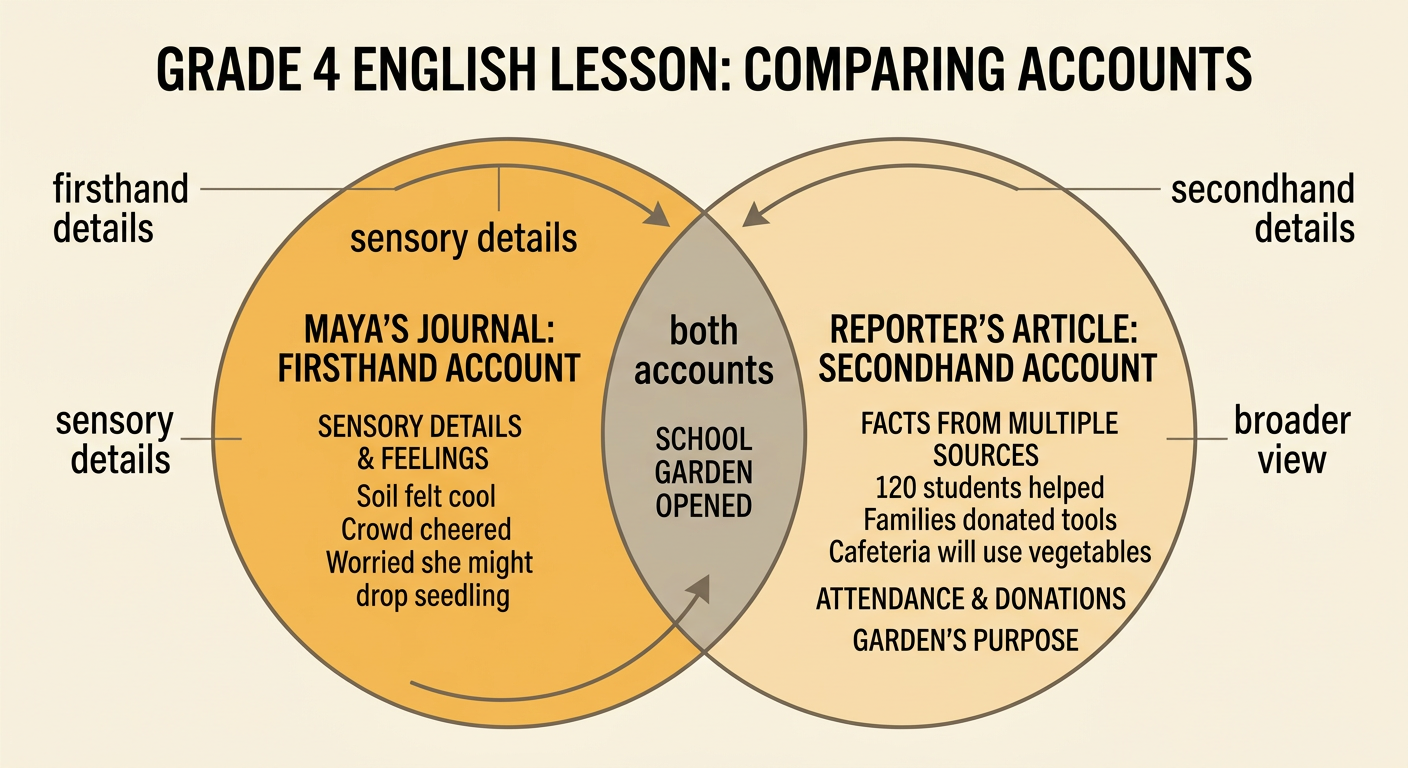
Firsthand and secondhand accounts of the same event may emphasize different information. A firsthand account often focuses on one person’s experience and includes sensory details, reactions, and a close view of particular moments. Maya writes that the soil felt cool, the crowd cheered, and she worried that she might drop the seedling. A secondhand article may focus on the event’s larger purpose and include facts from several sources. It explains that 120 students helped create the garden, local families donated tools, and the cafeteria would use some vegetables. Both accounts describe the garden opening, but they select different details. Use a Venn diagram or chart to compare them. Record what only the firsthand account provides, what only the secondhand account provides, and what both accounts say.
Explain Key Differences
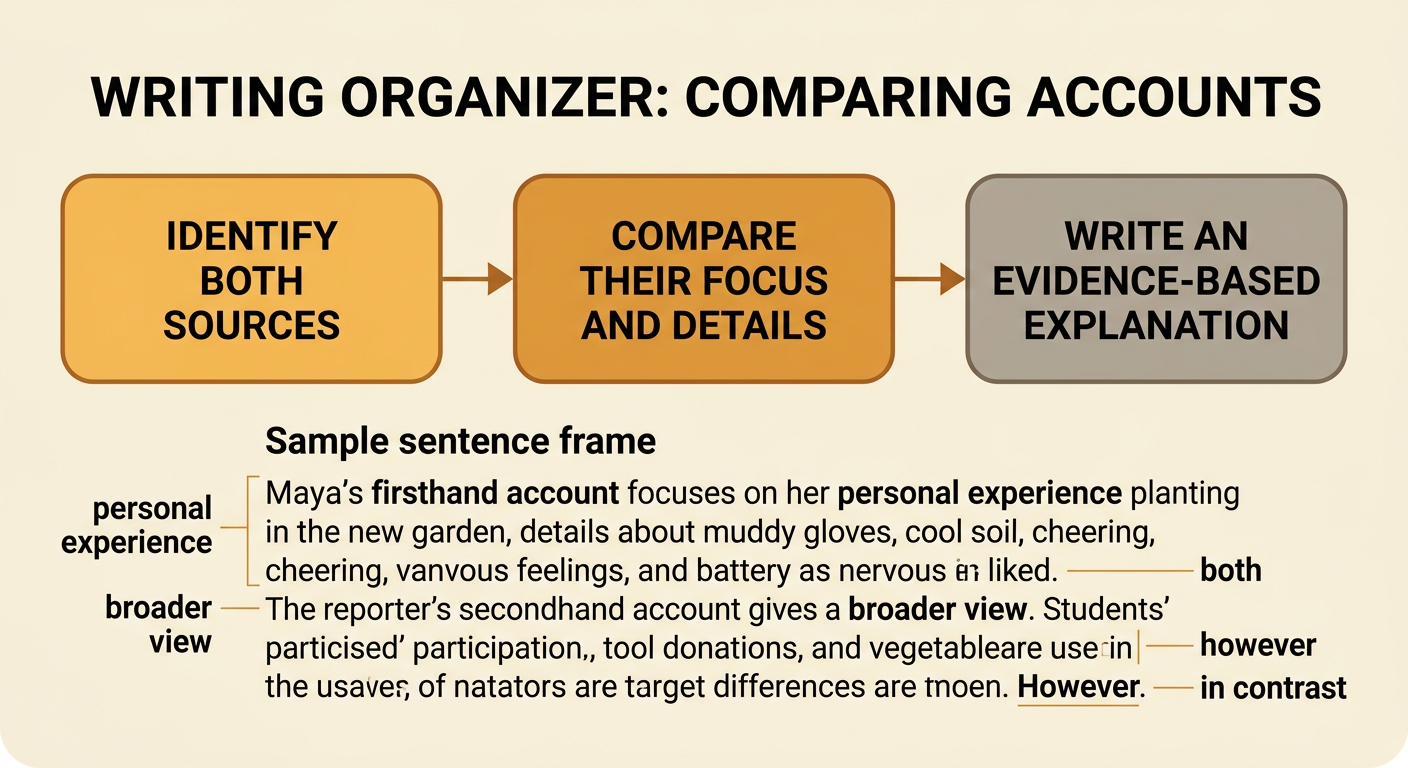
After comparing the accounts, explain the most important differences in complete sentences. Name each source, describe its focus, and support your explanation with details from both texts. For example: “Maya’s firsthand account focuses on her personal experience planting in the new garden. It includes muddy gloves, cool soil, cheering, and her nervous feelings. The reporter’s secondhand account gives a broader view by explaining how many students participated, who donated tools, and how the vegetables would be used. Both accounts describe the opening, but they provide different information because the authors learned about the event in different ways.” Avoid saying only that the texts are different. Explain how their viewpoints affect their focus and details. A strong response uses comparison words such as both, however, while, unlike, and in contrast.