Comparing Stories Across Genres
Students compare and contrast how two texts in different genres present similar themes, characters, or events.

Illustrations are auto-generated and may be placeholders. They can be refreshed to match the narration.
Review Forms and Genres
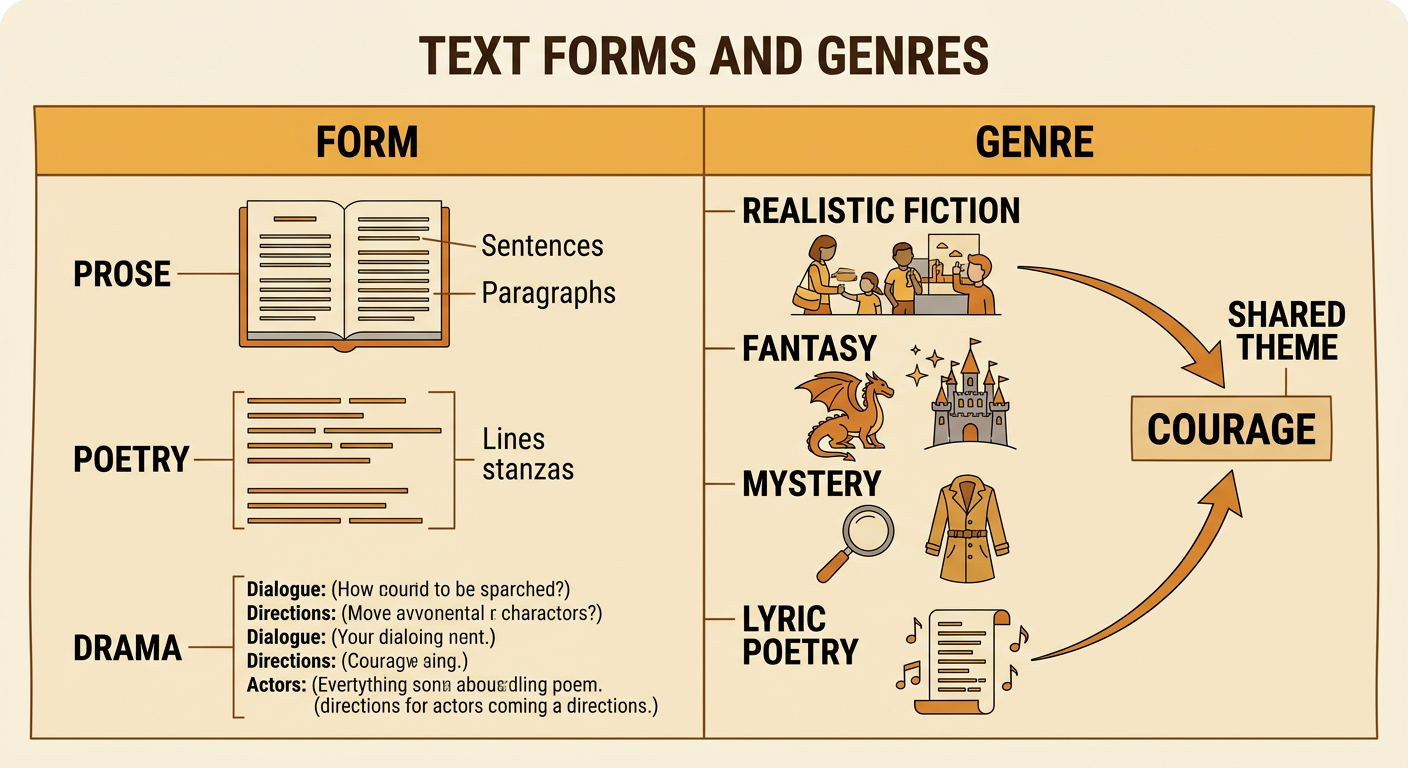
A text’s form is the way it is organized, such as prose, poetry, or drama. A genre is a category based on features and purpose, such as realistic fiction, fantasy, mystery, or lyric poetry. Different forms and genres can explore the same theme. For example, a realistic short story might show a child building courage through actions and dialogue. A poem might explore courage through images, rhythm, and repeated words. When comparing texts, notice both what they share and how they differ. Do not compare only their plots. Consider how each author uses the features of a form or genre to shape the reader’s understanding of a theme, character, or event.
Read Two Short Texts
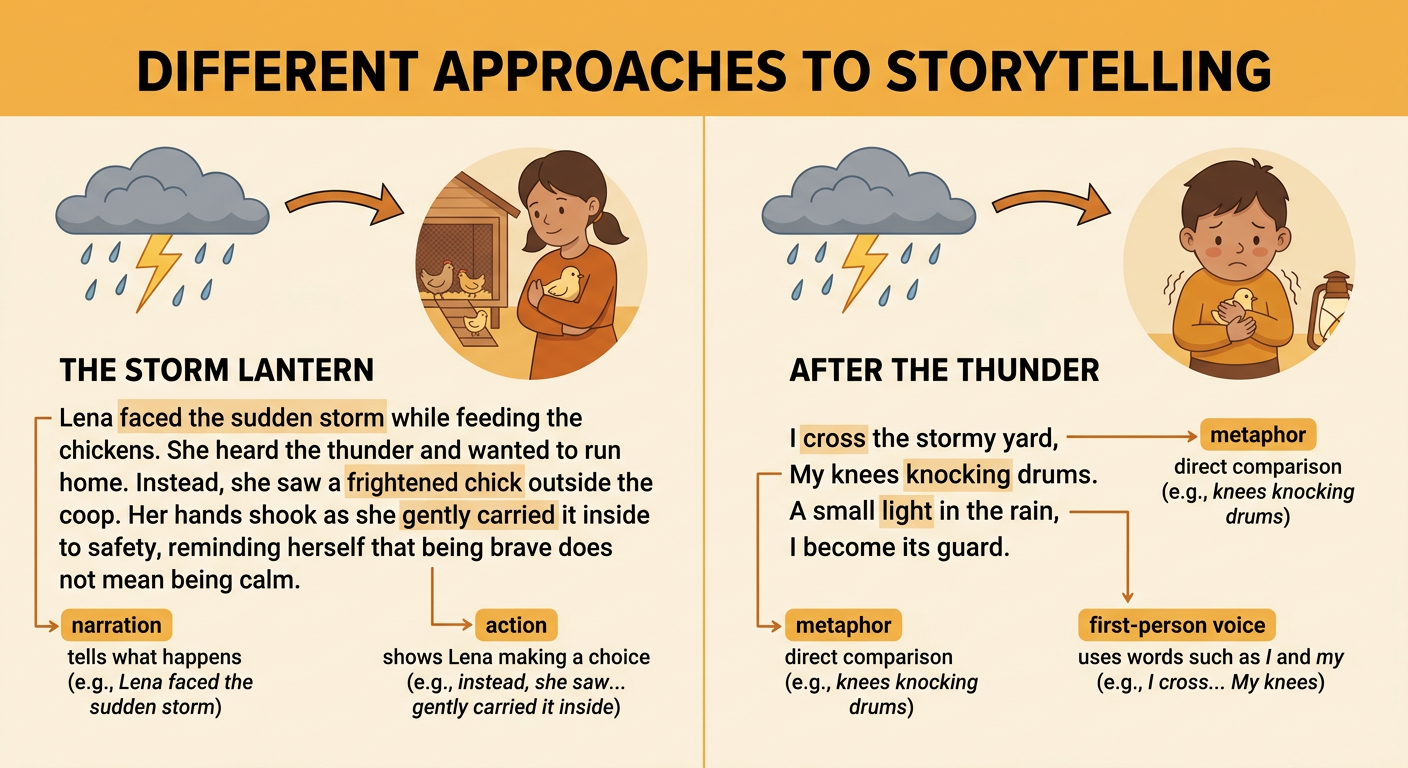
Read these two original texts about facing a storm. In the short story The Storm Lantern, Lena hears thunder while feeding the chickens. She wants to run home, but she notices a frightened chick outside the coop. Her hands shake as she carries it to safety. “Being brave does not mean being calm,” she tells herself. In the poem After the Thunder, the speaker says, “My knees are knocking drums, yet still I cross the yard. One small light waits in the rain, and I become its guard.” Both texts present a young person acting despite fear. However, the story uses narration, action, and a character’s thoughts, while the poem uses line breaks, rhythm, metaphor, and a first-person voice.
Identify Shared Elements
Begin the comparison by finding elements that both texts share. Ask who is involved, what happens, where the event occurs, and what message the details suggest. In The Storm Lantern and After the Thunder, the main character or speaker is afraid of a storm but crosses a yard to protect something vulnerable. Both settings include darkness, rain, and thunder. Both texts also develop the theme that courage means taking helpful action even when fear remains. Record only similarities supported by evidence. For example, the shaking hands in the story and the “knocking drums” knees in the poem both show fear. The decision to continue moving shows courage in each text.

Compare Each Author’s Approach
An author’s approach is the method used to present a topic or theme. Compare the choices each author makes rather than simply listing similarities. The author of The Storm Lantern develops courage gradually through a sequence of events: Lena hears thunder, sees the chick, hesitates, and acts. Third-person narration lets readers observe her actions and learn her thoughts. The poet of After the Thunder presents courage in a brief, intense moment. The metaphor comparing knees to drums creates a strong sound and image, while the first-person voice makes the fear feel immediate. Both authors show that the character remains afraid, but one emphasizes a developing decision and the other emphasizes emotion through concentrated language.

Write a Comparison
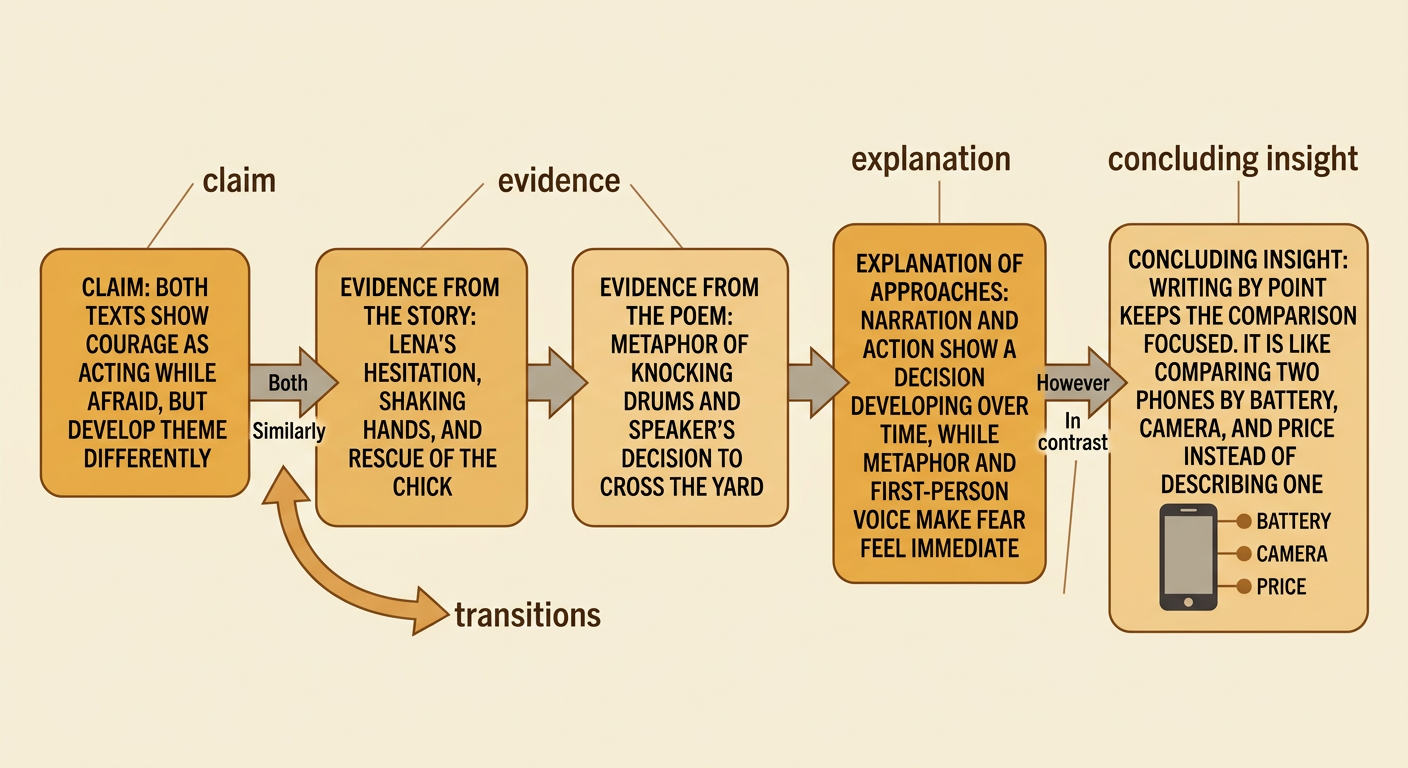
Write a comparison that states a clear claim, uses evidence from both texts, and explains each author’s approach. Organize ideas by point, such as theme, character response, or use of genre features. A strong example is: “Both The Storm Lantern and After the Thunder show that courage involves acting while afraid, but they develop this idea differently. The story follows Lena’s hesitation and decision through narration and action. In contrast, the poem uses the metaphor ‘knocking drums’ and a first-person speaker to emphasize fear in one intense moment. These different approaches help readers understand the same theme through both events and emotions.” Use transitions such as both, similarly, however, and in contrast. End by explaining why the differences matter.