Competition, Predation, and Symbiosis
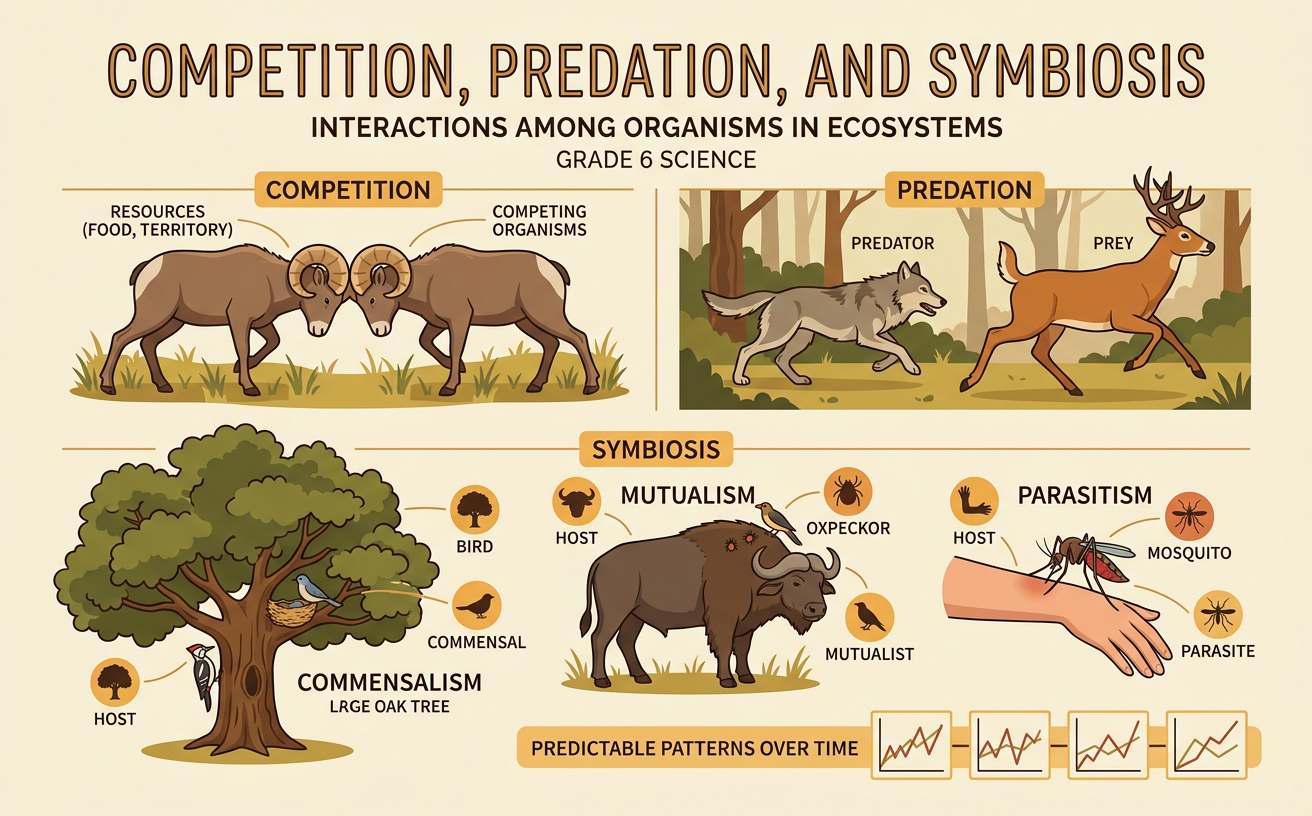
Students examine how competition, predation, and symbiosis create predictable patterns of interaction among organisms in ecosystems.
Illustrations are auto-generated and may be placeholders. They can be refreshed to match the narration.
Organisms in an Ecosystem
An ecosystem includes living organisms and the nonliving parts of their surroundings. Plants, animals, fungi, and microorganisms form populations and communities. Water, air, soil, sunlight, and temperature affect where these organisms can live. Organisms also affect one another through repeated interactions. They may compete for the same resource, hunt and eat other organisms, or live together in a close relationship called symbiosis. For example, in a Great Plains prairie, grasses use sunlight and soil nutrients, grasshoppers eat the grasses, and lizards eat the grasshoppers. Lizards may also compete with one another for food or shelter. Each interaction affects survival and reproduction. Studying these patterns helps scientists explain why populations increase, decrease, or remain stable over time.
Competition for Limited Resources
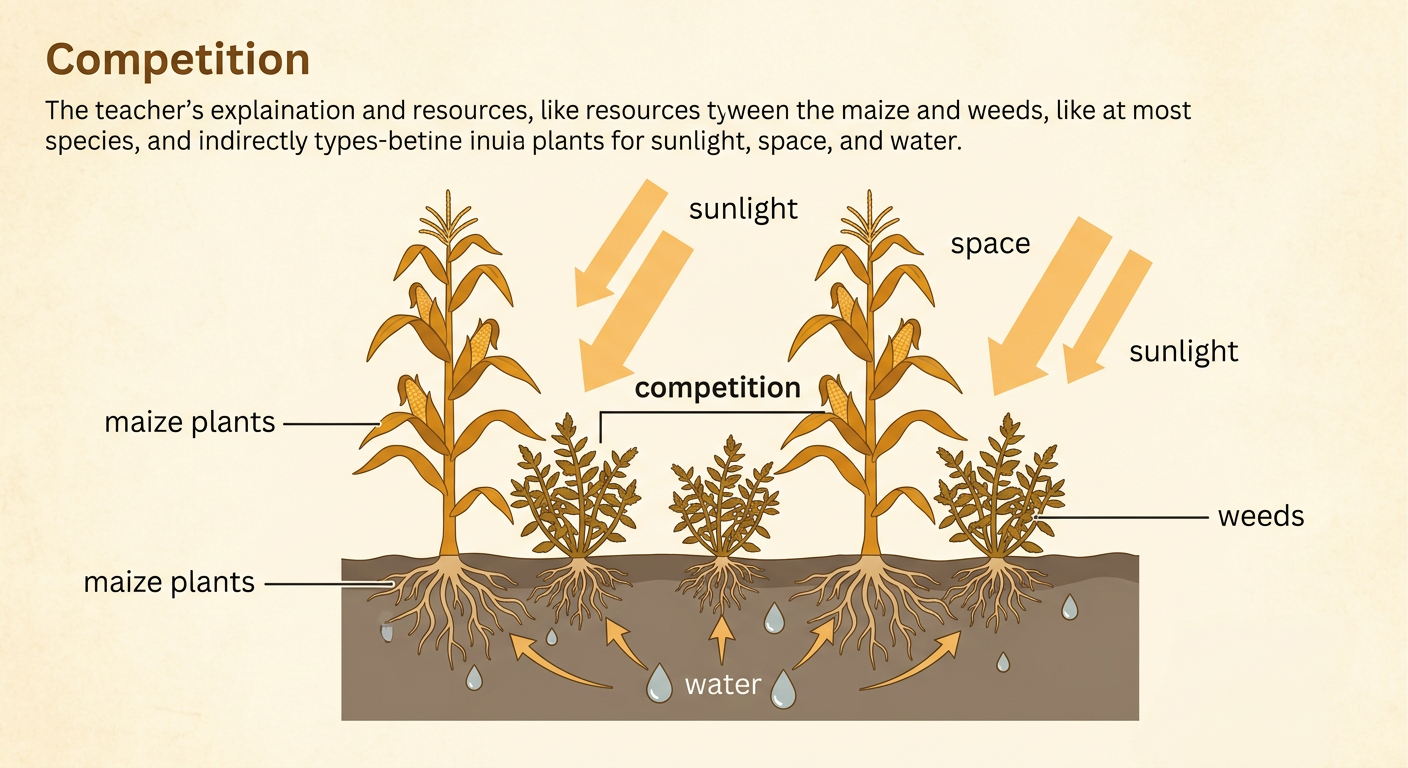
Competition occurs when two or more organisms need the same limited resource. Resources can include food, water, sunlight, space, shelter, and mates. Competition may occur within one species or between different species. For example, maize plants and weeds growing on the same farm compete for sunlight, water, space, and minerals in the soil. If many weeds surround a maize plant, the maize may grow slowly because fewer resources are available to it. Two male antelopes may also compete for access to a mate. Competition does not always involve fighting. Trees compete simply by spreading their roots and leaves to collect resources. When a resource becomes more plentiful, competition for it usually decreases. When it becomes scarce, competition usually becomes stronger.
Predators and Prey
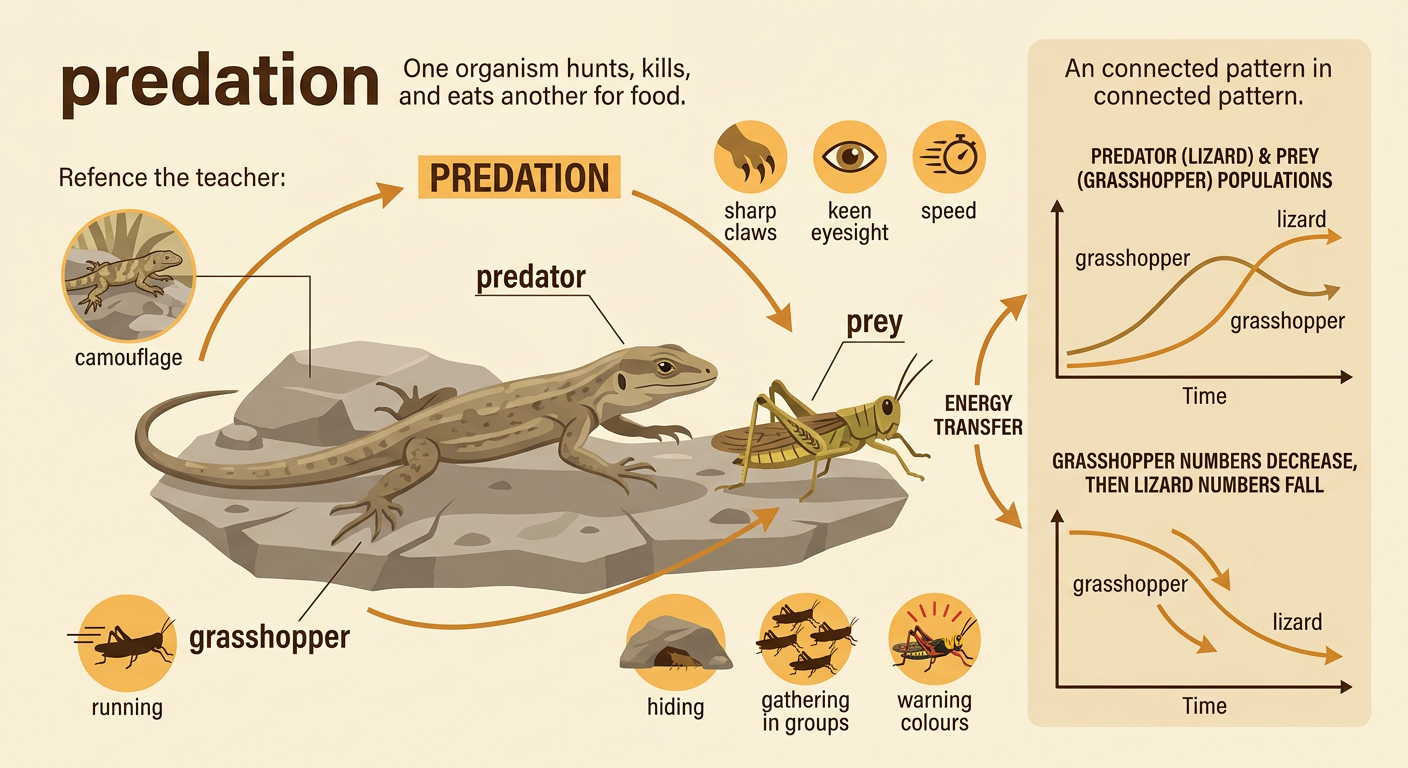
Predation is an interaction in which one organism hunts, kills, and eats another organism. The hunter is the predator, and the organism eaten is the prey. A lizard that catches a grasshopper is a predator, while the grasshopper is its prey. Predators have features or behaviors that help them find and capture food, such as sharp claws, keen eyesight, speed, or camouflage. Prey may escape by running, hiding, forming groups, or using warning colors. Predator and prey populations often change in a connected pattern. When prey become abundant, predators may have more food and produce more young. As predator numbers rise, more prey may be eaten. Prey numbers may then fall, leaving less food for predators. Predation transfers energy and helps prevent some prey populations from growing without limit.
Types of Symbiosis
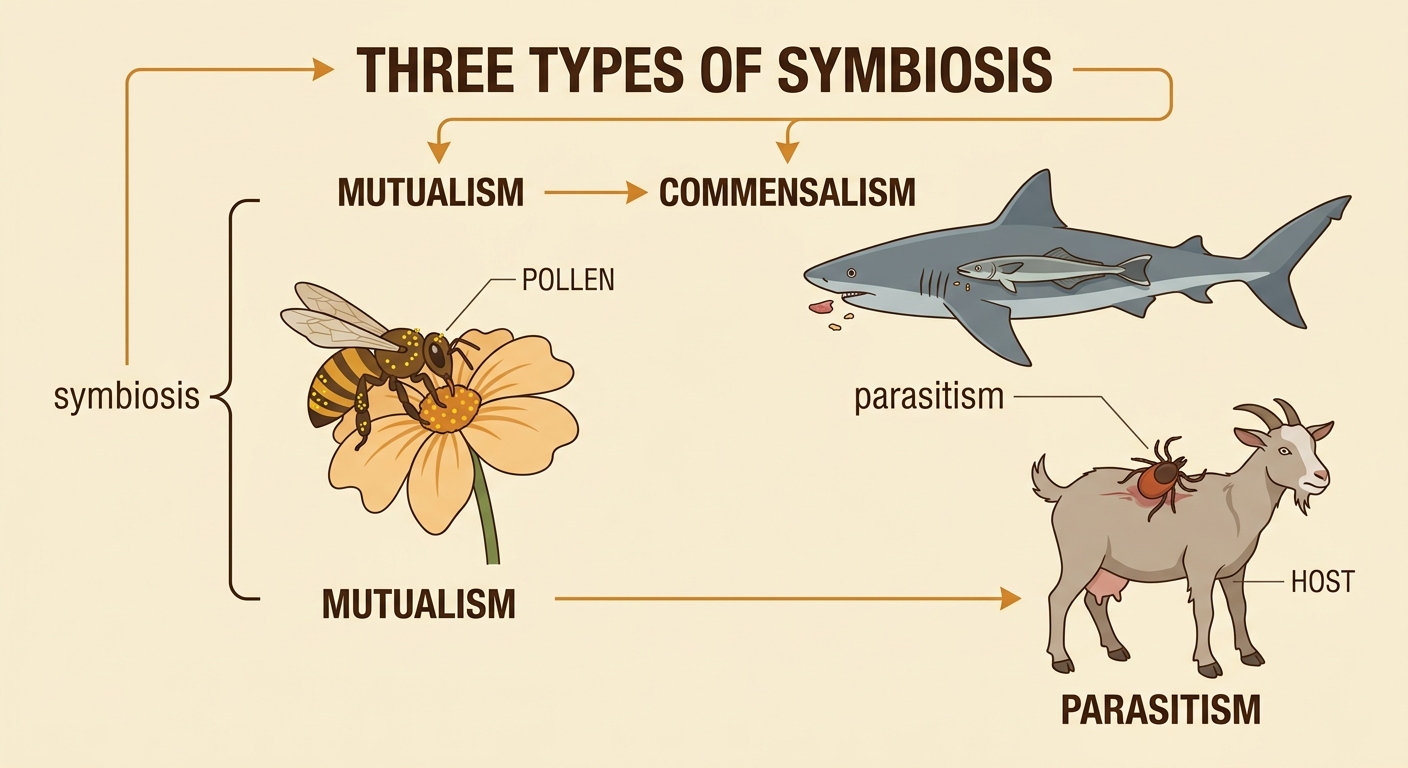
Symbiosis is a close relationship between organisms of different species. In mutualism, both organisms benefit. For example, a bee gets nectar from a flower while carrying pollen that helps the plant reproduce. In commensalism, one organism benefits while the other is not helped or harmed. A remora fish may attach to a shark and eat food scraps while the shark is mostly unaffected. In parasitism, one organism benefits and the other is harmed. A tick feeding on a goat gains blood, but the goat may suffer skin irritation or disease. Unlike a predator, a parasite usually lives on or inside its host for a period of time and does not immediately kill it. Scientists identify each type of symbiosis by examining how the relationship affects both organisms.
Comparing Interaction Patterns
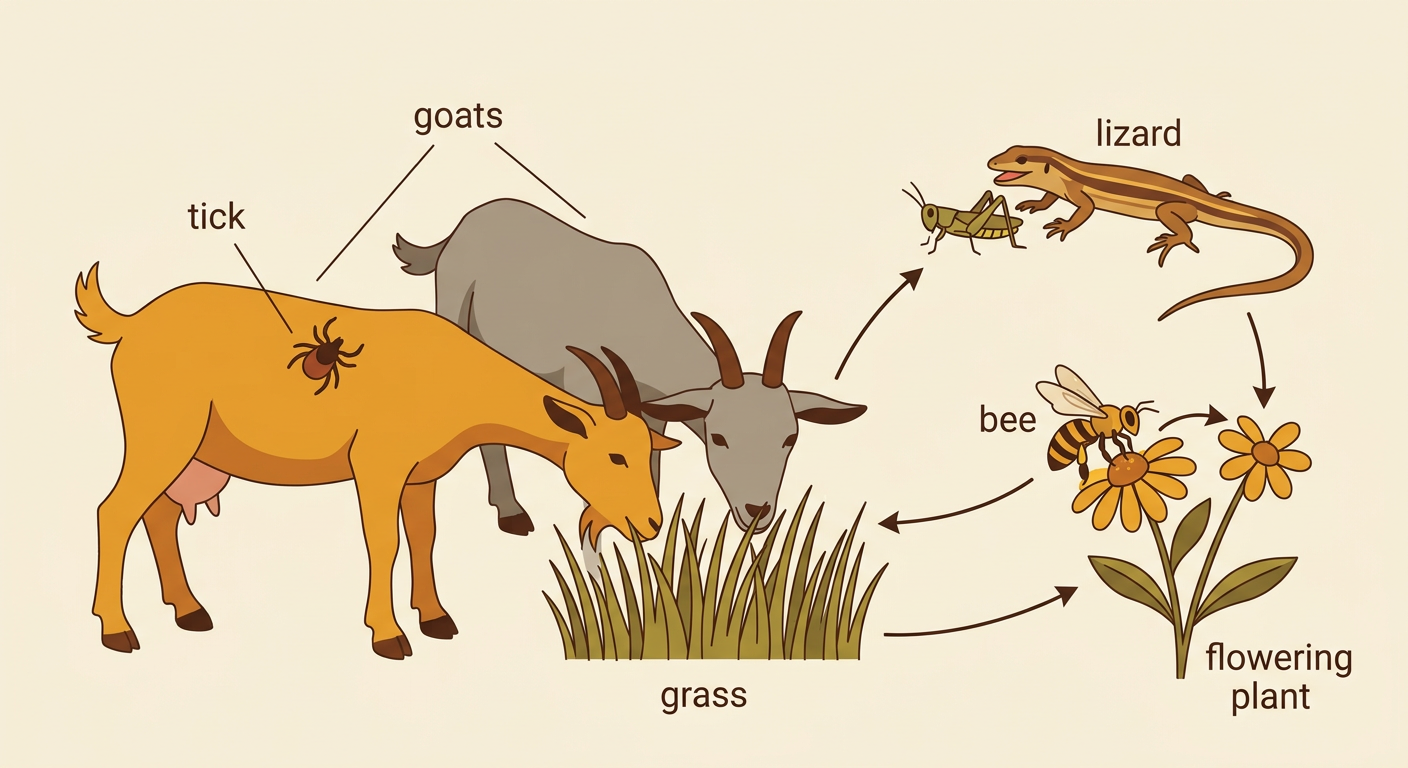
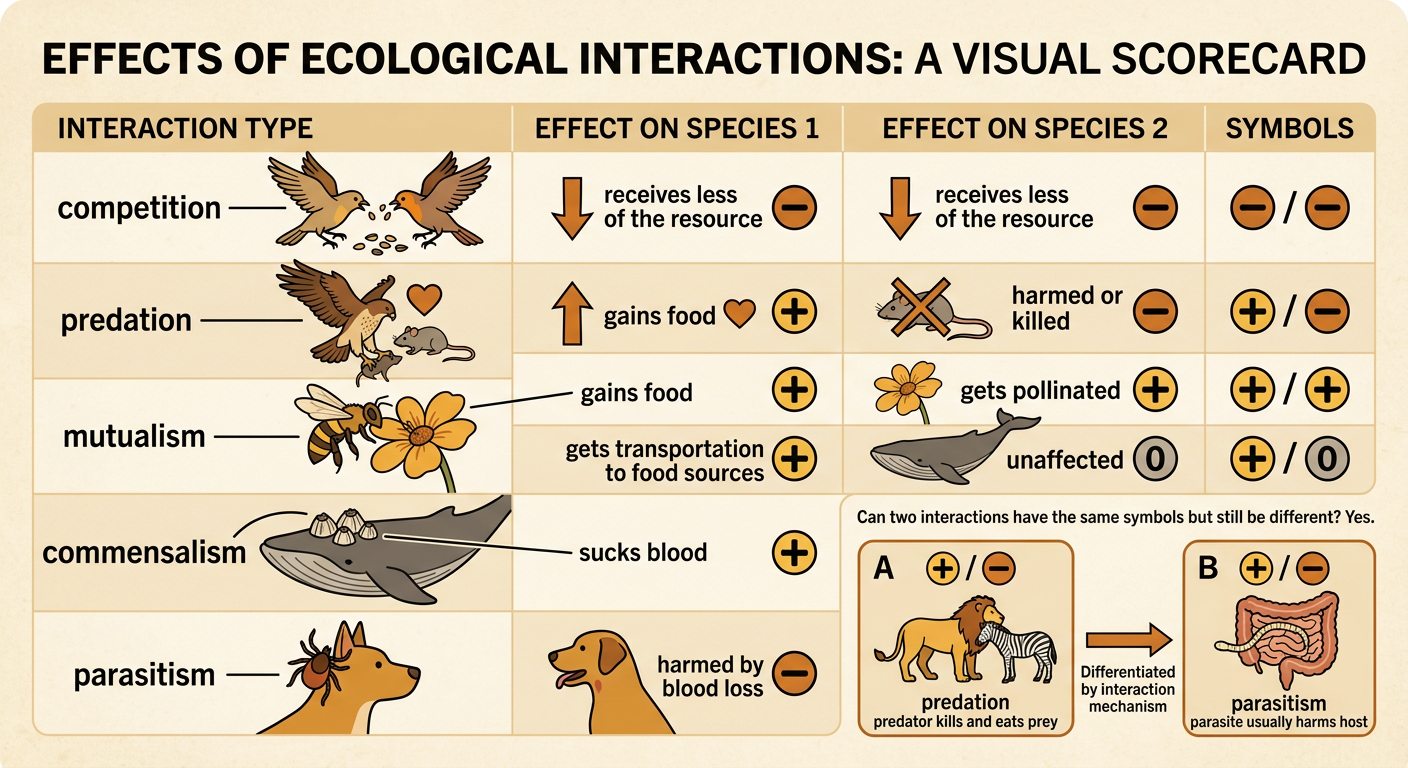
Competition, predation, and symbiosis affect organisms in different, predictable ways. In competition, both organisms are negatively affected because each receives less of a shared resource. Maize and weeds, for example, may both have less water when they grow close together. In predation, the predator benefits by gaining food, while the prey is harmed or killed. In mutualism, both organisms benefit. In commensalism, one benefits and the other is unaffected. In parasitism, the parasite benefits while the host is harmed. These effects can be shown with symbols: plus means benefit, minus means harm, and zero means no major effect. The same organism can take part in several interactions. A goat may compete with other goats for grass while also serving as a host for ticks.
Check Your Understanding
Use the interaction patterns to study this farm-edge ecosystem. Two goats reach for the same patch of grass. A lizard catches a grasshopper. A bee collects nectar from a flowering plant and carries pollen between flowers. A tick feeds on one goat. Which interaction occurs in each case? The goats show competition because both need the same limited food. The lizard and grasshopper show predation because the lizard kills and eats the grasshopper. The bee and plant show mutualism because both benefit. The tick and goat show parasitism because the tick benefits while the goat is harmed. Now predict what might happen if grass becomes scarce. Competition between the goats will probably increase. Explain each answer by naming the organisms, identifying the resource or benefit, and stating how each organism is affected.