
Compose New Shapes from Smaller Shapes
Students combine triangles, squares, rectangles, and other familiar shapes to create and describe larger composite shapes.
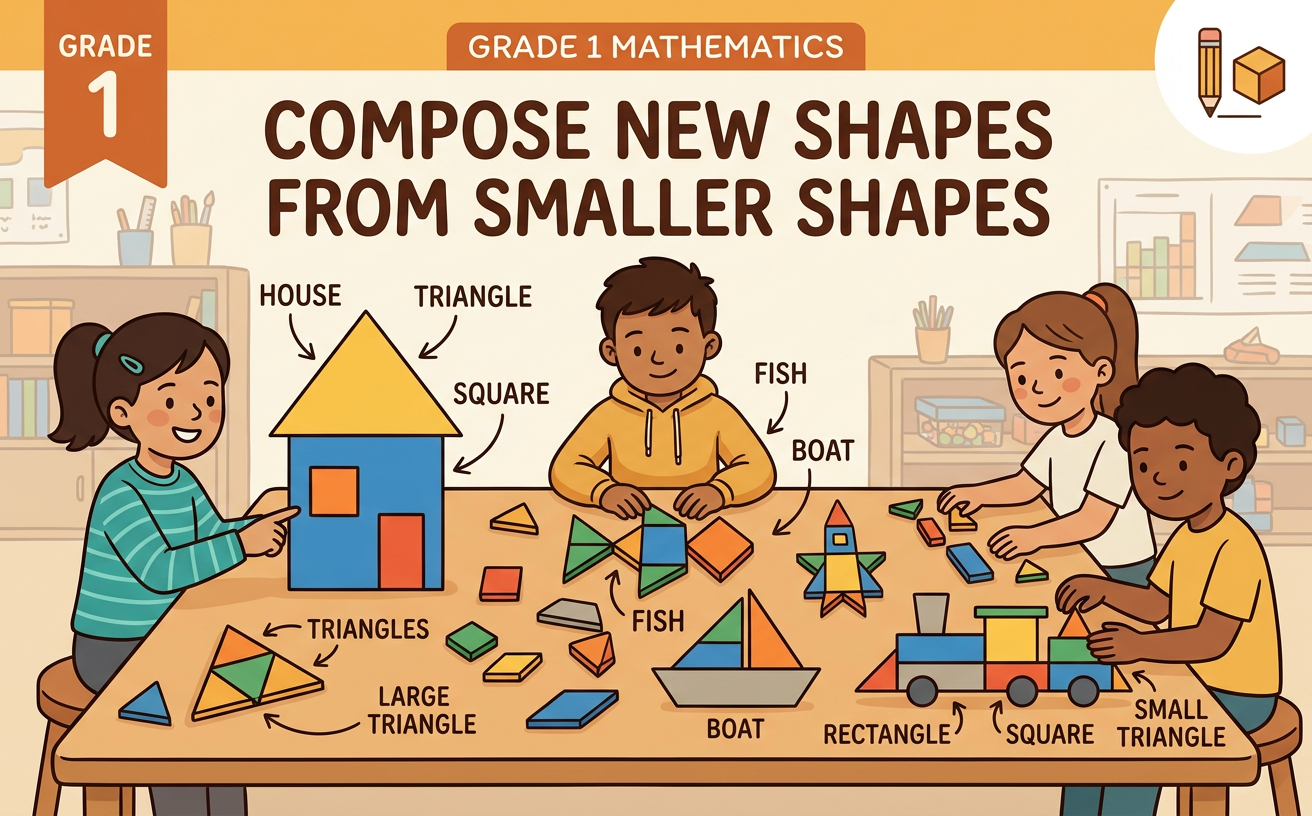
Illustrations are auto-generated and may be placeholders. They can be refreshed to match the narration.
Review Familiar Shapes
Before we build new shapes, let us name some shapes we already know. A triangle has three straight sides and three corners. A square has four equal sides and four corners. A rectangle has four sides and four corners. A circle is round and has no straight sides or corners. Shapes can be different sizes or turned in different directions, but their names do not change. For example, a triangle is still a triangle when its point faces down. Look closely at each shape. Count its sides and corners. Then think about how its edges might fit beside the edges of another shape. A square and a triangle can touch along one straight side. Soon, we will use familiar shapes like these as parts of larger shapes.

Model Combining Shapes
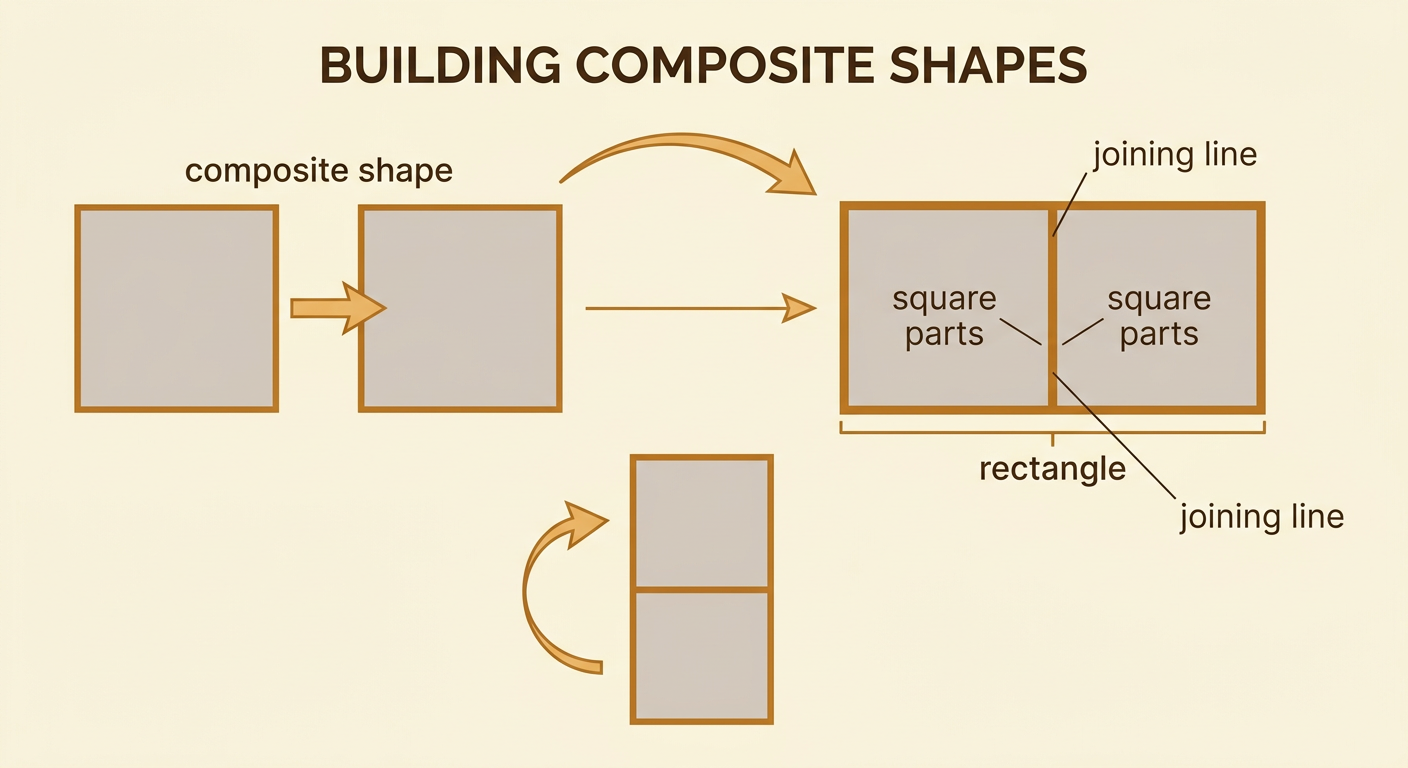
We can put smaller shapes together to make one larger composite shape. A composite shape is a whole shape made from two or more parts. Start with two equal squares. Place them side by side so one full side of the first square touches one full side of the second square. Do not leave a gap, and do not overlap the pieces. The outside edge of the two squares forms a rectangle. The line where the squares meet is still visible, so we can see the two parts. Turn the composite shape a quarter turn. It is still a rectangle made from two squares. The smaller shapes did not disappear. They became parts of a new whole. We can name both the parts and the larger shape.
Build Composite Shapes
Now use shape pieces to build composite shapes. Choose two or more triangles, squares, or rectangles. Slide the pieces together so their sides touch without gaps or overlaps. Try placing two equal triangles together along matching sides. If the triangles are right triangles made by cutting a square from one corner to the opposite corner, they can form a square when their longest sides meet. Next, place a square beside another square to make a rectangle. You can also add a triangle on top of a square to make a shape that looks like a house. After each build, trace the outside edge with your finger. The outside edge helps you notice the new whole. Then separate the pieces and try a different arrangement. The same small shapes can sometimes make more than one composite shape.

Describe the Parts and Whole
When we describe a composite shape, we tell about its smaller parts and its whole. First, name and count the pieces. Next, explain where the pieces are placed. Finally, name or describe the outside shape. For example, suppose two equal squares are side by side. You can say, “The parts are two squares. They share one side. Together, they make a rectangle.” Now look at a square with one triangle on top. You can say, “The bottom part is a square, and the top part is a triangle. Together, they make a shape that looks like a house.” Words such as above, below, beside, and next to help explain positions. Remember that the joining line shows where the parts meet, while the outside edge shows the whole.

Create a New Shape
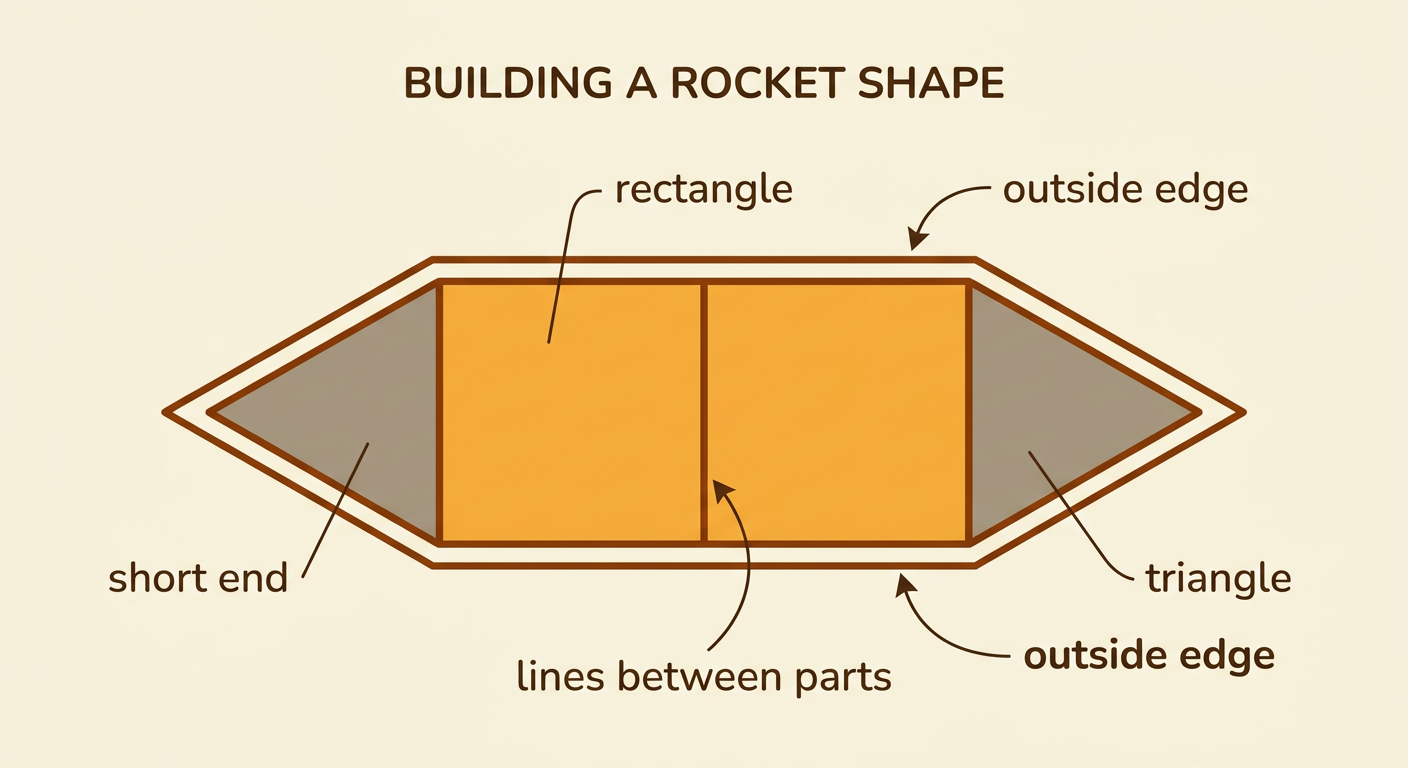
Use a composite shape as a building part to create another new shape. First, join two equal squares to make a rectangle. Treat that rectangle as one piece. Add a triangle to each short end of the rectangle. Now the new whole has four smaller parts: two squares and two triangles. You may call it a rocket-like shape because of how it looks, but you should also describe its exact parts. Try your own design with three to six pieces. Make sure every piece touches at least one other piece. Pieces should not overlap. After you build, draw the outside edge and the lines between the parts. Then count each kind of shape you used. Ask yourself: What composite shape did I build first? How did I use it to make a new, larger shape?
Share and Reflect
Show your composite shape to a partner. Begin by naming and counting the smaller shapes. Then explain how they touch and what new whole they make. You might say, “I used three triangles and one square. One triangle is above the square, and two triangles are beside it.” Ask your partner to find each part and trace the outside edge. Listen to your partner’s description too. Shapes can be arranged in different ways, so two students may use the same pieces and create different wholes. Think about your work. Which pieces fit together easily? Which arrangement did you change? Could you move one piece to make another shape? Finish with a reflection sentence such as, “I learned that smaller shapes can join to make a larger composite shape.”
