
Connecting Illustrations to Story Events
Students explain how an illustration helps reveal a story’s characters, setting, mood, or events.
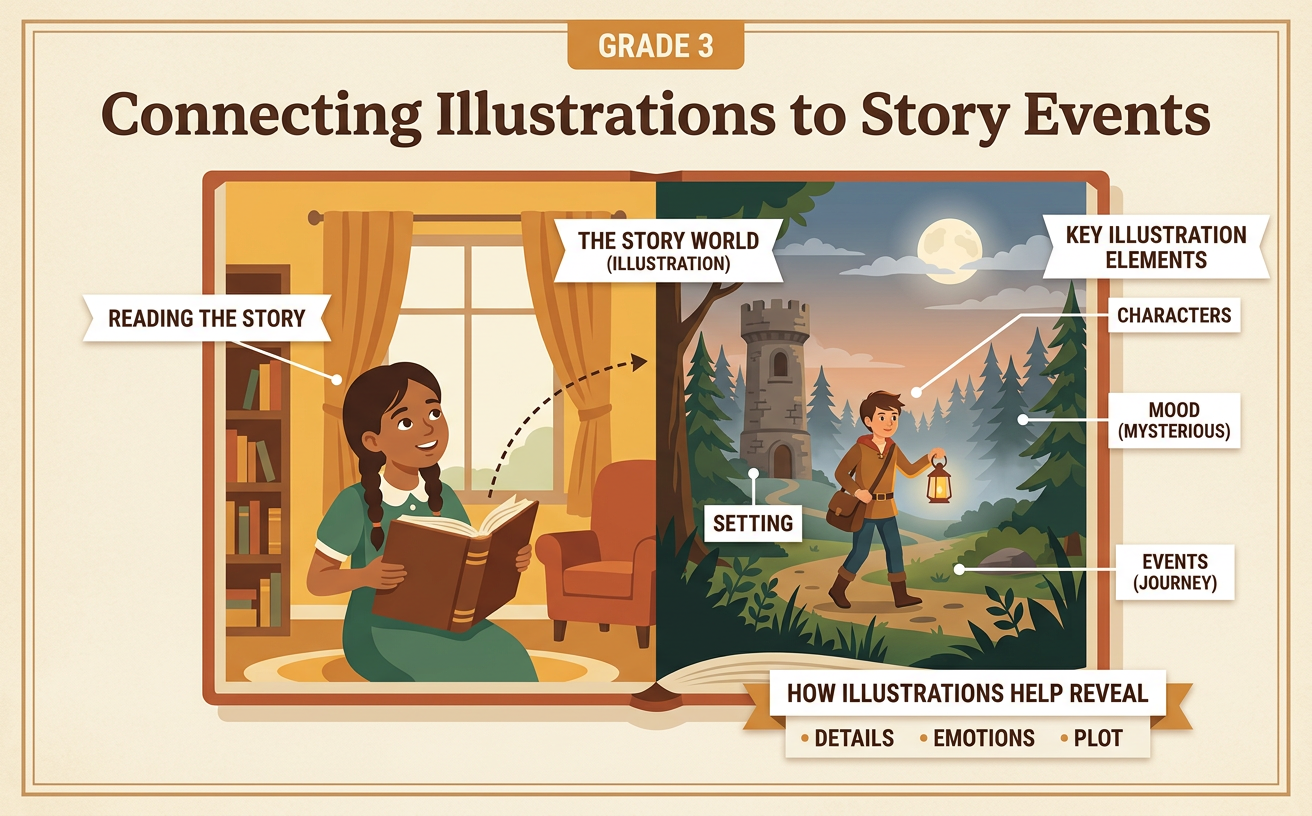
Illustrations are auto-generated and may be placeholders. They can be refreshed to match the narration.
Study the Illustration
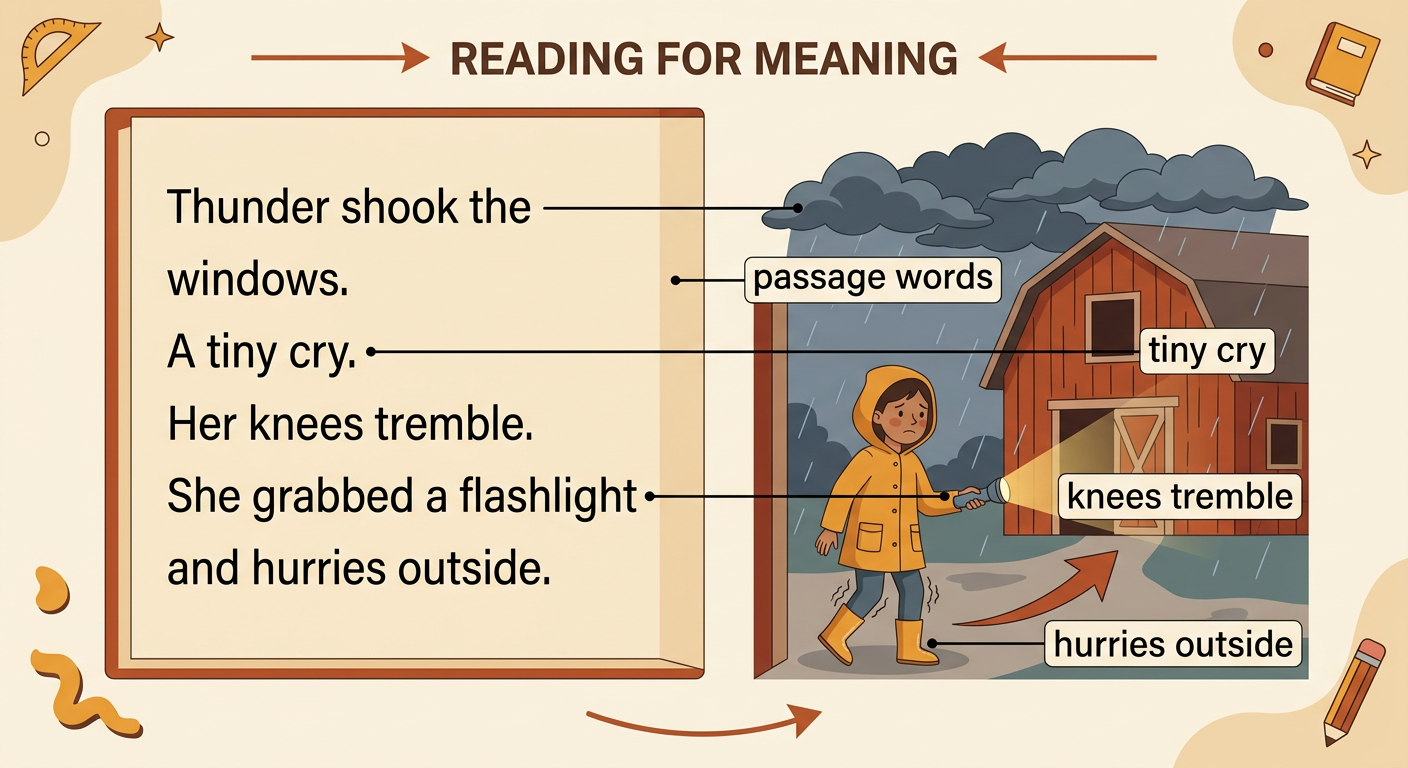
Before reading, look carefully at the illustration. First, notice the people, animals, objects, and setting. Then think about what may be happening. For example, imagine an illustration of a girl named Maya standing beside a dark barn. Rain slants across the sky, tree branches bend, and Maya holds a flashlight. Her eyes are wide, but she is stepping toward the barn. These details suggest that the story takes place during a storm. They also create a worried or suspenseful mood. Maya’s movement toward the barn may show that she is brave or determined. At this point, these ideas are predictions, not proven facts. The words in the story will help confirm or change them. Careful observation prepares you to understand how the picture supports the story.

Read the Related Passage
Next, read the words that appear near the illustration. Pay attention to details that describe the characters, setting, mood, and events. A related passage might say, “Thunder shook the windows. Maya heard a tiny cry from the barn. Although her knees trembled, she grabbed a flashlight and hurried outside.” The words explain important facts that the picture alone cannot prove. Now you know why Maya is going to the barn: she heard a cry. You also learn that she feels afraid because her knees tremble. However, she goes outside anyway. That action shows courage. As you read, ask, “What do the words tell me?” Then compare that information with what you noticed in the illustration. Together, the passage and picture create a fuller understanding of the scene.
Notice Visual Details
Visual details are small parts of an illustration that communicate information. Look at facial expressions, body positions, colors, light, weather, and the location of objects. In the picture of Maya, her wide eyes and tight grip on the flashlight suggest fear. Her feet point toward the barn, showing that she is moving forward instead of running away. Dark gray clouds, sharp flashes of lightning, and shadows around the barn make the mood tense. A small paw print near the barn door may hint that an animal is inside. Illustrators choose details for a reason. Bright colors can create a cheerful mood, while dark colors can create a gloomy or mysterious mood. When you notice a detail, explain what it suggests. Do not simply say, “There is lightning.” Say, “The lightning makes the storm seem dangerous.”

Connect Pictures and Words
To connect pictures and words, find a detail in the passage and match it with a detail in the illustration. Then explain how the two details work together. The passage says, “Although her knees trembled, she grabbed a flashlight and hurried outside.” The illustration shows Maya gripping the flashlight while walking toward the dark barn. The words directly tell you that she is frightened, while the picture emphasizes that she keeps moving forward. Together, they show that Maya is courageous because she acts even when she is afraid. Sometimes the illustration adds information that the words do not state. For example, the passage may mention a storm without describing its strength. Slanting rain and bending branches show that the wind is powerful. A strong connection names evidence from both sources and explains the shared meaning.

Explain the Illustration’s Contribution
An illustration’s contribution is the special way it adds to or strengthens the story. To explain it, name a specific visual detail and tell what that detail helps the reader understand. You can use this sentence frame: “The illustration shows ____, which helps the reader understand ____.” For example: “The illustration shows dark clouds, slanting rain, and Maya’s wide eyes, which creates a tense mood and emphasizes the danger she faces.” You can add how the words and picture work together: “The passage says Maya’s knees tremble, while the illustration shows her walking toward the barn, so both reveal her courage.” Avoid vague statements such as, “The picture helps the story.” A strong explanation identifies exact evidence and its effect. It tells whether the illustration reveals character, shows setting, creates mood, or emphasizes an important event.
