CRISPR Gene Editing: Mechanism, Evidence, and Ethics
Students model how CRISPR-Cas9 alters a DNA sequence, predict possible effects on protein function, and evaluate evidence-based criteria for regulating human gene editing.
Illustrations are auto-generated and may be placeholders. They can be refreshed to match the narration.
CRISPR and the Genome
A genome is an organism’s complete set of DNA. DNA is packaged into chromosomes, and sections of DNA called genes help cells make functional RNA and proteins. Different versions of genes can contribute to inherited differences in traits. CRISPR is a gene-editing technology that can make a targeted change in DNA, but it does not directly edit a trait. Instead, an edit may alter gene activity or a protein, which may then affect a trait. For example, certain variants of the HBB gene produce an altered form of hemoglobin associated with sickle cell disease. Editing DNA in blood-forming stem cells may change hemoglobin production. The relationship must be traced carefully from DNA sequence to chromosome, gene product, cell function, and observable trait.

Guide RNA and Cas9
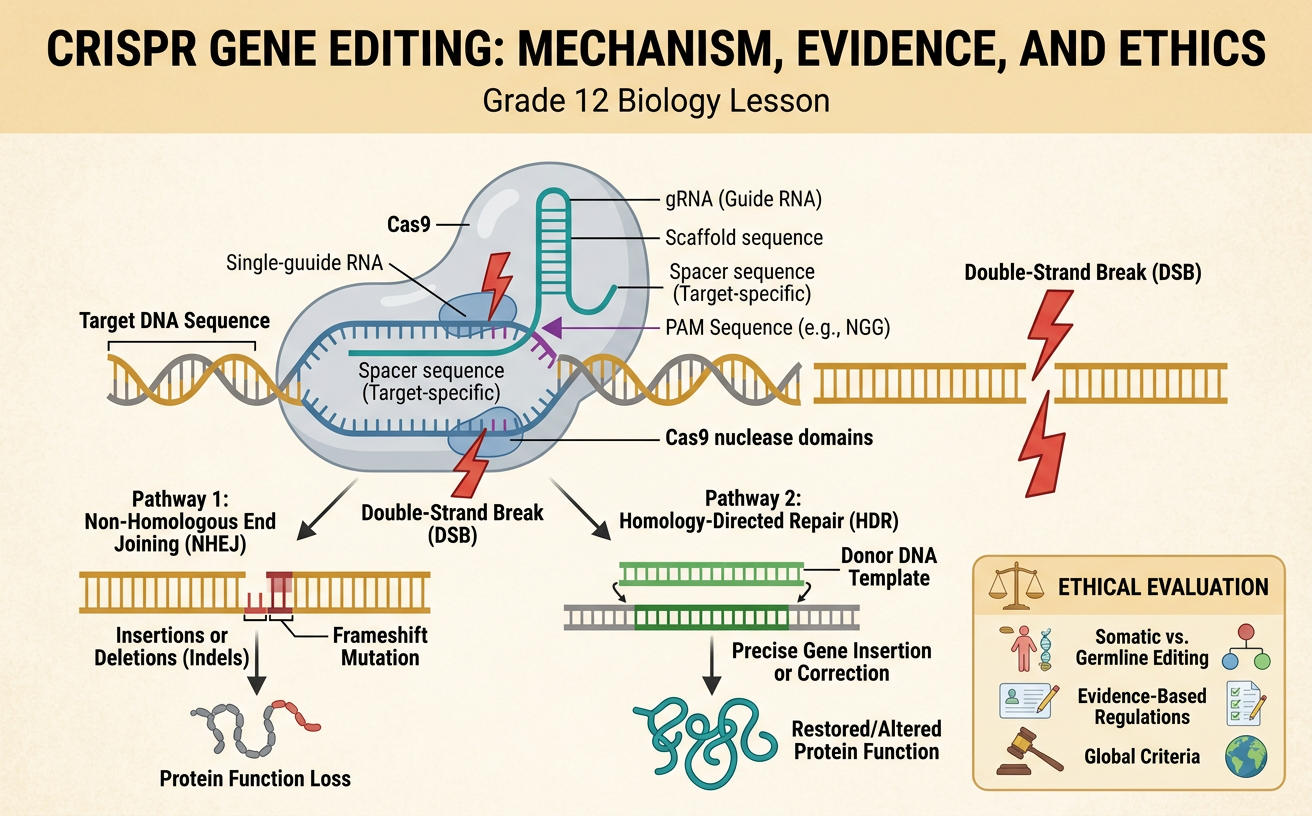
The CRISPR-Cas9 system uses two main engineered components: a guide RNA and the Cas9 protein. Part of the guide RNA contains a sequence designed to pair with a complementary target in DNA. Cas9 first recognizes a short nearby DNA sequence called a protospacer adjacent motif, or PAM. For commonly used Streptococcus pyogenes Cas9, the PAM is usually 5′-NGG-3′, where N can be any nucleotide. Cas9 then checks whether the adjacent DNA closely matches the guide RNA. If the match is sufficient, the DNA strands separate, the guide pairs with one strand, and Cas9 cuts both strands about three base pairs before the PAM. For example, researchers can design a guide to direct Cas9 toward a disease-associated sequence rather than an unrelated gene.

Modeling a Targeted DNA Edit
To model an edit, first locate a target sequence next to a suitable PAM. Consider the DNA strand 5′-GAGTCCGAGCAGAAGAAGAATGG-3′. The final TGG is the PAM, and the preceding 20 bases form the target. Cas9 cuts both DNA strands about three bases upstream of the PAM. The cell must then repair the break. Nonhomologous end joining often reconnects the ends with a small insertion or deletion, which can disrupt a gene. Homology-directed repair can copy information from a supplied donor DNA template, producing a planned sequence change, although this pathway is often less efficient. In a classroom model, students can remove two bases to represent an unpredictable deletion or replace one base using a matching donor template, then compare the resulting sequences.

Predicting Protein Effects
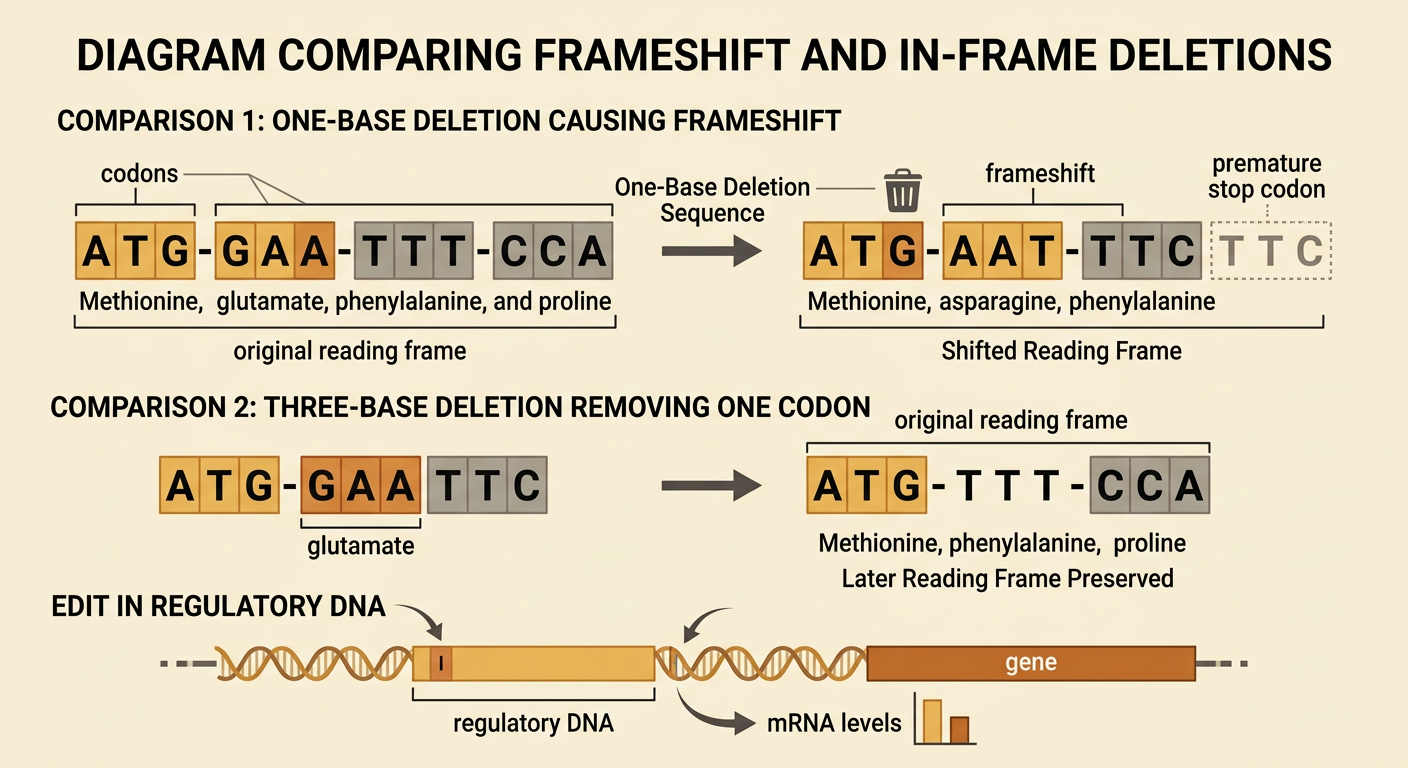
An edit’s effect depends on its location and on how it changes the sequence. During translation, a ribosome reads messenger RNA in groups of three bases called codons. An insertion or deletion not divisible by three shifts the reading frame and can alter every downstream codon. For example, the coding sequence ATG-GAA-TTT-CCA begins as methionine, glutamate, phenylalanine, and proline. Deleting the fourth base changes the grouping to ATG-AAT-TTC and changes the amino acid sequence; a premature stop codon may also appear later. By contrast, deleting exactly three bases may remove one amino acid without shifting later codons. A substitution may be silent, change one amino acid, or create a stop codon. Edits in regulatory DNA can change how much protein is produced rather than changing its amino acid sequence.
Evaluating Risks and Benefits
Evidence about CRISPR should include both possible benefits and measurable risks. A potential benefit is treating a serious disease by editing a patient’s somatic cells, which do not pass the edit to offspring. For example, blood-forming stem cells can be edited outside the body and returned to a patient to increase production of a hemoglobin form that reduces sickling. Risks include unintended edits at similar DNA sites, incomplete editing across cells, harmful repair outcomes, immune reactions, and unknown long-term effects. Students should compare DNA-sequencing data, treatment results, adverse-event tables, and explanations of study design rather than relying on a single claim. Strong evidence comes from appropriate control groups, sufficient sample sizes, independent replication, transparent methods, long-term monitoring, and results showing that the expected benefit is greater than available alternatives and foreseeable harms.

Setting Ethical Boundaries
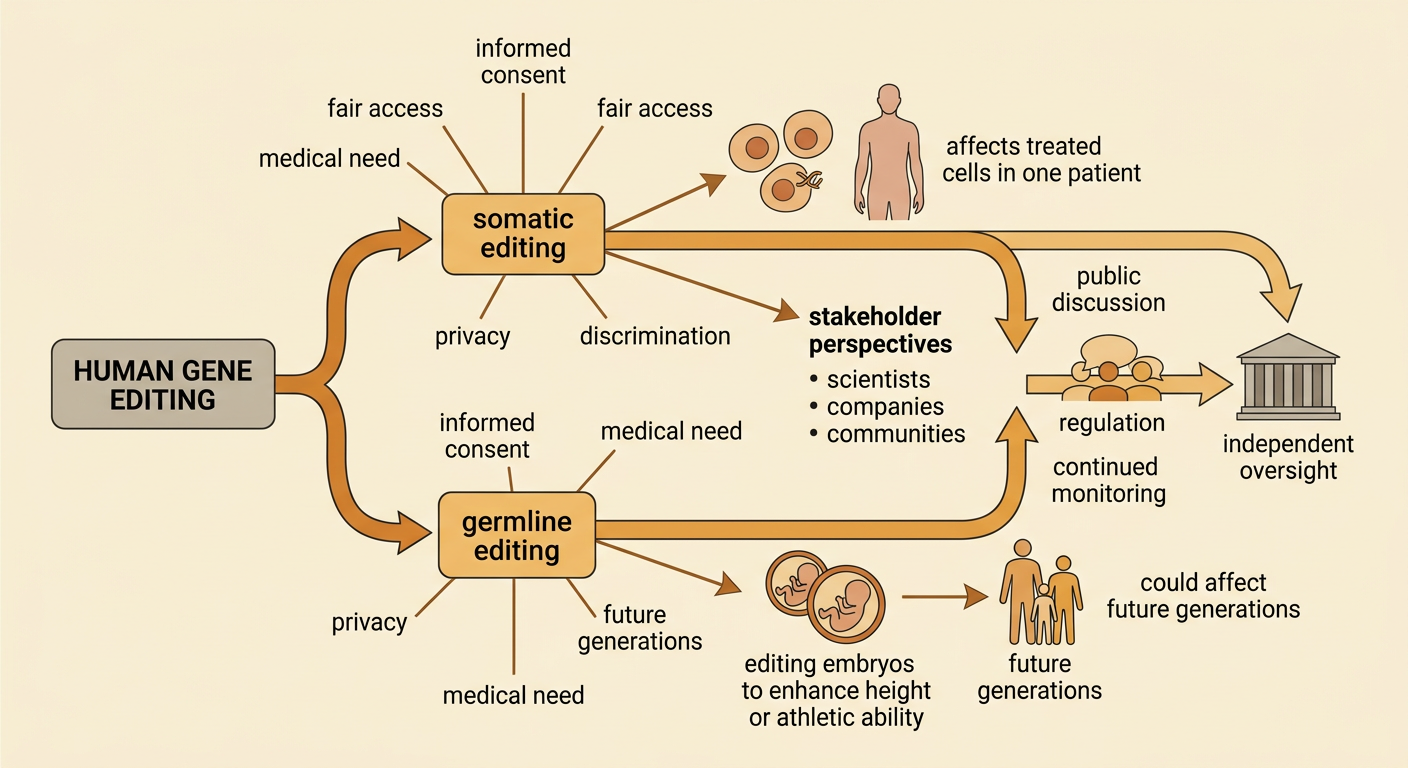
Ethical rules for human gene editing depend on who is affected, who can consent, and whether changes can be inherited. Somatic editing affects treated cells in one patient, while germline editing of embryos, eggs, or sperm could affect future generations. A proposed somatic treatment for a life-threatening disease may be considered differently from an inherited edit intended to enhance height or athletic ability. Regulators should consider safety, medical need, informed consent, privacy, disability perspectives, fair access, effects on future people, and the possibility of discrimination or social pressure. Patients may prioritize relief from disease, scientists may emphasize evidence, companies may have financial interests, and communities may disagree about acceptable uses. Democratic decision-making should include transparent public review, diverse representation, protection of individual rights, independent oversight, enforceable limits, and revision of policies as evidence changes.