
CRISPR Gene Editing: Mechanisms, Evidence, and Ethics
Students model how CRISPR alters DNA, evaluate evidence about potential outcomes, and develop an evidence-based position on regulating heritable human gene editing.

Illustrations are auto-generated and may be placeholders. They can be refreshed to match the narration.
CRISPR and Targeted DNA Changes
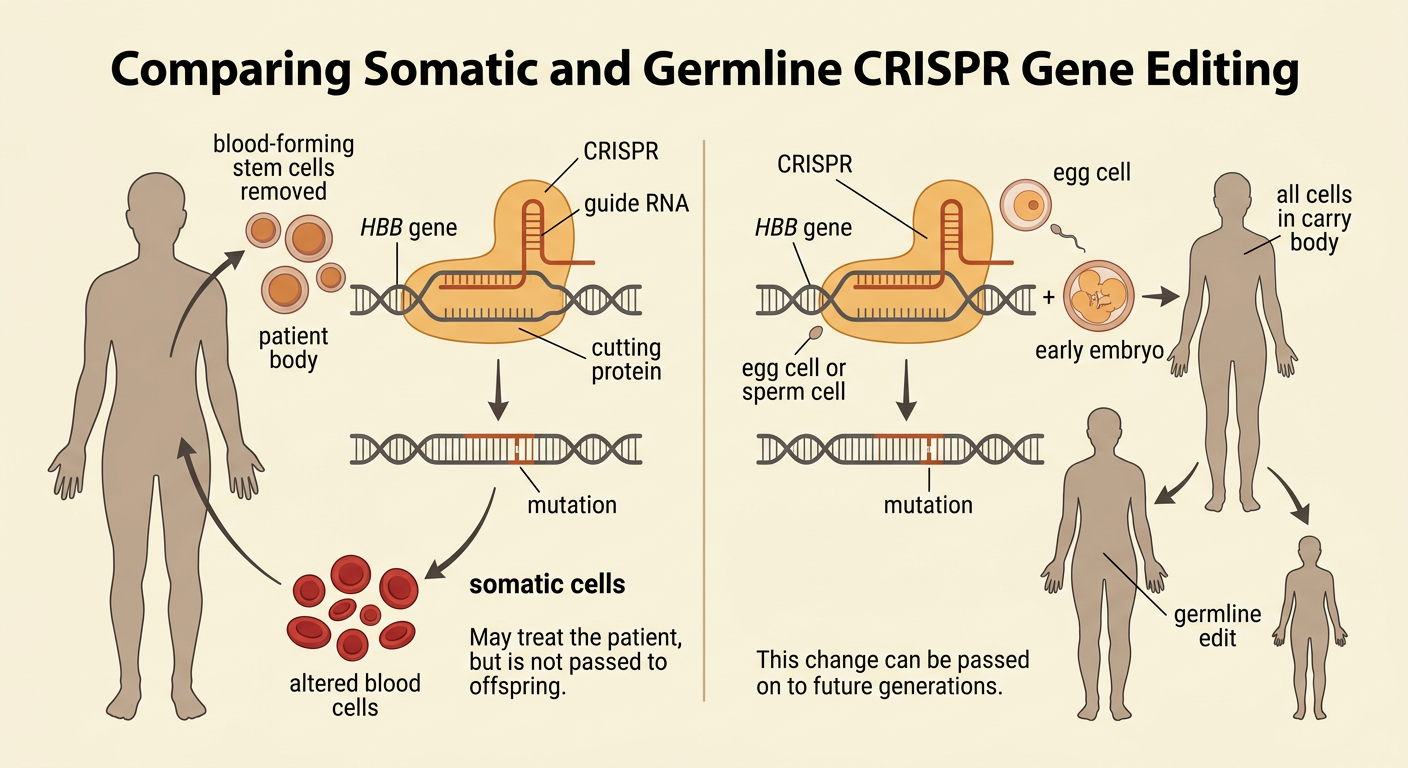
CRISPR gene editing is a method for making a targeted change in DNA. Scientists choose a DNA sequence associated with a trait or disease, direct a cutting protein to that location, and rely on cellular DNA repair to produce an edit. The result is a mutation, meaning a change in the nucleotide sequence. An edit in a body cell may affect the treated person but is generally not inherited. An edit in an egg, sperm, or early embryo could enter the germline and be passed to future generations. For example, sickle cell disease is associated with a specific variant in the HBB gene. Researchers can edit blood-forming stem cells outside the body and return them to the patient. Because these are somatic cells rather than reproductive cells, the therapeutic change is not expected to be inherited by the patient’s children.
Guide RNA and Cas9 Mechanism
A common CRISPR system uses a guide RNA and the Cas9 protein. The guide RNA contains a sequence designed to pair with a complementary target in DNA. Cas9 first recognizes a short nearby DNA pattern called a protospacer adjacent motif, or PAM. For the widely used SpCas9 protein, the PAM is usually NGG, where N can be any nucleotide. If the guide RNA pairs closely enough with the target, Cas9 cuts both DNA strands, typically about three base pairs before the PAM. The cell must then repair the break. For example, a guide RNA might be designed to direct Cas9 to a disease-related sequence in the HBB gene. The guide does not physically rewrite the gene; it positions Cas9 at the selected site. The eventual DNA change is produced during cellular repair, so cutting and editing are related but distinct steps.

Predicting Genetic Outcomes
A CRISPR cut can lead to several genetic outcomes because cells repair broken DNA in different ways. Nonhomologous end joining often reconnects the ends quickly but may add or remove nucleotides. These insertions or deletions can shift a reading frame or disable a gene. Homology-directed repair can copy information from a supplied DNA template, potentially creating a precise change, but it is often less efficient and depends on cell type and cell-cycle stage. Some cells may remain unedited, and others may receive different edits, producing mosaicism. Off-target cutting may also alter similar DNA sequences elsewhere in the genome. For example, if 60 percent of sampled cells contain the intended correction, 25 percent contain small deletions, and 15 percent remain unchanged, the organism has more than one cellular genotype. Predictions must therefore include probabilities, not just one expected result.

Evaluating Benefits and Risks
Claims about CRISPR should be judged using evidence about effectiveness, uncertainty, and consequences. Potential benefits include treating serious disease, reducing suffering, and correcting variants before symptoms develop. Risks include unintended mutations, immune reactions, mosaicism, unequal access, and effects that may appear only after many years. The evidence differs for somatic and heritable editing. Somatic therapies can be studied in consenting patients and do not intentionally alter future generations. Heritable embryo editing could affect descendants who cannot consent, and any harmful change might spread through a family line. For example, a study reporting improved blood-cell function after somatic editing supports a possible medical benefit, but it does not prove that embryo editing is safe. Students should cite specific data, methods, and limitations from sources. They should also compare perspectives from patients, scientists, disability advocates, religious communities, and groups concerned about discrimination or access.

Evidence-Based Policy Recommendation
A policy recommendation should state a clear claim, support it with specific evidence, and address competing interests and rights. One defensible recommendation is to permit carefully regulated somatic gene-editing research and treatment while temporarily prohibiting the clinical creation of gene-edited children. Evidence for somatic benefits includes measurable improvement in treated cells and patients, while evidence about heritable safety remains limited by mosaicism, off-target changes, and unknown long-term effects. A policy could require independent review, informed consent, public reporting of adverse events, long-term monitoring, and fair participant selection. It should also protect privacy and prohibit discrimination based on genetic information. Democratic decision-making requires public input from patients, researchers, future-parent advocates, disability communities, and historically excluded groups. Students can defend or challenge this recommendation, but they should quote or cite exact findings from assigned sources and explain how human dignity, equality, autonomy, safety, and responsibility to future generations shape their conclusion.
