Daylight Changes with the Seasons
Students compare seasonal daylight records to discover that the amount of daylight changes throughout the year.
Illustrations are auto-generated and may be placeholders. They can be refreshed to match the narration.
Notice Sunrise and Sunset
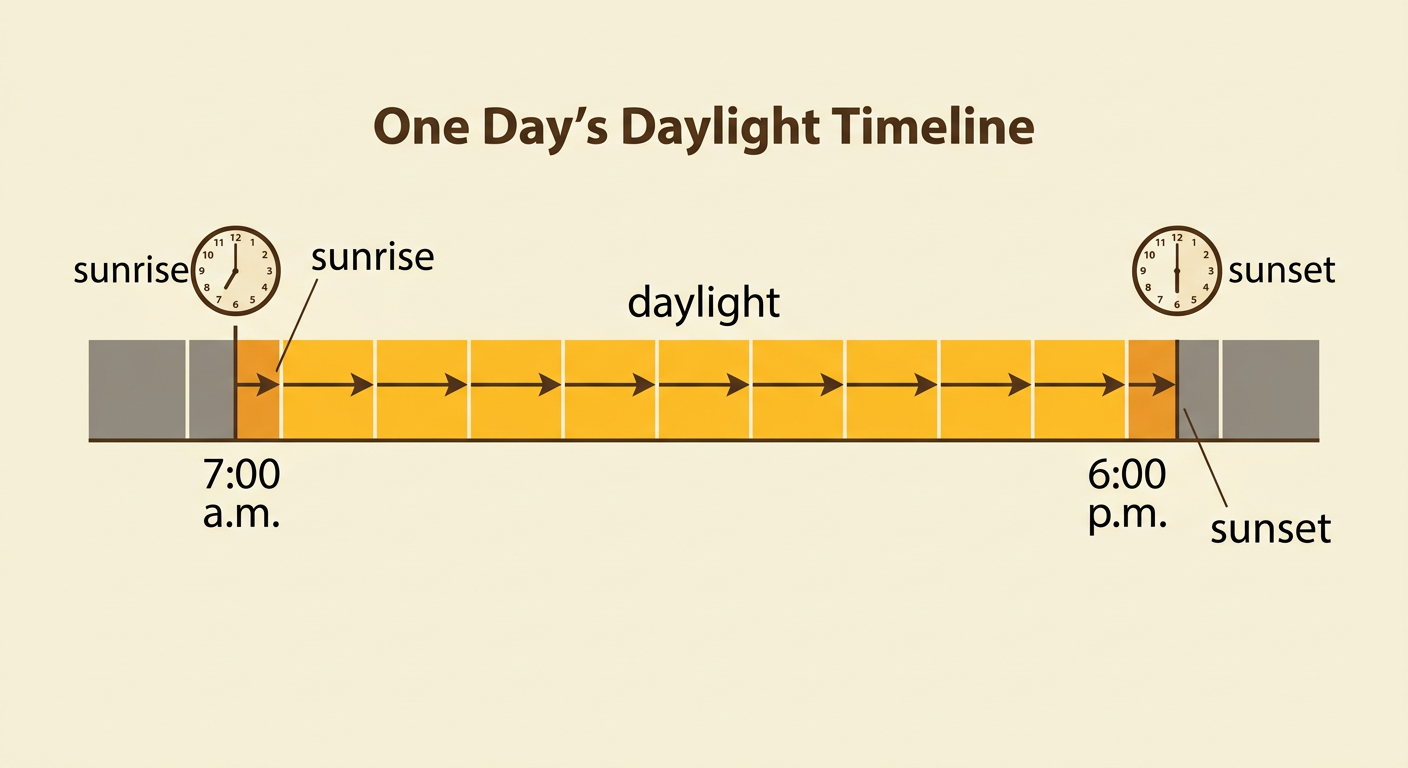
Sunrise is the time when the Sun first appears in the morning. Sunset is the time when the Sun disappears in the evening. The time between sunrise and sunset is called daylight. We can observe and record these times on different days. For example, a class might record sunrise at 7:00 a.m. and sunset at 6:00 p.m. That day has 11 hours of daylight. Clouds may hide the Sun, but the day still has daylight. To make a fair comparison, we should use records from the same place. We can also use the same clock or trusted weather record each time. These careful observations help us find out whether the amount of daylight stays the same or changes during the year.
Compare Seasonal Daylight Records
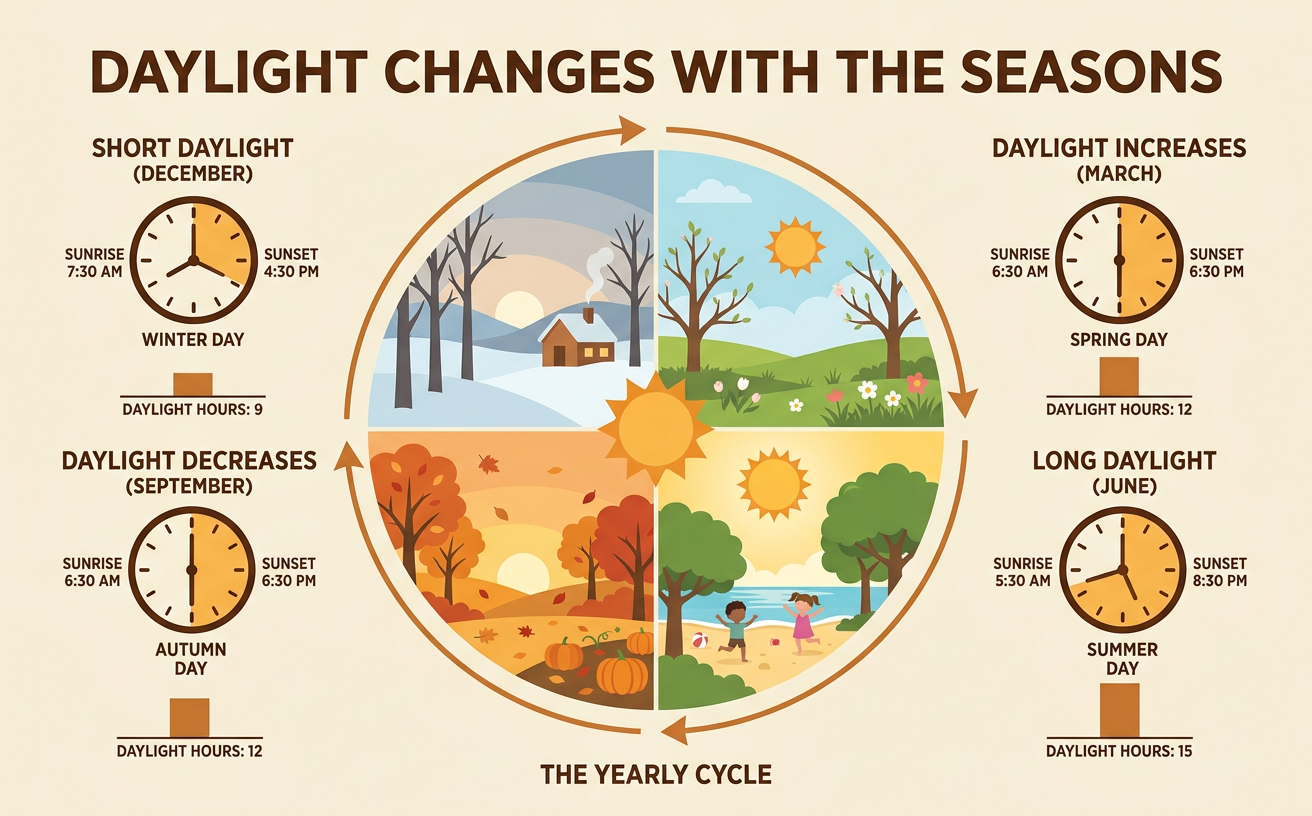
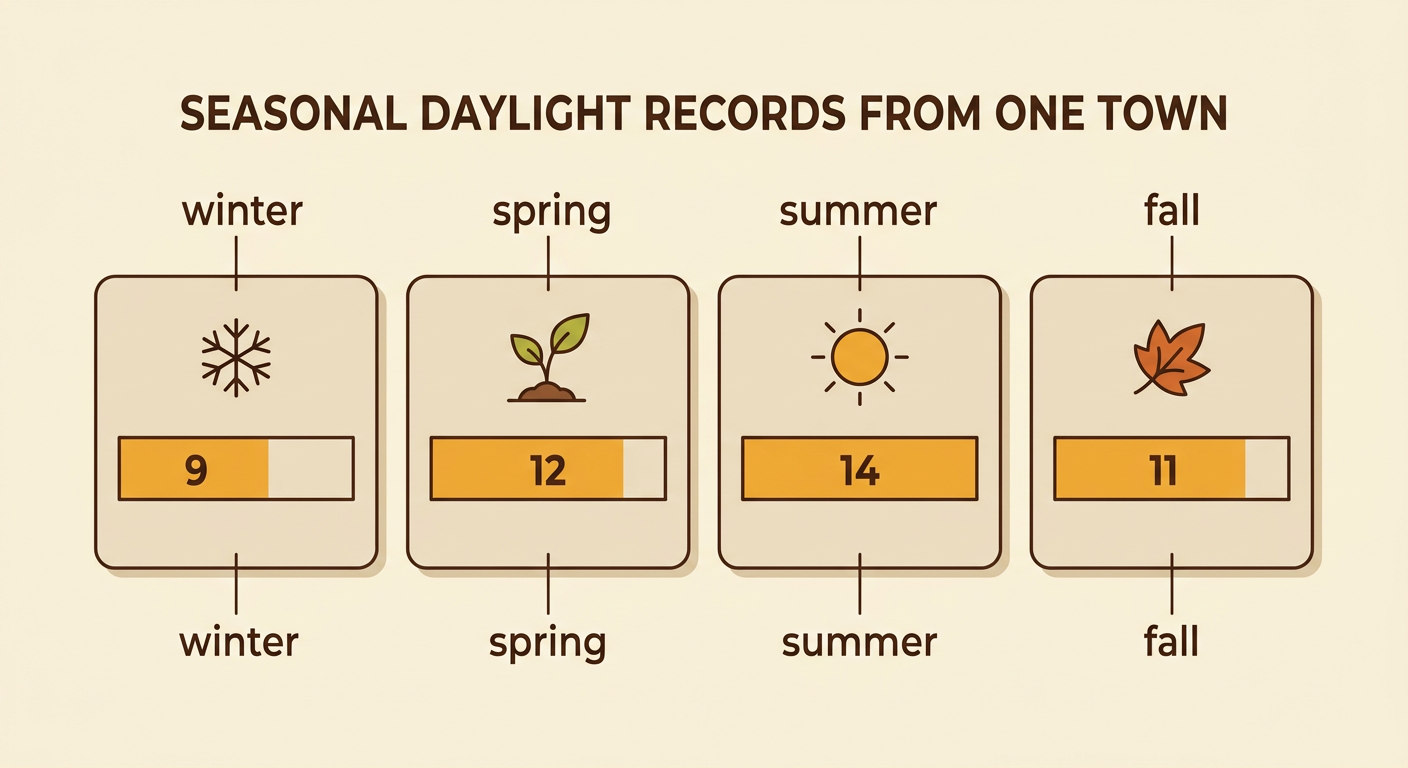
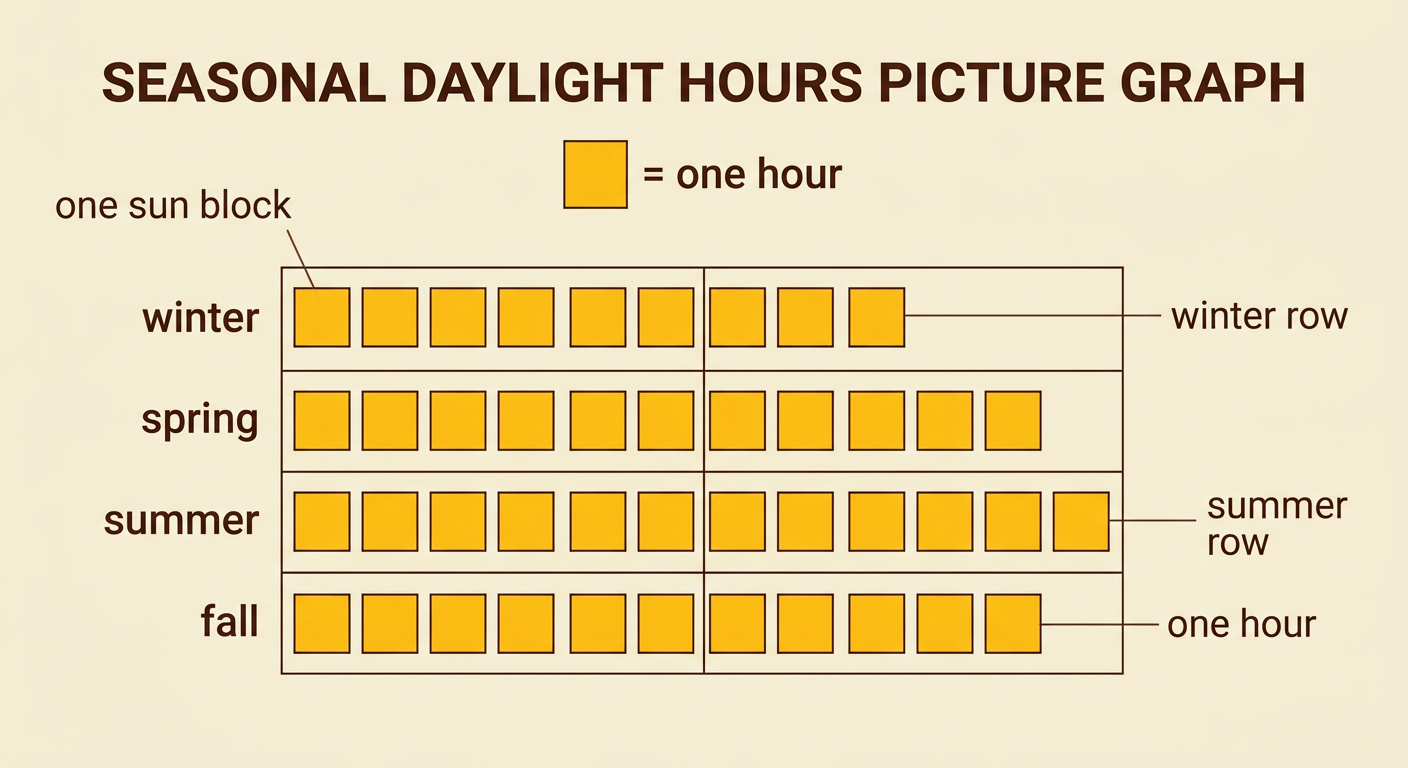
The year has four seasons: winter, spring, summer, and fall. Daylight records from the same town can be compared across these seasons. Imagine that a class has rounded records showing 9 hours of daylight in winter, 12 hours in spring, 14 hours in summer, and 11 hours in fall. Summer has more daylight than winter. Spring and fall have amounts between the winter and summer records. We should compare the numbers, not how bright or warm each day felt. A cloudy summer day can still have more daylight time than a clear winter day. These example times are for one town. Other places may have different sunrise and sunset times, but many places also have seasonal changes in daylight.
Organize the Data
A chart or picture graph helps us organize daylight data so it is easy to compare. Write each season in one row. Then show the number of daylight hours for that season. In a picture graph, one sun block can stand for one hour of daylight. The winter row would have 9 blocks, while the summer row would have 14 blocks. Count the blocks carefully and place them in a straight line. Ask questions about the graph: Which season has the most daylight? Which has the least? How many more daylight hours does summer have than winter? In this example, 14 is 5 more than 9, so summer has 5 more hours of daylight than winter. Organized data makes the difference easy to see.
Describe the Pattern
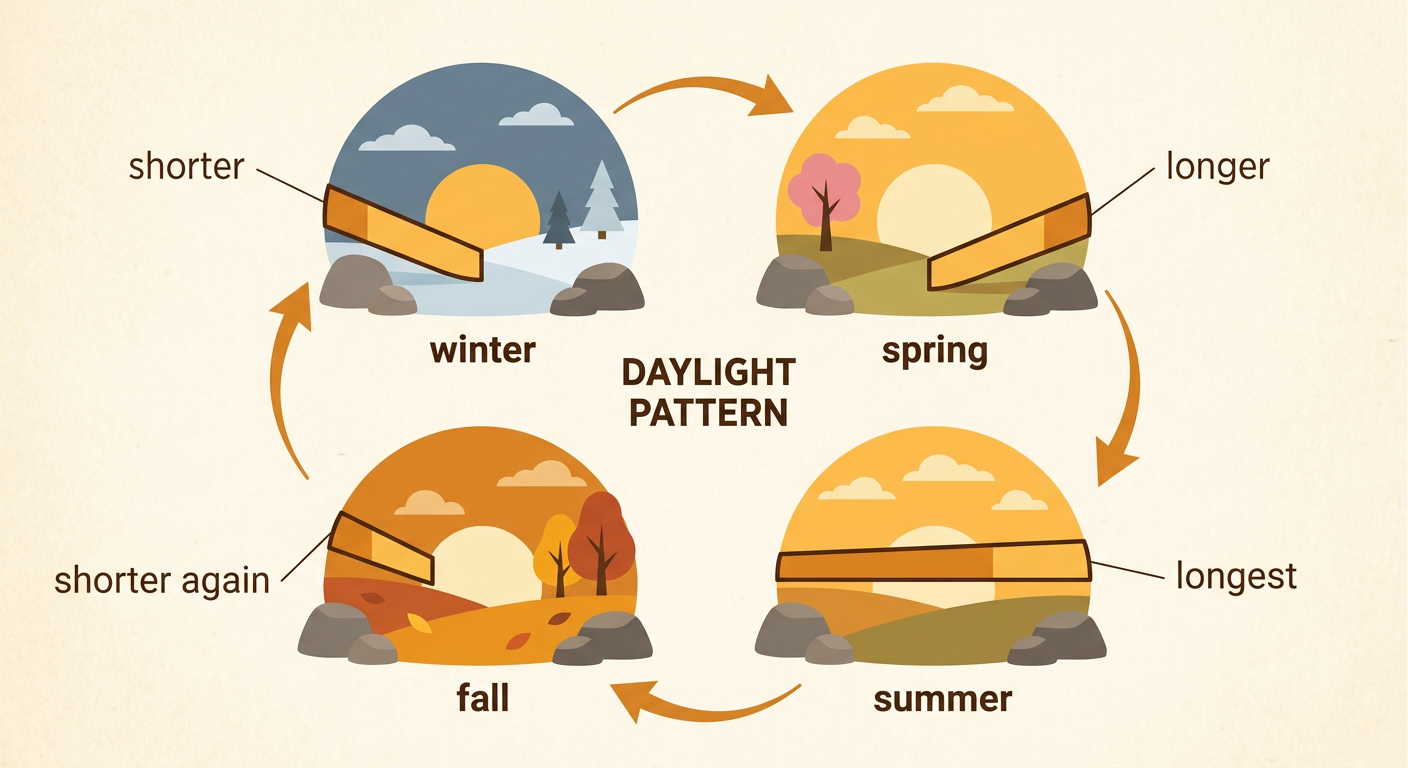
The organized records reveal a pattern. In this example town, winter has the least daylight, and summer has the most. Daylight increases from winter into spring and toward summer. After summer, daylight decreases through fall and toward winter. This pattern repeats each year. We can describe it with words: shorter, longer, longest, and shorter again. For example, a child may notice that the Sun is still up after dinner on many summer days but has already set before dinner on some winter days. One record is not enough to show the whole pattern. Scientists use observations from many dates and years. The exact number of daylight hours depends on the date and location, but the seasonal pattern can be found by comparing records from the same place.
Connect Daylight to Daily Life
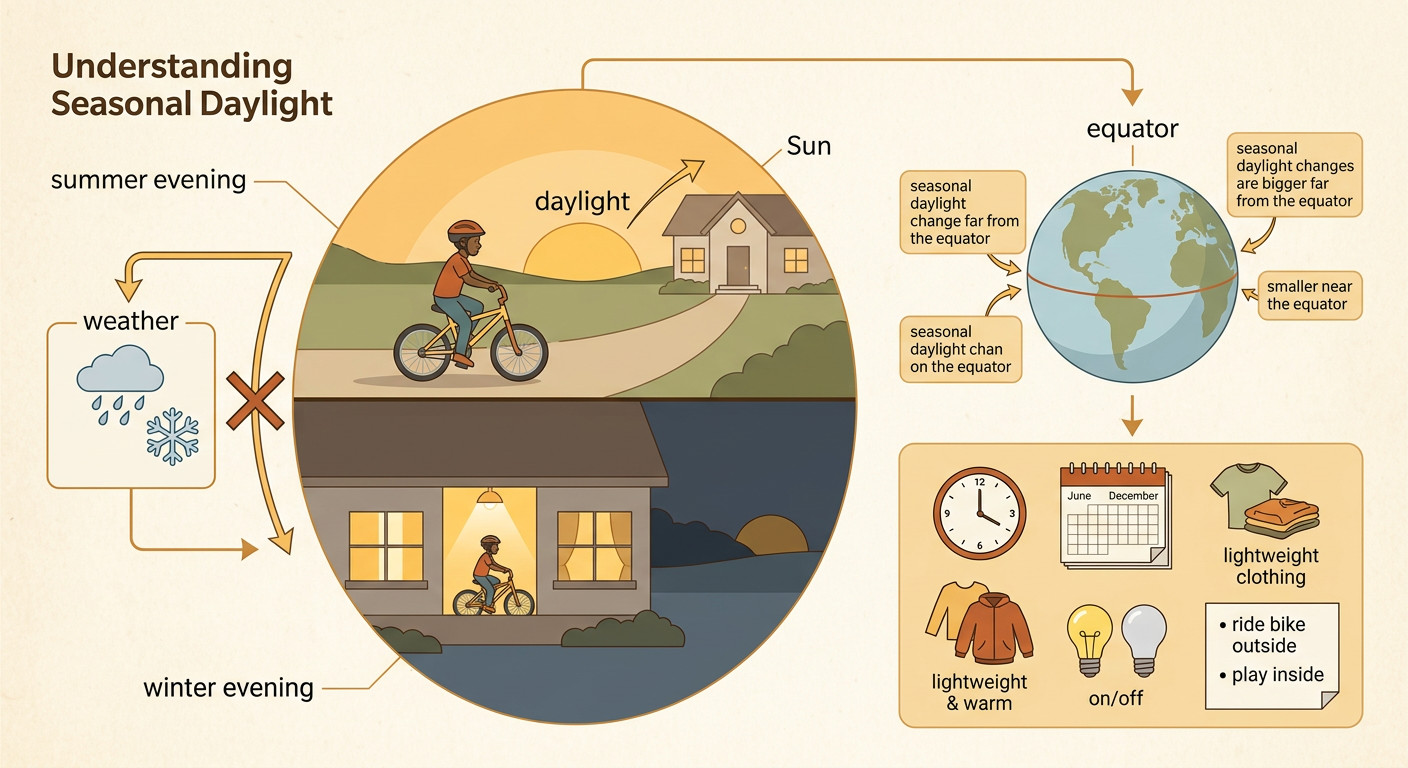
Seasonal daylight changes can affect what people do each day. When there is more evening daylight, families may play outside, garden, walk, or finish outdoor work later. When sunset comes earlier, people may turn on lights sooner and choose more indoor activities. For example, a child might ride a bicycle after dinner in summer but ride before dinner in winter. Daylight is not the same as weather. Rain, snow, heat, or cold can also change people's plans, but those conditions do not decide the sunrise and sunset times. Location matters too. Places far from the equator usually have bigger seasonal daylight changes than places near the equator. People use clocks, calendars, clothing, lights, and activity plans to adjust to their environment throughout the year.