
Describing Characters Through Feelings and Actions
Students use words and picture clues to describe a story character’s feelings, traits, and actions.

Illustrations are auto-generated and may be placeholders. They can be refreshed to match the narration.
Meet the Character
A character is a person or animal in a story. To meet a character, look for the character’s name and notice what the character says, does, thinks, and feels. These details help you understand who the character is. Imagine a story about a girl named Maya. Maya sees a small, muddy dog alone near the park gate. She kneels beside the dog and reads the name tag on its collar. Maya is the main character because the story mostly follows her. The dog is another character. As you read, ask: Who is this character? What is happening to the character? What details tell me more? Careful readers use story details instead of making a guess without evidence.

Notice Words and Picture Clues
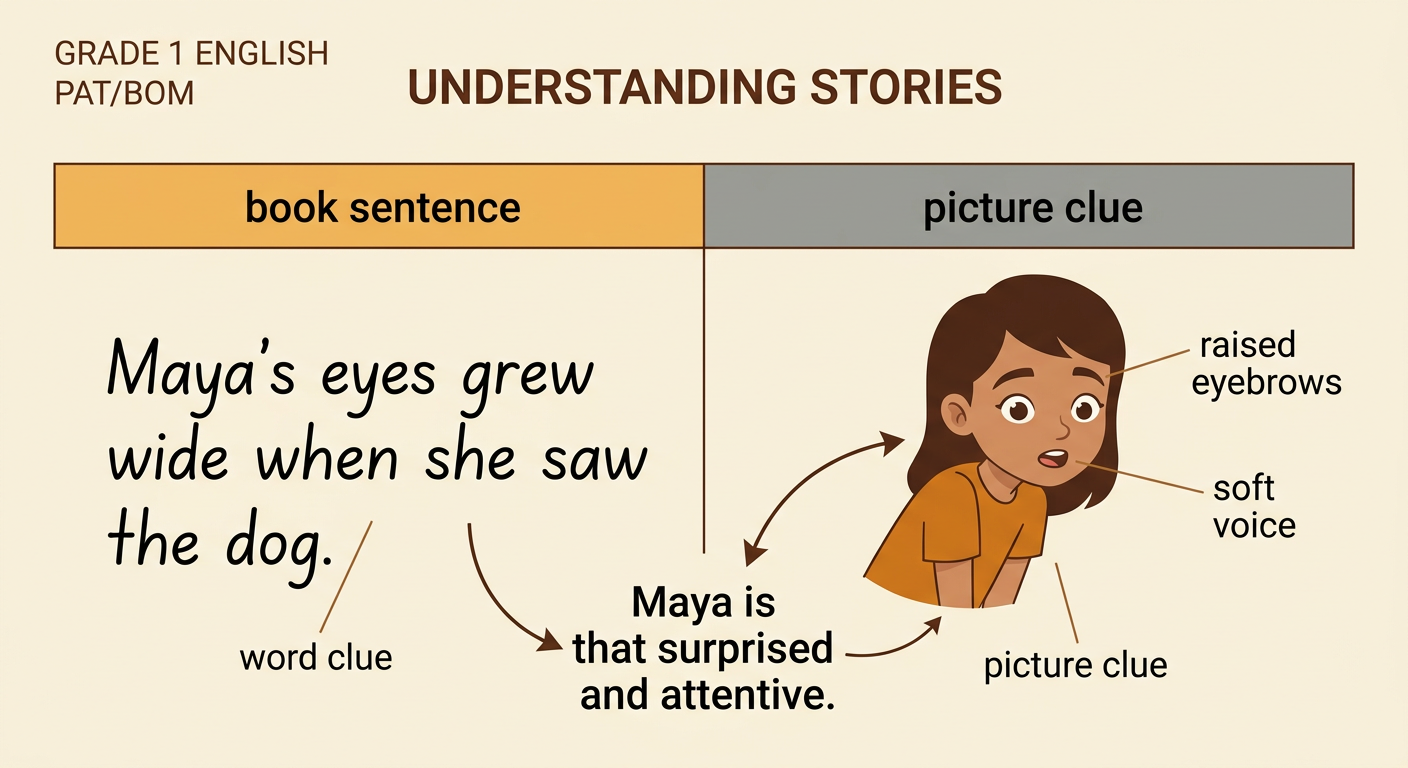
Story words and pictures both give clues about a character. First, read or listen to the words. Then study the character’s face, body, and surroundings in the picture. In Maya’s story, the words say, “Maya’s eyes grew wide when she saw the dog.” The picture shows Maya leaning forward with raised eyebrows. These clues suggest that she is surprised and paying close attention. Another sentence says that Maya speaks in a soft voice. That word clue shows that she is trying not to scare the dog. Point to the exact clue that supports your idea. Do not use only one small picture detail if the words tell something different. Strong readers put word clues and picture clues together.
Identify Feelings and Traits
A feeling tells how a character feels at one moment. Feelings can change during a story. Happy, worried, excited, sad, and afraid are feeling words. A trait tells what a character is usually like. Kind, brave, patient, honest, and helpful are trait words. When Maya first finds the dog, she may feel worried because it is alone. Worried is her feeling at that moment. Maya gently checks the dog’s tag and looks for its owner. These actions show that she is caring and helpful. Caring and helpful are traits because they describe the kind of person Maya is. Choose words that match the story clues. Then explain your choice with a detail from the words or picture.

Connect Feelings to Actions
A character’s feelings can help explain the character’s actions. An action is something the character does. Look for what happens first and what happens next. Maya feels worried when she sees the dog alone. Because she is worried, she stays with the dog and asks an adult for help. Then Maya calls the phone number on the dog’s tag with the adult. Her feeling connects to her actions. Later, the dog’s owner arrives, and Maya smiles. Now she feels relieved and happy. Her new feelings lead her to wave goodbye and continue walking. Use the word because to explain a connection: Maya stays with the dog because she is worried about it. This sentence links a feeling to an action.

Share a Character Description
A strong character description names the character, tells a feeling or trait, and gives a key detail from the story. You can say, “Maya is caring and helpful. She feels worried when she finds the lost dog, so she stays with it and asks an adult for help.” This description uses trait words, a feeling word, and actions as evidence. Before you share, check that your details come from the story’s words or pictures. Speak in complete sentences and point to a clue if you can. You may use this sentence frame: The character is ____. The character feels ____ when ____. I know because ____. Your description does not need to tell every event. Choose the clearest details that help others understand the character.
