
Describing Characters Through Their Actions
Students identify a story character’s traits, motivations, and feelings by citing evidence from the character’s words and actions.

Illustrations are auto-generated and may be placeholders. They can be refreshed to match the narration.
Meet the Character
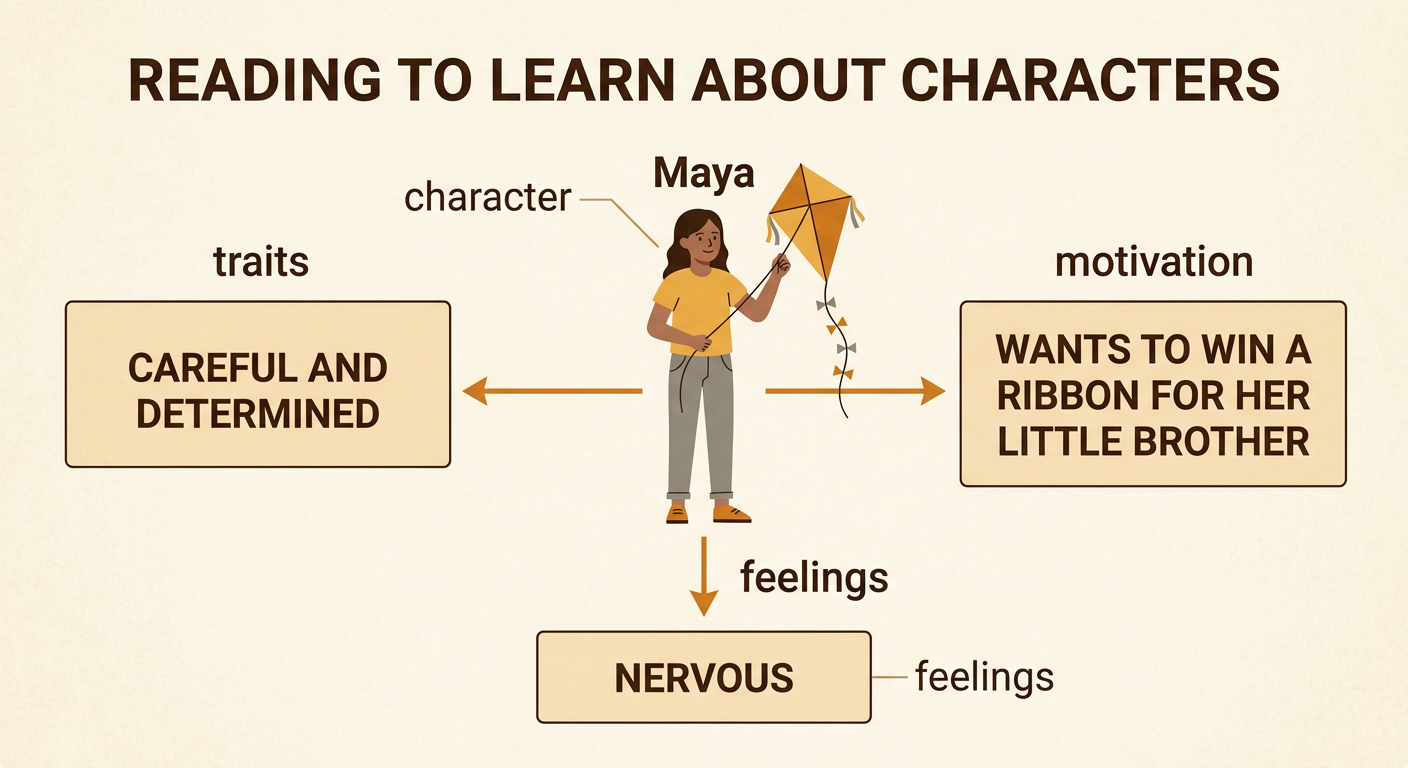
A character is a person, animal, or creature in a story. To understand a character, look for clues about the character’s traits, motivations, and feelings. Traits describe what a character is usually like, such as brave, patient, or curious. A motivation is the reason a character wants or does something. Feelings are emotions that may change during the story. For example, Maya enters a kite-flying contest. She wants to win a ribbon for her little brother. Winning the ribbon is her motivation. Before the contest, Maya’s hands shake, so she may feel nervous. She still checks every knot on her kite and practices again. These actions begin to show that Maya is careful and determined.
Notice Words and Actions
A character’s words and actions give readers important clues. Words are what the character says or thinks. Actions are what the character does. Pay attention to strong details instead of making a guess based only on a picture. At the kite contest, Maya says, “I will try one more time,” after her kite falls. Then she straightens the kite’s tail and runs back to the starting line. Her words show that she does not want to quit. Her actions show that she works to solve the problem. Together, these clues suggest that Maya is determined. If Maya had dropped the kite and gone home, that action would suggest something different. Readers use exactly what happens in the story to understand a character.

Name Character Traits
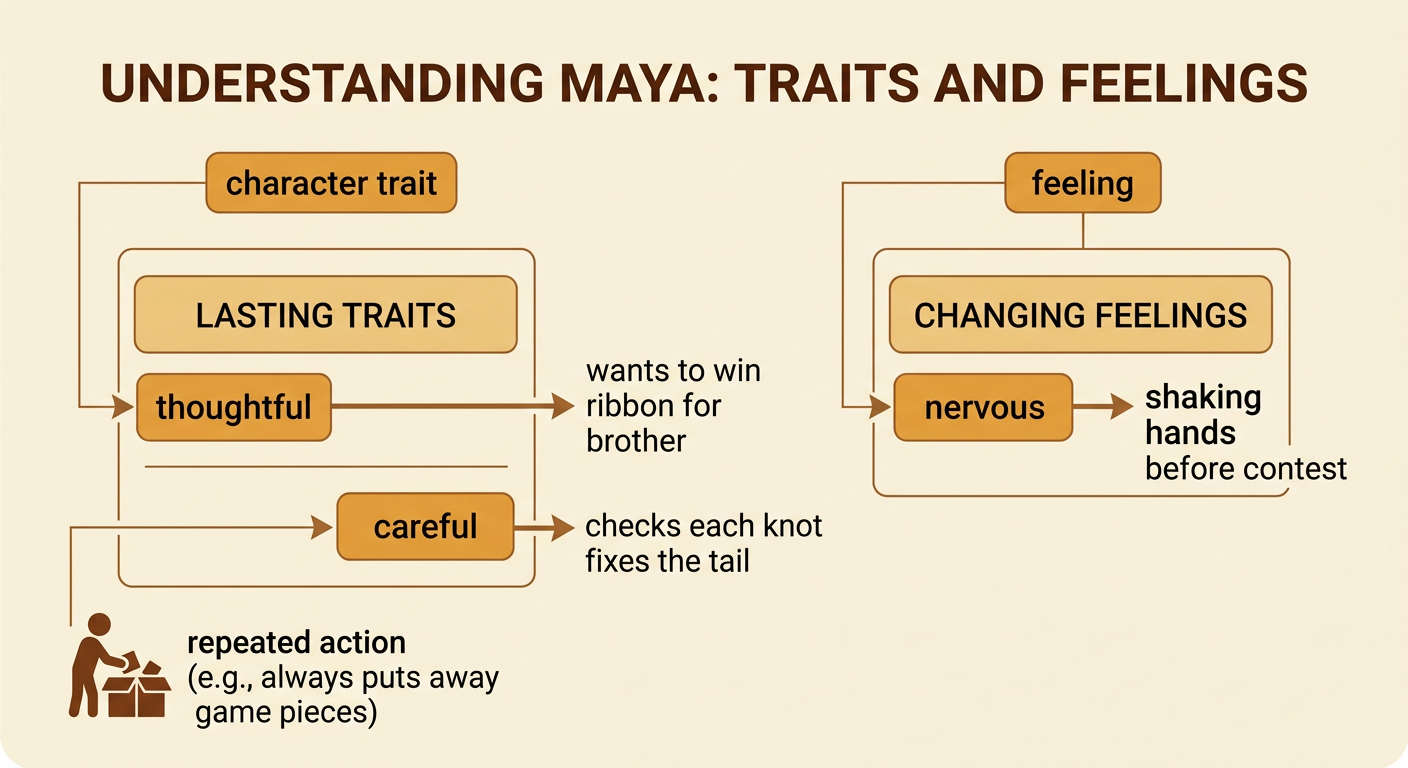
A character trait is a word that describes how a character usually thinks, speaks, or acts. Good trait words are specific. Instead of saying Maya is nice, a reader might call her thoughtful because she wants to win a ribbon for her brother. Maya may also be determined because she keeps trying after her kite falls. One action can suggest several traits, so choose the trait that best fits all the clues. Do not confuse a temporary feeling with a trait. Nervous is Maya’s feeling before the contest, but careful is a trait shown when she checks each knot. Ask, “What does this character do more than once?” Then select a trait word and explain which behaviors support it. Strong descriptions connect the trait directly to the story.
Support Ideas with Text Evidence
Text evidence is a word, sentence, or event from the story that supports an idea. First, state your idea about the character. Next, give a specific detail from the text. Finally, explain how the detail proves your idea. For example: Maya is determined. After her kite falls, she says, “I will try one more time,” fixes the tail, and runs again. This evidence shows determination because Maya continues working instead of quitting. The quote and actions are stronger evidence than saying, “I just think she is determined.” You can use sentence starters such as “The story says,” “For example,” and “This shows.” Always make sure your evidence matches your claim. A detail about Maya’s shaking hands supports the idea that she feels nervous, not the idea that she is careless.

Connect Actions to Events
A character’s actions can cause later events in a story. To find the connection, ask, “What did the character do?” and “What happened because of that action?” Maya’s kite first falls because its tail is twisted. Maya chooses to straighten the tail and try again. Because she fixes the problem, the kite rises into the air. It stays up longer than the other kites, so Maya wins the ribbon for her brother. These events form a sequence: the kite falls, Maya repairs it, the kite flies, and Maya wins. If Maya had not acted, the later events might not have happened. Her determined action moves the plot forward. When describing a character, explain both what the action reveals and how it changes what happens next in the story.
