
Determining Theme and Summarizing a Story
Students identify a story's theme using key details and write an objective summary of the text.

Illustrations are auto-generated and may be placeholders. They can be refreshed to match the narration.
Review Theme and Summary
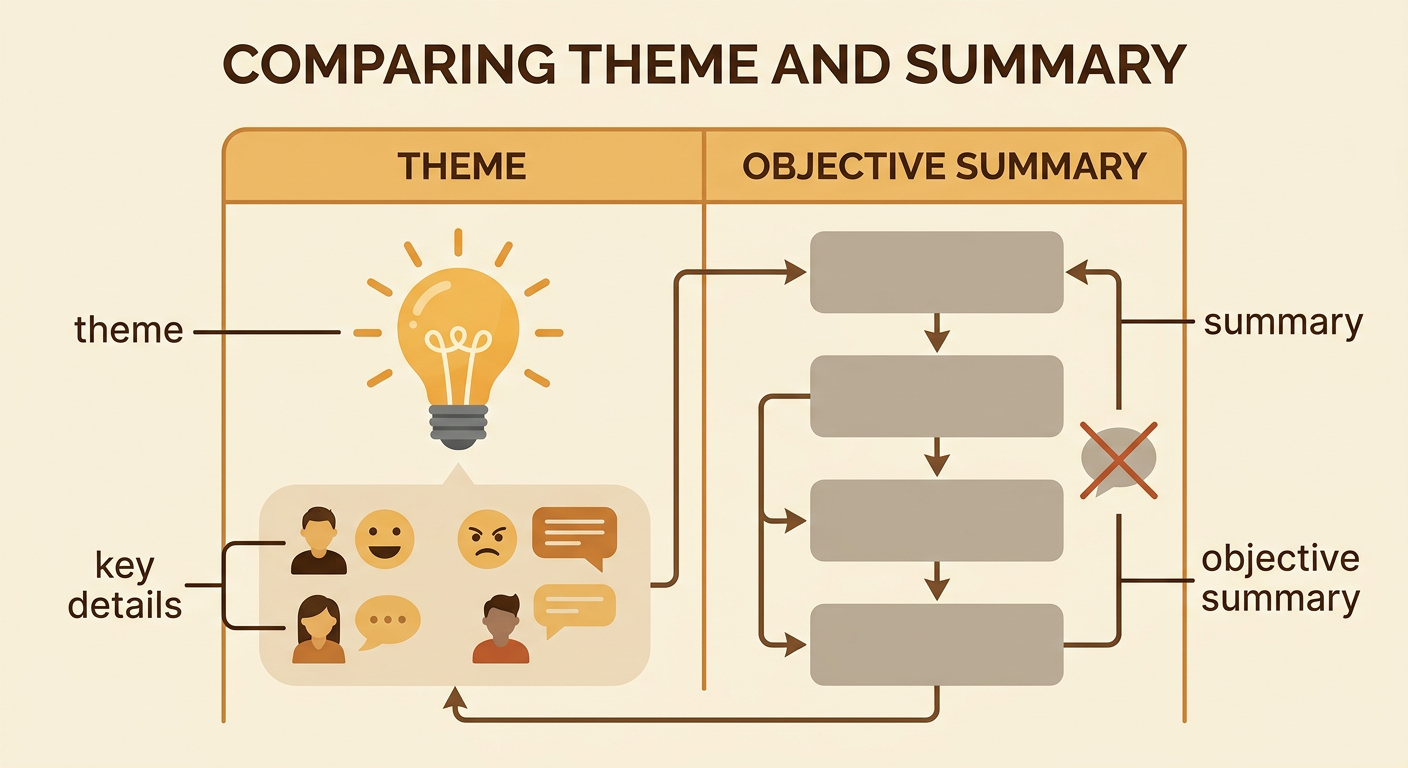
A theme is a message about life that a story communicates. It is not just one word, such as friendship or courage. A theme is a complete idea, such as “True friends help each other through difficult times.” Readers determine a theme by examining what characters say, do, learn, and feel. A summary is a brief retelling of the story’s most important events. It identifies the main characters, setting, central challenge, major actions, and resolution. An objective summary includes facts from the text but leaves out personal opinions. For example, “The story was exciting” is an opinion, so it does not belong in an objective summary. A useful summary might state, “Maya practiced her speech, overcame her fear, and presented it to her class.” Theme explains the story’s message, while summary explains what happened.
Read a Short Story
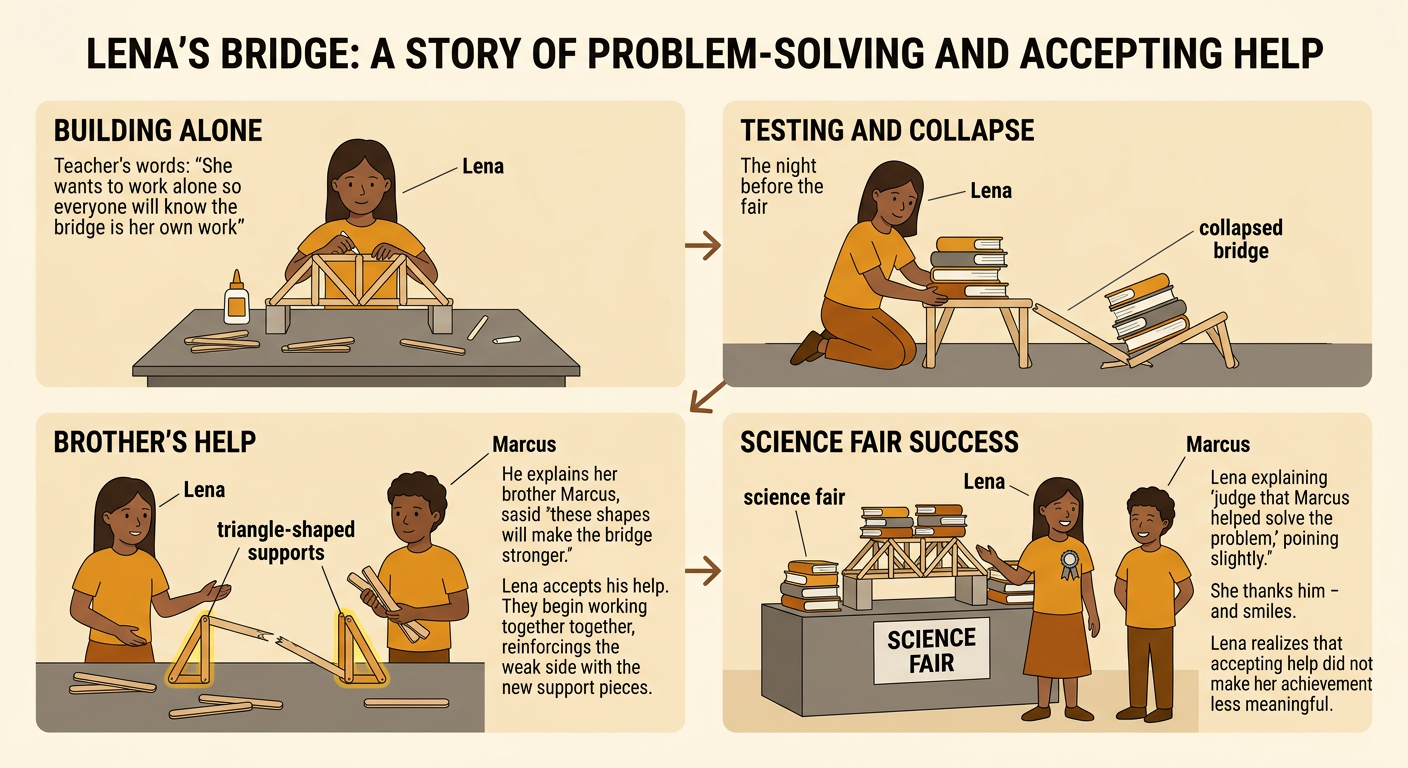
Lena hurried to finish her model bridge for the school science fair. She wanted to build it alone so everyone would know it was her work. The night before the fair, Lena tested the bridge by placing books on it. One side bent and collapsed. Her brother Marcus offered to help, but Lena first refused. After another unsuccessful repair, she showed Marcus the broken supports. He explained that triangle-shaped supports could make the bridge stronger. Together, they rebuilt the weak side and tested it several times. At the fair, Lena’s bridge held more weight than she expected. When the judge praised the design, Lena explained that Marcus had helped her solve the problem. She did not win first prize, but she smiled as she thanked her brother. Lena realized that accepting help did not make her achievement less meaningful. Working with someone else had helped her learn and improve.
Identify Key Details
Key details are the parts of a story that help readers understand the main events, the character’s challenge, and what the character learns. In Lena’s story, her challenge is that her model bridge collapses before the science fair. At first, she refuses Marcus’s help because she wants all the credit. Her repeated failure causes her to change her response. She accepts Marcus’s advice, works with him, and gives him credit at the fair. These details matter because they show Lena changing from someone who insists on working alone into someone who values cooperation. A detail such as the exact number of books on the bridge would not be important unless it affected the outcome. Ask three questions: What challenge does the character face? How does the character respond? What changes by the end? The answers point toward both the theme and the summary.

Determine the Theme
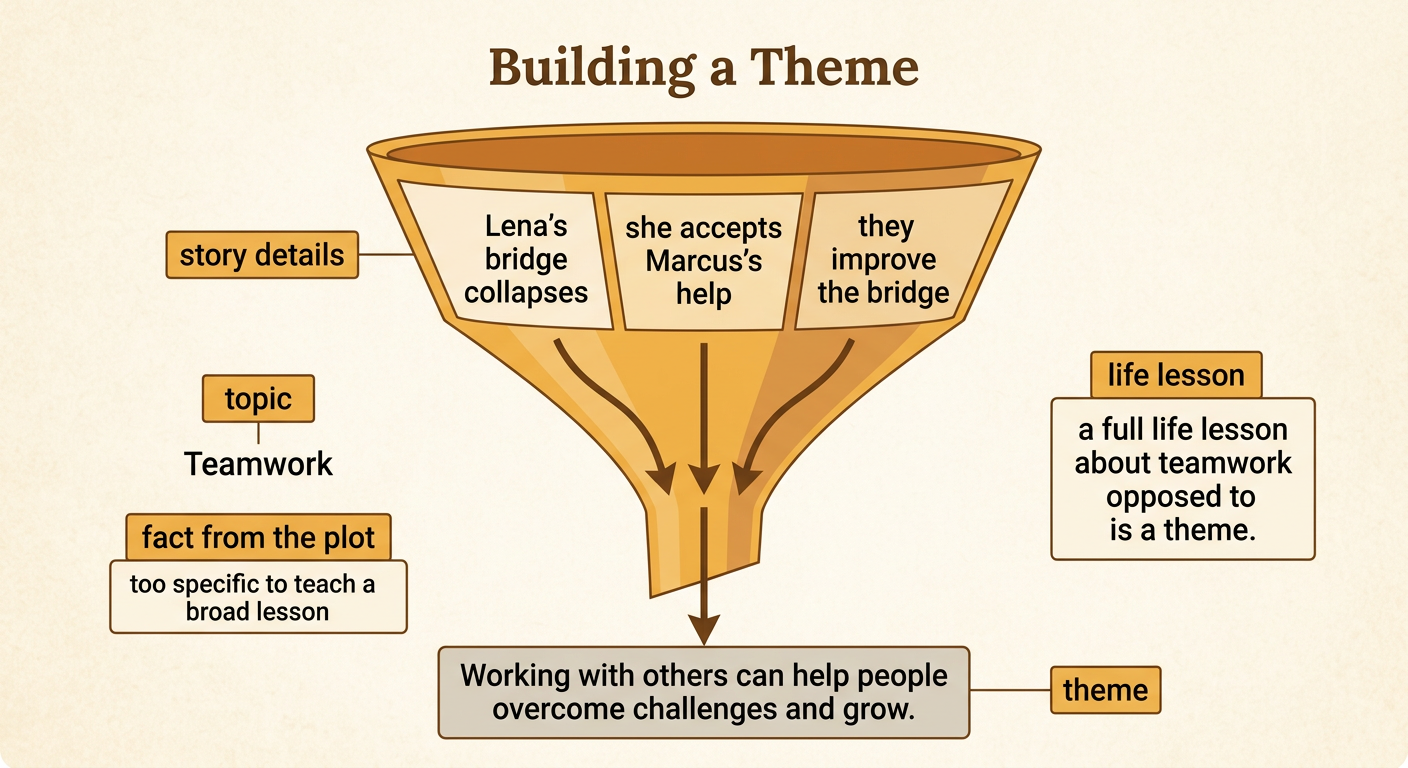
To determine the theme, combine key details into a message that could apply beyond the story. Lena’s bridge problem teaches her that accepting help can lead to learning and improvement. One well-supported theme is “Working with others can help people overcome challenges and grow.” This theme fits because Lena cannot repair the bridge alone, listens to Marcus, succeeds through cooperation, and openly gives him credit. Another possible theme is “Accepting help does not make an achievement less meaningful.” More than one theme may be reasonable if each one is supported by strong details from the text. Avoid giving only a topic, such as teamwork, because a topic does not state a message. Also avoid a theme that is too specific, such as “Triangle supports make bridges stronger.” That is a fact connected to the plot, not a broad lesson about life.
Write an Objective Summary
An objective summary states the central events in a logical order without including every small detail or the writer’s opinion. Begin with the main character, setting, and challenge. Then explain the most important response and the resolution. Use your own words and keep the summary shorter than the original story. For example: “Lena builds a model bridge for her school science fair because she wants to complete it by herself. When the bridge collapses, she first refuses help from her brother Marcus. After her repair fails, Lena accepts his advice, and they rebuild the bridge together. The improved bridge succeeds at the fair, and Lena gives Marcus credit for helping. She learns that accepting support can help her improve without taking away from her achievement.” This summary is objective because it reports important events and Lena’s lesson without saying whether the story, characters, or outcome are good or bad.
