
Determining Theme and Tracing Its Development
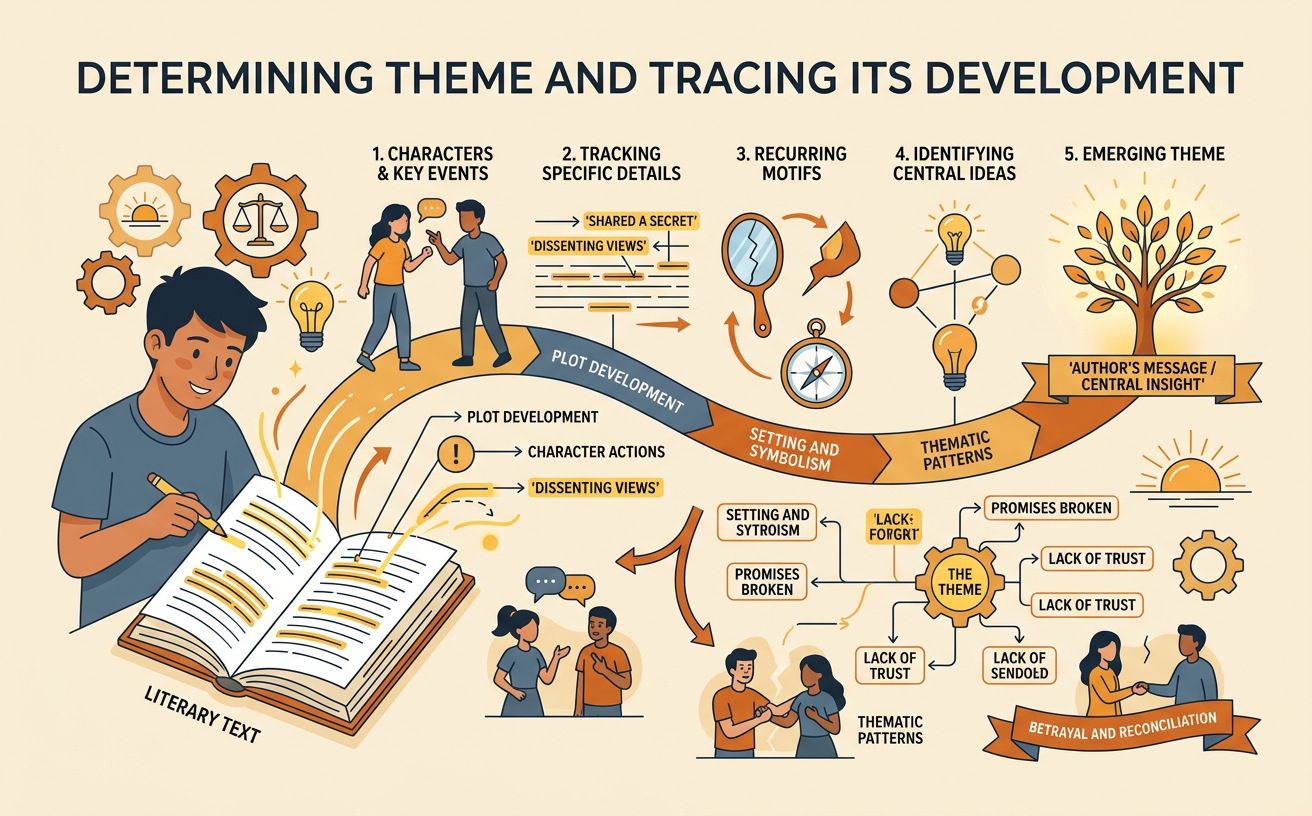
Students determine a central theme in a literary text and explain how specific details and events develop and refine it.
Illustrations are auto-generated and may be placeholders. They can be refreshed to match the narration.
Theme Versus Topic
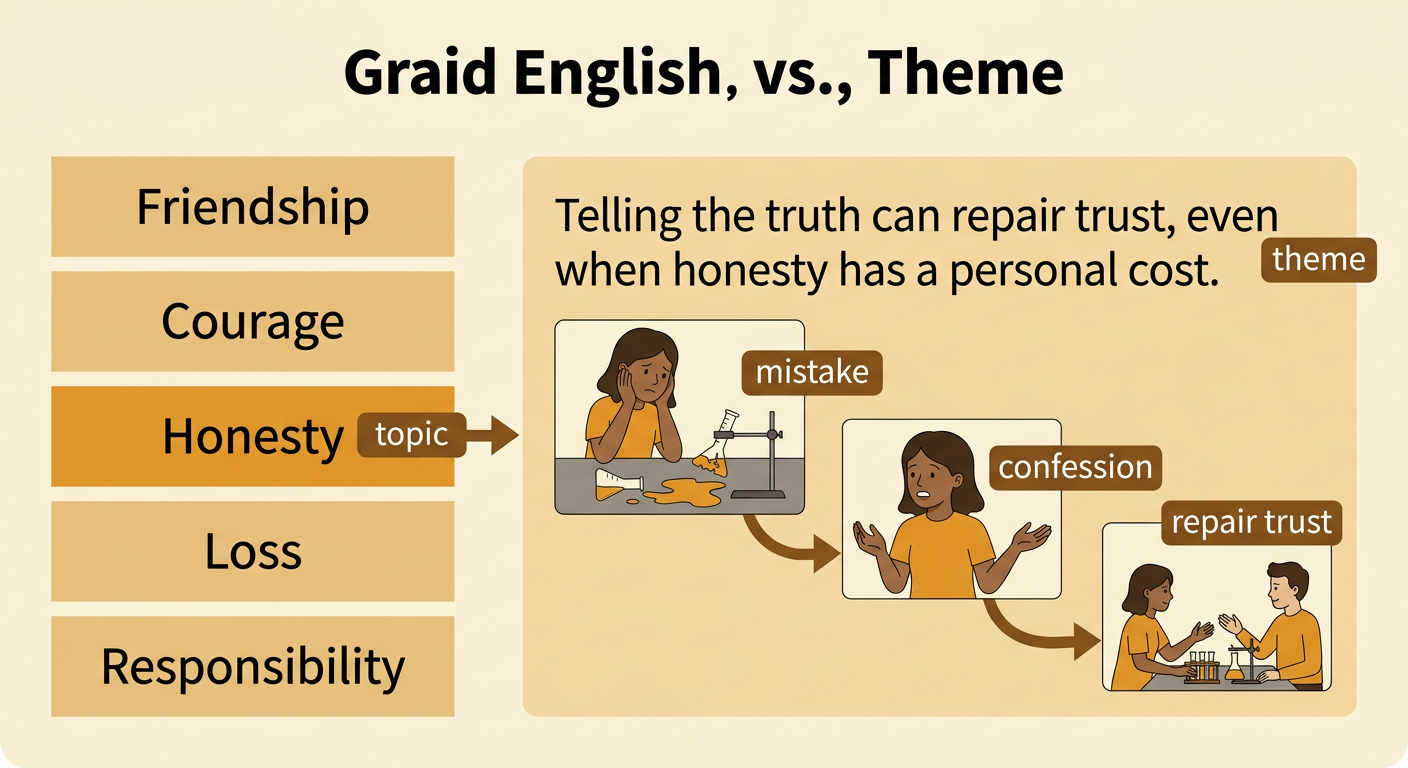
A topic is a broad subject that a literary text explores, such as friendship, courage, loss, or responsibility. A theme is a complete message about that topic. It expresses an idea the text develops rather than a single word or a command to the reader. For example, imagine a story in which Lena hides her mistake during a science competition. Her friend is blamed, so Lena finally admits what happened and accepts the consequences. The topic might be honesty. A possible theme is that telling the truth can repair trust, even when honesty has a personal cost. This statement fits the character’s choices and their results. A theme should be supported by evidence from the whole text, not merely by one quotation or event. Different readers may state a theme differently, but each interpretation must be specific, reasonable, and grounded in textual details.
Identifying a Thematic Message
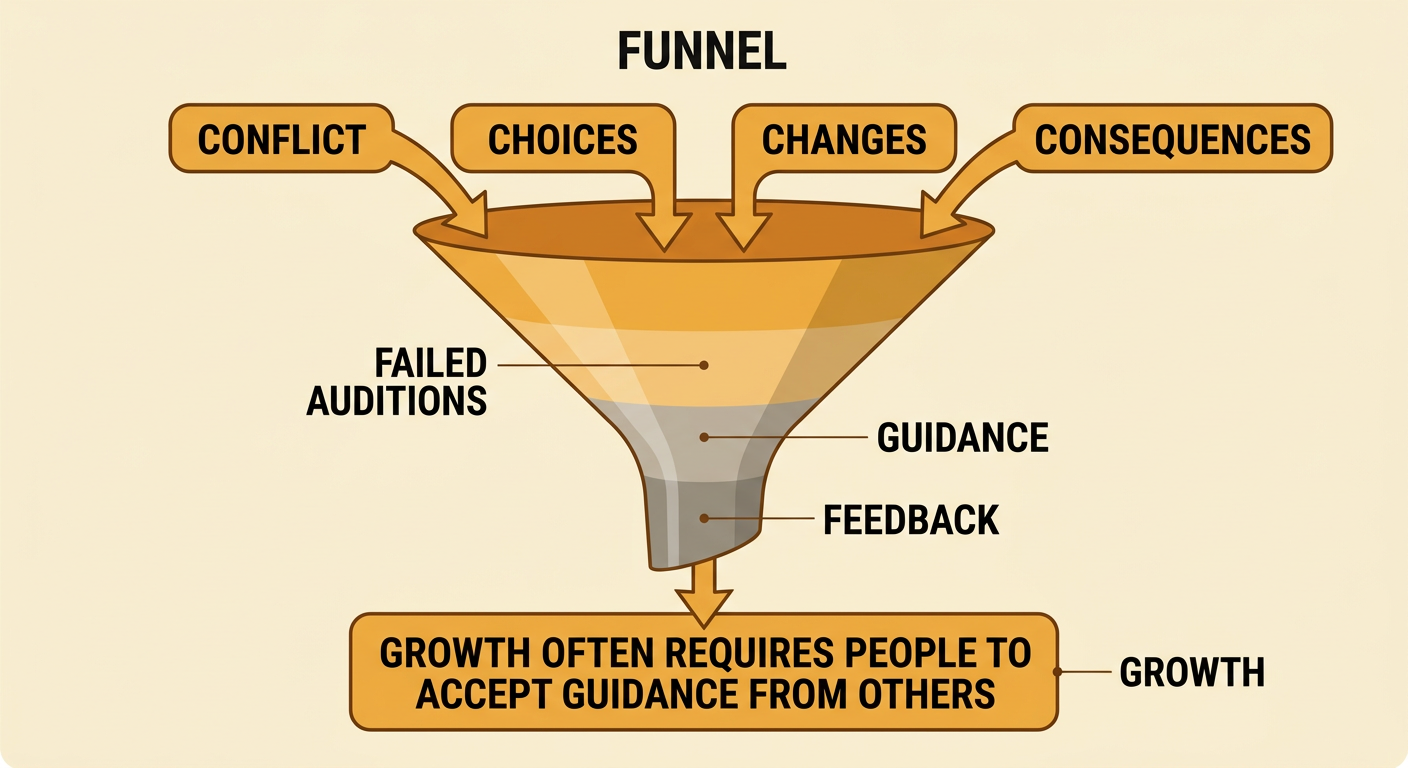
To identify a thematic message, look for patterns in the main character’s conflict, choices, changes, and consequences. Ask what the character learns, what idea appears repeatedly, and what the ending suggests. Then express the answer as a complete statement that can apply beyond the story. Suppose Marcus wants to earn a place in the school orchestra. At first, he refuses help because he believes talented people should succeed alone. After several poor auditions, he practices with a classmate, listens to feedback, and improves. A weak theme statement would be “practice” because that is only a topic. A stronger theme would be “Growth often requires people to accept guidance from others.” This message connects Marcus’s original belief, his repeated failures, his changed behavior, and his eventual progress. Before settling on a theme, check that multiple important details support it and that no major event clearly contradicts it.
Tracing Key Details and Events
Tracing a theme means following how it emerges and changes from the beginning to the end of a text. Select details that reveal the theme rather than listing every plot event. In a story about Marcus and the orchestra, the theme begins to emerge when he rejects a classmate’s offer to practice together. It develops when his solo preparation leads to another unsuccessful audition. It becomes clearer when he reluctantly accepts feedback and notices improvement. Finally, it is refined when Marcus earns a position but credits the classmate who helped him. The ending adds an important idea: accepting guidance does not weaken individual achievement; it can make achievement possible. A timeline or evidence chart can help organize this analysis. For each chosen event, record what happens, what it reveals about the character or conflict, and how it contributes to the developing theme.

Explaining Theme Development
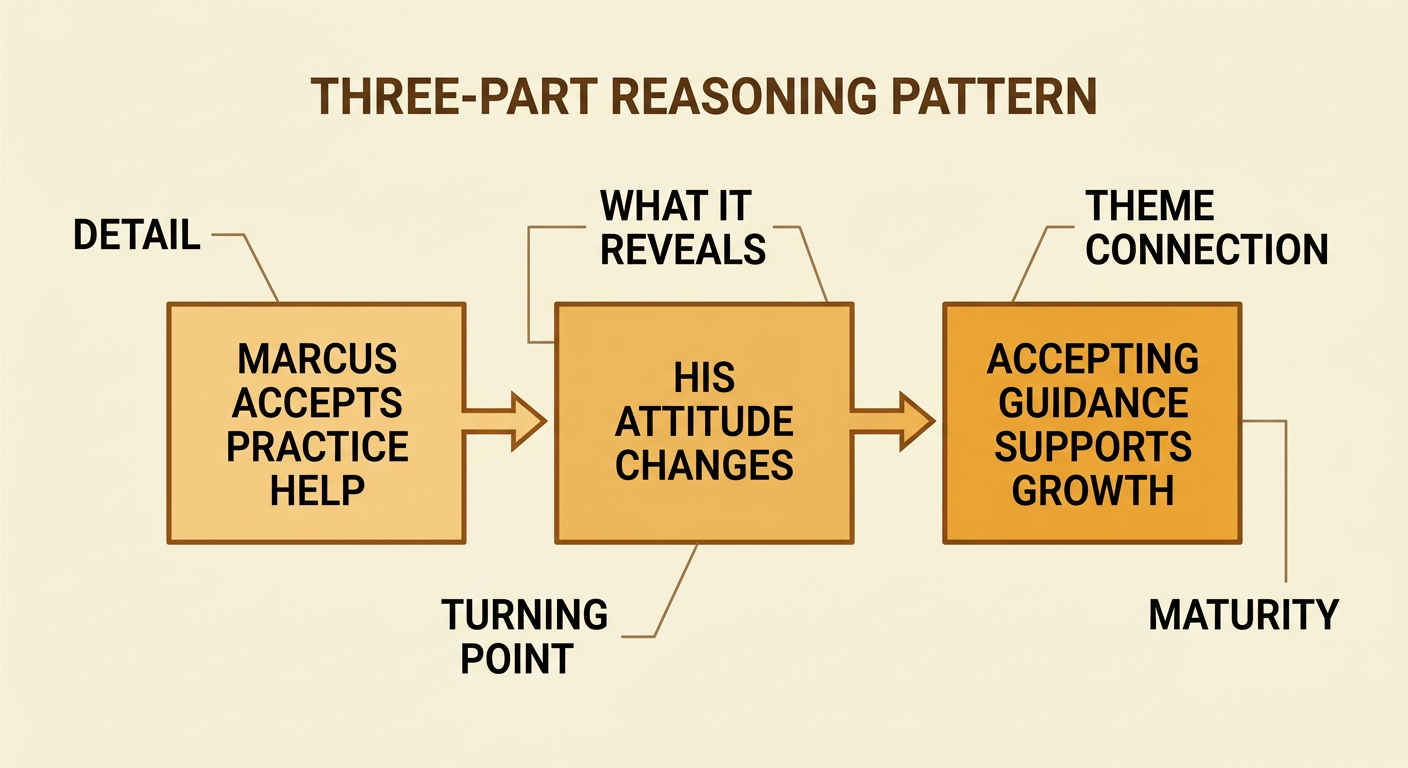
A strong analysis explains how evidence shapes the theme instead of simply naming events. Use a three-part reasoning pattern: identify the detail, explain what it reveals, and connect it to the theme. For example, Marcus’s first failed audition shows the limits of his belief that asking for help proves weakness. His decision to practice with a classmate marks a turning point because he begins to value cooperation. When he later credits that classmate, the theme is refined: guidance supports growth, and acknowledging others is part of maturity. Notice that each explanation answers how or why the event matters. Useful transitions include “At first,” “This begins to change when,” and “By the end.” Avoid unsupported claims such as “This proves teamwork is always best.” Instead, make a precise claim that matches the text’s evidence and recognizes how the author gradually builds the message through conflict, decisions, and consequences.
Writing an Objective Summary
An objective summary gives the text’s essential characters, conflict, major events, and resolution without adding opinions or unnecessary details. Use your own words, follow the text’s order, and keep the focus on what actually happens. Do not include statements such as “Marcus is inspiring” or “The ending is excellent,” because those are personal judgments. An objective summary of the orchestra story might read: “Marcus hopes to join the school orchestra but refuses a classmate’s offer to practice because he wants to succeed independently. After repeated unsuccessful auditions, he accepts feedback and rehearses with the classmate. His performance improves, and he earns a position in the orchestra. Marcus then recognizes his classmate’s contribution to his success.” This summary includes events that are important to the theme, but it does not directly analyze them. Theme analysis explains the message and its development; an objective summary concisely reports the central action.
