
Determining Theme Through Textual Evidence
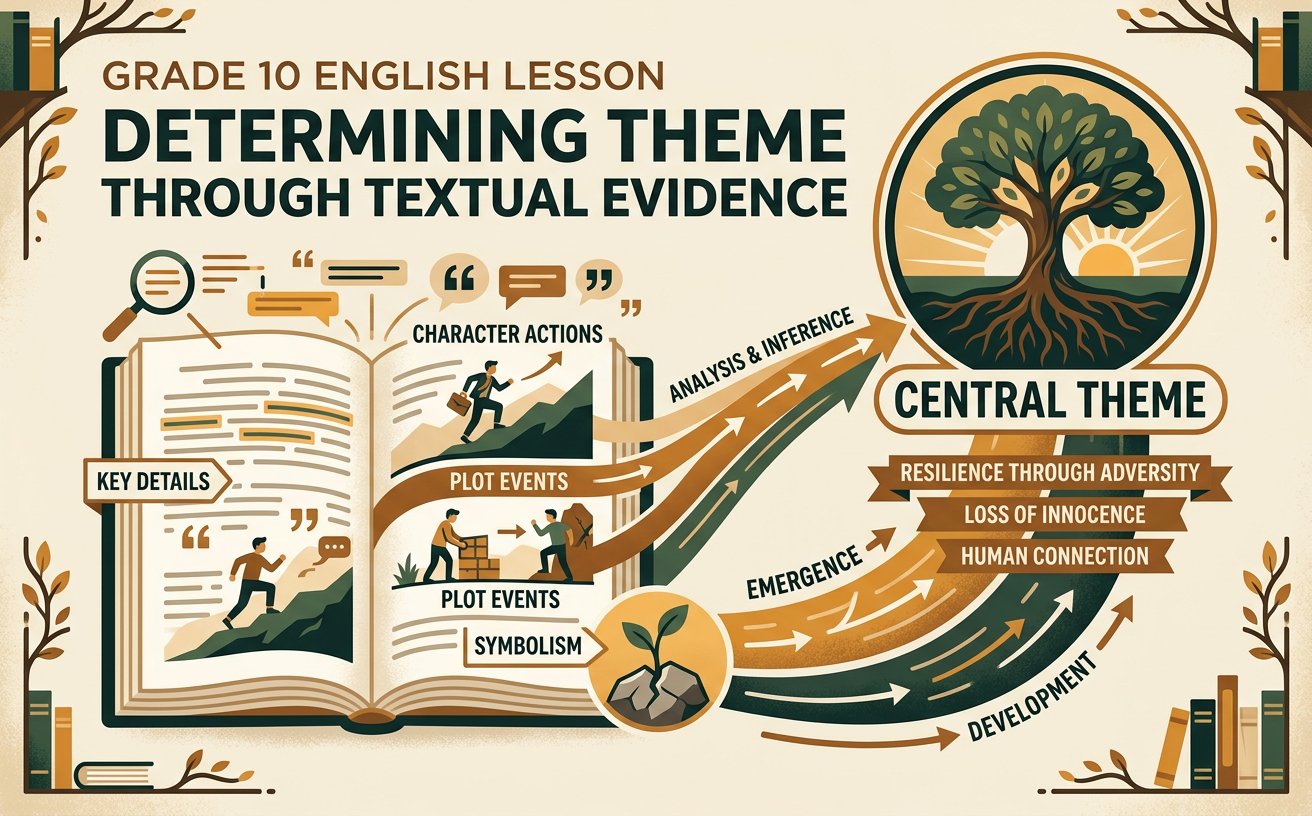
Students analyze how a central theme emerges and develops through key details in a grade-appropriate literary text.
Illustrations are auto-generated and may be placeholders. They can be refreshed to match the narration.
Theme vs. Topic
A topic is a broad subject that a text explores, such as friendship, ambition, courage, or family. A theme is a complete statement about what the text suggests about that topic. Themes are usually not stated directly; readers infer them from characters, conflicts, settings, and outcomes. For example, imagine a story in which Maya hides her failed audition, avoids her friends, and then improves after admitting the truth and accepting their help. The topic might be failure or friendship. A possible theme is, “Honesty about failure can open the way to growth and support.” This statement expresses an idea that the story develops. Avoid using a single word as a theme, and avoid presenting a lesson that the details do not support. A strong theme is specific enough to fit the text but broad enough to apply beyond one character.

Read and Annotate the Passage
Read a literary passage more than once. During the first reading, identify the characters, setting, conflict, and major events. During the second reading, mark details that repeat, reveal change, or affect the outcome. Consider this example: “After missing the final shot, Jordan left the gym before anyone could speak to him. The next morning, he found his teammates practicing and quietly joined them. When the coach asked who would attempt the next difficult shot, Jordan raised his hand.” Annotate Jordan’s departure as a response to failure, his return as a turning point, and his raised hand as evidence of renewed courage. Also write brief questions or inferences in the margin, such as “Why does Jordan return?” Annotations should identify meaningful evidence rather than highlight every sentence. Focus on details that may reveal an important message.
Identify Key Details
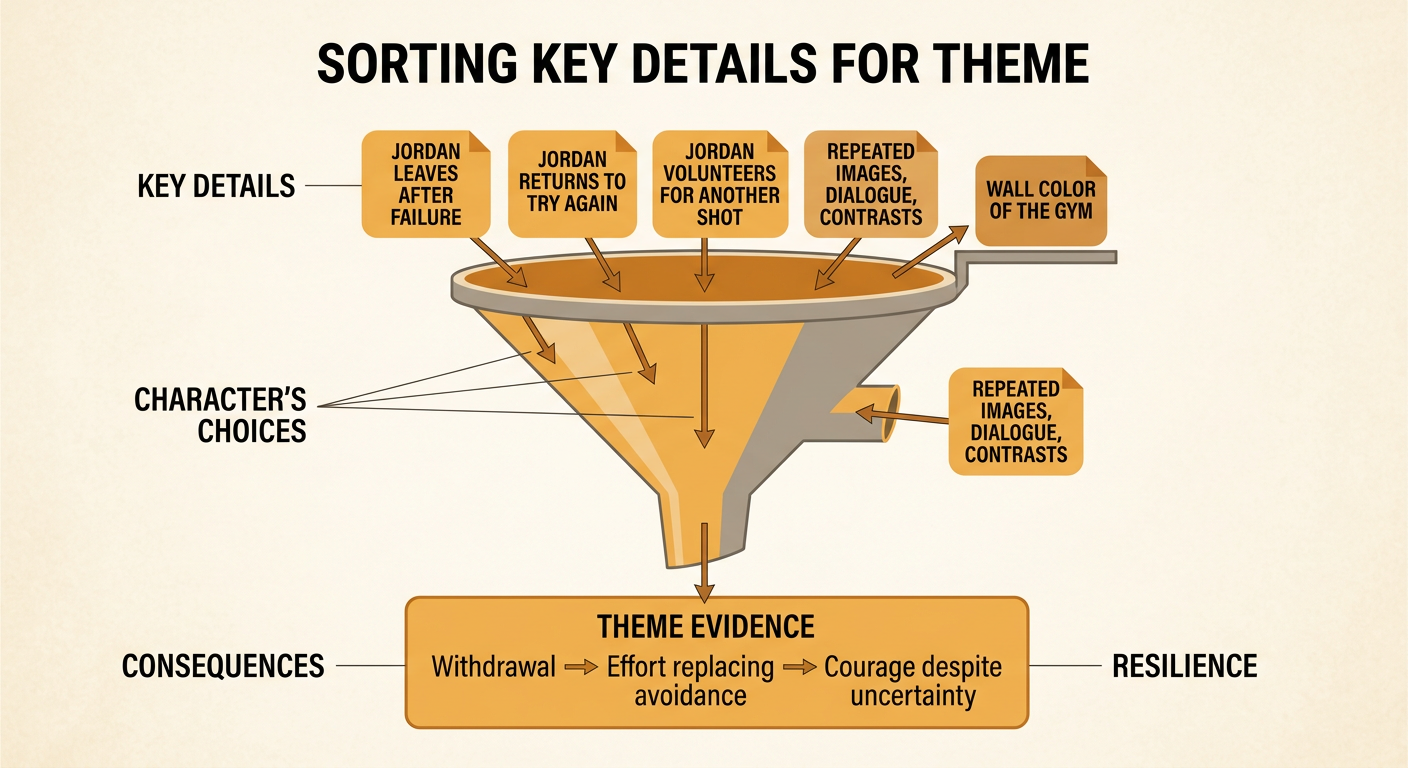
Key details are specific parts of a text that help reveal or refine a theme. They may include a character’s choices, dialogue, repeated images, conflicts, contrasts, or consequences. Not every event is equally important. In the Jordan passage, leaving the gym shows that failure initially causes him to withdraw. Returning to practice shows that he chooses effort instead of continued avoidance. Volunteering for another difficult shot demonstrates that he has regained courage even though success is not guaranteed. Together, these details support the theme that resilience grows when people face failure and try again. To test a detail, ask, “Does this information help explain the character’s change, the conflict, or the outcome?” A description of the gym’s wall color would probably not be key unless that color became a meaningful symbol repeated throughout the text.
Trace the Theme’s Development
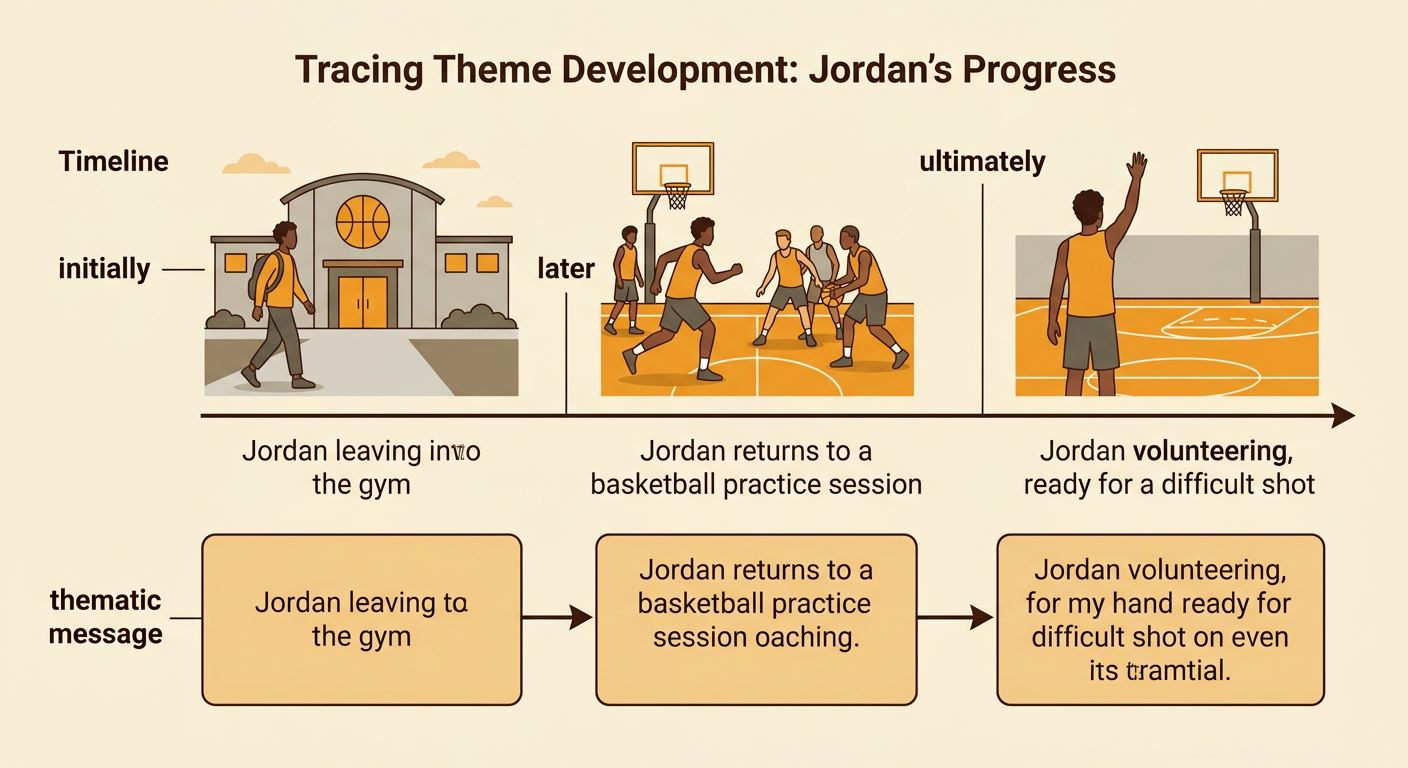
A theme develops over the course of a text rather than appearing fully formed at one moment. Trace it by examining the beginning, middle, and end. At the beginning of the Jordan passage, his quick departure suggests that failure leads to shame and avoidance. In the middle, his return to practice introduces the possibility that effort can overcome that response. At the end, raising his hand refines the idea: resilience does not require certainty of success; it requires willingness to risk failure again. This progression supports the theme that people develop resilience by returning to difficult tasks after setbacks. When analyzing development, explain how each detail adds to or changes the reader’s understanding. Use precise transitions such as “initially,” “later,” and “ultimately.” Do not merely list events. Show the relationship between the sequence of events and the increasingly clear thematic message.
Write an Objective Summary
An objective summary briefly explains the text’s central events and theme without including personal opinions, judgments, or unnecessary details. Begin by naming the text or passage and its main situation. Then describe the most important events in order and state the theme supported by those events. For example: “In the passage, Jordan leaves the gym after missing an important shot, but he returns the next day to practice with his teammates. When another difficult opportunity arises, he volunteers, showing that he is willing to face possible failure again. His change develops the theme that resilience grows when people return to challenging tasks after setbacks.” This summary is objective because it reports what happens and explains the supported theme without saying that Jordan is admirable or that the story is inspiring. Check that every sentence reflects the text and that minor details have been excluded.
