Determining Theme Through Textual Evidence
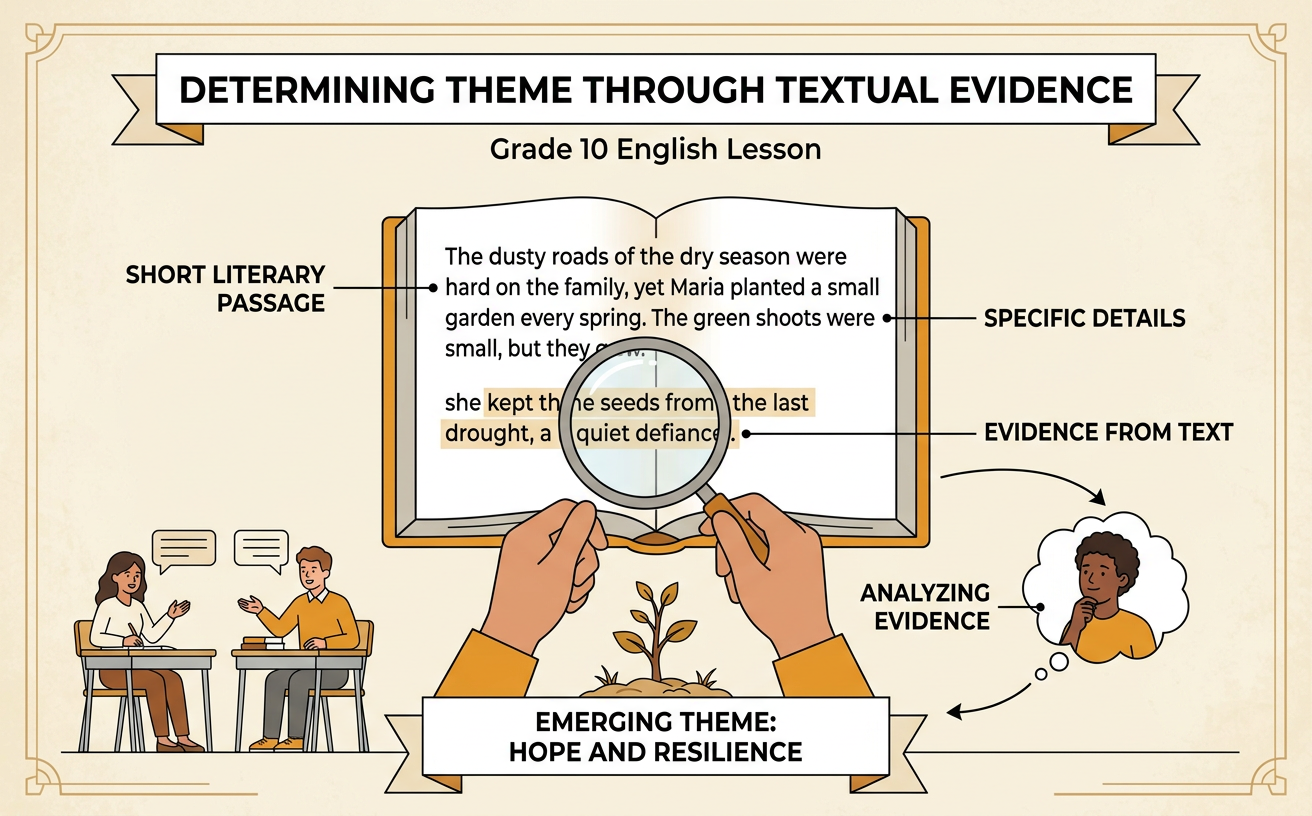
Students analyze a short literary passage to identify an emerging theme and explain how specific details develop it.
Illustrations are auto-generated and may be placeholders. They can be refreshed to match the narration.
Theme Versus Topic
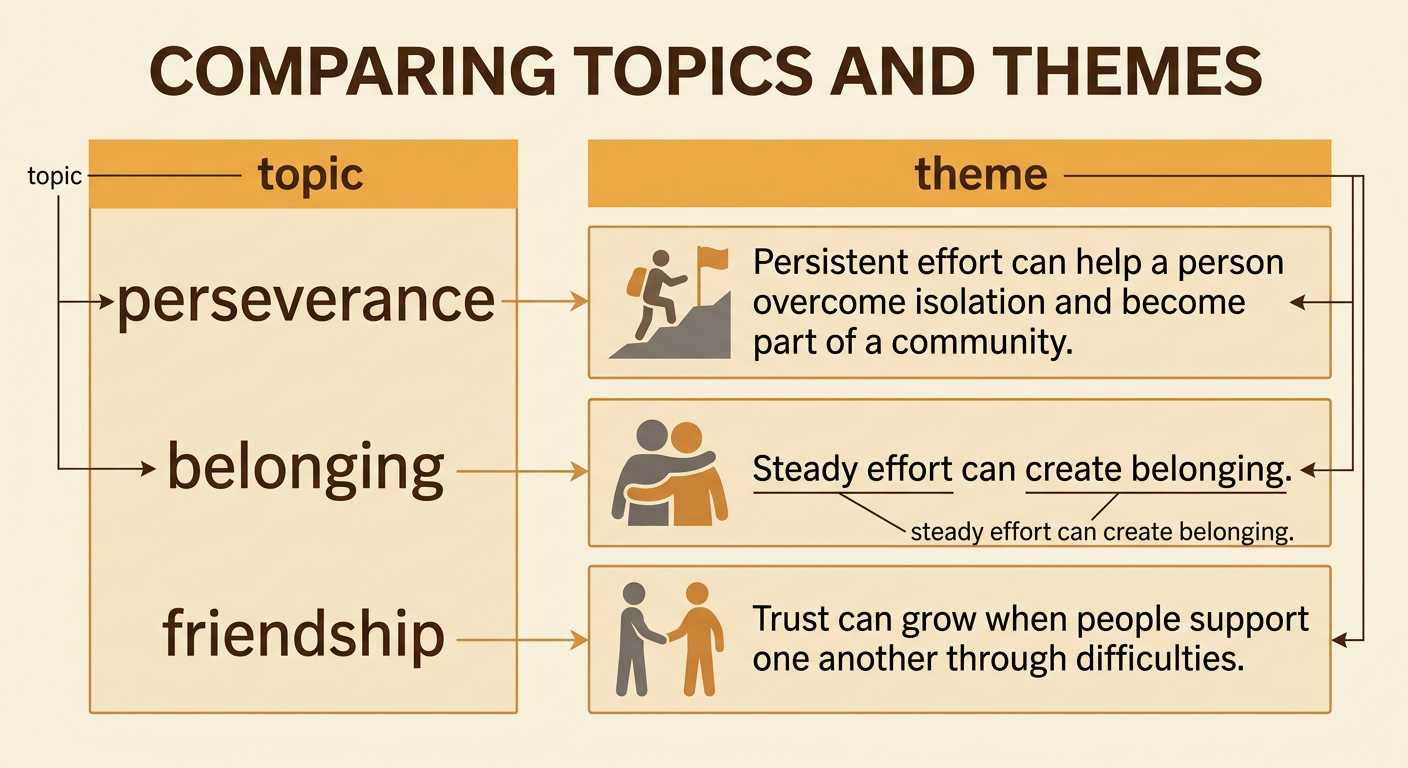
A topic is a broad subject explored in a literary text, while a theme is a message the text develops about that subject. Topics are usually expressed in one or two words, such as belonging, courage, or perseverance. Themes are complete statements that can apply beyond the particular characters and events. For example, if a story follows Maya as she repeatedly works in a community garden after moving to a new town, its topics might include perseverance and belonging. An emerging theme could be: Persistent effort can help a person overcome isolation and become part of a community. This statement explains what the story suggests about the topics. Avoid treating a familiar saying as the theme unless the text’s details support it. The theme must grow from the character’s experiences, choices, conflicts, and changes.
Close Reading of the Passage
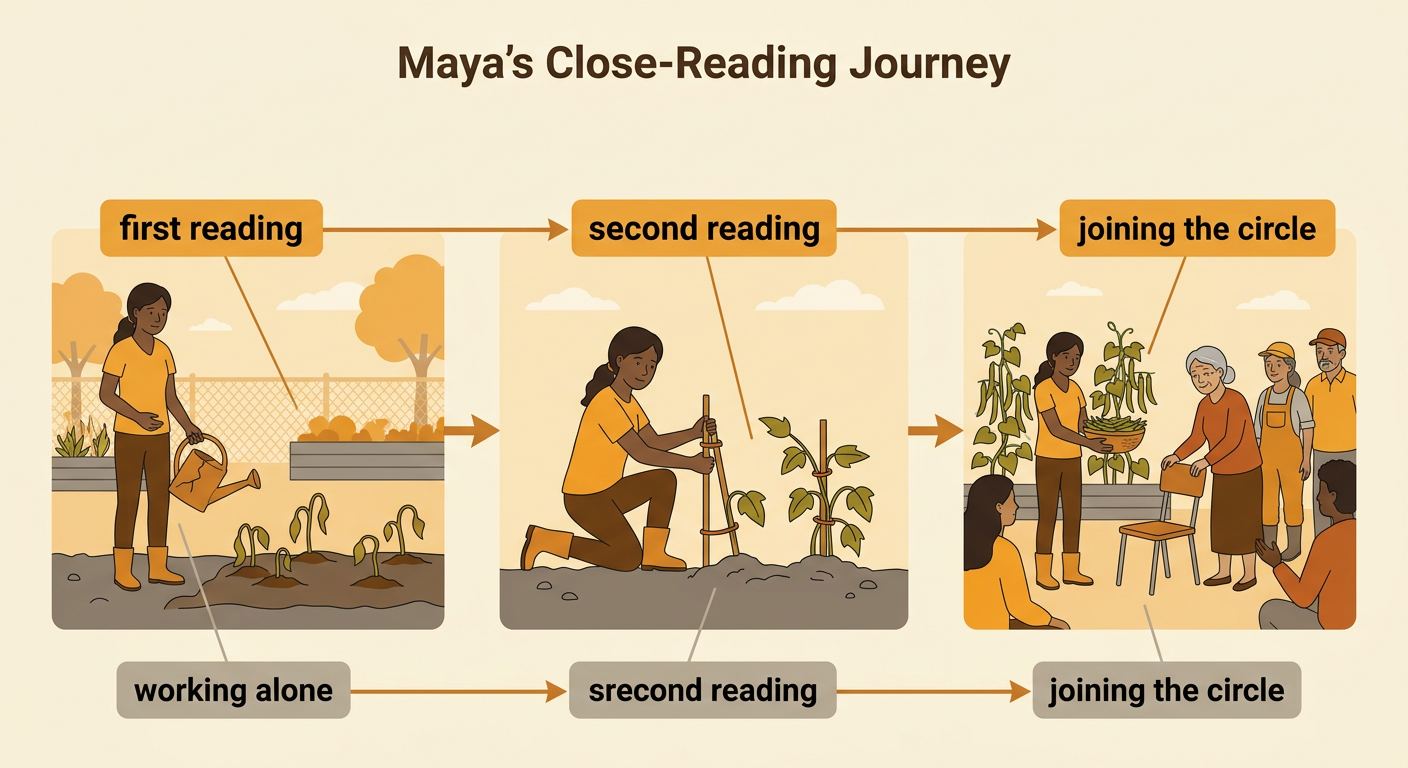
Read this passage closely: “On her first Saturday in the new town, Maya entered the community garden carrying a cracked watering can. The other gardeners traded old jokes while she worked alone on a dry plot. When her first seeds failed to grow, she planted again. A storm later bent the young bean plants, but Maya returned before school and tied each stem to a stake. By August, green pods covered the vines. Maya placed a basket of beans on the shared table. Mrs. Chen thanked her and moved a chair into the circle.” On a first reading, identify the characters, setting, and main events. On a second reading, notice repetition, contrasts, and changes. Maya moves from working alone to joining the group. Her repeated returns to the garden help produce both the harvest and a new relationship with her neighbors.
Tracking Key Details
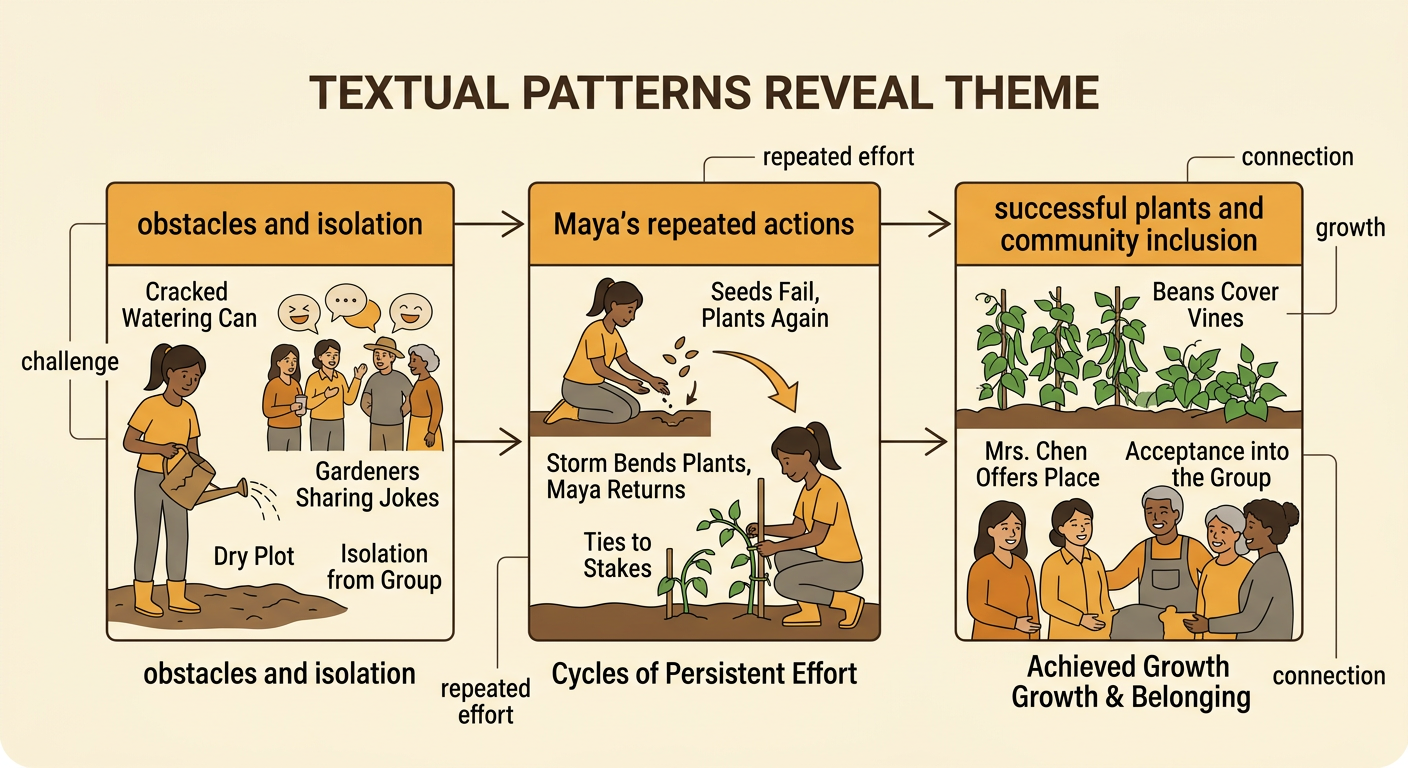
Key details shape a theme when they establish a pattern or show change. Track what happens, what Maya does, and what each detail suggests. At the beginning, the cracked watering can and dry plot emphasize difficulty, while the gardeners’ old jokes show that Maya is outside their established group. When the seeds fail, Maya plants again. After the storm bends the plants, she returns and supports them with stakes. These actions create a pattern of persistence. At the end, the beans show the result of her work, and Mrs. Chen’s chair signals social acceptance. No single detail states the theme by itself. Together, the details move from challenge, through repeated effort, to growth and connection. This progression supports the idea that steady effort can help someone build a place within a community.
Writing a Theme Statement
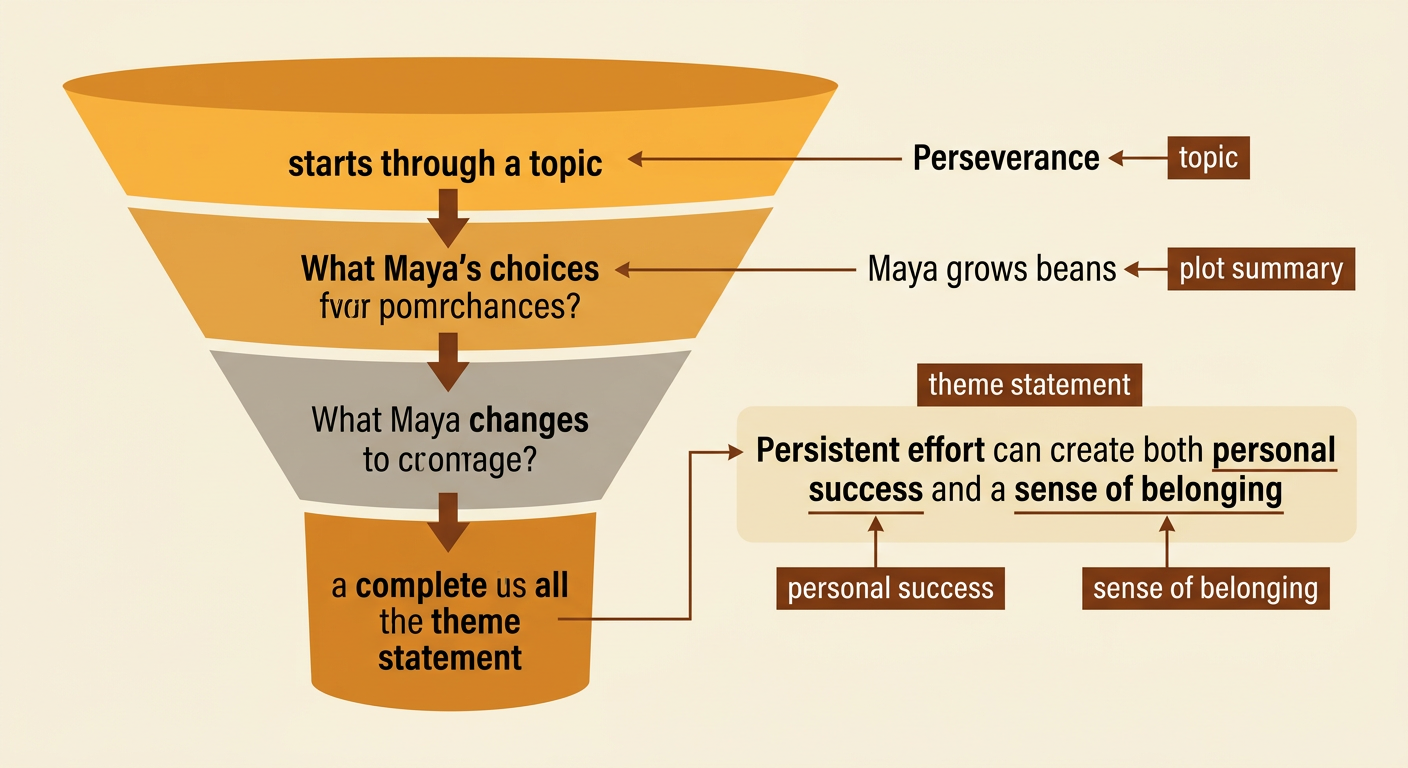
A strong theme statement expresses a general insight, not a plot summary or a rule using words such as always or everyone. Begin by naming an important topic, then ask what the character’s experience suggests about it. For Maya’s story, the topic perseverance is too broad, and “Maya grows beans” merely summarizes an event. A stronger statement is: Persistent effort can create both personal success and a sense of belonging. This idea is supported by Maya’s decision to replant, repair the storm damage, and share her harvest. The word can keeps the statement thoughtful rather than absolute. The statement also applies beyond gardening because people may use persistence to overcome many kinds of setbacks and social barriers. Before finalizing a theme, check that multiple details support it and that no major event clearly contradicts it.
Evidence-Based Analysis
Evidence-based analysis connects a claim about theme to precise textual details and explains how those details support the claim. One possible claim is that persistence helps Maya overcome both practical and social difficulties. The passage states, “When her first seeds failed to grow, she planted again.” This evidence shows that failure does not end her effort. Later, Maya “tied each stem to a stake,” demonstrating continued care after another setback. These actions lead to a harvest, but the final detail adds another layer: Mrs. Chen “moved a chair into the circle.” The chair represents Maya’s growing inclusion in the group. Do not stop after quoting the passage. Explain the relationship between each quotation and the theme. Effective analysis follows a clear pattern: make a claim, present relevant evidence, explain its meaning, and connect it back to the theme.

Objective Summary
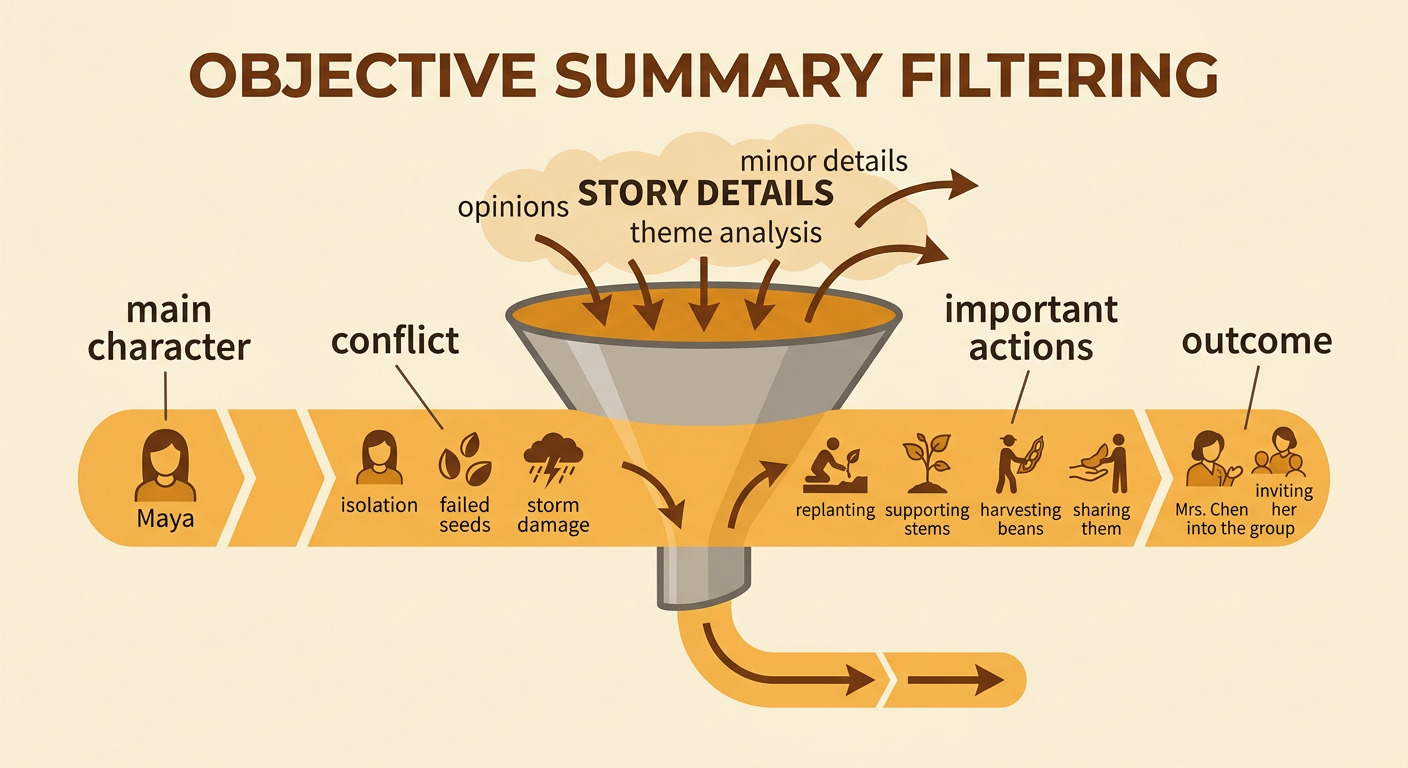
An objective summary states the text’s central events without opinions, judgments, or unnecessary details. It identifies the main character, conflict, important actions, and outcome in a neutral tone. For example: After moving to a new town, Maya begins working alone in a community garden. Although her first seeds fail and a storm damages the new plants, she continues planting and caring for them. By the end of the summer, she harvests beans and shares them with the other gardeners. Mrs. Chen thanks Maya and invites her into the group. This summary includes the events that develop the text but does not say that Maya is admirable or that the ending is heartwarming. It also avoids analyzing symbols or directly stating the theme. Analysis explains meaning; an objective summary reports what happens accurately and concisely.