Discovering Feeling and Sensory Words in a Poem
Students identify words and phrases in a grade-level poem that communicate feelings or help readers imagine sights, sounds, smells, tastes, and textures.

Illustrations are auto-generated and may be placeholders. They can be refreshed to match the narration.
Introduce the Five Senses
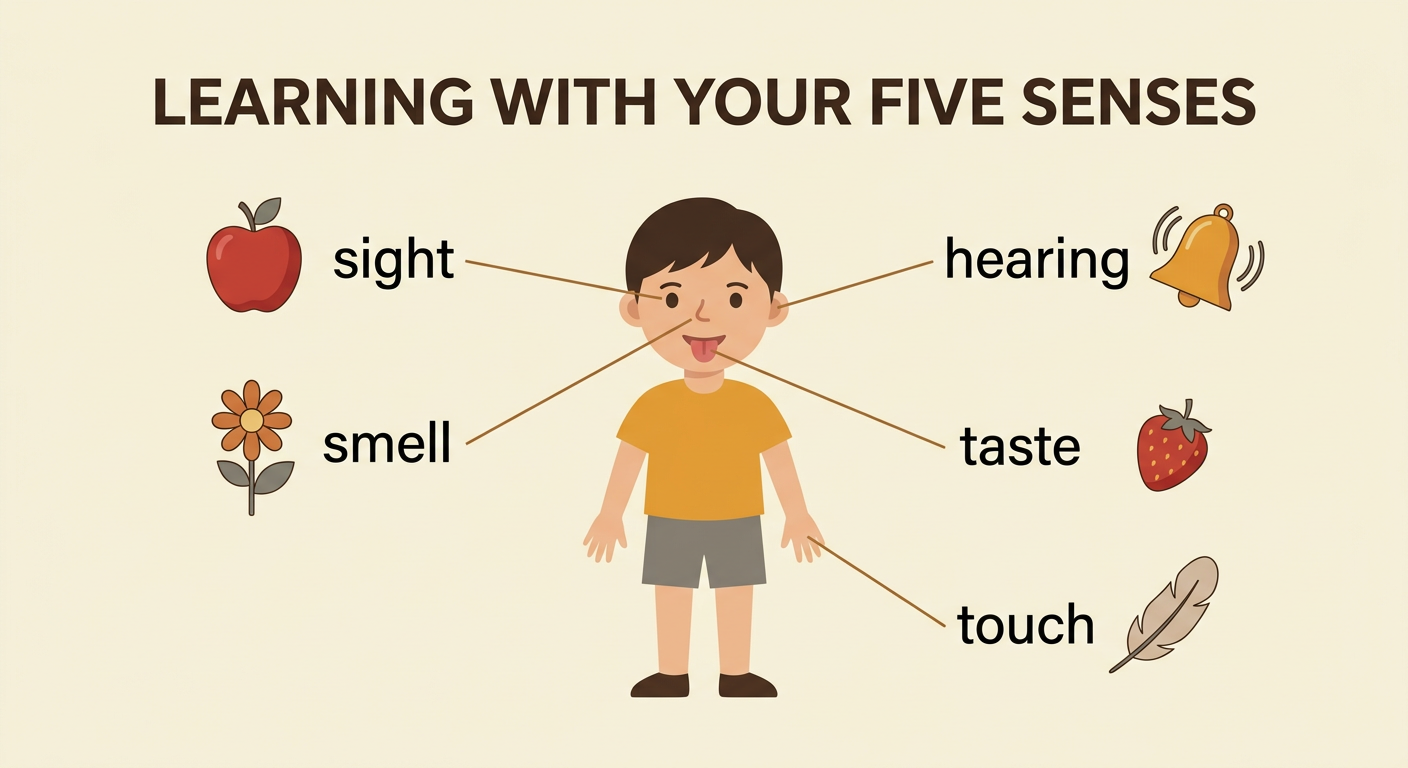
Your five senses help you learn about the world. You use your eyes to see, your ears to hear, your nose to smell, your tongue to taste, and your skin to touch. Poets choose sensory words that help you imagine using these senses. For example, the phrase “a bright red apple” helps you picture what you might see. “The apple crunches” helps you imagine a sound. “Its skin feels smooth” tells about touch. As you read a poem, ask yourself, “What can I see, hear, smell, taste, or feel?” A poem may not use every sense, but its carefully chosen words can help you form a picture in your mind.
Read the Poem Aloud
Listen as the poem is read aloud. Pay attention to words that tell how the speaker feels and words that help you imagine the garden. Morning Garden: “I step outside in golden light. A red bird sings nearby. Cool grass tickles my bare toes. Sweet roses scent the sky. I taste one warm, ripe berry. A busy bee hums low. At first I feel a little scared, but then I watch it go. I feel calm and glad to see the bright flowers in a row.” Read the poem again slowly. Use your voice to show meaning. Pause at the end of each sentence. When you hear a word that creates a picture, sound, smell, taste, touch, or feeling, gently tap one finger on your desk.

Find Feeling Words
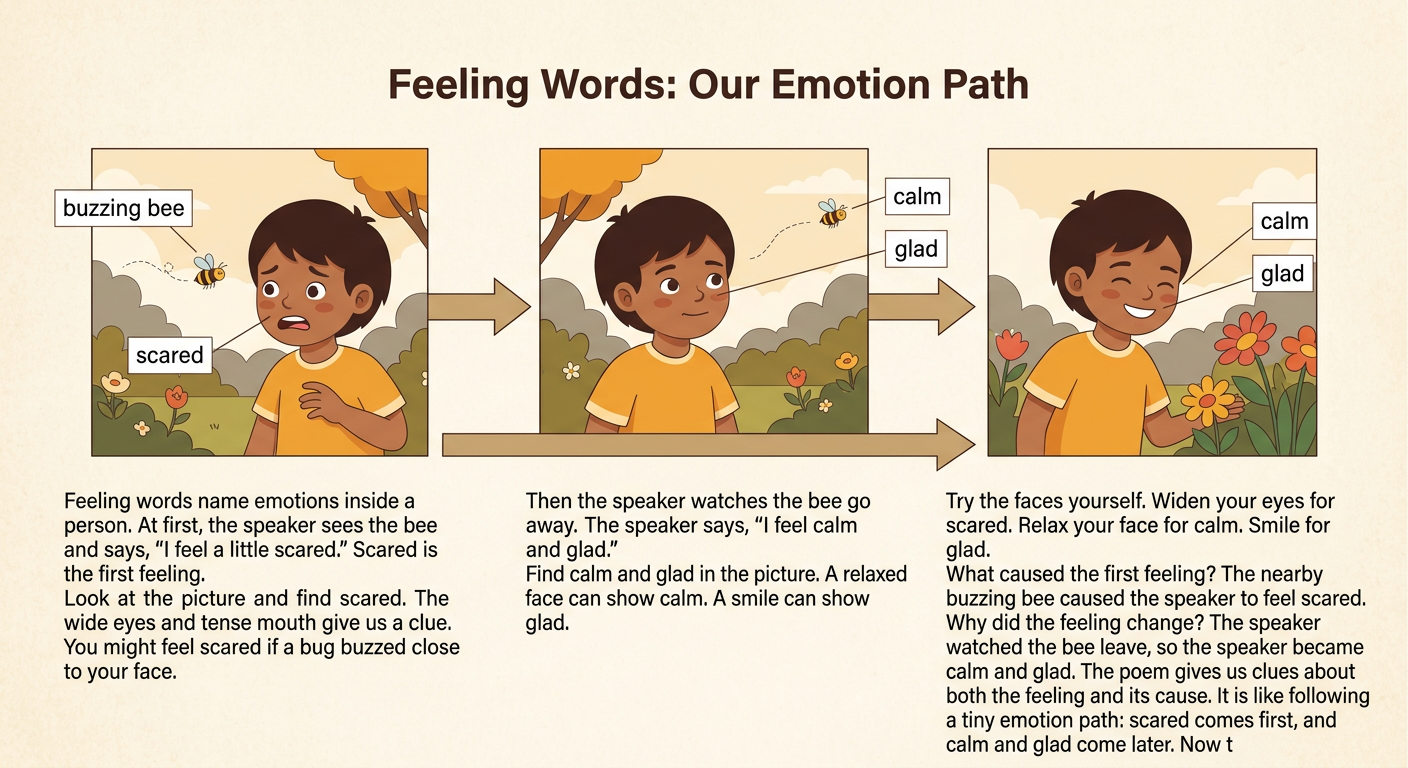
Feeling words tell us about an emotion inside a character or speaker. In the poem, the speaker says, “At first I feel a little scared.” The word “scared” names the speaker’s first feeling about the bee. Later, the speaker says, “I feel calm and glad.” The words “calm” and “glad” show that the feeling changes after the speaker watches the bee fly away. Look for clues near a feeling word. The buzzing bee is a clue for why the speaker feels scared. Watching it go helps the speaker become calm. Try making a face for each emotion. Widen your eyes to show scared, relax your face to show calm, and smile to show glad. These words help readers understand the speaker.
Notice Sensory Words and Phrases
Sensory words and phrases help readers imagine what something looks, sounds, smells, tastes, or feels like. In the poem, “golden light,” “a red bird,” and “bright flowers” appeal to sight. “A red bird sings” and “a busy bee hums low” appeal to hearing. “Sweet roses scent the sky” helps you imagine smell. “One warm, ripe berry” helps you imagine taste, while “cool grass tickles my bare toes” appeals to touch. Some phrases can connect to more than one sense. A ripe berry might help you imagine its color and flavor. Sort each phrase by the sense it most strongly suggests. Then explain your choice using a sentence such as, “The phrase ‘hums low’ appeals to hearing because I can imagine the bee’s sound.”

Draw and Share a Mental Image
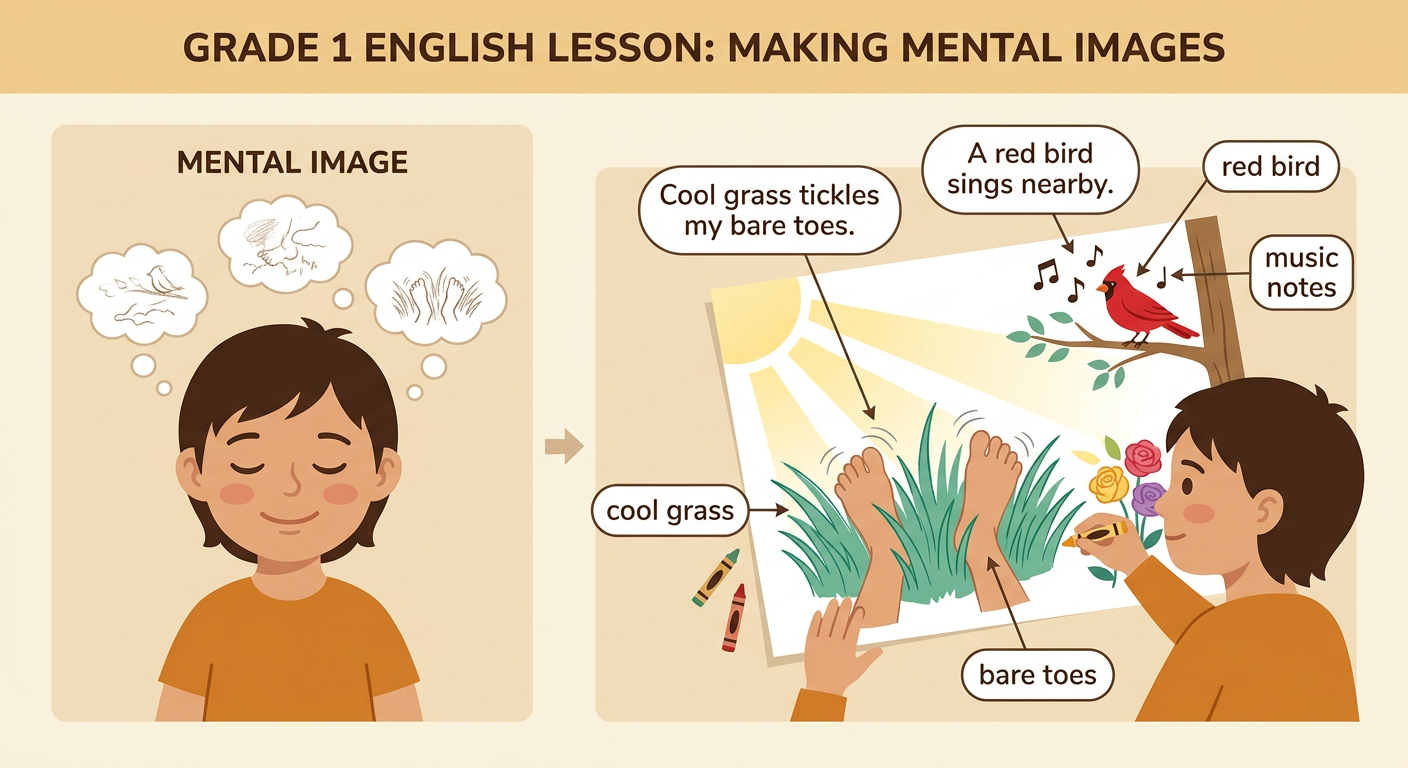
A mental image is a picture you create in your mind while reading. Choose one line from the poem and close your eyes while someone reads it again. Imagine the colors, shapes, sounds, smells, tastes, or textures described by the words. If you choose “Cool grass tickles my bare toes,” you might draw green blades bending around two feet. You could add small motion lines to show the tickling feeling. If you choose “A red bird sings nearby,” you might draw a red bird and add music notes to represent its song. Share your drawing with a partner. Point to a detail and name the exact words that helped you include it. Say, “I drew this because the poem says…” Different readers may create different pictures from the same words.