
Early Textile Mills: How Industry Changed American Communities
Students examine how water-powered textile mills changed work, daily life, natural resources, and growing communities in the early United States.
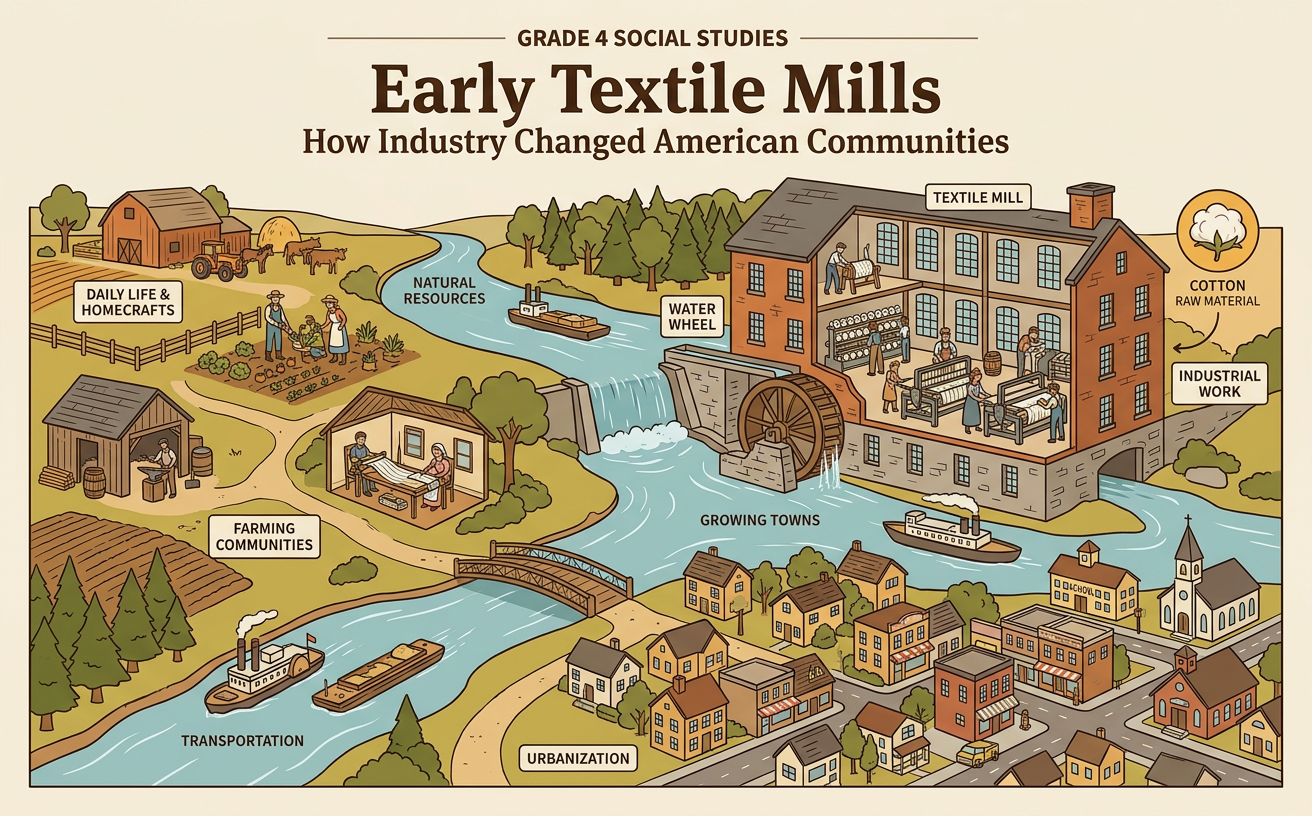
Illustrations are auto-generated and may be placeholders. They can be refreshed to match the narration.
Before Factories: Making Cloth by Hand
Before textile factories became common, families often made cloth at home or bought it from skilled workers. First, people cleaned and carded wool or prepared flax fibers. They spun the fibers into thread with a spinning wheel. Then they wove the thread into cloth on a hand loom. These steps required time and skill, so cloth was valuable and clothes were repaired and reused. Work was usually organized around the household rather than a factory clock. For example, a farm family might spin thread during winter evenings when less outdoor work was needed. One person could complete one step while another handled a different task. Because hand tools made small amounts at a time, producing enough cloth for shirts, dresses, blankets, and sacks could take many days.

Why Mills Were Built Near Rivers
Early textile mills needed energy to run many machines at once. Before electric power was widely available, mill owners often used moving river water. A dam directed water into a narrow channel called a millrace. The flowing water turned a large water wheel or turbine. Gears and shafts carried that motion into the building, where it powered spinning and weaving machines. This use of waterpower allowed mills to produce cloth much faster than workers using hand tools. For example, mills in Lowell, Massachusetts, were built near the Merrimack River and used a system of canals to carry water to machinery. Rivers also helped shape where industrial towns grew. However, mills could slow down during droughts or when winter ice reduced the flow of water.

Jobs and Daily Life in a Mill Town
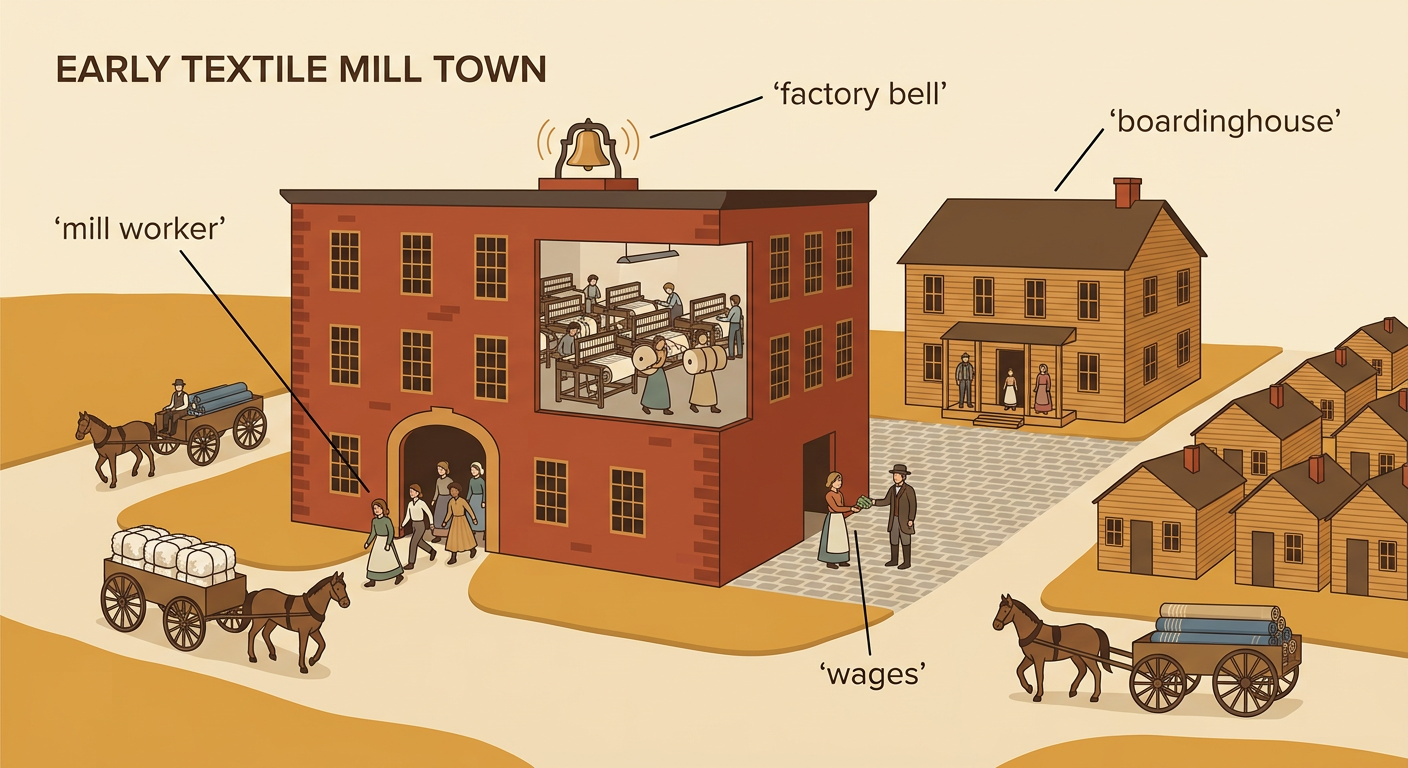
Textile mills created new kinds of jobs and changed daily routines. Owners hired workers to watch machines, repair broken threads, move materials, and pack finished cloth. In Lowell, Massachusetts, many early workers were young women from New England farms. Some lived in company boardinghouses with rules and supervised schedules. A factory bell announced when work began and ended, and shifts were often long and noisy. Children and immigrant workers also labored in some mills, especially as the industry expanded. For example, a worker might wake before sunrise, eat breakfast at a boardinghouse, and report to the mill when the bell rang. Wages gave workers cash they might not have earned on a farm, but machinery could be dangerous, and workers had limited control over their time.
Effects on Communities and the Environment
Textile mills helped small settlements grow into busy towns. Workers needed homes, stores, roads, schools, and places of worship. Businesses opened to supply food, tools, and services. Mills also connected farms, ports, and markets because factories needed large amounts of cotton, wool, wood, and metal. These changes affected the environment. Dams altered river flow and could block fish movement. Building mills and homes required land and timber. Dyes, fibers, and other waste sometimes entered waterways, especially before strong pollution laws existed. For example, a new dam might provide renewable water energy for machines while changing habitats downstream. Textile production also depended heavily on cotton grown by enslaved people in the South before the Civil War. Industry brought growth and useful goods, but its benefits and harms were not shared equally.

Comparing Mill Life with Life Today
Life in an early mill town was different from life in many communities today. Early workers commonly spent long days beside loud, unguarded machines. Safety rules were limited, and children sometimes worked instead of attending school. Communication, transportation, and household chores also took more time. Today, U.S. laws set workplace safety standards, restrict child labor, and require children to attend school. Modern textile factories often use electricity, computers, and automated machines, although working conditions differ around the world. Some factories use energy from fossil fuels, while others use renewable sources such as water, wind, or sunlight. For example, a modern worker may program a machine and wear hearing protection, while an early worker tied broken threads by hand near moving gears. Both periods show how technology and energy sources shape work and communities.
