Ecological Succession and Changing Species Interactions
Students explain how communities change during ecological succession and how competition, predation, and symbiosis influence which organisms survive at each stage.
Illustrations are auto-generated and may be placeholders. They can be refreshed to match the narration.
What Is Ecological Succession?
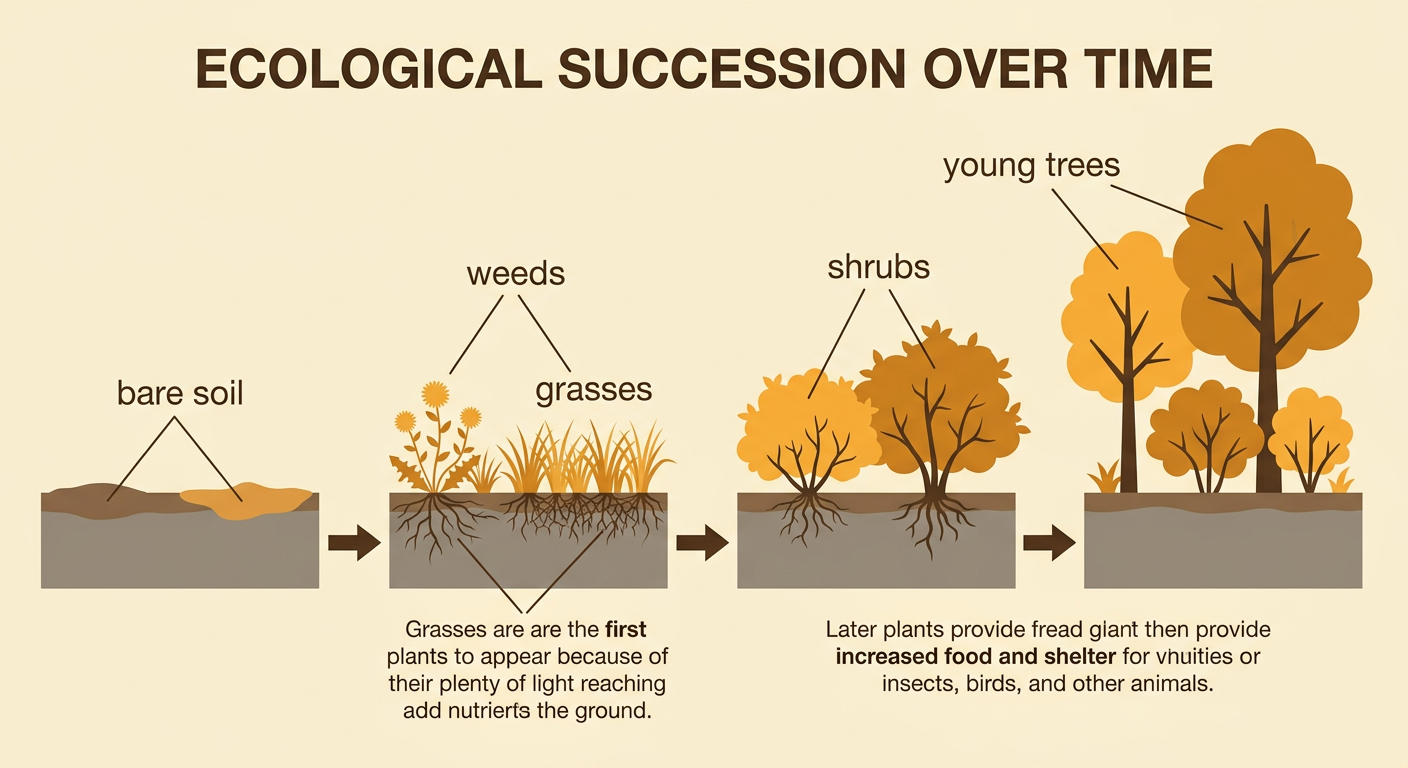
Ecological succession is the gradual change in the living community of a habitat over time. It may begin on a new surface, such as bare rock, or after a disturbance, such as a fire, flood, or cleared farm. Different organisms become common as soil, water, light, and shelter change. For example, weeds and grasses may first grow on an abandoned garden. Their roots hold the soil, while their dead parts add nutrients. Later, shrubs and young trees may appear. These plants provide new food and shelter for insects, birds, and other animals. Succession does not happen in one day, and its stages are not always exactly the same. Climate, soil, nearby organisms, and further disturbances all affect how the community develops.
From Pioneer Species to a Mature Community
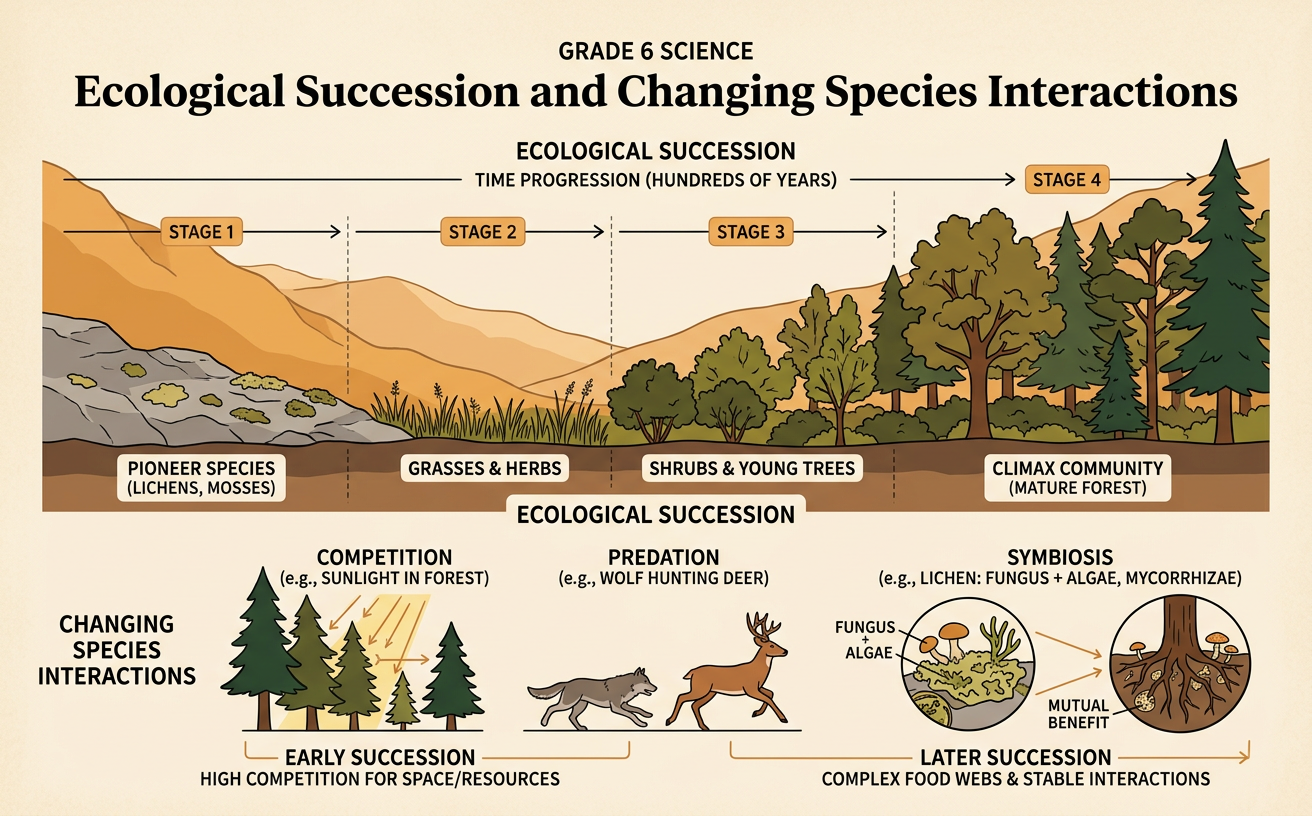
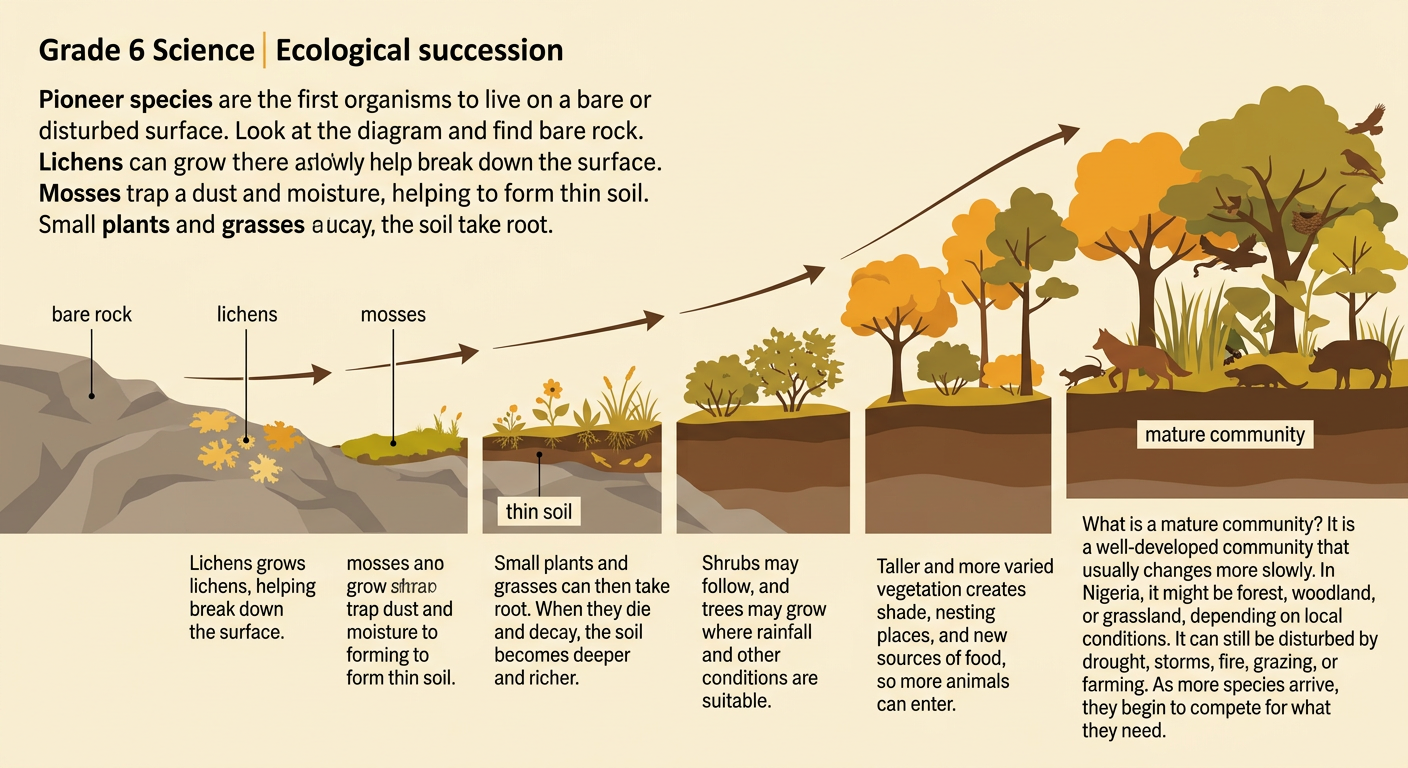
Pioneer species are the first organisms to live in a bare or disturbed habitat. On bare rock, lichens can help break down the surface, while mosses trap dust and moisture. These actions help form a thin layer of soil. Small plants and grasses can then grow, and their decaying remains make the soil deeper and richer. Shrubs may follow, then trees if rainfall and other conditions are suitable. As vegetation becomes taller and more varied, it creates shade, nesting places, and different sources of food. More animal species can enter the habitat. A mature community is a well-developed community that changes more slowly, although storms, fires, farming, or drought can disturb it again. In the United States, the mature community may be forest, woodland, or grassland, depending on local conditions.
Competition as Resources Change
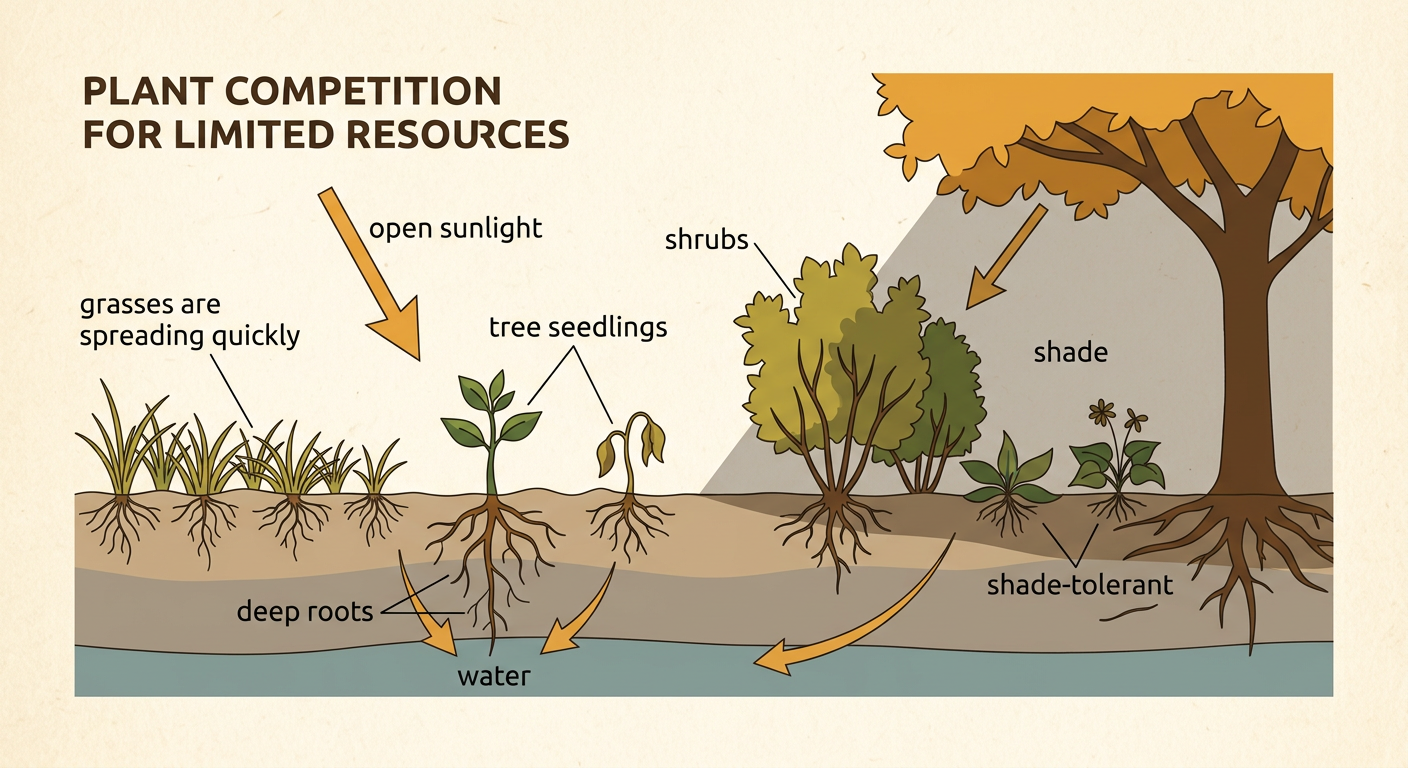
Competition occurs when organisms need the same limited resource. Plants may compete for sunlight, water, soil minerals, and space. Animals may compete for food, water, shelter, or mates. During early succession, grasses may spread quickly because they grow well in open sunlight. As shrubs and trees become taller, they block some light from reaching the ground. Shade-tolerant plants may survive, while some sun-loving grasses become less common. In a young woodland, tree seedlings may also compete for water during the dry season. Seedlings with deeper roots or better access to light may grow faster and produce more offspring. Competition can occur between members of the same species or between different species. It helps determine which organisms become common at each stage, but weather, disease, predation, and other factors also affect survival.
Predation During Succession
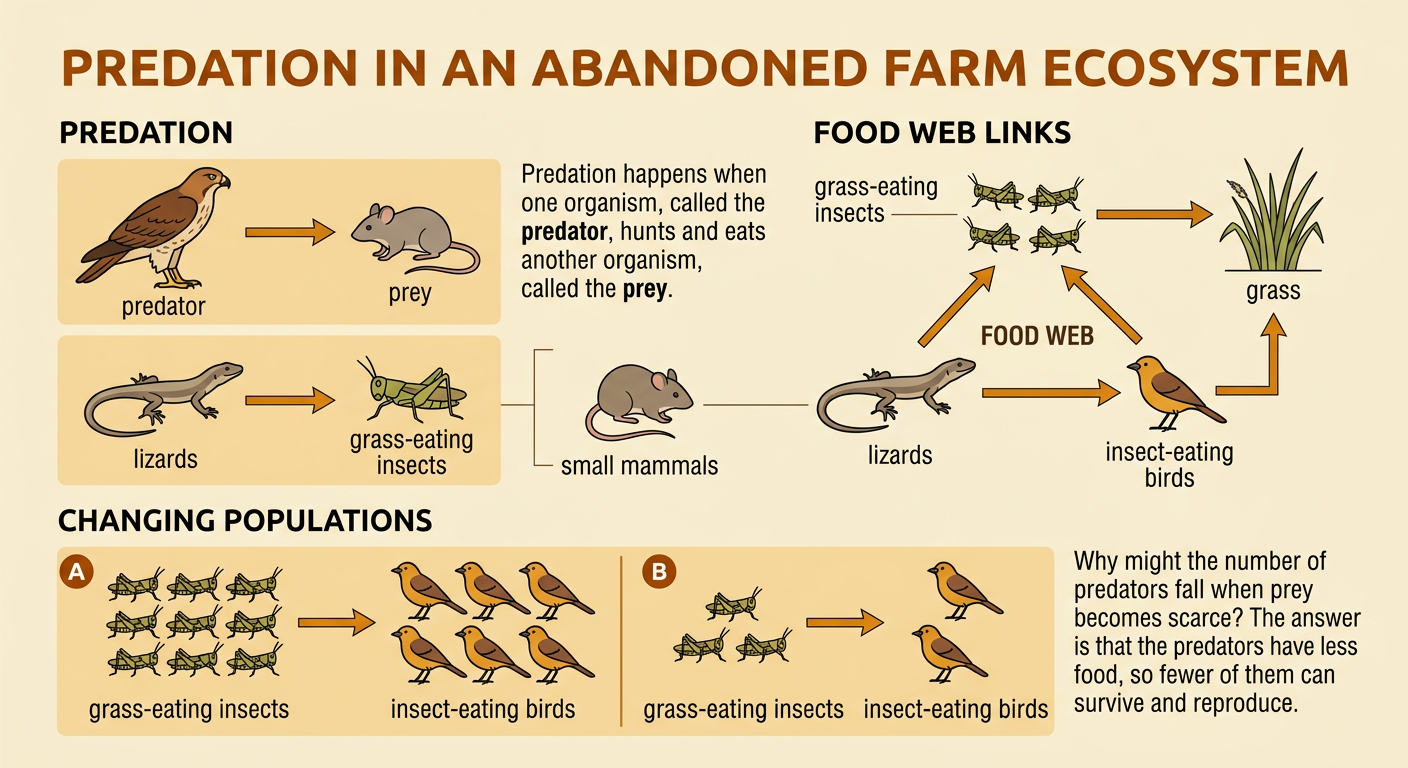
Predation happens when one organism, the predator, hunts and eats another organism, the prey. The kinds of predators and prey in a habitat can change during succession. For example, a newly abandoned farm may contain grasses and many grass-eating insects. Lizards and insect-eating birds may arrive because food is available. Later, shrubs and trees provide nesting sites for more birds and hiding places for small mammals. Snakes or birds of prey may then enter and feed on these animals. Predators can prevent one prey population from becoming too large, but predator numbers may also decrease if prey becomes scarce. Predation therefore affects which species survive and how many individuals are present. It is one part of a food web, so a change in one population can influence several other organisms in the developing community.
Symbiosis and Community Development
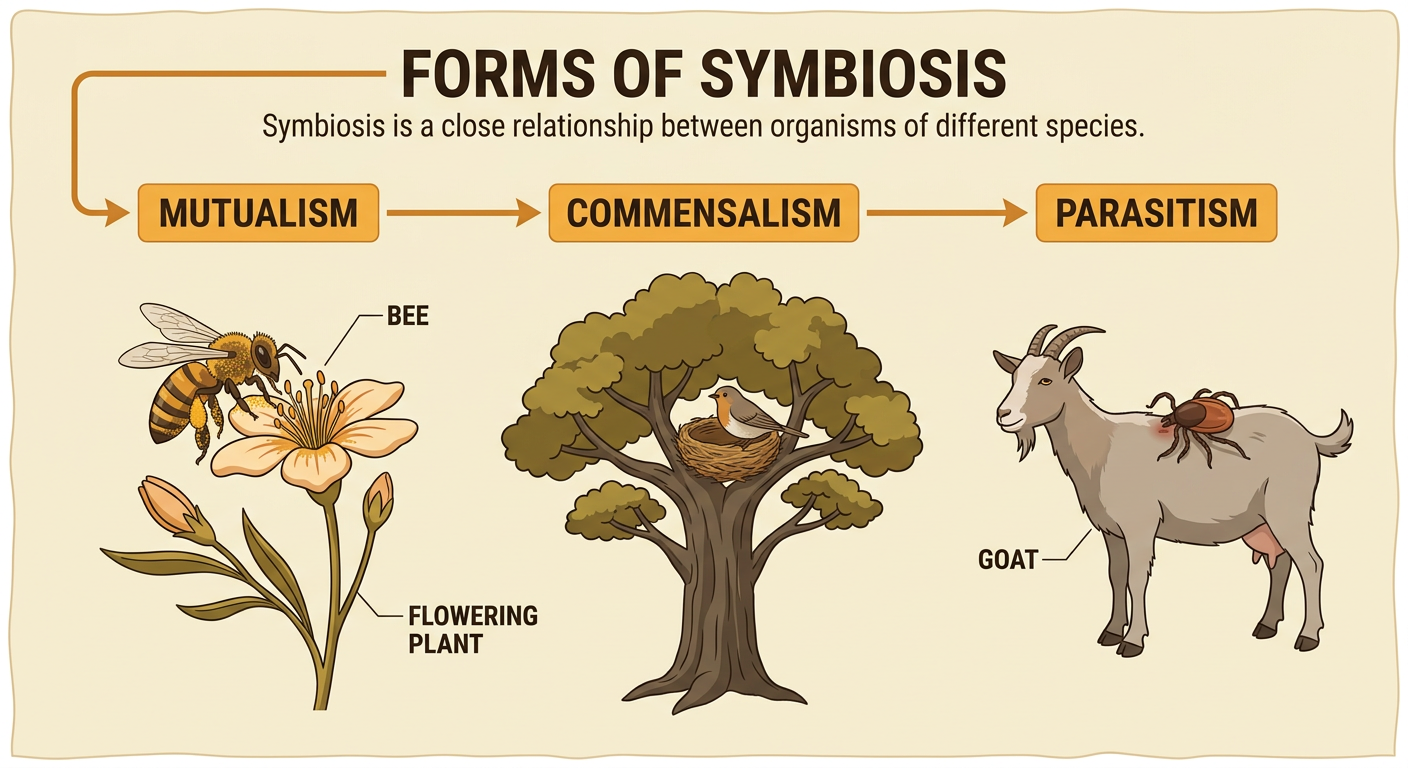
Symbiosis is a close relationship between organisms of different species. In mutualism, both organisms benefit. For example, bees obtain nectar from flowering plants while carrying pollen between flowers, helping the plants reproduce. In commensalism, one organism benefits while the other is not significantly helped or harmed. A bird may build its nest in a tree and gain shelter without greatly affecting the tree. In parasitism, one organism benefits while the host is harmed. A tick feeding on a mammal is an example. These relationships can influence succession. Pollinators help flowering plants produce seeds, and birds may spread seeds to new areas. Parasites may weaken some animals and reduce their populations. As plant cover and food supplies increase, more opportunities for symbiosis appear, helping shape the developing community.
Tracing Change in a Local Habitat
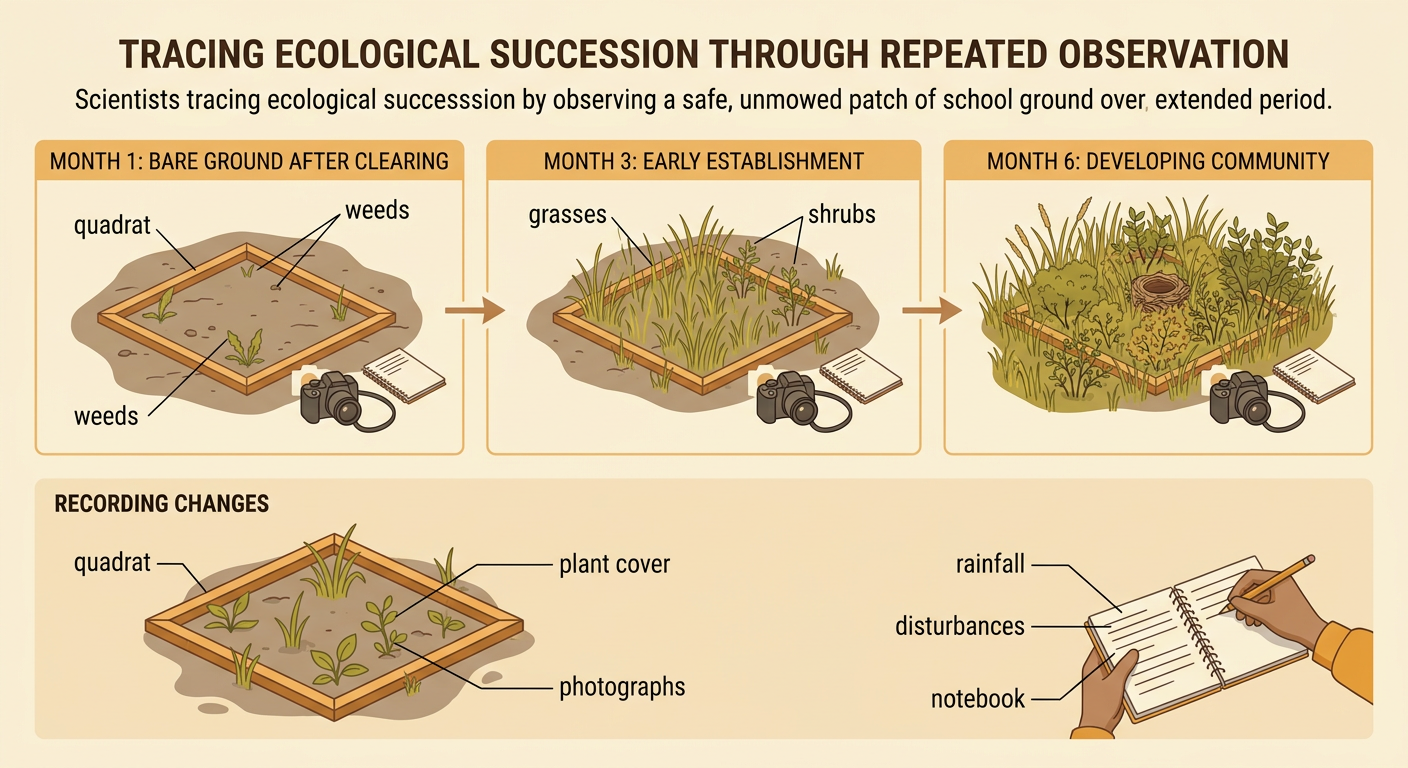
Scientists trace succession by observing the same habitat repeatedly and recording changes. Students can study a safe part of the school grounds, such as a patch left unmowed after clearing. Mark a small sample area called a quadrat without damaging the organisms. At regular times, count the types of plants, estimate how much ground they cover, and record visible animals or signs such as nests. Photographs taken from the same position provide useful evidence. For example, bare soil may first become covered by weeds, then grasses and small shrubs over several months. Record rainfall, mowing, fire, grazing, or other disturbances because these can explain sudden changes. Seasonal changes should not automatically be called succession. Careful observations over a long period help show whether the community is gradually developing or only responding to short-term weather.