Ecosystem Detectives: Living and Nonliving Connections
Students classify biotic and abiotic factors in contrasting ecosystems and use evidence to explain how nonliving conditions shape where organisms can live.
Illustrations are auto-generated and may be placeholders. They can be refreshed to match the narration.
What Makes Up an Ecosystem?
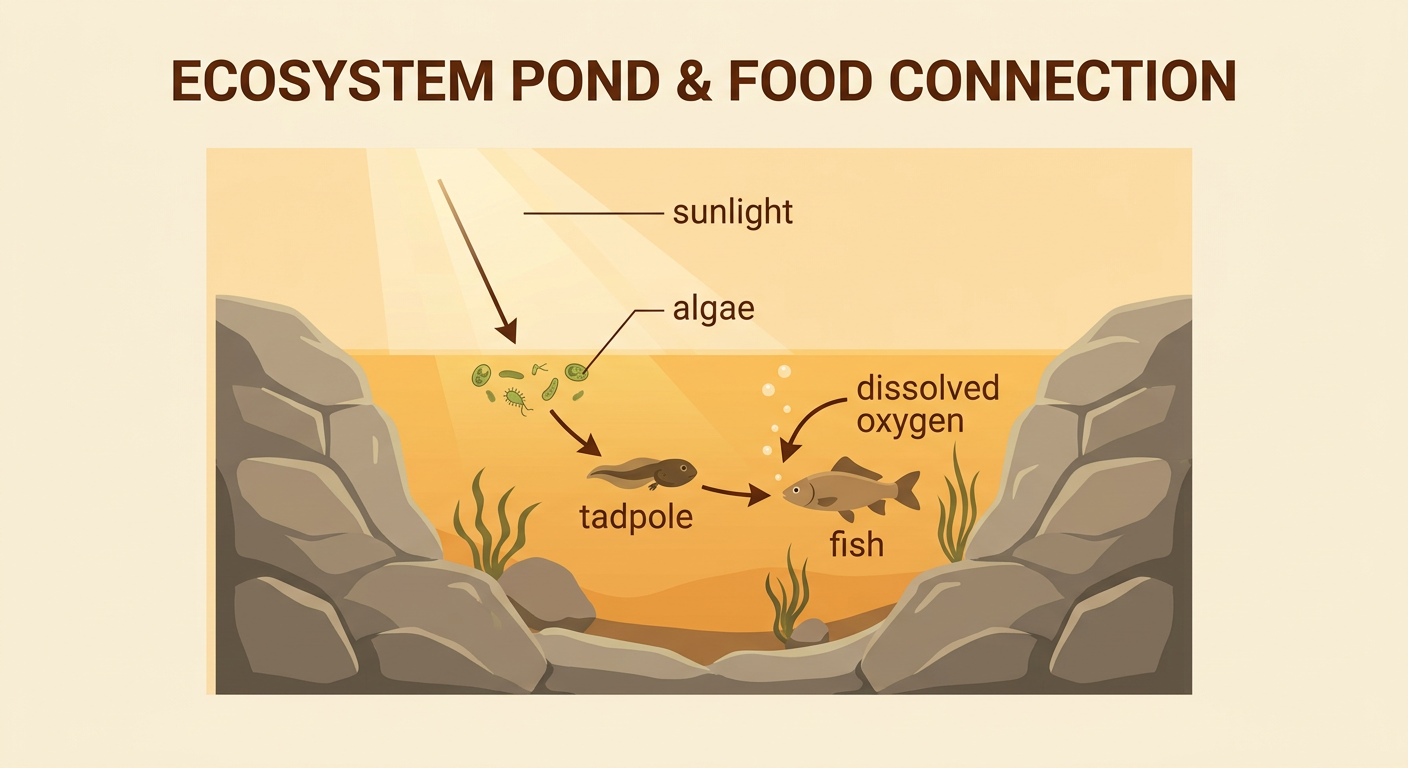
An ecosystem includes all the living organisms in an area and the nonliving surroundings with which they interact. It can be as small as a rotting log or as large as a desert. Living parts include plants, animals, fungi, bacteria, and other organisms. Nonliving parts include sunlight, water, air, soil, temperature, and rocks. An ecosystem is not simply a collection of separate things. Its parts affect one another. In a pond ecosystem, algae use sunlight, water, and carbon dioxide to grow. Tadpoles may eat the algae, while fish may eat the tadpoles. The fish also depend on oxygen dissolved in the water. To understand an ecosystem, scientists identify its parts and investigate the connections among them.
Classifying Biotic and Abiotic Factors
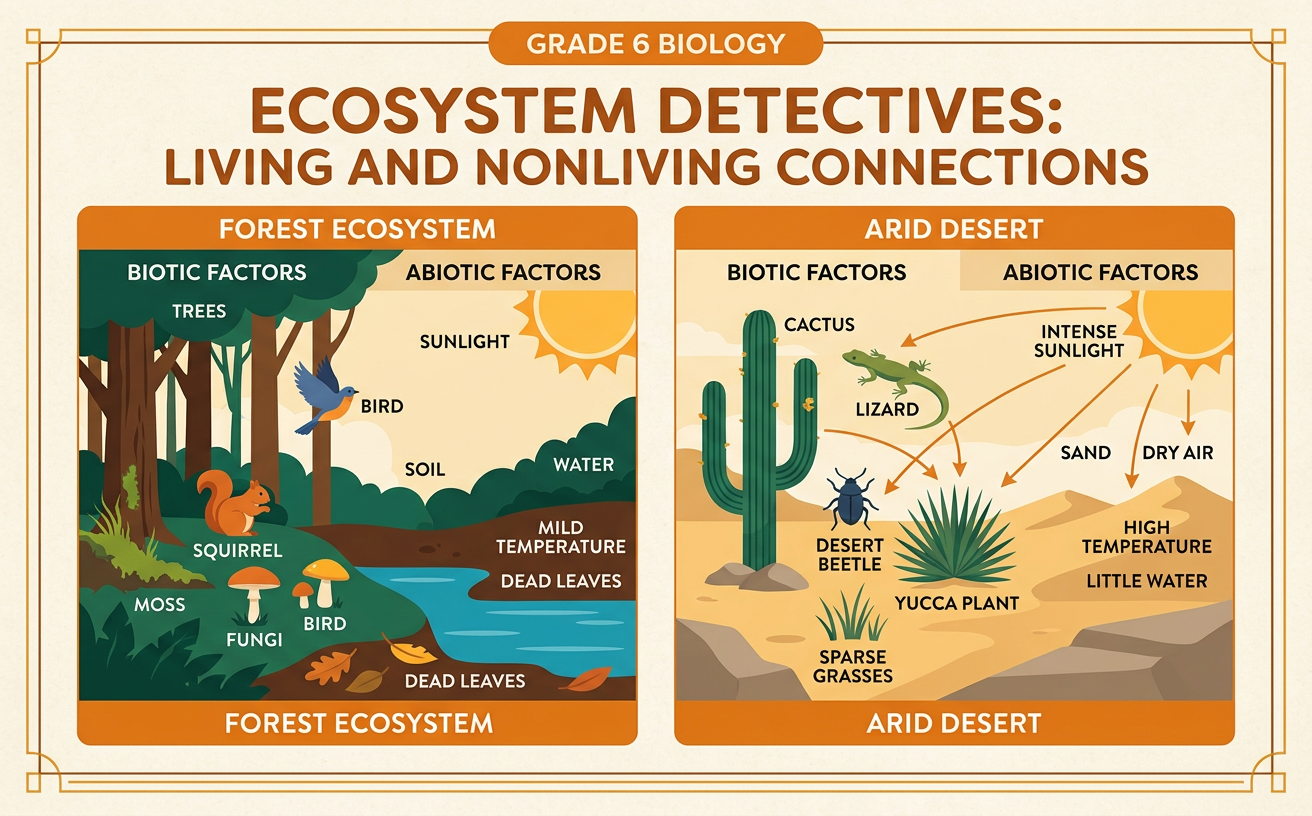
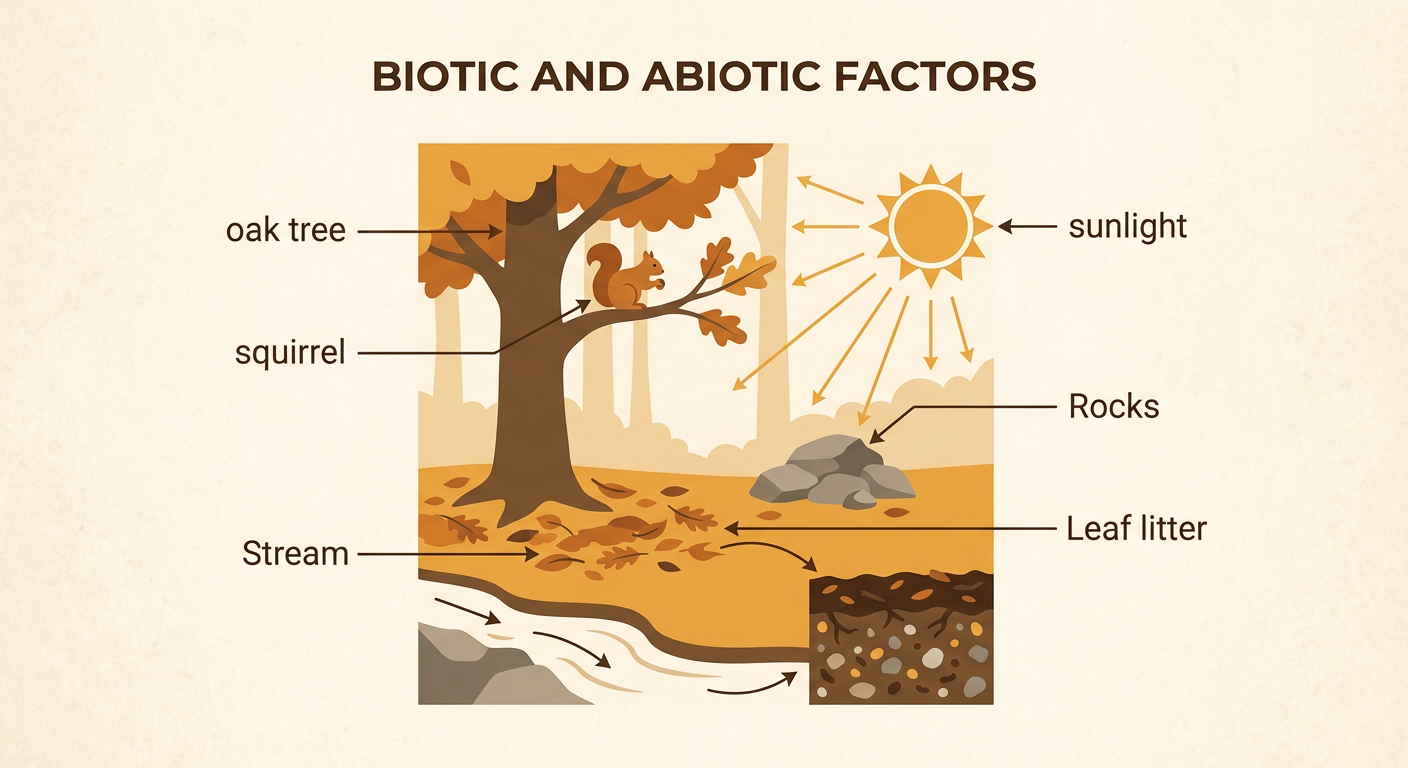
Scientists classify ecosystem factors as biotic or abiotic. A biotic factor is a living organism or something that was once living, such as a fallen leaf or dead wood. An abiotic factor is a nonliving physical or chemical part of the environment, such as light, water, temperature, wind, soil minerals, or salinity. Movement does not determine whether something is biotic: flowing water moves, but it is abiotic. In a forest, an oak tree, a squirrel, mushrooms, and leaf litter are biotic factors. Rainfall, rocks, air temperature, and sunlight are abiotic factors. Some examples require careful thinking. Soil contains abiotic mineral particles as well as biotic organisms and once-living material, so soil is a mixture of both kinds of components.
Connections Between Living and Nonliving Parts
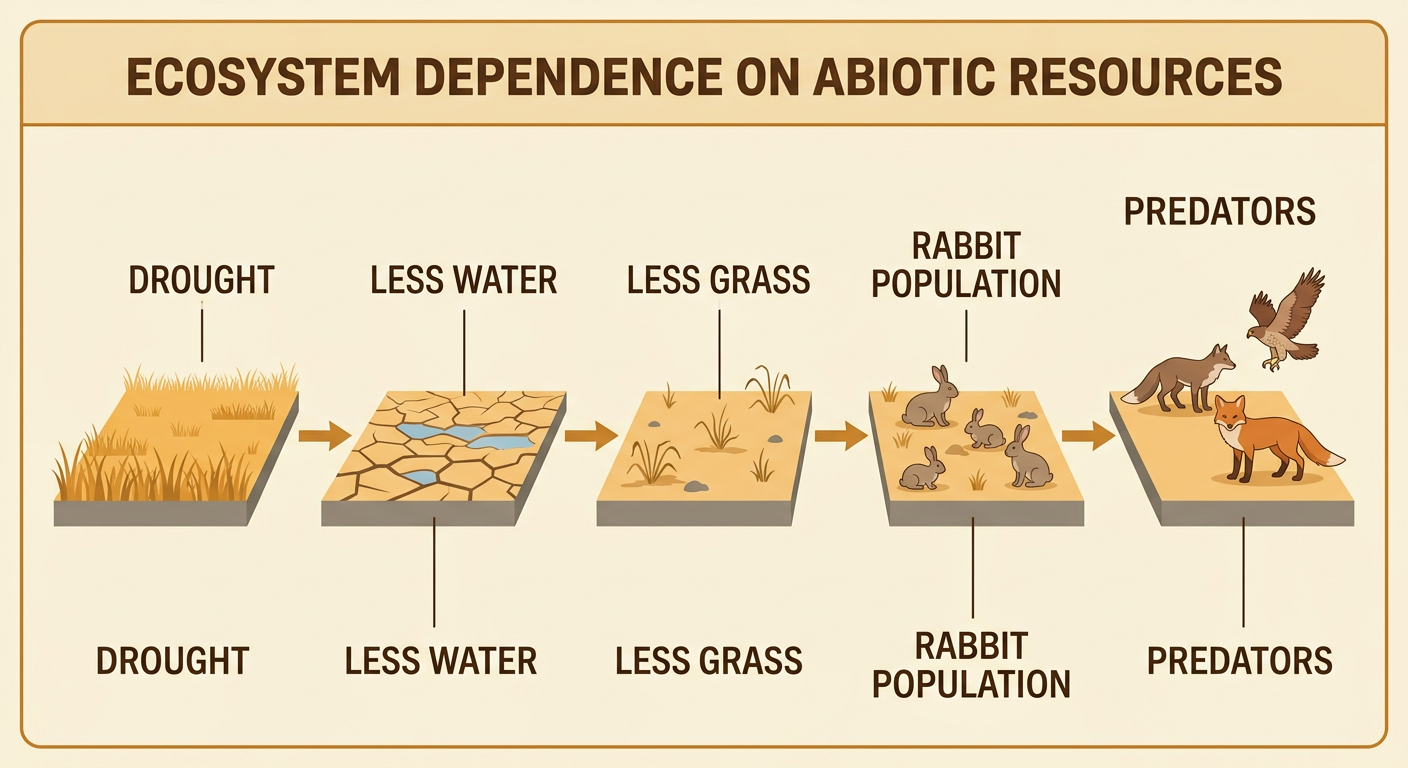
Organisms need resources from the nonliving environment. Plants need light, water, carbon dioxide, space, and nutrients. Animals need resources such as water, oxygen, food, shelter, and space. When a resource becomes scarce, fewer organisms may survive or reproduce. For example, during a long drought, a grassland receives less water. Grass growth decreases, so grass-eating rabbits have less food. Some rabbits may move away, produce fewer young, or die, causing the rabbit population to decrease. Predators that eat rabbits may then have less food. This chain of effects begins with an abiotic condition but spreads through the living community. Scientists study such patterns by comparing measurements, including rainfall amounts, plant growth, and population size, over time.
Comparing Two Ecosystems
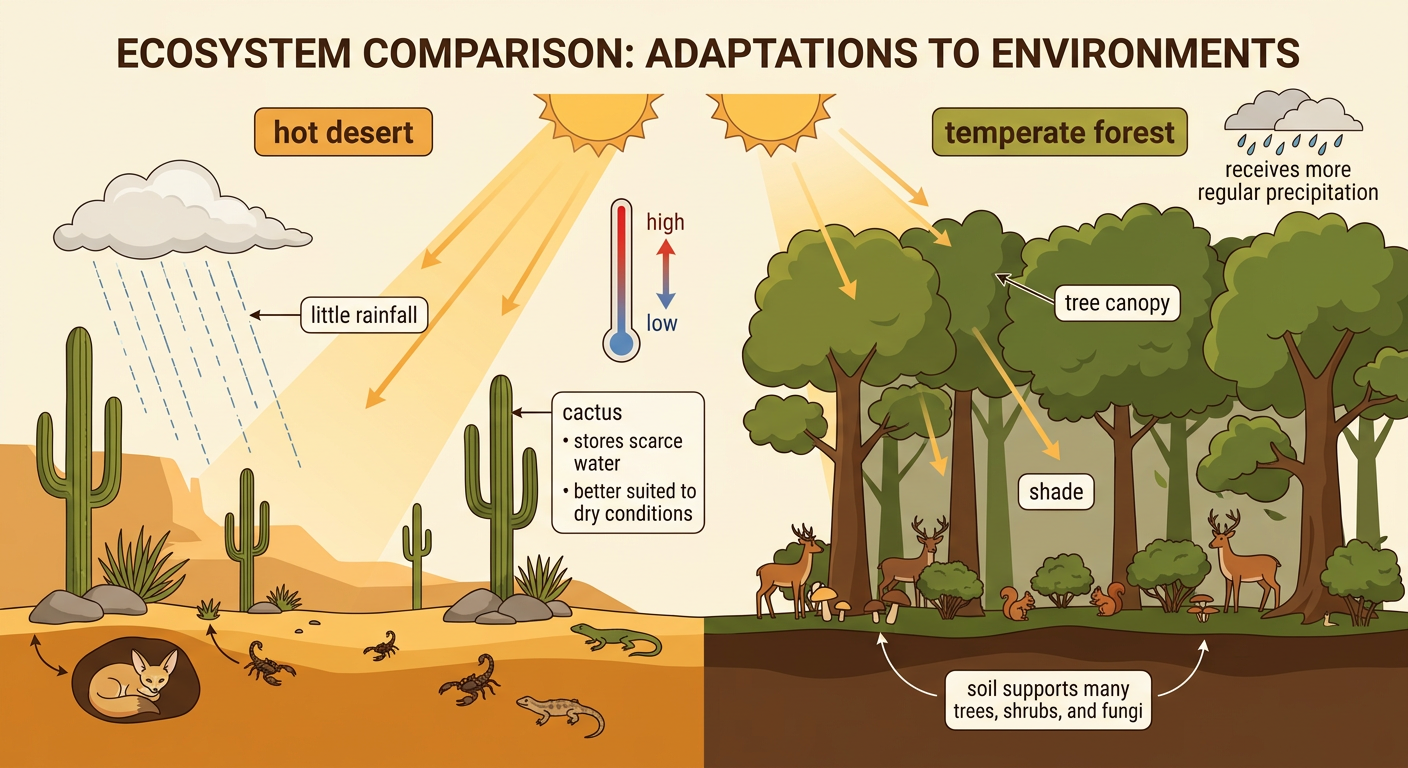
Comparing ecosystems helps scientists explain why different organisms live in different places. Consider a hot desert and a temperate forest. The desert receives little rainfall, has intense sunlight, and often has large temperature changes between day and night. Cacti store water, and many desert animals avoid daytime heat. A temperate forest receives more regular precipitation and has soil that supports many trees, shrubs, and fungi. Its shade keeps the ground cooler and reduces light beneath the tree canopy. Both ecosystems contain plants, animals, soil, air, and sunlight, but the amounts and patterns of resources differ. People also interact with each place through activities such as recreation, farming, or water use. Environmental conditions and human land use together help make each place distinct.
Evidence-Based Ecosystem Explanation
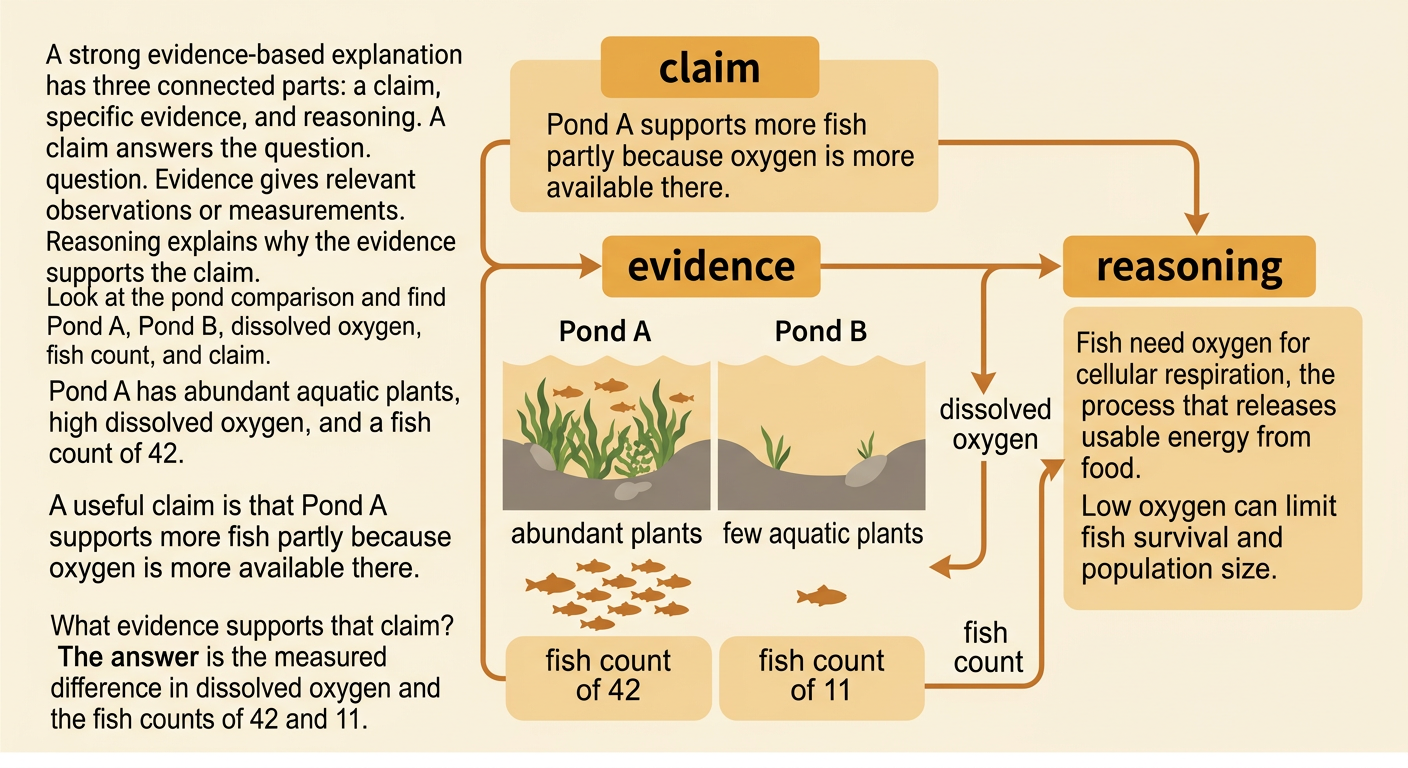
An evidence-based explanation includes a claim, specific evidence, and reasoning that connects the evidence to the claim. Suppose a data table reports that Pond A has abundant aquatic plants, high dissolved oxygen, and 42 fish, while Pond B has few aquatic plants, low dissolved oxygen, and 11 fish. A strong claim is that Pond A supports more fish partly because oxygen is more available there. The evidence should cite the measured oxygen levels and fish counts from the table, not simply say that Pond A is healthier. The reasoning explains that fish need dissolved oxygen for cellular respiration, so low oxygen can limit survival and population size. Scientists should also avoid claiming that one factor proves the entire cause. Temperature, food, predators, and pond size may also affect the fish population.