Electric and Magnetic Forces at a Distance
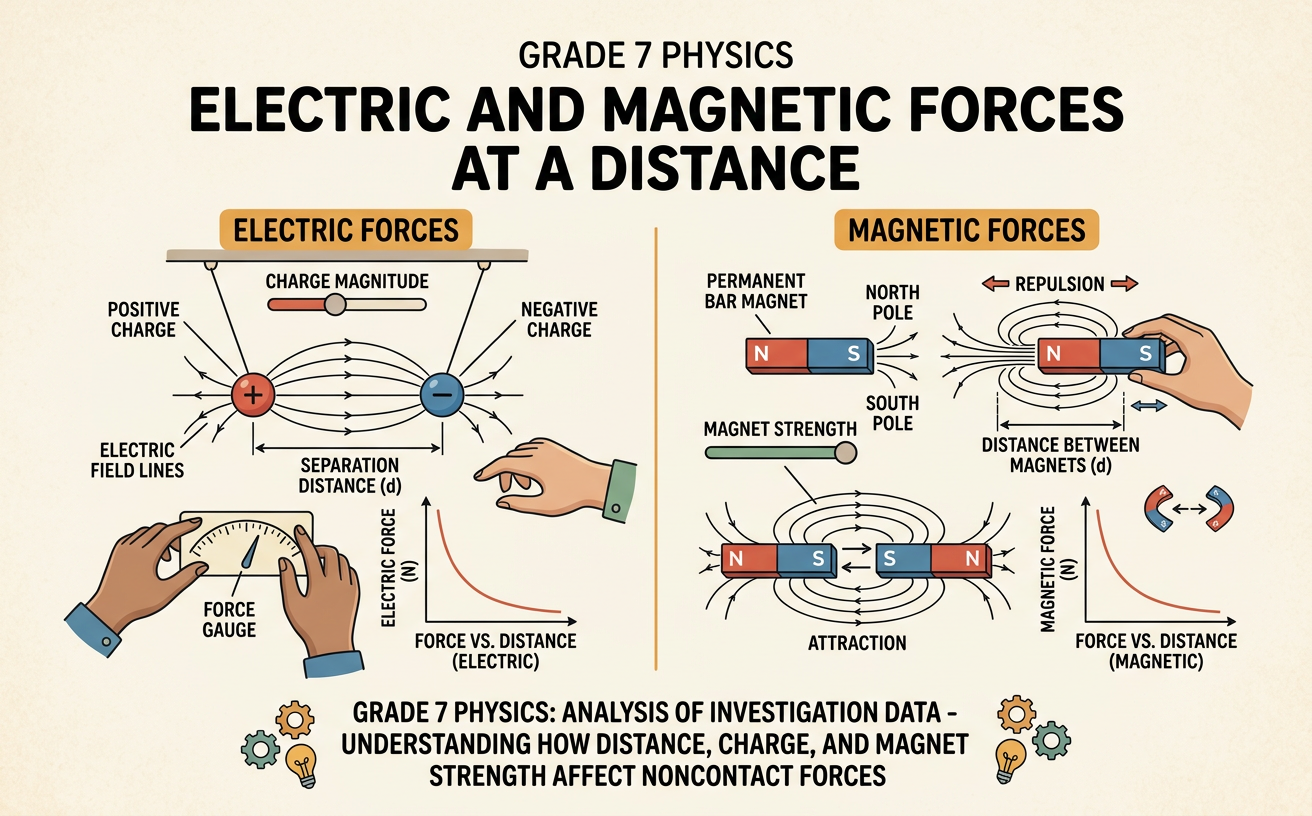
Students analyze simple investigation data to determine how distance, charge, and magnet strength affect noncontact electric and magnetic forces.
Illustrations are auto-generated and may be placeholders. They can be refreshed to match the narration.
Forces Without Contact
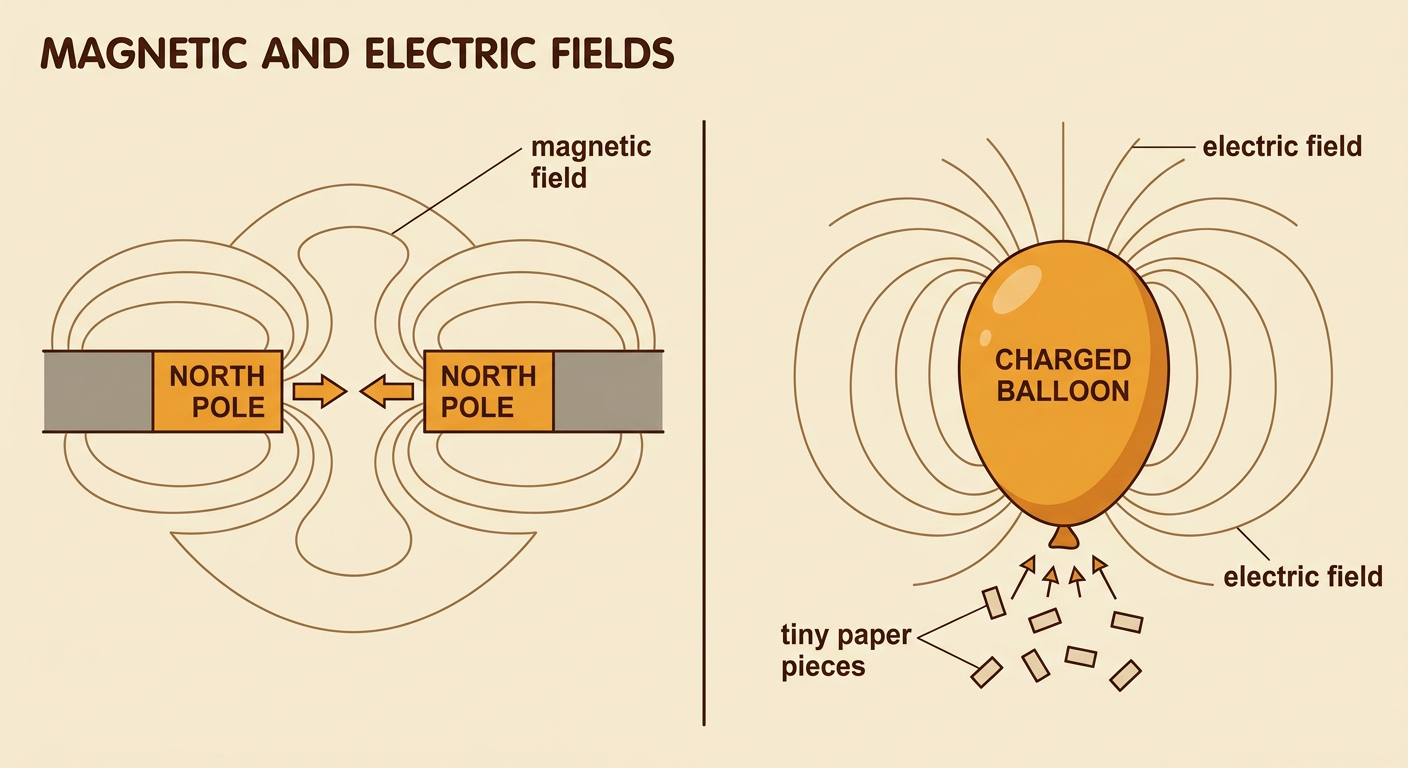
A force is a push or pull. Electric and magnetic forces can act without objects touching because charged objects and magnets create fields in the space around them. Two objects with opposite electric charges attract, while objects with like charges repel. Similarly, opposite magnetic poles attract, and like magnetic poles repel. For example, the north pole of one bar magnet can push away the north pole of another magnet even when a small gap separates them. A rubbed balloon can also attract tiny paper pieces without touching them at first. The paper may have no overall charge, but charges inside it shift slightly toward or away from the balloon. The force becomes easier to notice as the paper moves closer. These observations provide evidence that noncontact forces act across space.
Testing Magnets and Charged Objects
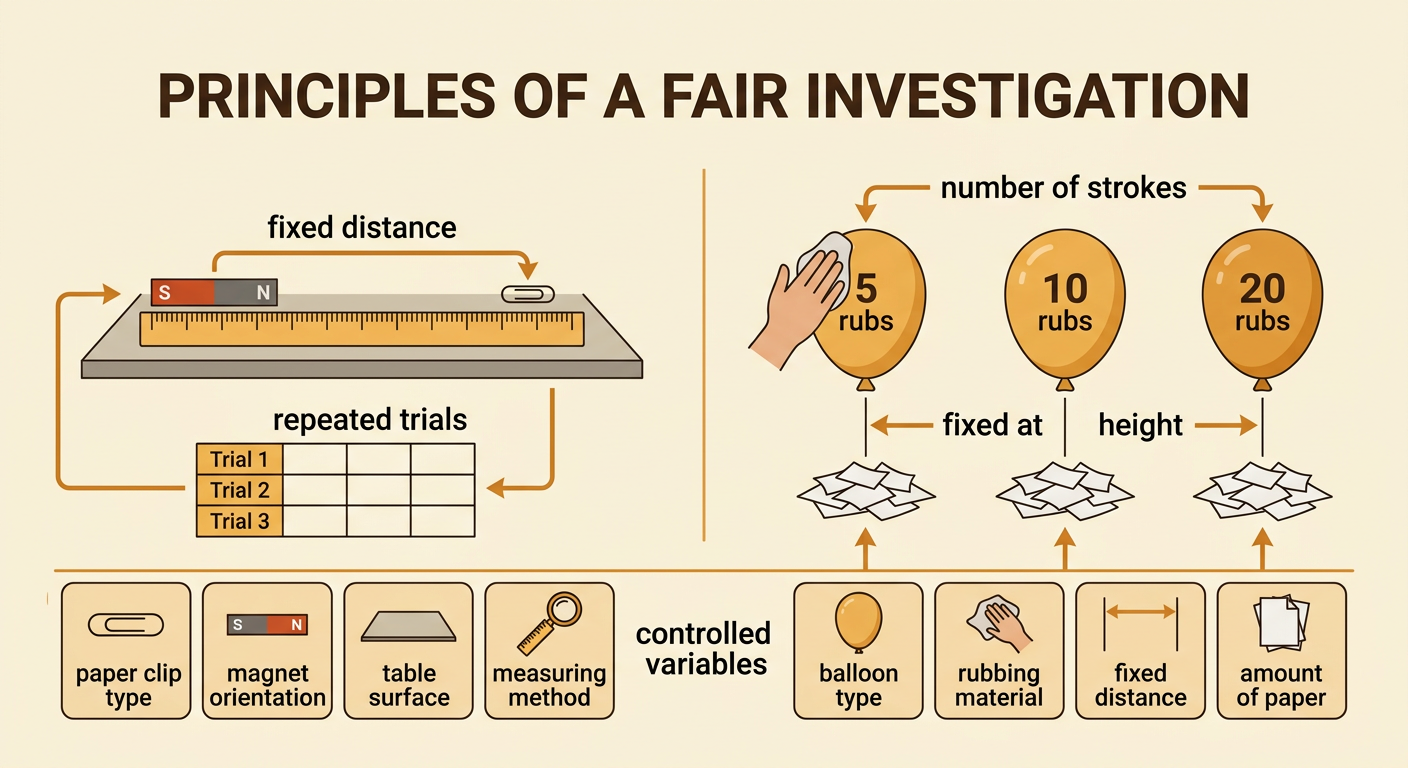
A fair investigation changes one factor at a time while keeping other conditions the same. To test magnet strength, place a paper clip a fixed distance from a bar magnet and record whether it moves. Repeat three times, then test a stronger magnet at the same distance. Keep the paper clip type, magnet orientation, table surface, and measuring method constant. To test electric force, rub identical balloons with the same cloth for different numbers of strokes, such as 5, 10, and 20 strokes. Hold each balloon at the same distance from equal piles of paper pieces and count how many pieces rise. Follow the steps in the same order and record every result. Repeated trials make unusual measurements easier to identify and provide more dependable evidence.
Distance and Force Strength
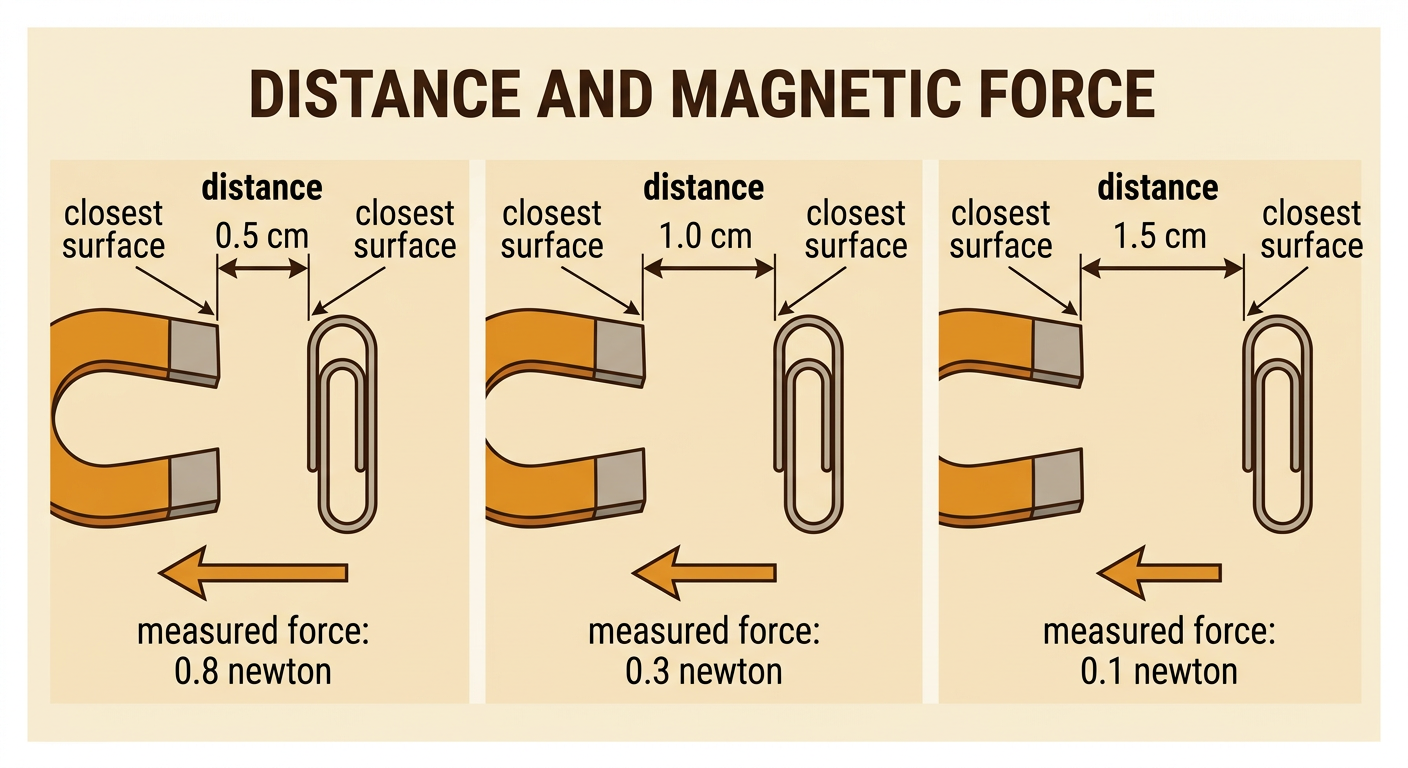
Distance is an important factor affecting electric and magnetic force strength. In general, the force becomes weaker as the distance between objects increases. Imagine that a magnet attracts a paper clip with a measured force of 0.8 newton at 0.5 centimeter, 0.3 newton at 1.0 centimeter, and 0.1 newton at 1.5 centimeters. The values do not decrease by the same amount each time, so the relationship is not necessarily linear. A charged balloon also pulls more strongly on paper pieces when it is nearby than when it is farther away. Investigators must measure distance consistently, such as from the closest surface of one object to the closest surface of the other. Magnet orientation, charge amount, and object type should remain unchanged while distance is tested.
Finding Patterns in Data
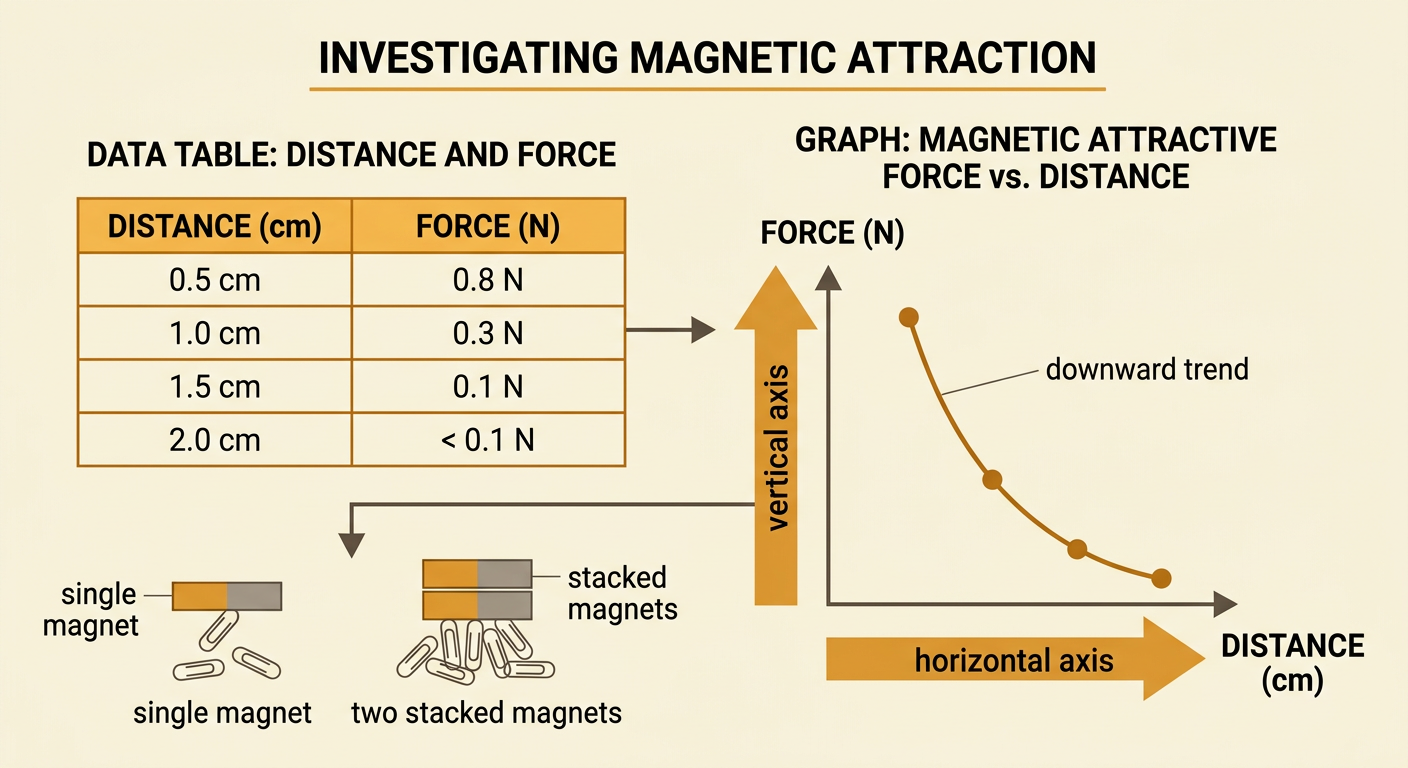
Scientists organize measurements in tables and graphs to find patterns. Put the changed factor, such as distance, on the horizontal axis and the measured response, such as force in newtons, on the vertical axis. Suppose a class measures magnetic attraction at four distances: 0.5 centimeter gives 0.8 newton, 1.0 centimeter gives 0.3 newton, 1.5 centimeters gives 0.1 newton, and 2.0 centimeters gives almost 0 newton. A downward trend shows that attraction weakened as distance increased. Students can also compare averages from repeated trials or calculate differences between measurements. A second data set might show that two stacked magnets lift more paper clips than one magnet at the same distance. This pattern supports the idea that both distance and magnet strength affect force.
Claim, Evidence, and Reasoning
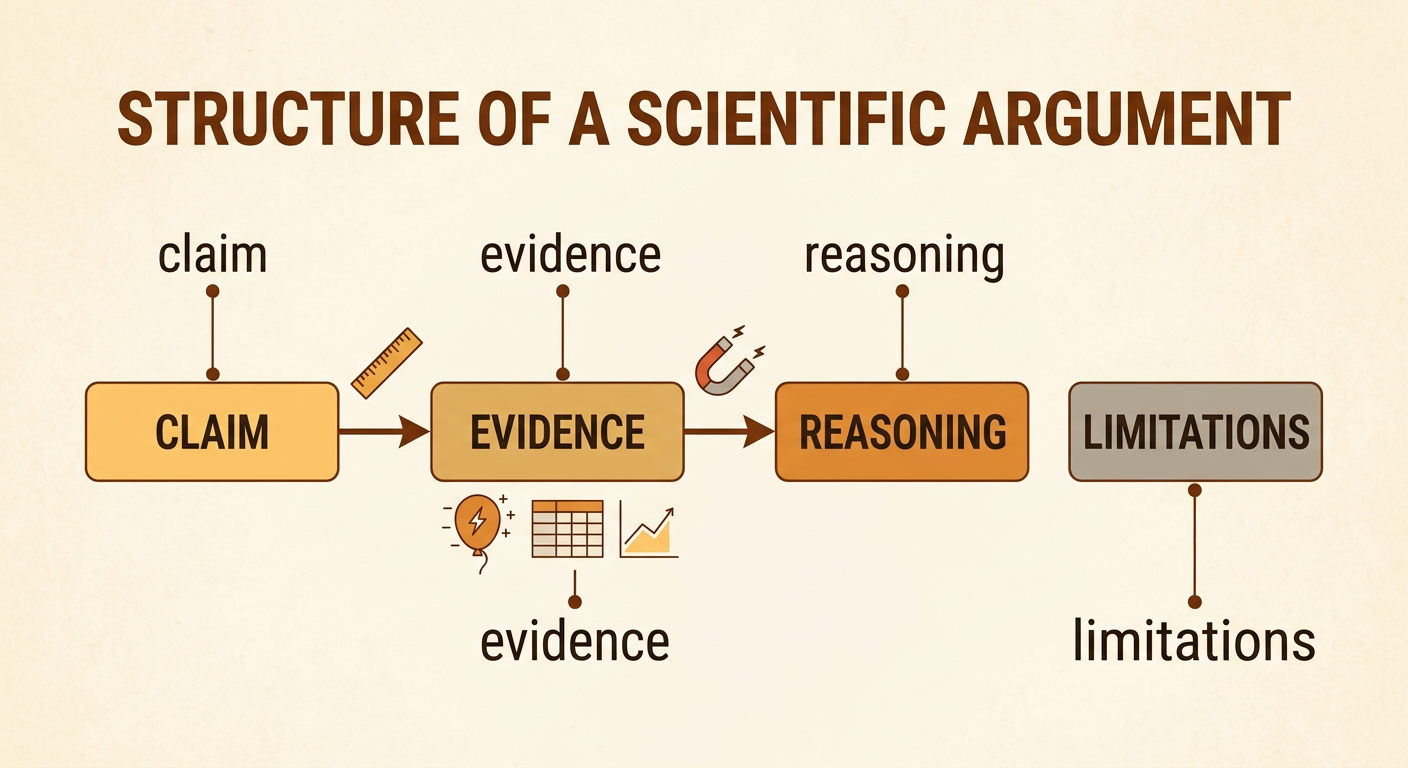
A scientific argument includes a claim, evidence, and reasoning. A claim answers the investigation question. Evidence gives relevant measurements from several trials or sources. Reasoning explains why the evidence supports the claim using scientific ideas. For example, a student might claim that magnetic attraction weakens as distance increases. The evidence could state that the average force fell from 0.8 newton at 0.5 centimeter to 0.1 newton at 1.5 centimeters in three trials. The reasoning connects this trend to the reduced interaction between the magnet and paper clip across a larger gap. Strong arguments also acknowledge limitations. A ruler may have limited precision, magnets may not be identical, and humidity can reduce static charge. Comparing class data, a graph, and direct observations can strengthen a conclusion when these sources show the same pattern.