
Electric Circuits Transfer Energy
Students build and observe simple circuits to explain how electric current transfers energy from a source to a light bulb or motor.
Illustrations are auto-generated and may be placeholders. They can be refreshed to match the narration.
What Is an Electric Circuit?
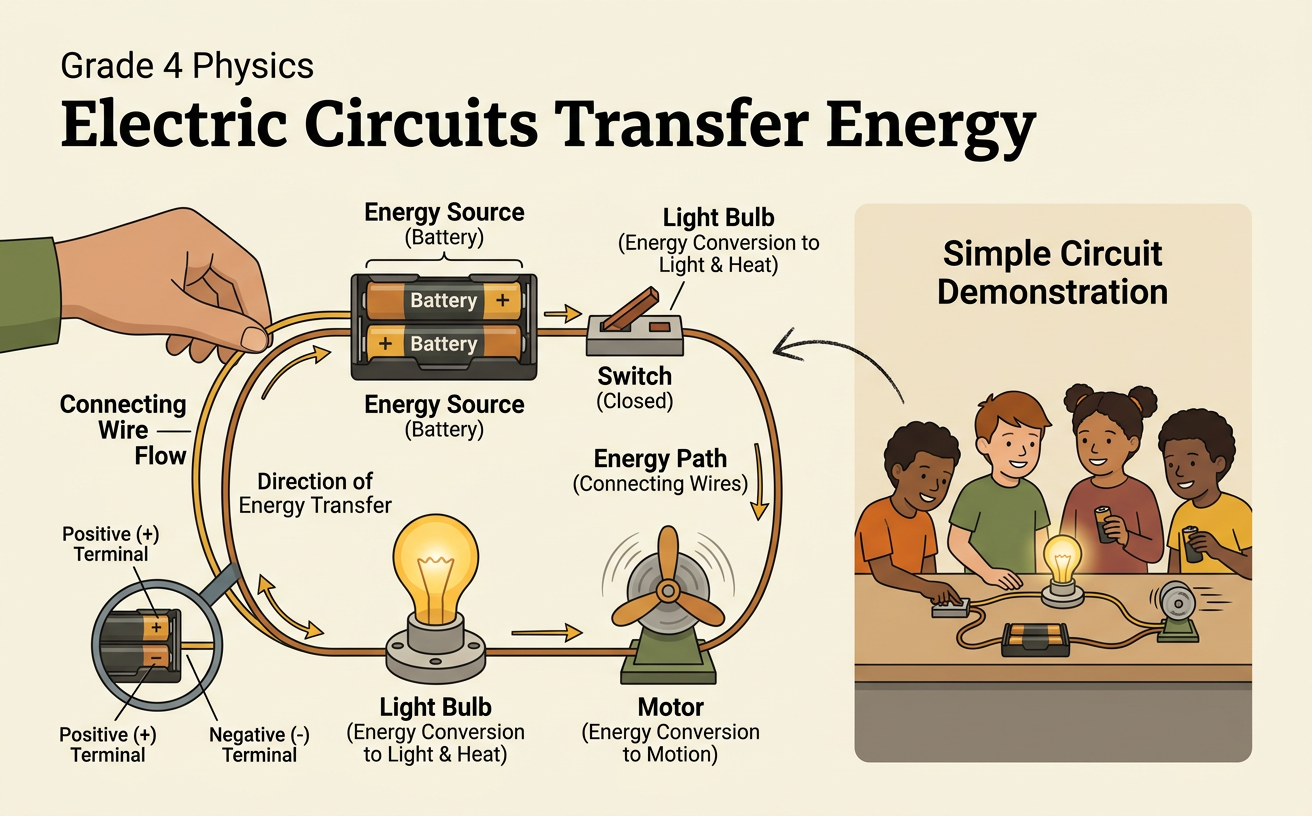
An electric circuit is a path through which electric current can flow. Current is the movement of electric charge through connected materials, such as metal wires. A circuit needs an energy source and a complete path that leads away from the source and returns to it. The source transfers energy through the electric current to other parts of the circuit. For example, connect a battery to a small bulb with wires. When the path is complete, current flows and the bulb produces light and heat. The charges are not used up inside the bulb. Instead, energy carried by the electric current is transferred to the bulb. If a wire is removed, the path is broken, current stops, and the bulb goes out.

Parts of a Simple Circuit
Each part of a simple circuit has a job. A battery is the energy source. Wires provide a conducting path for electric current. A switch opens or closes the path. A device such as a bulb, buzzer, or motor changes electrical energy into other forms. A bulb produces light and heat, while a motor produces motion and some sound and heat. For example, a battery-powered toy fan contains a battery, wires, a switch, and a motor. When the switch is turned on, current flows through the motor. The motor spins the fan blades. All parts must be connected correctly for the circuit to work. Metal conductors carry current well, while plastic coverings help keep the current inside the wires.

Open and Closed Circuits
A closed circuit has a complete, unbroken path, so electric current can flow. An open circuit has a gap in the path, so current cannot flow through the whole circuit. A switch controls this gap. When the switch contacts touch, the circuit is closed. When they separate, the circuit is open. Imagine a battery connected to a bulb and a switch. Closing the switch makes the bulb light because energy is transferred to it by the current. Opening the switch makes the bulb go out because the path is broken. A loose wire can also create an open circuit. If a circuit does not work, check whether every connection touches metal and whether the path returns to the other battery terminal.

Observing Energy Transfer
Scientists use observations as evidence of energy transfer. Build a circuit with a battery, wires, a switch, and a small bulb. Close the switch and record what happens: the bulb lights and may become slightly warm. These changes show that electrical energy was transferred into light and heat. Next, replace the bulb with a classroom motor. When the circuit closes, the motor shaft spins and may make sound. This is evidence that electrical energy was transferred into motion, sound, and heat. You can attach a paper wheel to the shaft to make the motion easier to see. Use only teacher-approved parts. Compare the device before and after closing the switch, and record visible, audible, or safely measurable changes in a science notebook.

Explaining the Evidence
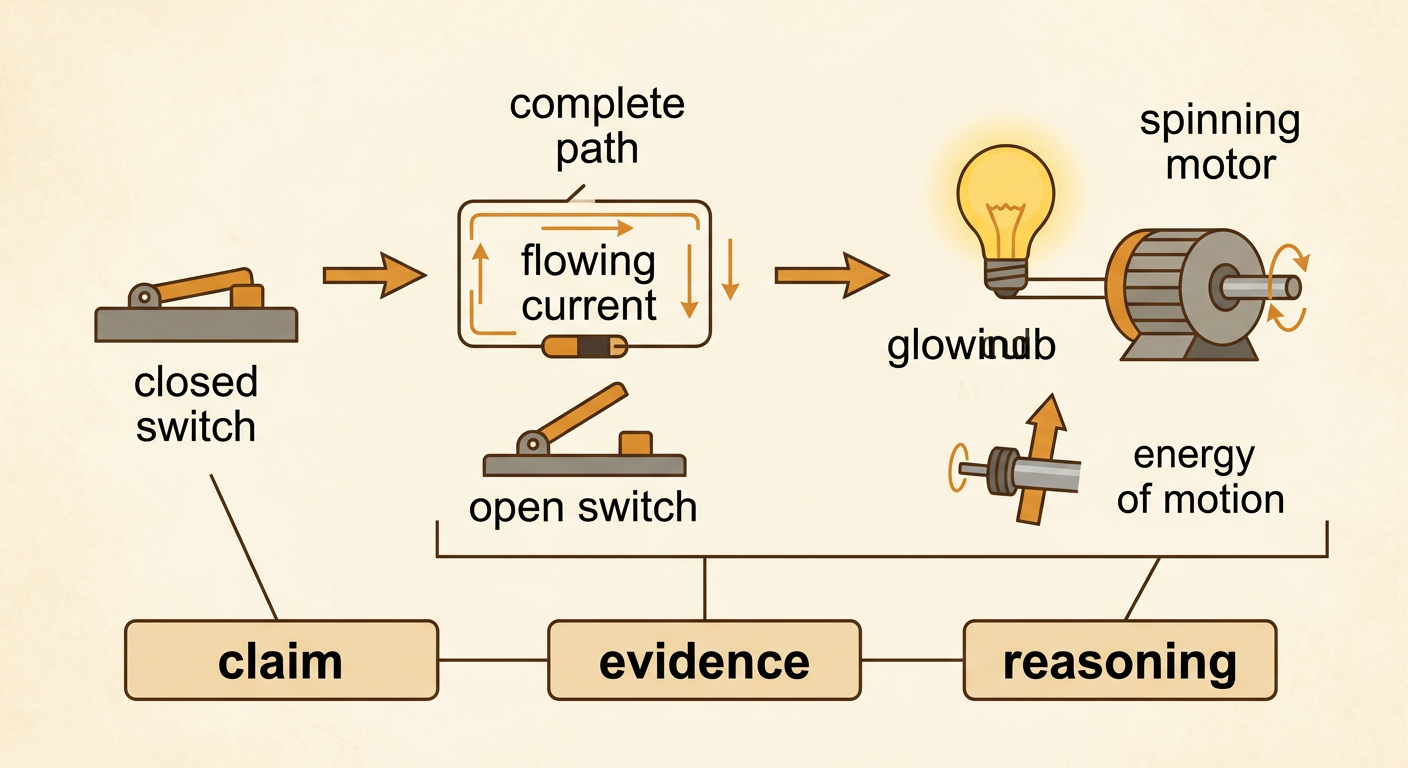
A scientific explanation tells what happened, why it happened, and what evidence supports the idea. Begin with a claim: electric current transferred energy from the battery to the device. Then give evidence from the investigation. For example, the bulb was dark when the switch was open, but it produced light when the switch was closed. Finally, add reasoning. Closing the switch completed the path, allowing current to flow and transfer energy to the bulb. A motor provides another example. If its shaft spins faster under a teacher-approved test condition, the faster-moving shaft has more energy of motion than when it spins slowly. The observations connect cause and effect: changing the circuit changes the device’s output because the amount or path of transferred energy changes.
Using Electricity Safely
Safety rules for electricity help prevent shocks, burns, fires, and damaged equipment. In class, use only low-voltage batteries and parts approved by the teacher. Keep circuits away from water, and never place wires or other objects into an electrical outlet. Do not connect the two battery terminals directly with a wire because the wire and battery can become hot. Disconnect a circuit if a part feels warm, smells unusual, or looks damaged, and tell an adult. Homes, schools, and communities also use safety policies to address public problems. Electrical codes require safe wiring, outlets may have protective covers, and circuit breakers shut off dangerous current. For example, a school rule requiring adults to replace damaged cords protects everyone who uses the classroom.
