Energy from Food: Modeling Cellular Respiration
Students analyze a simplified model and quantitative data to explain how cellular respiration transfers energy from glucose into ATP under aerobic and anaerobic conditions.
Illustrations are auto-generated and may be placeholders. They can be refreshed to match the narration.
Why Cells Need ATP
Cells need a steady supply of usable energy to build molecules, move materials, maintain homeostasis, and perform mechanical work. ATP, or adenosine triphosphate, serves as an immediate energy carrier. When ATP is hydrolyzed to form ADP and inorganic phosphate, energy becomes available for energy-requiring cellular processes. Cells continuously regenerate ATP because they store only a limited amount. For example, during a sprint, muscle cells use ATP to power interactions between protein filaments that shorten muscle fibers. They also use ATP to pump calcium ions and restore ion concentration differences across membranes. Glucose is not used directly for each of these tasks. Instead, cellular respiration transfers part of glucose’s chemical energy into ATP, creating a smaller, accessible energy source that can be coupled to cellular work.

Tracing Matter Through Respiration
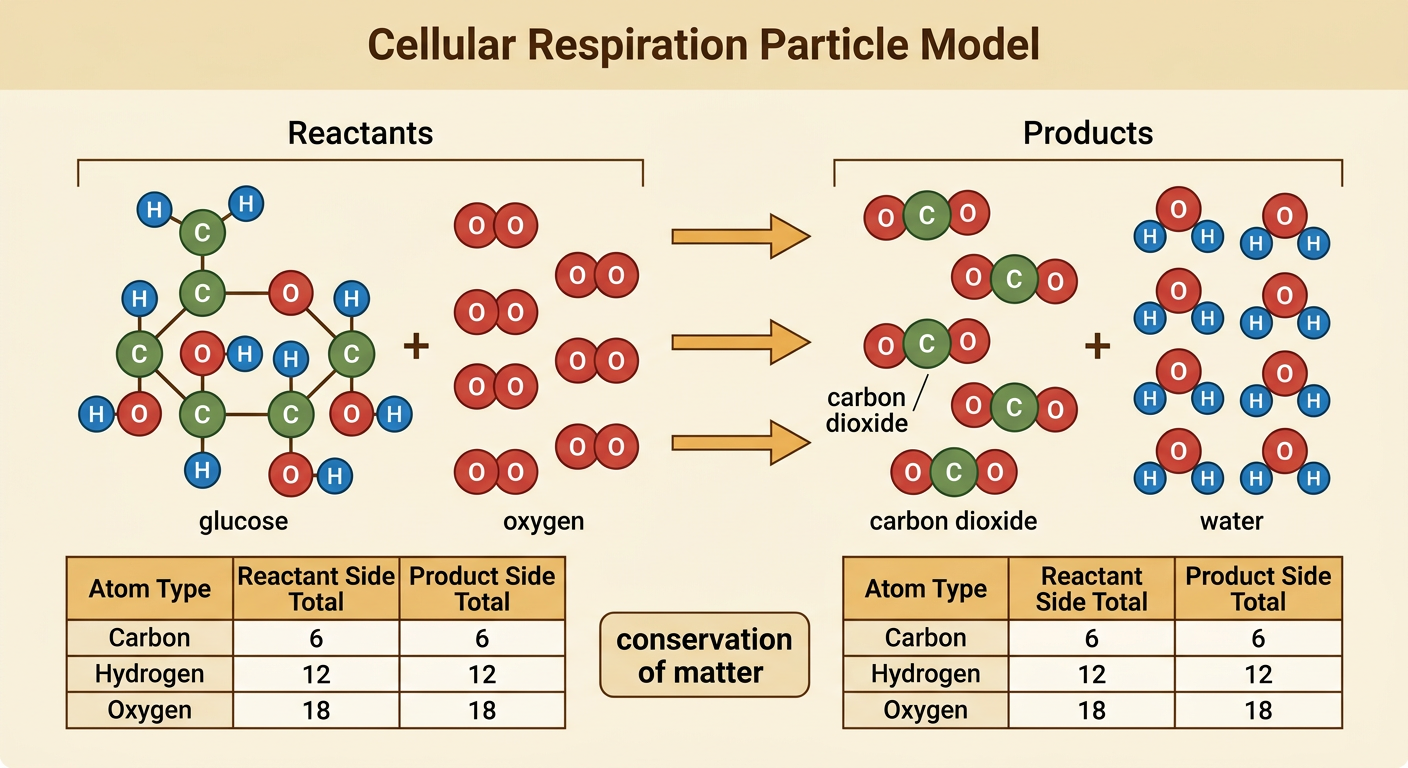
Cellular respiration rearranges atoms rather than creating or destroying them. The simplified overall equation is C6H12O6 + 6 O2 → 6 CO2 + 6 H2O. On the reactant side, one glucose molecule and six oxygen molecules contain 6 carbon atoms, 12 hydrogen atoms, and 18 oxygen atoms. The products contain the same totals: six carbon dioxide molecules have 6 carbon and 12 oxygen atoms, while six water molecules have 12 hydrogen and 6 oxygen atoms. For example, carbon atoms from a glucose molecule can be traced through many enzyme-controlled reactions until they leave a cell in carbon dioxide. In a person, that carbon dioxide enters the blood, travels to the lungs, and is exhaled. The equation summarizes the net rearrangement but does not show every intermediate reaction.
Modeling Energy Transfers
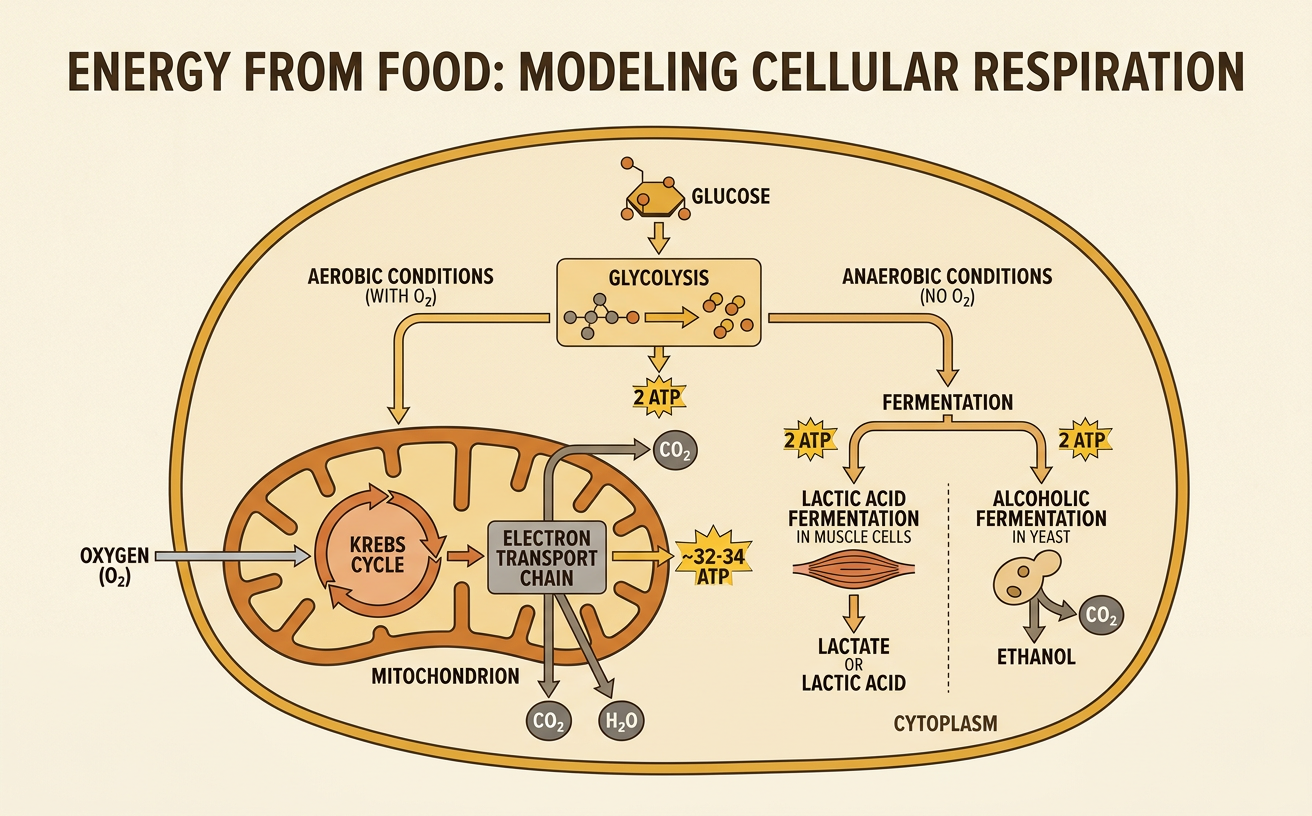
Cellular respiration transfers energy through a series of reactions rather than releasing it in one step. Glycolysis begins breaking down glucose and produces a small amount of ATP. Later reactions transfer high-energy electrons to carriers such as NADH. In aerobic respiration, the electron transport chain uses those electrons to pump hydrogen ions across the inner mitochondrial membrane. As the ions flow through ATP synthase, the enzyme produces ATP from ADP and phosphate. Oxygen accepts electrons at the end of the chain, helping form water. Some of glucose’s chemical energy is captured in ATP, while some is transferred to the surroundings as thermal energy. For example, if a simplified model begins with 100 energy units in glucose, it might show 34 units transferred to ATP and 66 units released as heat. These values illustrate energy accounting, not a fixed efficiency for every cell.

Comparing Aerobic and Anaerobic Pathways
Both aerobic respiration and fermentation begin with glycolysis in the cytoplasm. Glycolysis splits one glucose molecule and produces a net gain of two ATP molecules. When oxygen is available, products of glycolysis can enter mitochondrial pathways that include the citric acid cycle and electron transport chain. A simplified classroom model commonly assigns about 30 to 32 ATP per glucose to the complete aerobic pathway. Without sufficient oxygen, fermentation regenerates NAD+, allowing glycolysis to continue, but it adds no ATP beyond glycolysis’s two ATP. In human muscle cells, fermentation produces lactate. In yeast, it produces ethanol and carbon dioxide. For example, during an intense sprint, oxygen delivery may not match ATP demand, so muscle cells increase their reliance on glycolysis and lactate fermentation. This pathway supplies ATP rapidly but extracts much less energy from each glucose molecule.

Interpreting ATP-Yield Data
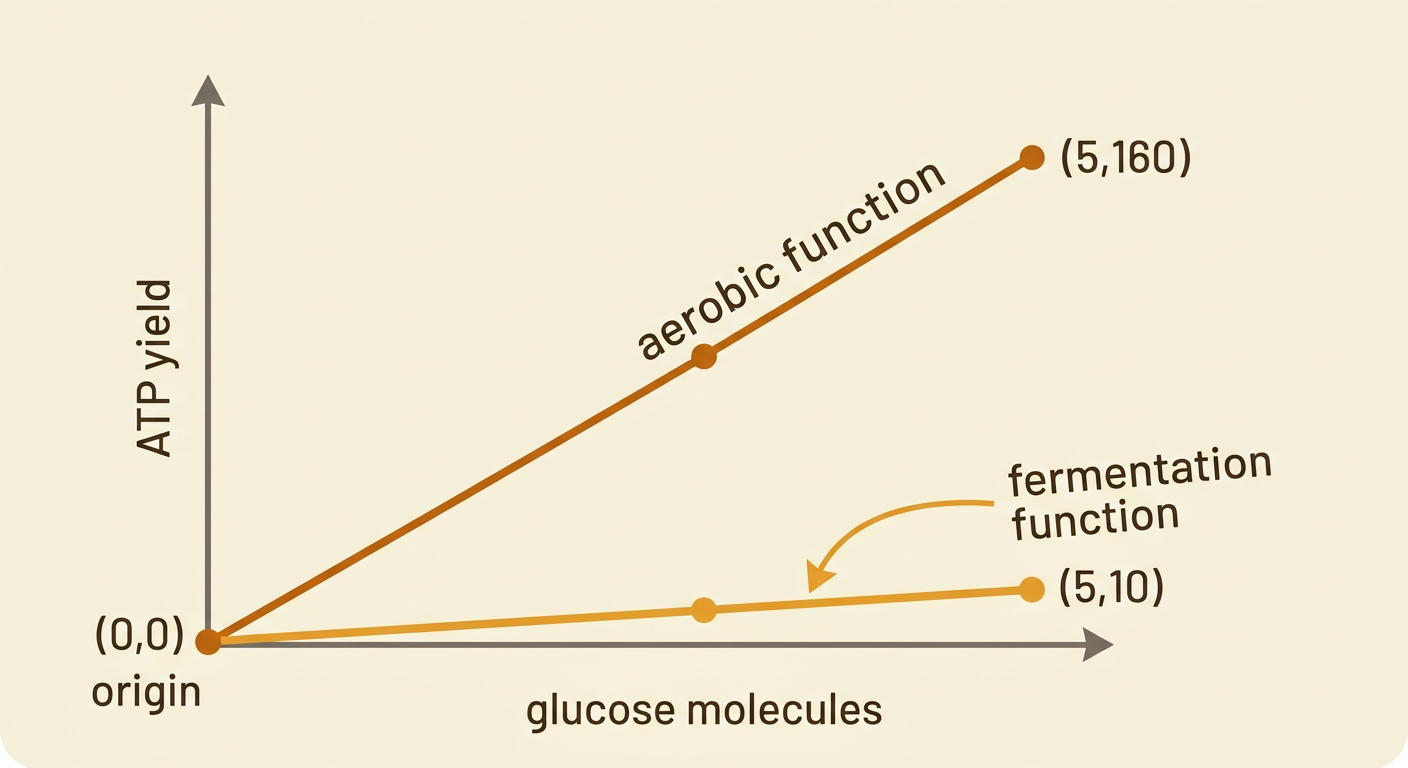
Quantitative models make differences in ATP yield easier to compare. Suppose a simplified dataset assigns 32 ATP per glucose to aerobic respiration and 2 ATP per glucose to fermentation. If x represents the number of glucose molecules processed, the functions are A(x) = 32x and F(x) = 2x. Both graphs begin at the origin because processing zero glucose produces zero ATP in this model. Their slopes represent ATP yield per glucose: 32 for the aerobic function and 2 for the fermentation function. For example, five glucose molecules would produce 160 ATP aerobically but only 10 ATP through fermentation. The aerobic model therefore predicts 16 times as much ATP per glucose. These linear functions are useful for comparison, but real cellular yields vary with cell type, membrane conditions, transport costs, and proton leakage. The graph is a simplified model, not an exact measurement for every cell.
Evidence-Based Exit Claim
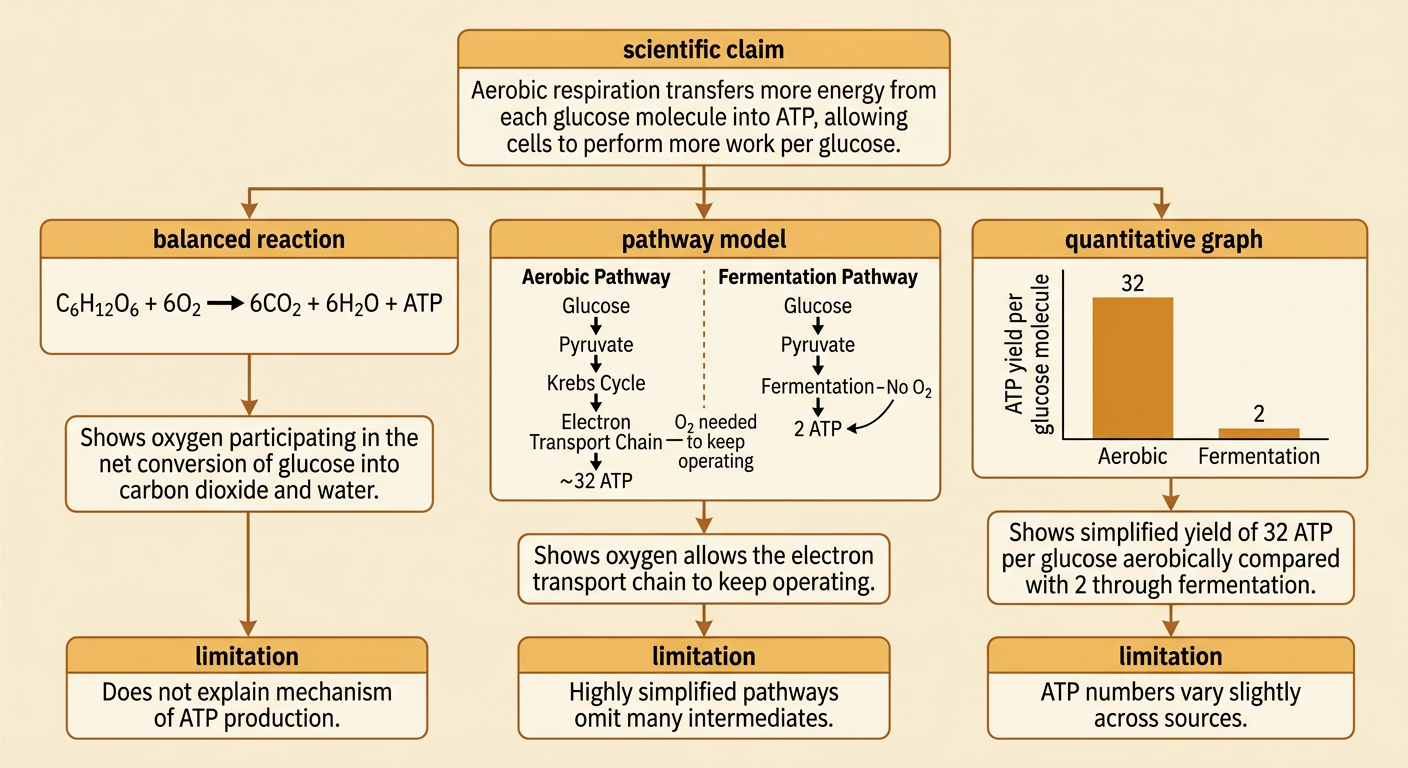
A strong scientific claim answers a question and is supported by evidence from multiple sources. Consider the question, “Why is aerobic respiration more effective for sustained activity than fermentation?” One defensible claim is that aerobic respiration supports sustained activity because it transfers more energy from each glucose molecule into ATP. The balanced reaction model shows that oxygen participates in the net conversion of glucose into carbon dioxide and water. The pathway model shows that oxygen allows the electron transport chain to keep operating. The quantitative graph shows a simplified yield of 32 ATP per glucose aerobically compared with 2 ATP through fermentation. Together, these sources support the reasoning that cells can perform more work per glucose when oxygen is available. A complete argument should also note a limitation: fermentation can maintain rapid glycolysis when oxygen is limited, even though its ATP yield is much lower.