
Energy Resources and Their Environmental Effects
Students compare renewable and nonrenewable energy resources and explain how using each resource can affect people and the environment.
Illustrations are auto-generated and may be placeholders. They can be refreshed to match the narration.
Where Energy Comes From
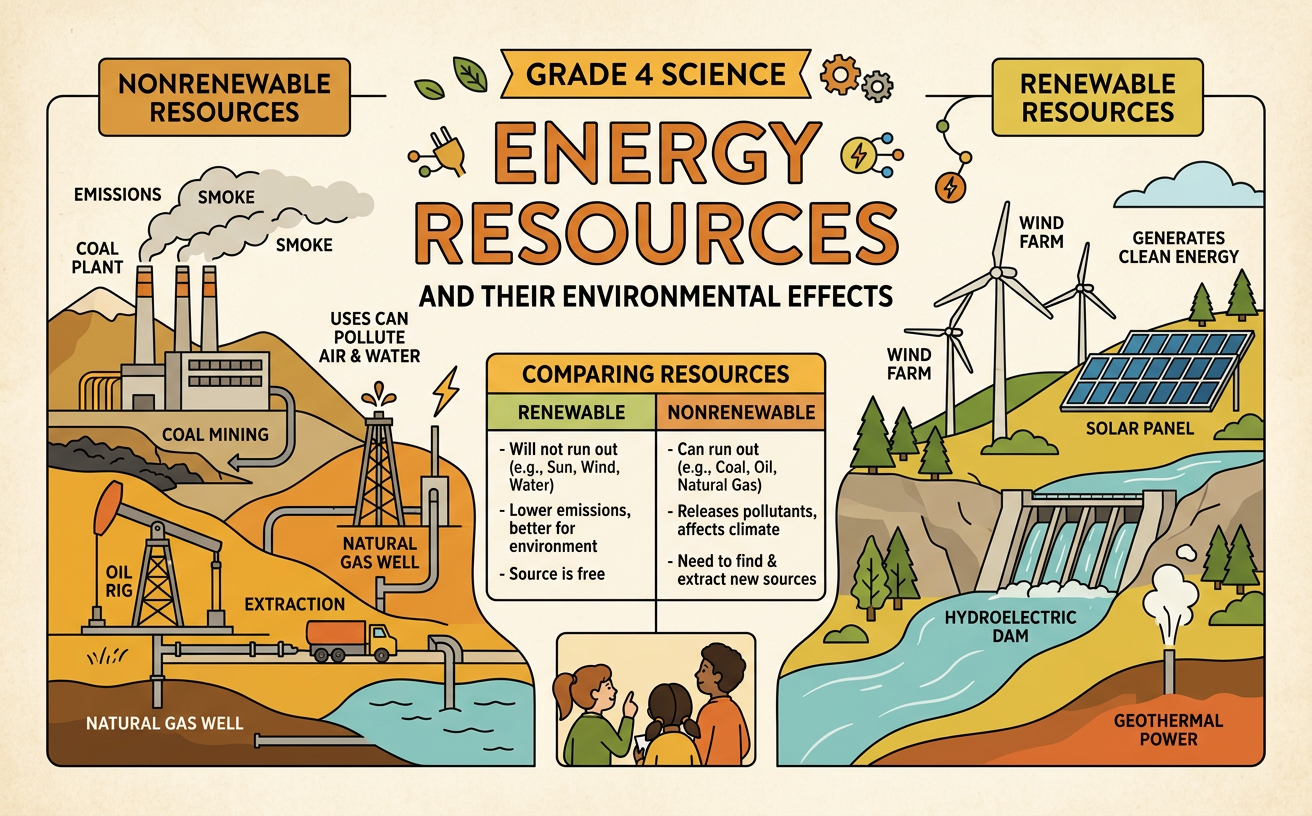
Energy used in homes, schools, farms, and vehicles often begins with a natural resource. Sunlight can be changed into electricity by solar panels. Moving air turns wind turbines, and flowing water turns turbines in dams. Coal, oil, and natural gas are fuels found underground. People burn these fuels to release stored energy. The location of a resource can affect where people build communities and energy systems. For example, a windy plain may be a good place for a wind farm, while a town near a fast-flowing river may use hydropower. Energy may also travel far from its source through power lines, pipelines, trucks, trains, or ships. Communities consider resource location, transportation, cost, and environmental effects when deciding how to obtain energy.
Renewable and Nonrenewable Resources
A renewable energy resource is replaced naturally in a relatively short time. Sunlight, wind, and flowing water are renewable because they continue through natural processes. Biomass, such as wood or plant material, can also be renewable when people replace it as quickly as they use it. A nonrenewable resource forms much more slowly than people use it. Coal, oil, and natural gas take millions of years to form, so Earth has a limited supply. Uranium used in nuclear power plants is also nonrenewable. Renewable does not mean free of environmental effects. For example, a wind turbine produces electricity without burning fuel, but its location may affect birds or nearby views. Nonrenewable resources can provide dependable energy, but extracting and using them can change land, water, and air.
Compare Energy Information
Scientists and communities combine information from different sources before making energy decisions. One text might explain how an energy source works, while another reports its cost, electricity output, or environmental effects. Readers should identify facts that agree, note differences, and check whether each source is trustworthy. Mathematics can help model the information. Imagine that a town uses 500 units of electricity in one day. Solar panels provide 300 units, and natural gas provides 200 units. The town gets 300 out of 500 units, or three fifths, from solar energy. A bar graph can show that solar supplies more electricity than natural gas that day. However, the town should also study several days because cloudy weather may reduce solar output. Using numbers together with written evidence creates a more complete comparison.
Environmental Benefits and Costs
Every energy choice has benefits and costs. Solar panels and wind turbines generate electricity without releasing air pollution while operating, but making the equipment uses materials and energy. Large solar farms require land, and poorly placed wind turbines can disturb wildlife. Hydroelectric dams produce renewable electricity, but a dam can flood habitats and block fish movement. Burning coal, oil, or natural gas can provide energy whenever fuel is available, yet it releases carbon dioxide, which contributes to climate change. Burning these fuels may also release pollutants that harm human health. Drilling and mining can damage land or water. For example, a coal-burning power plant may provide many homes with steady electricity, but nearby residents may experience dirtier air. Comparing both benefits and costs helps communities avoid treating any energy source as perfect.
Choose and Explain an Energy Source
Choosing an energy source requires a claim supported by evidence. First, identify the community’s needs and nearby natural resources. Then compare energy output, reliability, cost, transportation, and environmental effects. Suppose a sunny desert town needs more electricity. Solar energy may be a strong choice because sunlight is abundant and panels do not release air pollution while operating. Evidence could show that the town has many sunny days and open rooftops. The town must still plan for nighttime, protect desert habitats, and decide how to store electricity or obtain backup power. A clear explanation might state: The town should add rooftop solar panels because local sunlight is plentiful, rooftops are already developed spaces, and operating panels produce little pollution. This decision connects human settlement to resource location while recognizing that responsible planning can reduce environmental costs.