Energy Resources and Their Environmental Effects
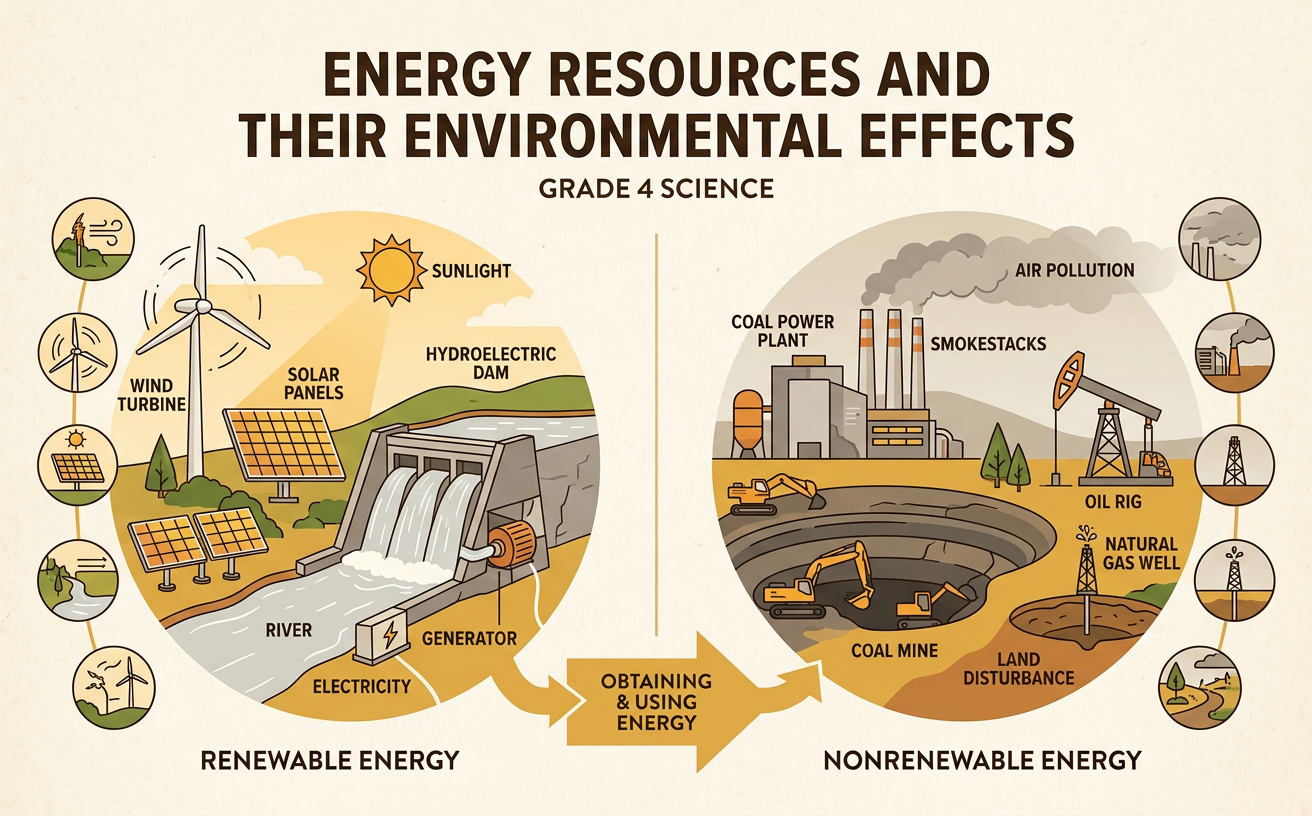
Students compare renewable and nonrenewable energy resources and explain how obtaining and using them can affect the environment.
Illustrations are auto-generated and may be placeholders. They can be refreshed to match the narration.
Where Energy Comes From
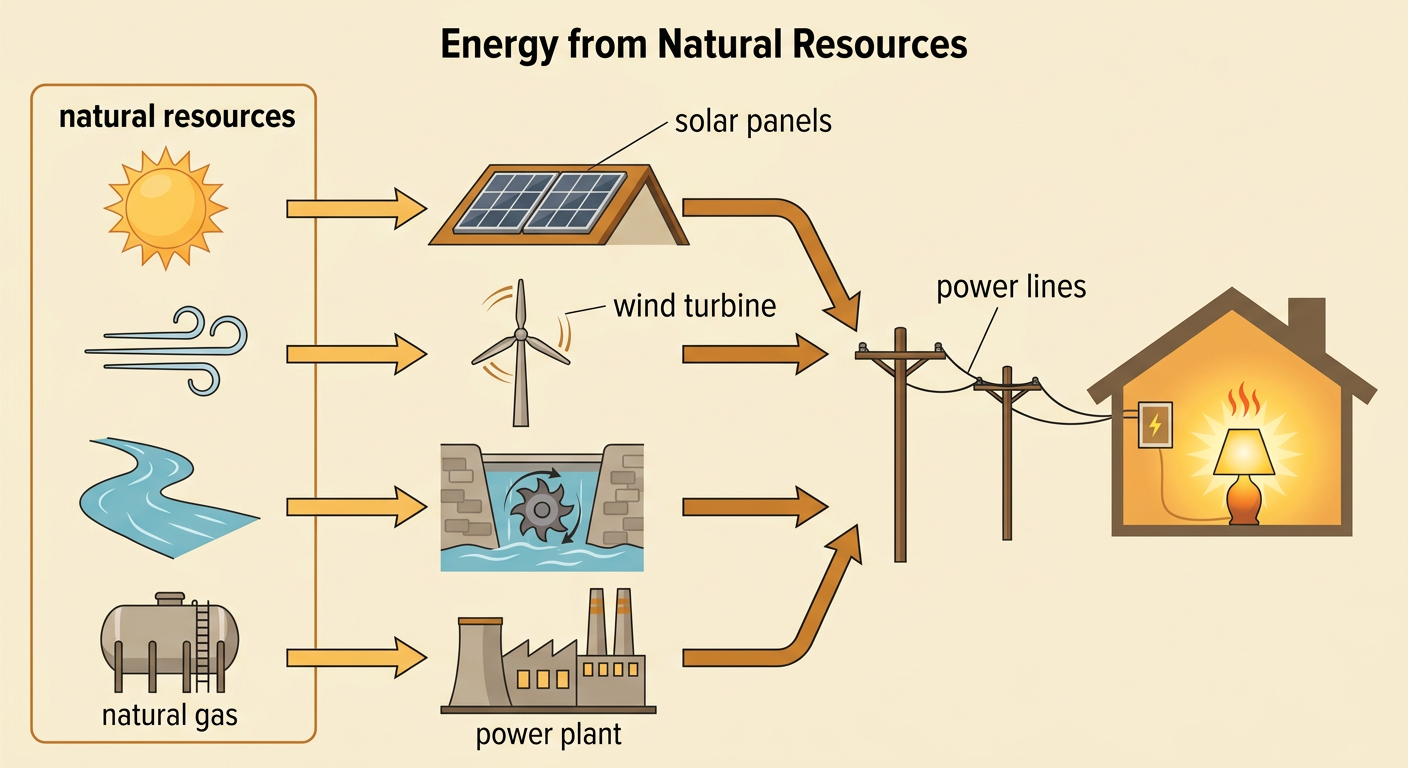
Energy used by people begins with natural resources. Sunlight can be changed into electricity by solar panels. Moving air turns wind turbines, and flowing water spins turbines in dams. Fuels such as coal, oil, natural gas, and wood store chemical energy that is released when they burn. People use these resources to produce electricity, heat buildings, cook food, and move vehicles. Energy often changes form before we use it. For example, a wind turbine changes the motion energy of wind into electrical energy. Power lines then carry the electricity to homes, where a lamp changes it into light and heat. Obtaining and using an energy resource can affect land, water, air, plants, animals, and people, so both the source and its effects matter.
Renewable and Nonrenewable Resources
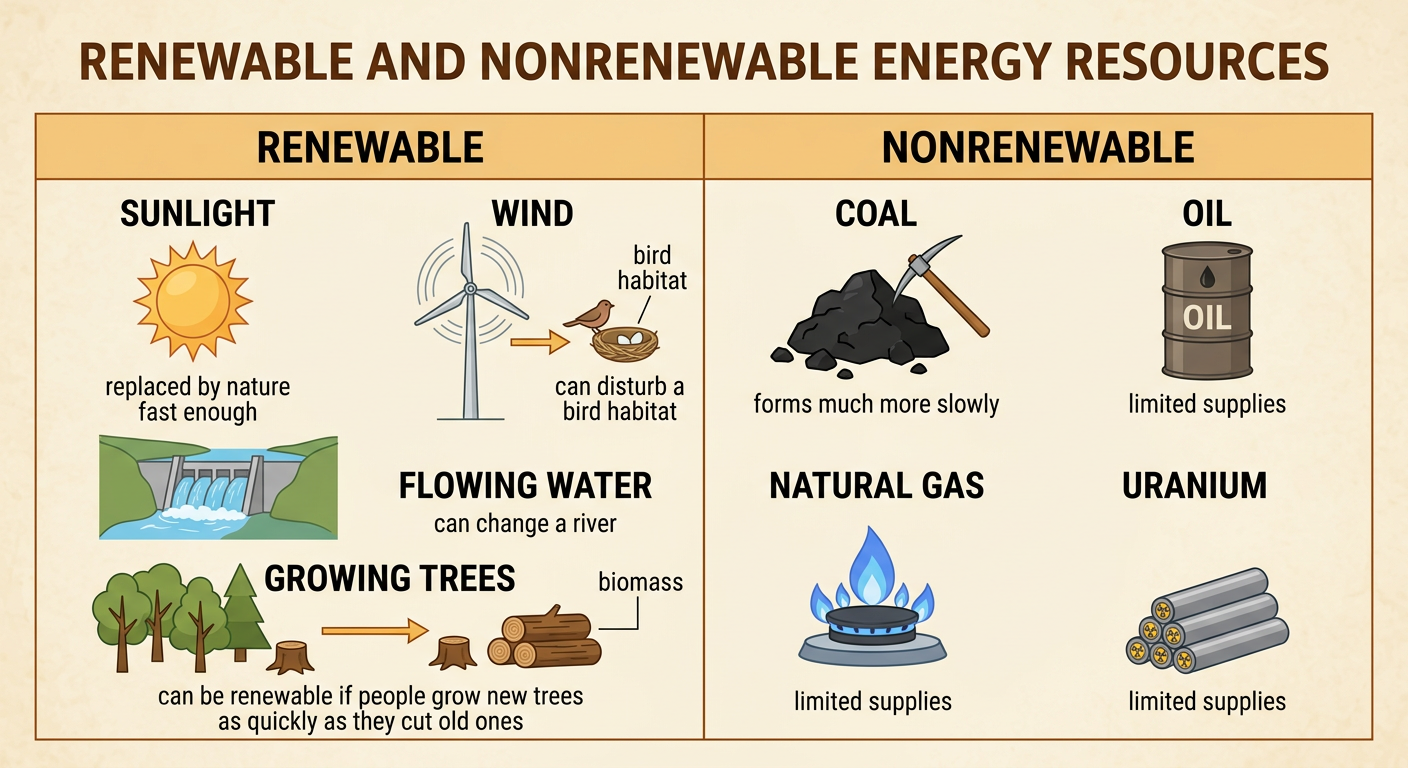
A renewable energy resource is naturally replaced fast enough for people to use it again and again. Sunlight, wind, and flowing water are renewable because these resources continue through natural cycles. Biomass, such as wood, can also be renewable if people grow new plants as quickly as they use old ones. A nonrenewable resource forms much more slowly than people use it. Coal, oil, natural gas, and uranium are nonrenewable, so Earth has limited supplies. For example, sunlight reaches a rooftop solar panel each day, but coal removed from a mine cannot be quickly replaced. Renewable does not mean harmless. A wind farm may affect bird habitats, and a dam may change a river. Every resource has benefits and costs that should be compared.
Reading and Comparing Energy Sources
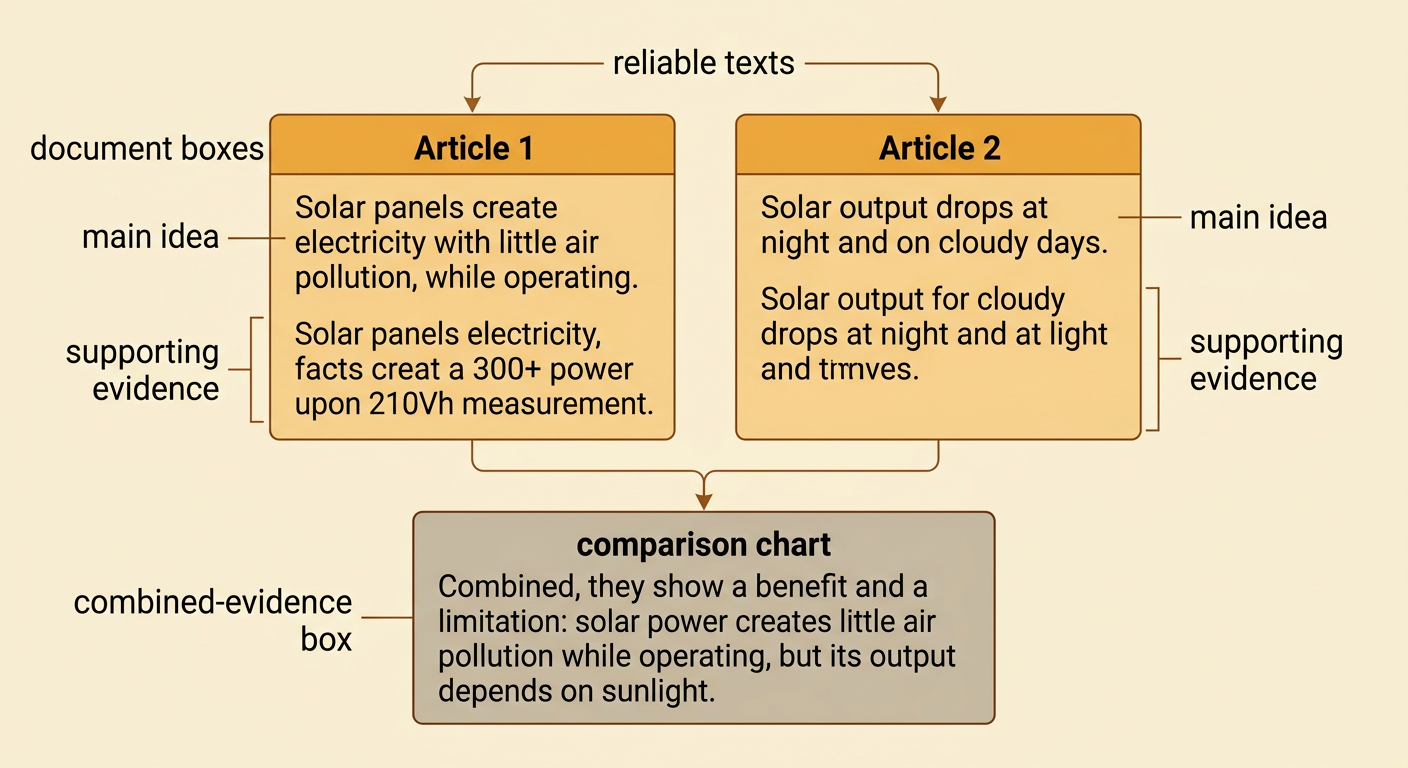
To compare energy sources, readers can combine facts from two or more reliable texts. First, identify each text's main idea and supporting evidence. Next, record matching and different information in a chart. Suppose one article explains that solar panels produce electricity without releasing air pollution while operating. A second article explains that solar output decreases at night and on cloudy days. Together, the texts show both a benefit and a limitation: solar energy has low operating emissions, but its output changes with sunlight. Readers should also check who created each source, when it was published, and whether facts are supported by measurements. Combining information gives a more complete understanding than reading only one text. It also prevents a single benefit or cost from deciding the comparison.
Environmental Benefits and Costs
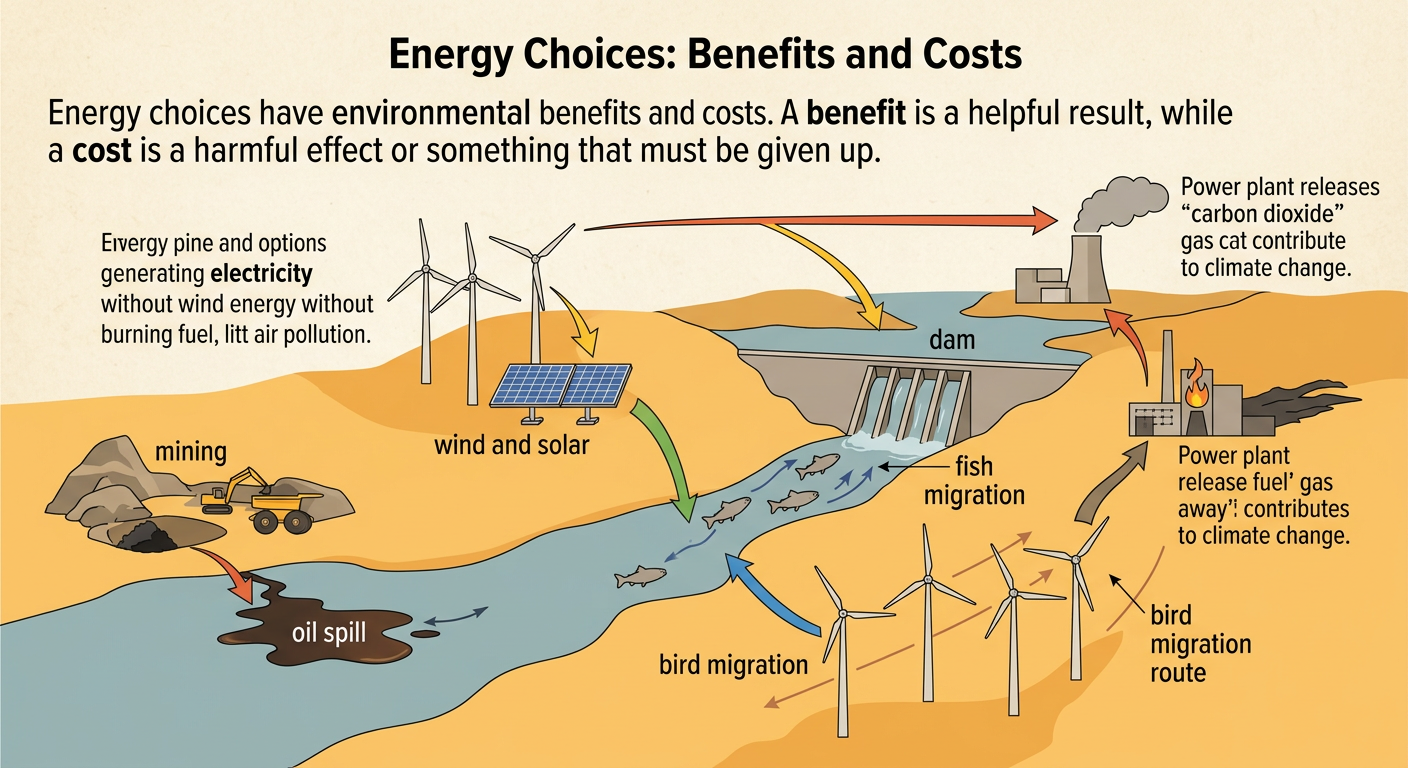
Energy choices can create environmental benefits and costs. Wind and solar systems produce electricity without burning fuel, so they release little air pollution while operating. However, they require land and materials, and poorly placed projects can disturb habitats. Hydroelectric dams produce electricity from moving water, but a dam can flood land and block fish migration. Burning coal or natural gas can provide steady electricity, yet it releases carbon dioxide, which contributes to climate change. Coal burning can also release other air pollutants. Obtaining fuels matters too: mining may remove soil and rock, while oil spills can harm water and wildlife. For example, placing wind turbines away from an important bird migration route can reduce harm. Careful planning cannot remove every effect, but it can help balance benefits and costs.
Solving an Energy-Use Problem
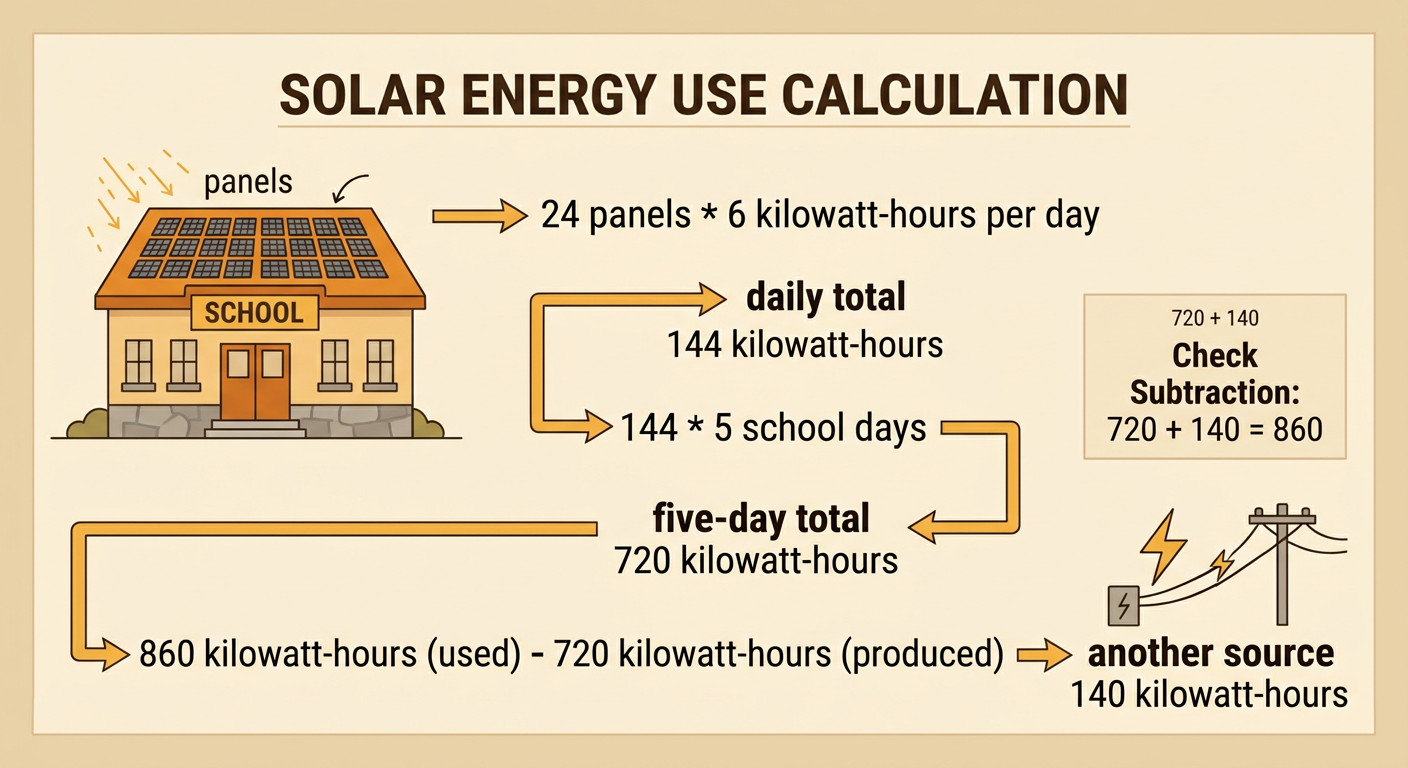
Whole-number problems can help people plan energy use. Imagine that a school has 24 solar panels. Each panel produces 6 kilowatt-hours of electricity per day. First find the daily total: 24 times 6 equals 144 kilowatt-hours. Over 5 school days, the panels produce 144 times 5, or 720 kilowatt-hours. Suppose the school uses 860 kilowatt-hours during those five days. Subtract the solar production from the total use: 860 minus 720 equals 140 kilowatt-hours. The school must obtain 140 kilowatt-hours from another source. Check the answer by adding 720 and 140 to get 860. This problem uses multiplication and subtraction in separate steps. In real life, solar output can change with weather, so planners often use measured averages and prepare another energy source.
Choosing an Energy Resource
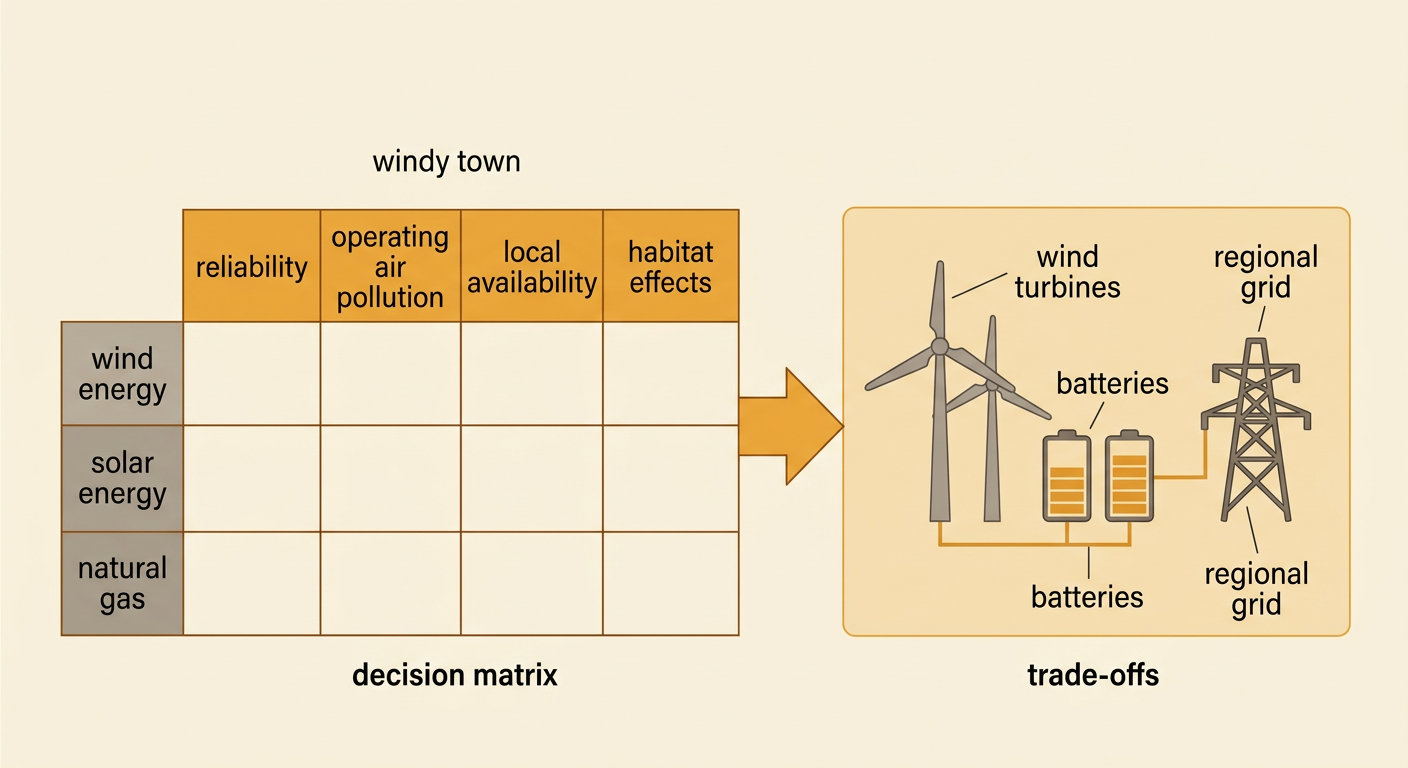
Choosing an energy resource requires comparing benefits, costs, and local needs. A community might consider reliability, price, available land, pollution, wildlife, and the amount of energy needed. For example, a windy town could build wind turbines. The benefits might include renewable electricity, no fuel cost, and little air pollution during operation. The costs might include construction expenses, changing views, noise near turbines, and possible effects on birds or bats. Because wind is not constant, the town may also need energy storage or another power source. Community members can use evidence to rank their criteria and explain trade-offs. They might choose wind energy along with batteries and electricity from the regional grid. A strong decision does not claim that one resource is perfect; it explains why the chosen benefits outweigh the costs for that place.