
Engineering Solutions for Weather Hazards
Students use evidence about floods, strong winds, or lightning to compare design solutions that reduce a weather hazard’s impact on a community.
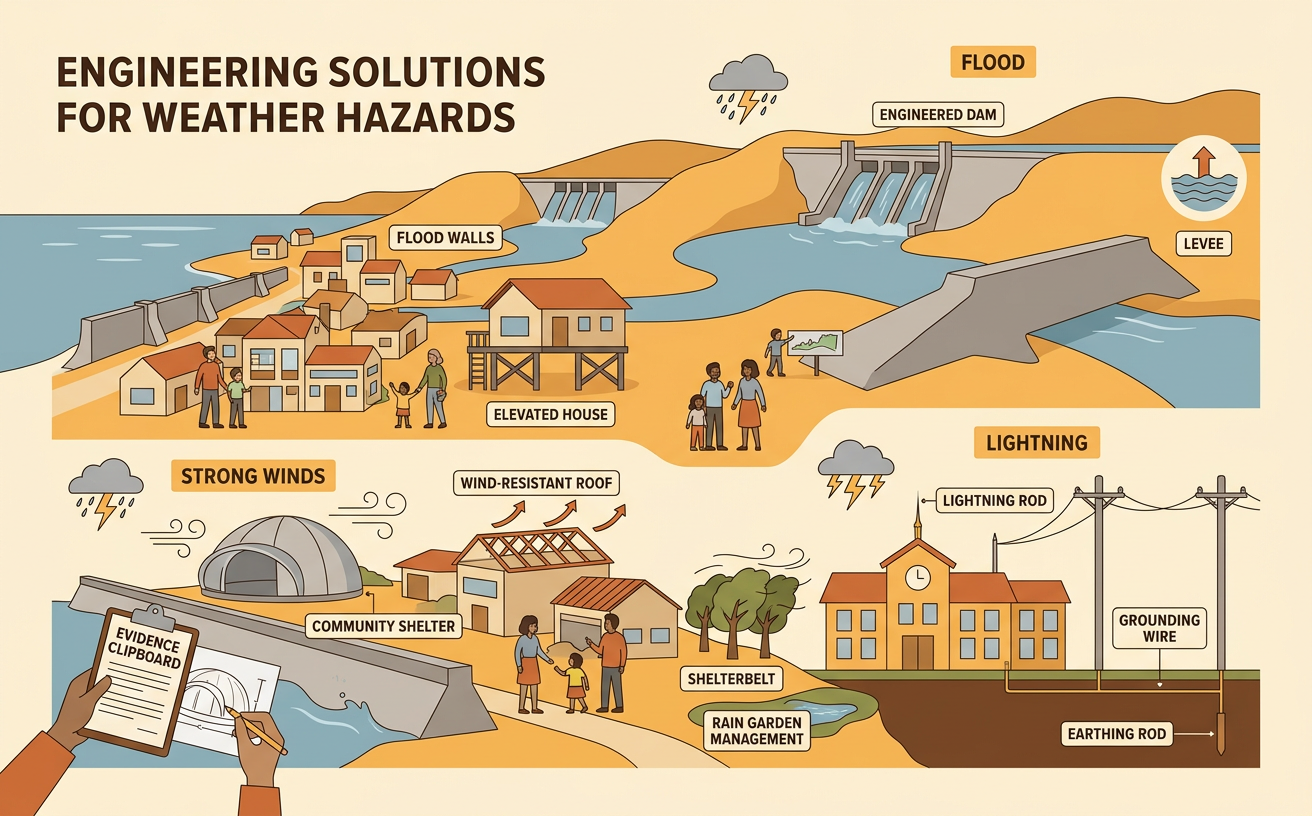
Illustrations are auto-generated and may be placeholders. They can be refreshed to match the narration.
Identify Weather Hazards
A weather hazard is a weather event that can harm people, buildings, roads, or natural areas. Heavy rain can cause a flood when water covers land that is usually dry. Strong winds can break tree branches, damage roofs, and blow loose objects through the air. Lightning can start fires or injure people when electric energy moves between a cloud and the ground. Scientists study weather reports, maps, photographs, and past events to identify which hazards may affect a place. For example, a town beside a river may face flooding after several days of heavy rain. When reading about a hazard, ask questions such as: What caused it? Where did it happen? What damage did it cause? Use details from the text to answer.

Explore Community Impacts
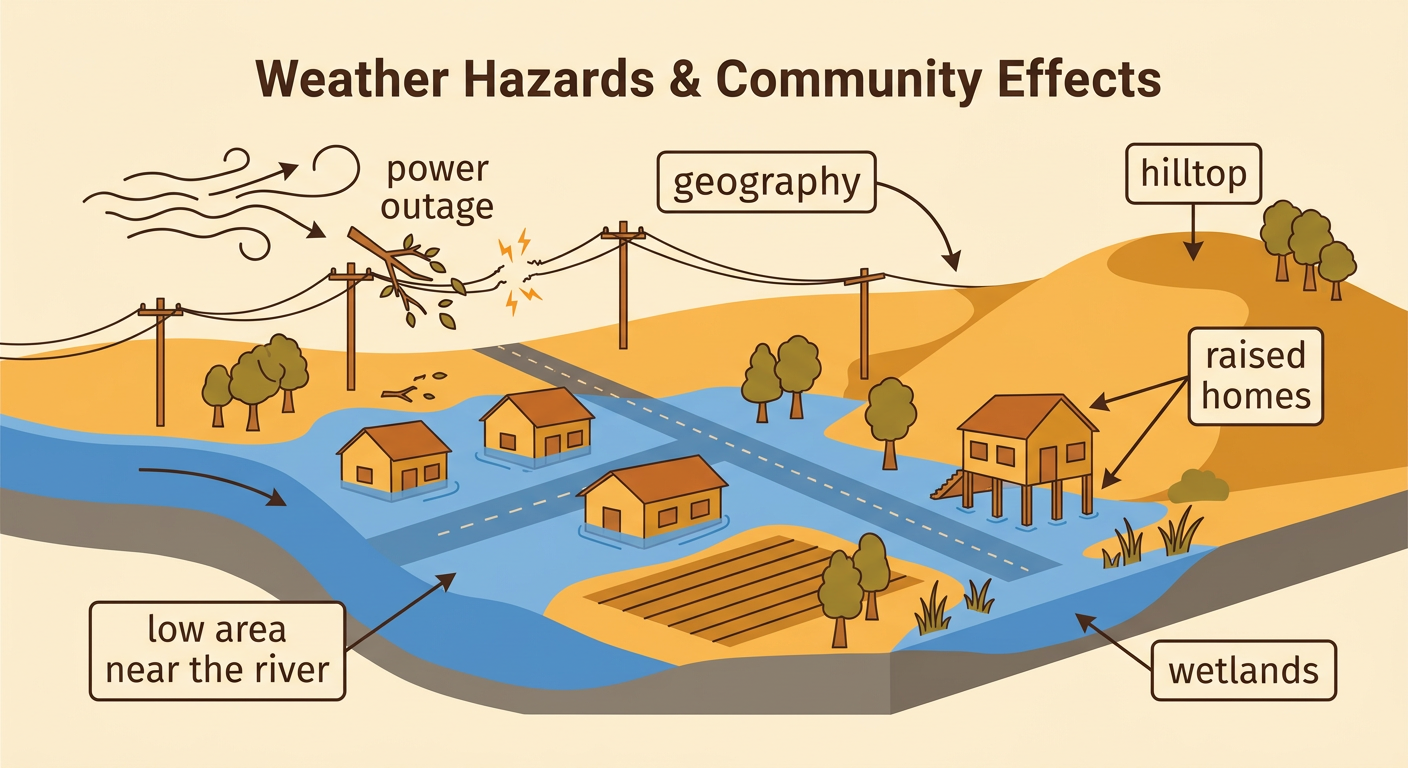
A weather hazard can affect many parts of a community. A flood may fill homes with water, close roads, damage crops, and make clean water difficult to obtain. Strong winds may cause power outages by knocking branches onto power lines. Lightning may damage electrical equipment or start a fire. Geography helps explain why impacts differ. A low area near a river may flood more often than a hilltop. Culture also influences how people adapt because communities have different traditions, knowledge, needs, and building practices. For example, some communities in flood-prone areas build raised homes because generations of residents have learned to live with rising water. Other communities use drainage canals or protect wetlands that absorb water. Studying both geography and culture helps engineers understand what a community needs.
Examine Safety Solutions
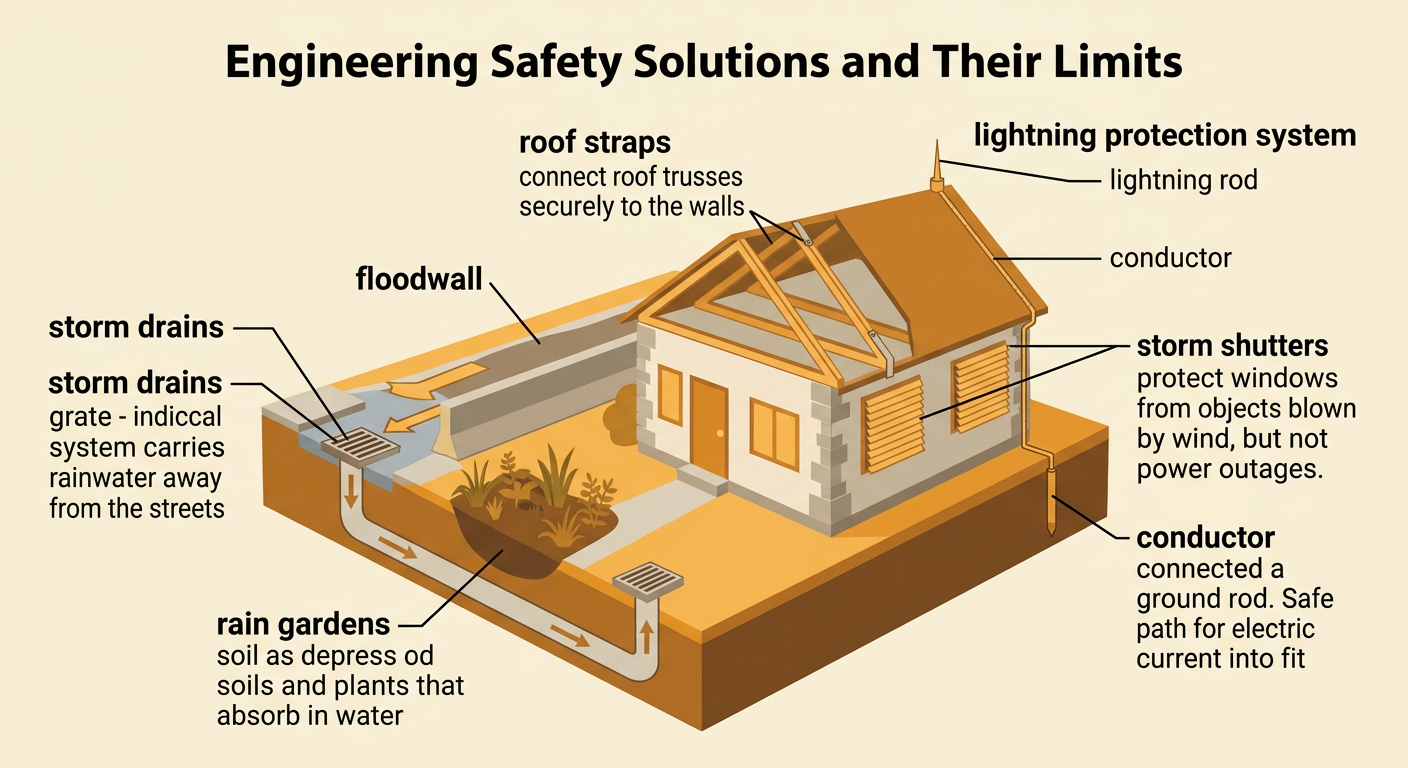
Engineers design solutions to reduce harm from weather hazards. A solution does not stop the weather, but it can make people and property safer. Storm drains and rain gardens move or absorb rainwater to reduce flooding. Floodwalls can block water from certain areas, although engineers must study where the redirected water will go. Roof straps and storm shutters help buildings resist strong winds. A lightning protection system gives electric current a safe path from a building into the ground if lightning strikes. Every design has a purpose and limits. For example, shutters may protect windows from windblown objects, but they do not prevent a power outage. Engineers also consider cost, building materials, local landforms, community traditions, and maintenance. These factors help determine whether a solution fits a particular place.
Compare Designs Using Evidence
To compare designs fairly, engineers use criteria and evidence. Criteria are the features a successful solution should have, such as reducing floodwater, keeping people safe, costing a reasonable amount, and fitting the community. Constraints are limits, such as money, space, materials, or time. Imagine students test two model flood solutions with the same amount of water. A model floodwall keeps 18 of 20 cups of water away from a paper house. A model rain garden absorbs 14 cups, costs less to build, and provides space for plants. The floodwall blocks more water in this test, but the rain garden has other benefits. Students should ask where the evidence came from and whether each test was the same. They can then compare the merits, or useful qualities, of both designs.

Make and Support a Claim
A claim states which design has greater merit for a specific community. Support the claim with evidence from an informational text, map, chart, or test, and explain how the evidence connects to the hazard. For example: A rain garden has greater merit for reducing small floods near the school. According to the town report, most flooding there comes from rainwater flowing off the playground. The class test also showed that the model rain garden absorbed 14 of 20 cups of water. This evidence supports the claim because a rain garden can capture runoff before it reaches the school entrance. Students should also recognize a limitation: a rain garden may not hold enough water during a severe flood. A strong claim names the design, cites specific evidence, explains the reasoning, and considers community needs and limits.
