Eutrophication: Nutrient Pollution in Aquatic Ecosystems
Students trace how excess nitrogen and phosphorus cause algal blooms, oxygen depletion, and biodiversity loss, then evaluate strategies for reducing nutrient runoff.
Illustrations are auto-generated and may be placeholders. They can be refreshed to match the narration.
Sources of Nutrient Pollution
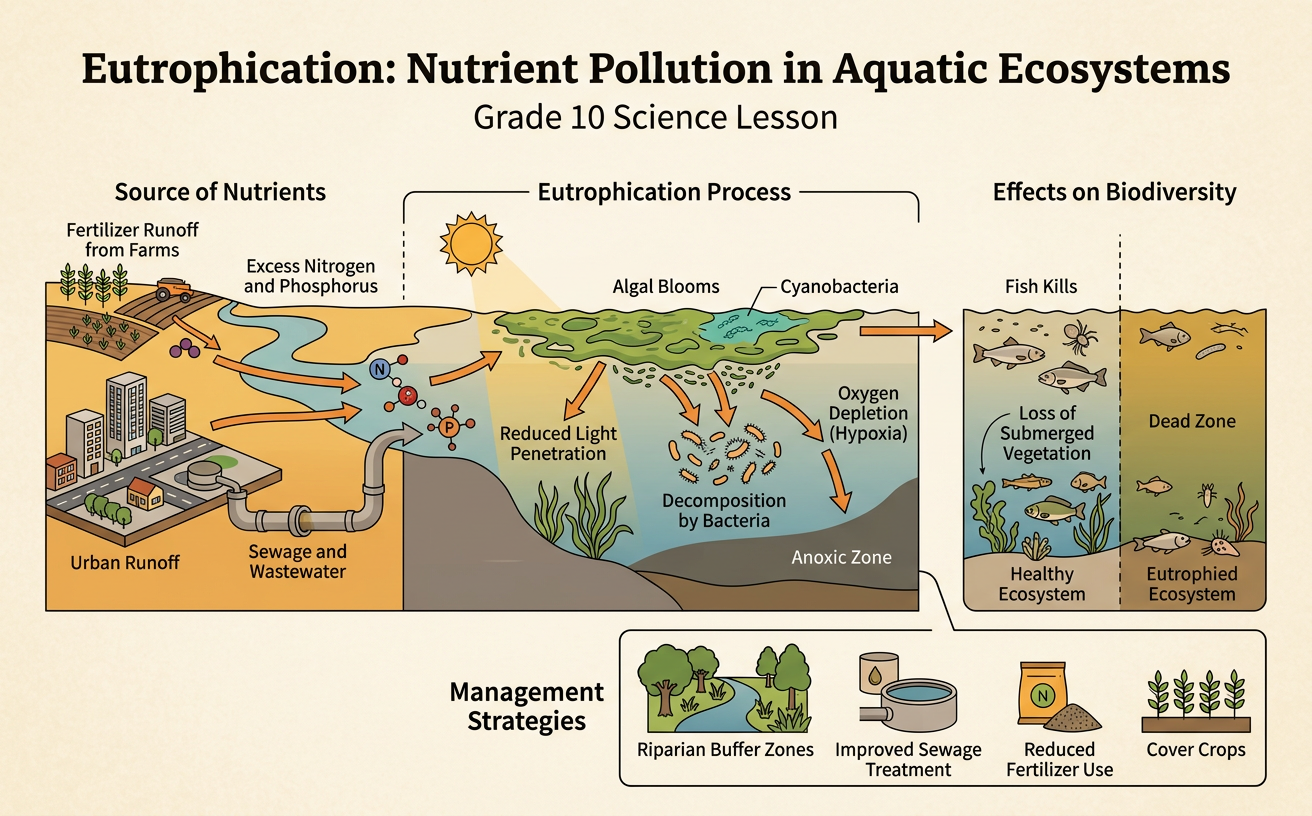
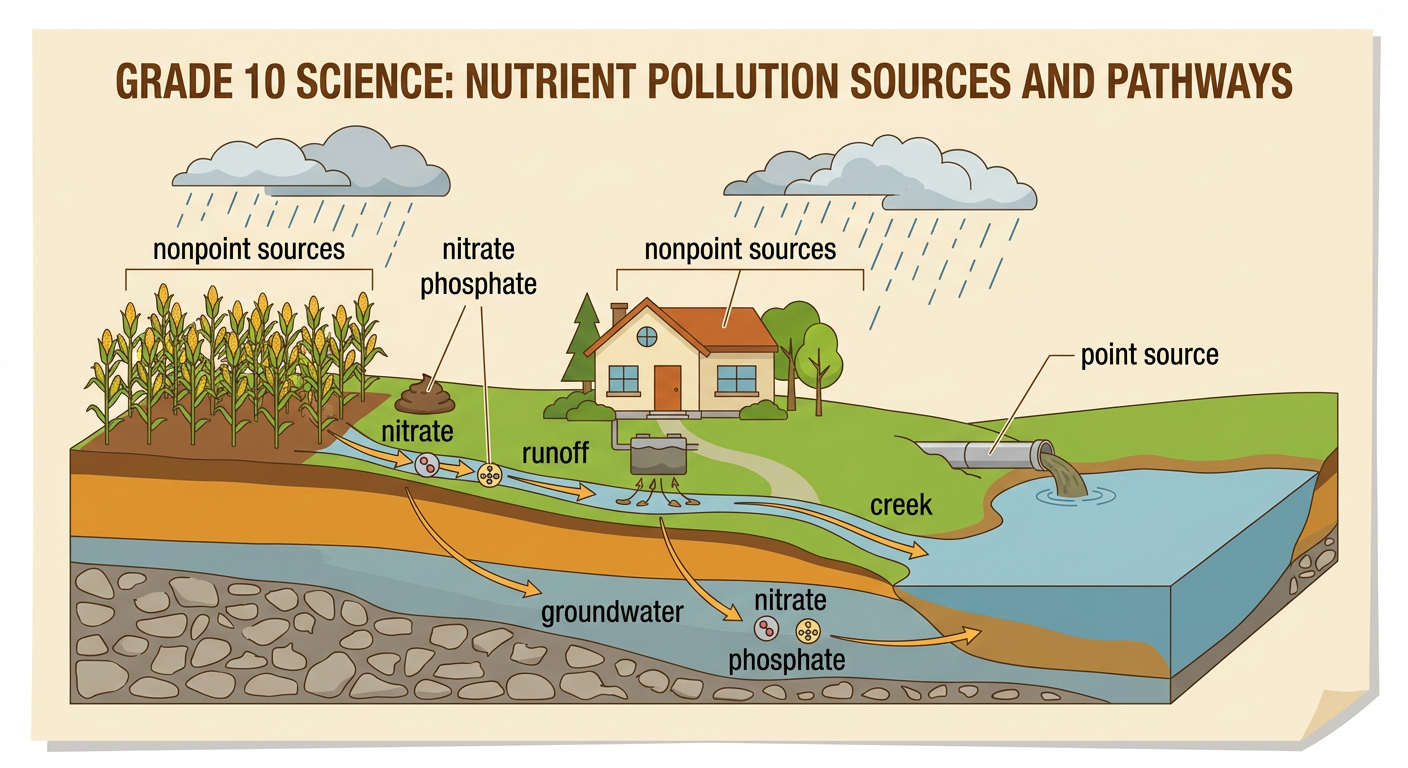
Nitrogen and phosphorus are nutrients that organisms need, but excessive amounts can pollute aquatic ecosystems. Major sources include fertilizers washed from farms and lawns, animal manure, leaking septic systems, wastewater discharges, and stormwater carrying soil and organic waste. Rainfall moves these materials downhill through runoff or groundwater into streams, lakes, and coastal waters. The source may be a single discharge pipe, called a point source, or many scattered areas, called nonpoint sources. For example, after heavy rain on a fertilized cornfield, runoff may carry nitrate and phosphate into a nearby creek. Nutrient pollution depends not only on how much fertilizer is applied, but also on soil conditions, weather, slope, vegetation, and the distance to water. Identifying sources helps communities choose effective prevention strategies.
From Algal Bloom to Dead Zone
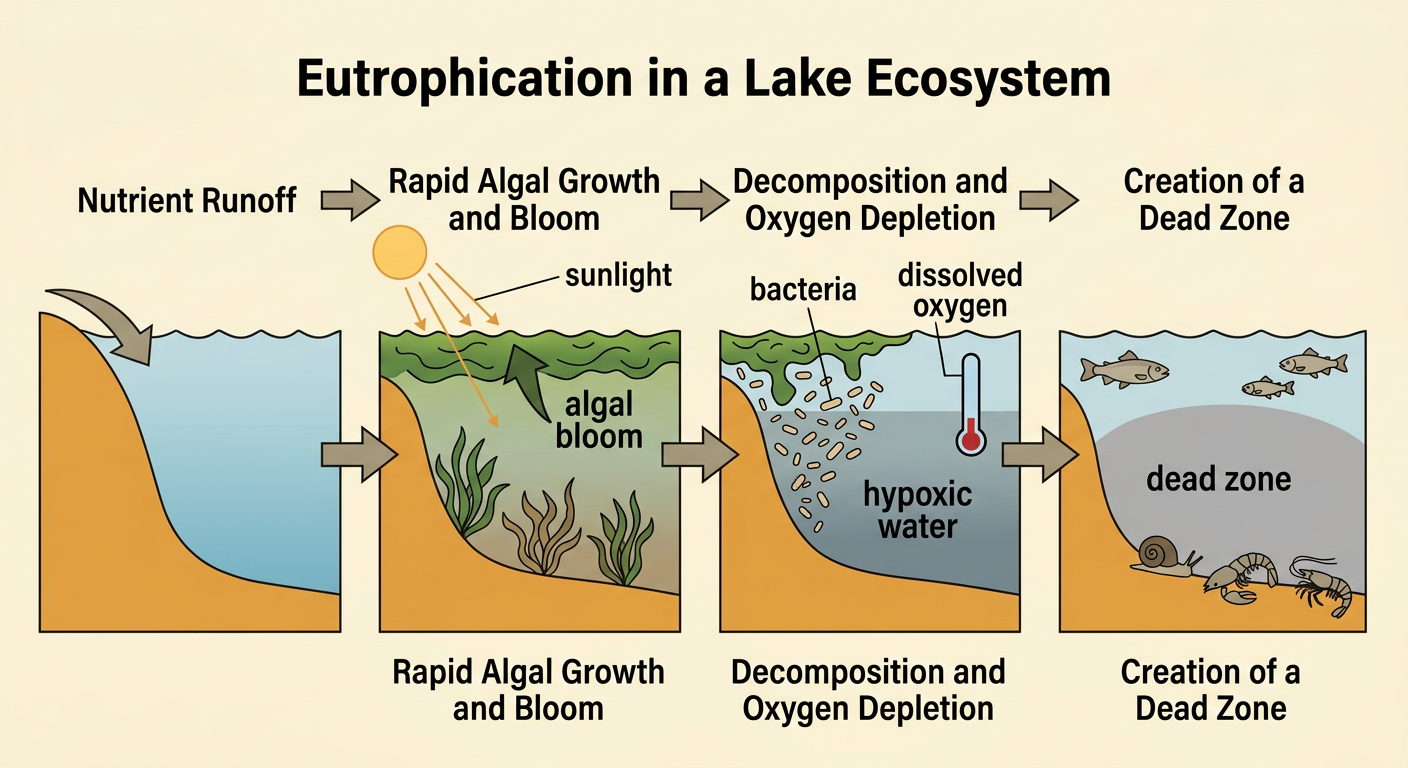
When excess nitrogen and phosphorus enter water, algae and cyanobacteria may grow rapidly, forming an algal bloom. The bloom can block sunlight, reducing photosynthesis by submerged plants. Although algae produce oxygen while photosynthesizing, they also respire, and their short life cycles create large amounts of dead organic matter. Bacteria decompose this material and consume dissolved oxygen. If oxygen falls below the needs of many aquatic animals, the water becomes hypoxic; if oxygen is nearly absent, it becomes anoxic. Fish may leave, but slow-moving or bottom-dwelling organisms can suffocate. For example, nutrients carried by the Mississippi River contribute to a seasonal low-oxygen zone in the Gulf of Mexico. Warm water and water-column layering can worsen the problem by slowing the mixing that would normally replace oxygen near the bottom.
Interpreting Dissolved Oxygen Evidence
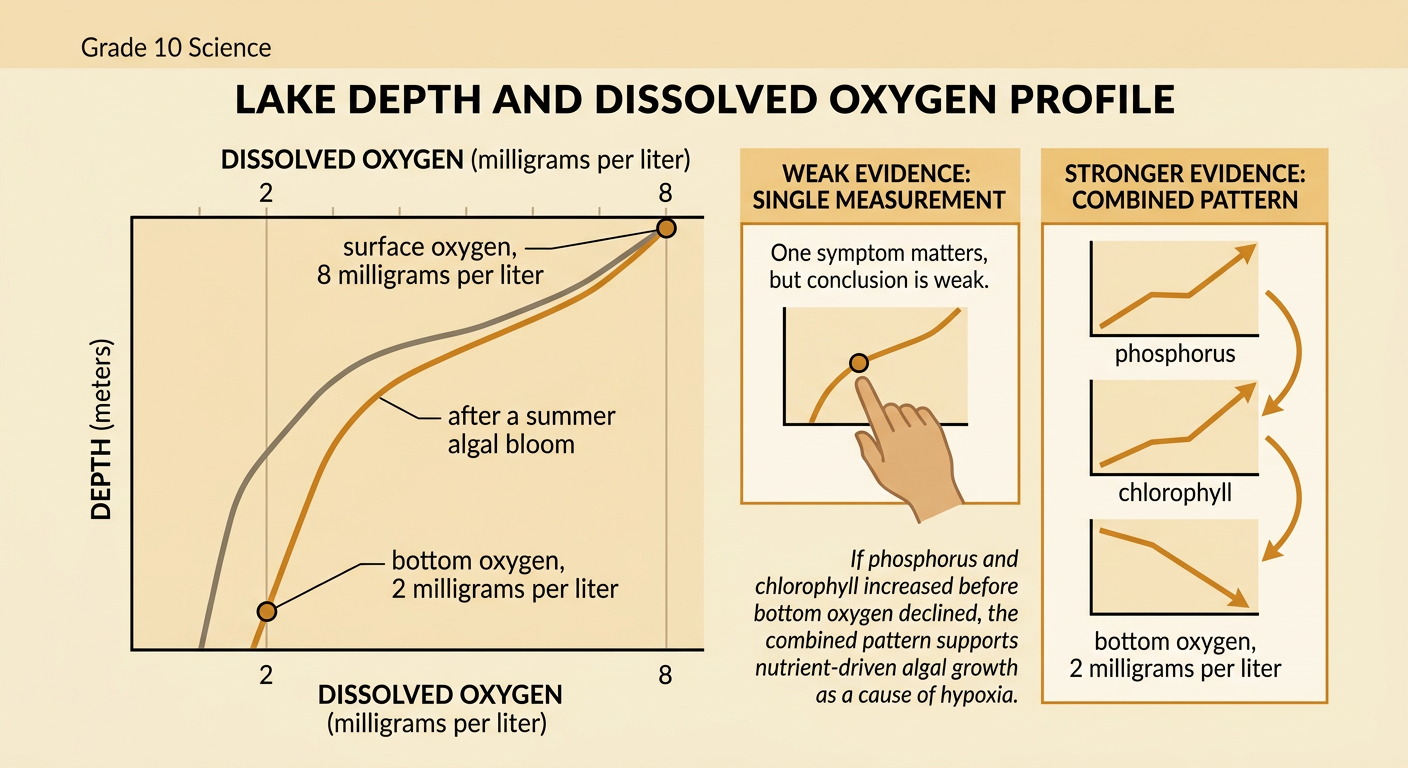
Dissolved oxygen data help scientists test whether eutrophication is creating stressful conditions. Oxygen is often measured in milligrams per liter at several depths, locations, and times. A single reading is weak evidence because temperature, weather, and time of day naturally affect oxygen. Stronger evidence comes from repeated measurements paired with nutrient and algal data. For example, suppose a lake has 8 milligrams per liter of oxygen near the surface but only 2 milligrams per liter near the bottom after a summer bloom. If phosphorus and chlorophyll levels also rose before the decline, the combined evidence supports the claim that nutrient-driven algal growth contributed to bottom-water hypoxia. However, the evidence does not prove that nutrients were the only cause. Students should examine sampling methods, comparison sites, seasonal patterns, and alternative explanations before accepting a scientific claim or recommendation.
Impacts on Aquatic Biodiversity
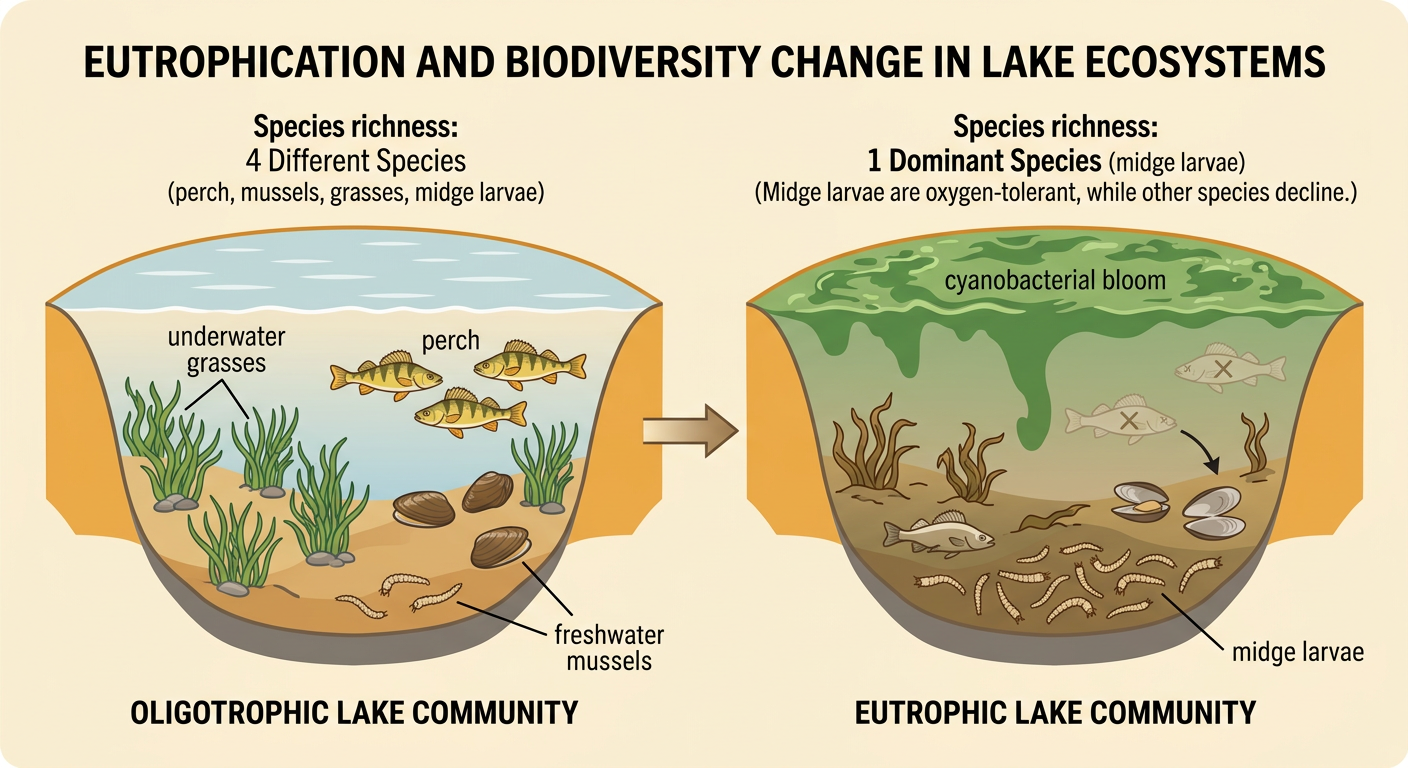
Eutrophication changes which organisms can survive in an aquatic ecosystem. Dense blooms reduce light, so underwater grasses and other plants may die. Habitat and food sources then disappear for insects, fish, and waterfowl. As decomposition lowers oxygen, sensitive species decline first, while organisms that tolerate pollution or low oxygen may become more common. Some cyanobacterial blooms also release toxins that can harm wildlife, pets, and people. For example, in a shallow lake, low oxygen may kill perch and freshwater mussels while midge larvae and other tolerant organisms remain. A high number of individuals does not necessarily mean high biodiversity if most belong to only one or two tolerant species. Scientists evaluate impacts by comparing species richness, population sizes, and community composition before and after nutrient enrichment or between polluted and less-polluted sites.
Evaluating Runoff-Reduction Solutions
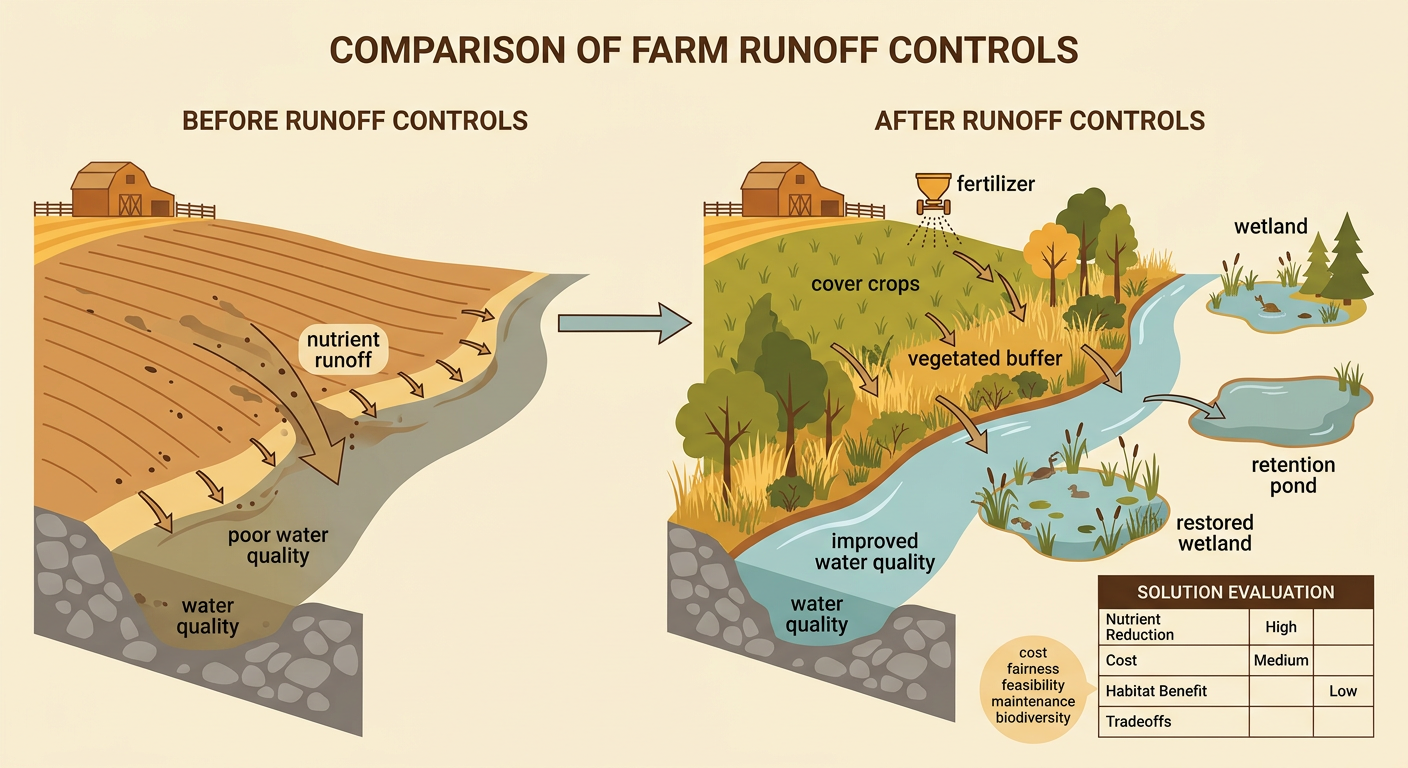
Effective solutions reduce nutrients before they reach water while considering cost, fairness, feasibility, and unintended outcomes. Farmers can apply fertilizer at the correct rate and time, plant cover crops, establish streamside buffer vegetation, restore wetlands, or use retention ponds. Communities can upgrade wastewater plants, inspect septic systems, limit lawn fertilizer, and build green infrastructure that absorbs stormwater. For example, a vegetated buffer beside a field can trap sediment and phosphorus, absorb some nitrogen, and provide wildlife habitat. However, it removes land from crop production and may be less effective during extreme floods. A policy offering farmers financial support for buffers may gain more participation than an unfunded requirement, but voluntary programs may not achieve enough adoption. Students should compare evidence about nutrient reduction, cost, maintenance, and biodiversity, then refine a solution. A strong plan combines methods, monitors water quality, and changes course when results do not meet measurable goals.