
Evaluating Evidence in an Argument
Students analyze a short argument about an environmental solution, evaluating whether its claims, evidence, and reasoning are relevant, sufficient, and logically connected.

Illustrations are auto-generated and may be placeholders. They can be refreshed to match the narration.
Argument and Evidence Review
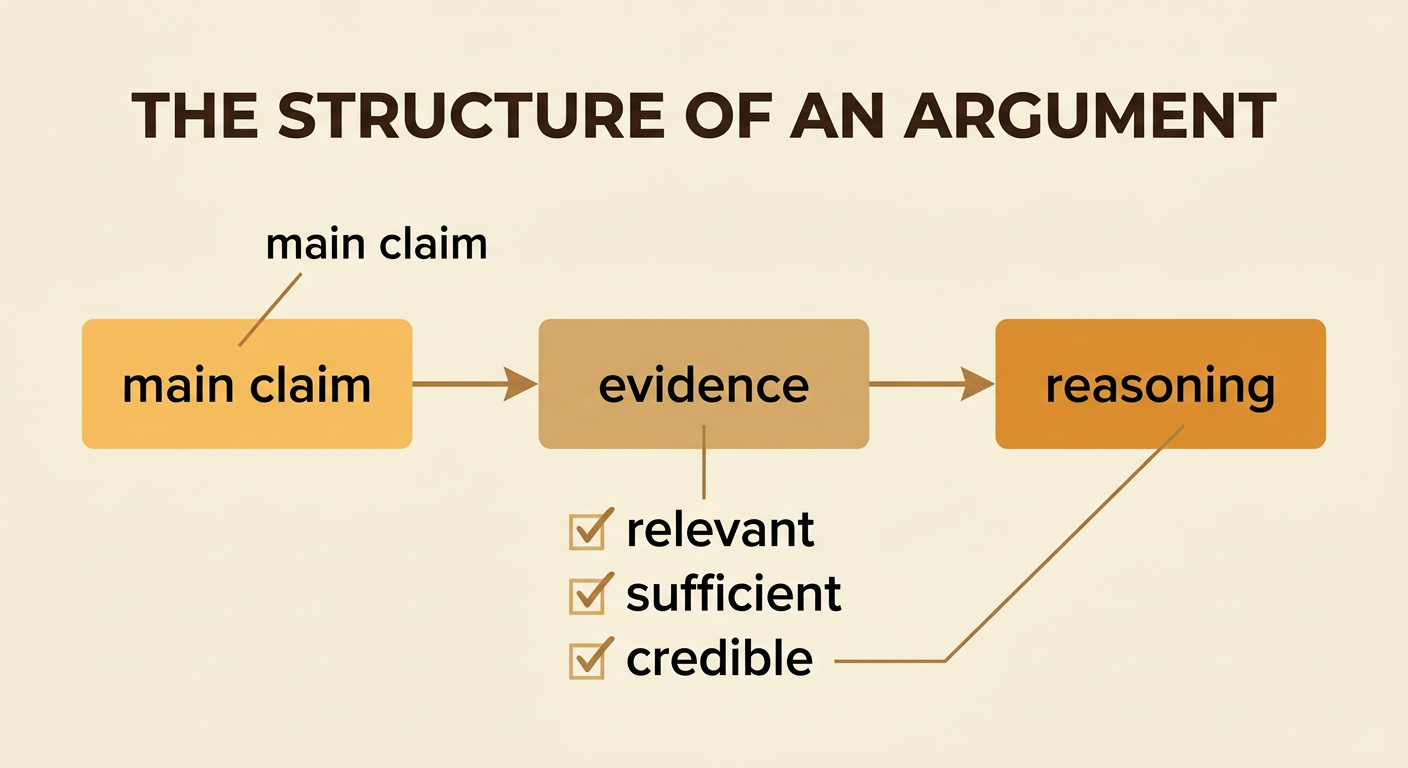
An argument presents a main claim and supports it with evidence and reasoning. A claim states what the author wants readers to accept. Evidence includes facts, statistics, examples, expert findings, or firsthand observations. Reasoning explains why the evidence supports the claim. Evaluate evidence by asking three questions: Is it relevant to the claim? Is it sufficient to justify the conclusion? Is it credible and consistent with other sources? For example, an author may claim that a city should install reflective roofs to reduce summer energy use. Data showing lower air-conditioning use in buildings with reflective roofs is relevant. One building’s result may not be sufficient, however, because other factors could explain the change. Reasoning must connect the data to the proposal without exaggerating what the evidence proves.
Read and Annotate the Text
Read this classroom argument: The city should require reflective roofs on all new commercial buildings. In a city pilot involving 20 buildings, summer electricity use fell by an average of 15 percent after reflective roofs were installed. A roofing manufacturer reports savings as high as 25 percent. However, a university study of 120 buildings in a similar climate found an average reduction of 8 percent and noted possible glare near taller buildings. Reflective roofs cost about 3 percent more to install, but the energy savings should repay that cost within six years. As you annotate, underline the main claim, circle each numerical fact, and mark statements that need more support. For example, “within six years” needs a source or calculation because the preceding percentages do not establish a specific repayment period.

Trace Claims and Reasoning
Trace the argument by placing each idea in a claim-evidence-reasoning chain. The main claim is that the city should require reflective roofs on new commercial buildings. A supporting claim is that these roofs reduce electricity use. The city pilot and university study both support that point, although they report different levels of savings. The reasoning is that lower electricity use can reduce operating costs and demand on the electrical system, making the requirement beneficial. Another supporting claim is that the added cost will be recovered within six years, but the argument provides no detailed calculation for it. Watch for logical gaps. Evidence that roofs save some energy does not automatically prove that a citywide requirement is the best policy. The author must compare alternatives and explain why a mandate is preferable to incentives or voluntary adoption.

Evaluate Evidence and Trade-Offs
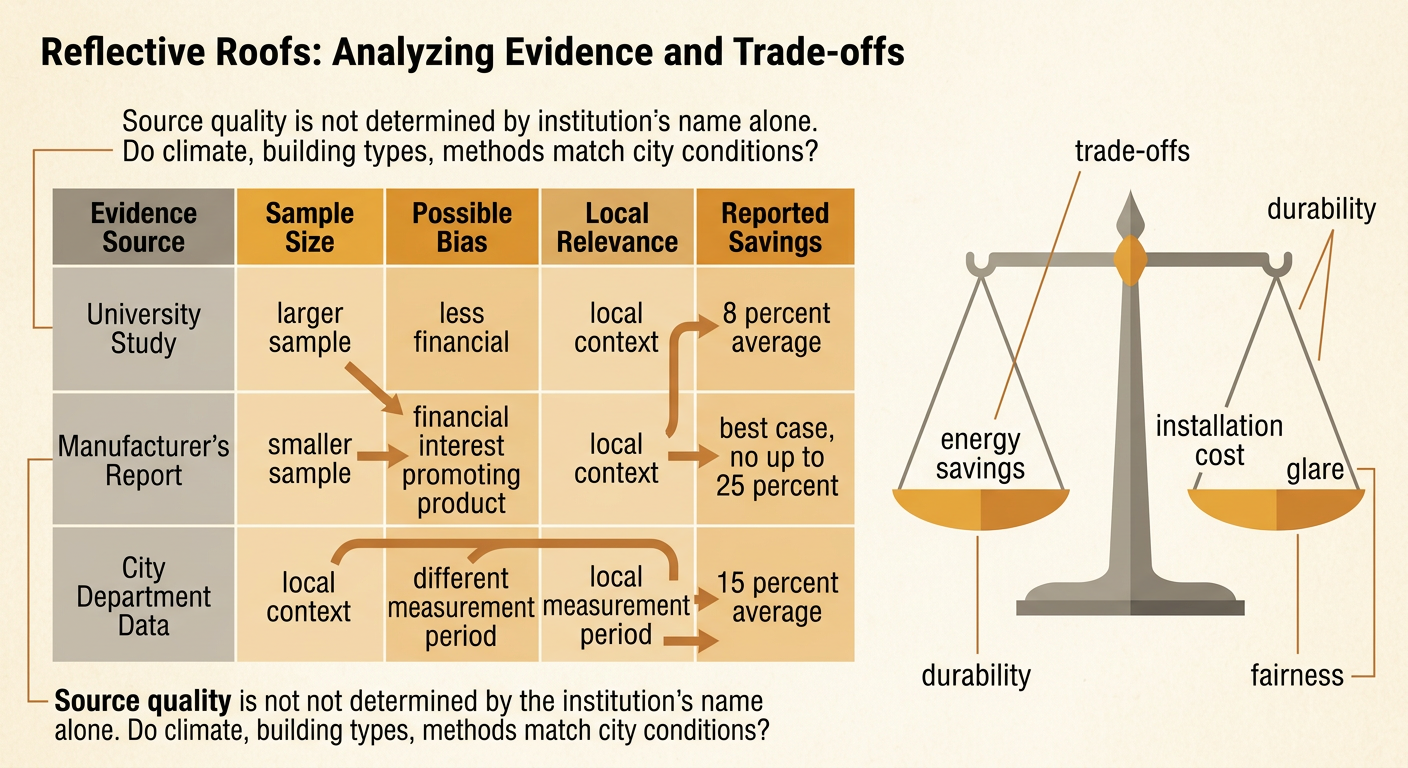
A real-world solution should be judged using prioritized criteria and trade-offs. For reflective roofs, useful criteria include energy savings, installation cost, durability, glare, and fairness to property owners. The university study is stronger than the manufacturer’s report for estimating typical savings because it includes more buildings and may have less financial interest in the outcome. Still, check whether its climate, building types, and methods match the city’s conditions. The 8 percent and 15 percent findings are not automatically contradictory; different samples or measurement periods could explain the difference. However, the 25 percent manufacturer figure should not be treated as typical because “as high as” describes a best case. A reasonable evaluation might prioritize verified energy savings and safety, while recognizing that higher initial costs and glare are trade-offs requiring further study or design adjustments.
Write an Evidence-Based Judgment
An evidence-based judgment states a clear conclusion, cites the strongest evidence, explains its significance, and acknowledges limits or counterevidence. A model response might say: The city has reasonable grounds to encourage reflective roofs, but the evidence is not yet sufficient to require them on every new commercial building. The city pilot and larger university study both show reduced electricity use, supporting the claim that reflective roofs can conserve energy. However, reported savings range from 8 to 15 percent, the six-year repayment claim is unsupported, and glare may affect nearby buildings. The city should gather local cost and glare data or begin with incentives before adopting a mandate. This judgment does not merely summarize sources. It weighs source quality, identifies inconsistencies, considers trade-offs, and revises the original claim into a narrower conclusion that the available evidence can support.
