
Evaluating Solutions to Electronic Waste
Students analyze the environmental and social impacts of discarded computing devices and compare repair, reuse, recycling, and responsible purchasing as possible solutions.
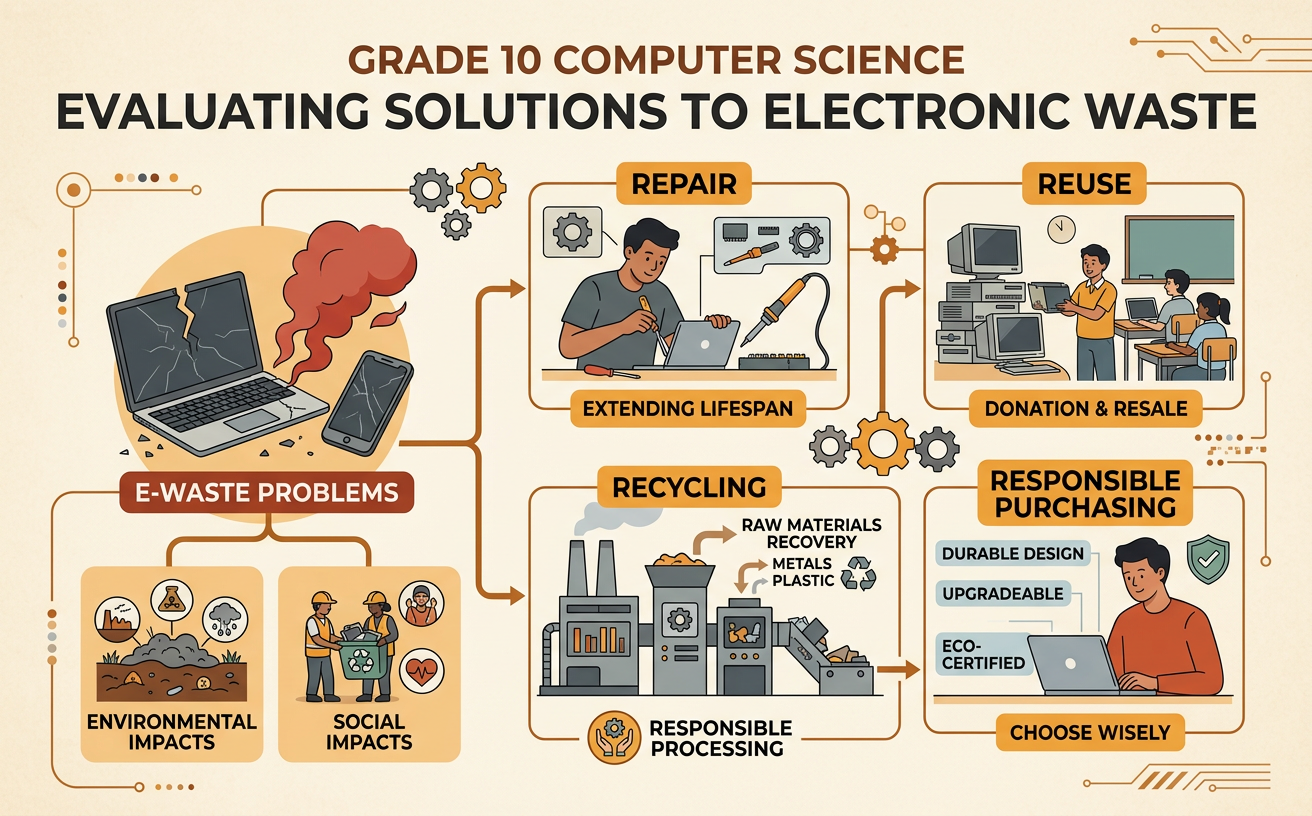
Illustrations are auto-generated and may be placeholders. They can be refreshed to match the narration.
The Life Cycle of a Computing Device
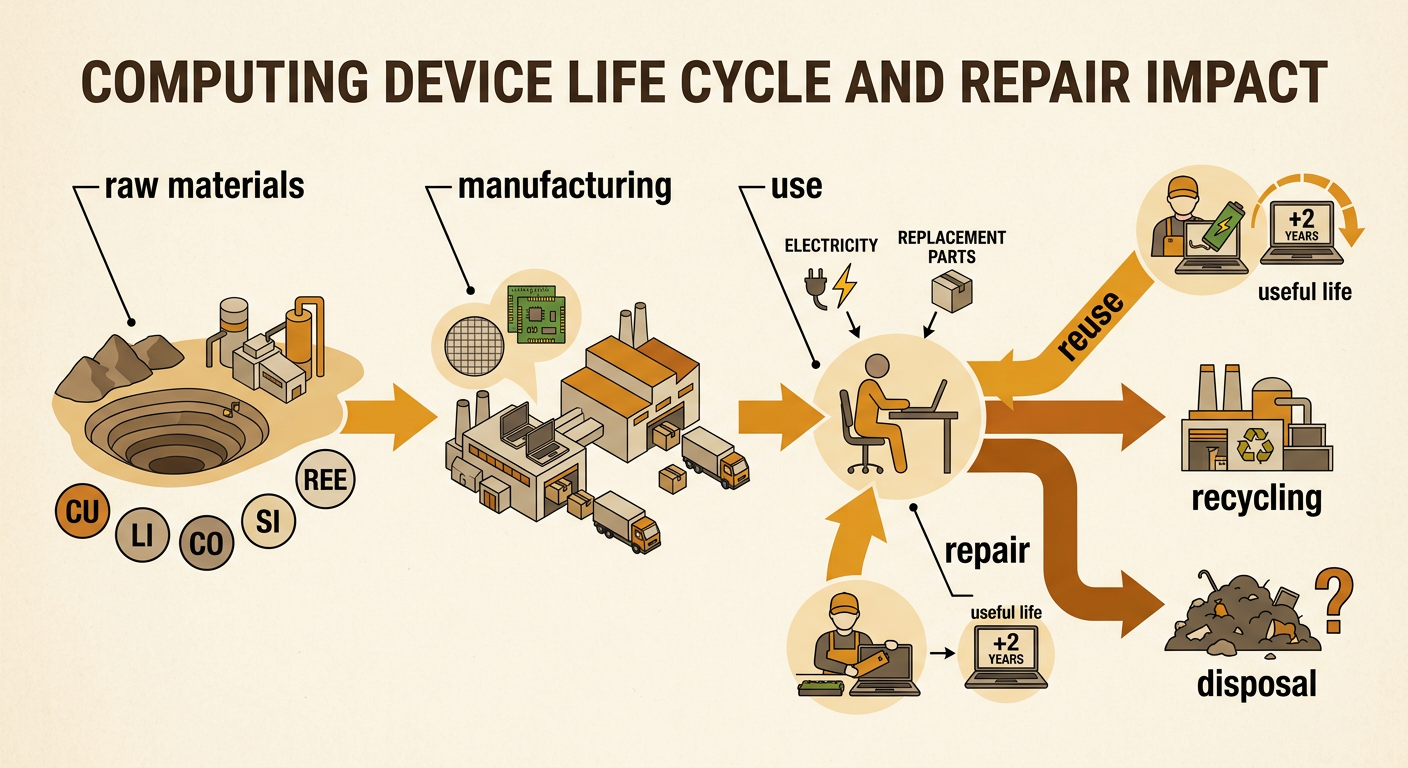
A computing device has environmental and social impacts long before it becomes waste. Its life cycle begins when raw materials such as copper, lithium, cobalt, silica, and rare earth elements are extracted and processed. Manufacturers turn these materials into components, assemble the device, package it, and transport it to stores or customers. Electricity and other resources are also used while the device operates. At the end of its first use, the device may be repaired, passed to another user, recycled for materials, or discarded. Extending the useful life of a device can reduce demand for new production. For example, replacing the battery in a three-year-old laptop may allow it to serve a student for two additional years, delaying both a new purchase and the disposal of the old computer.
Environmental and Social Costs of E-Waste
Electronic waste, or e-waste, includes discarded computers, phones, monitors, batteries, and related equipment. These products may contain valuable metals as well as substances that can cause harm if handled improperly. Burning wires to recover copper can release polluted smoke, while breaking components without protective equipment can expose workers to hazardous dust. Batteries can also create fire risks when they are crushed or placed in ordinary trash. The impacts are social as well as environmental because unsafe processing may occur where workers have limited protections and nearby communities bear the pollution. For example, an informal recycler might recover a small amount of copper from a cable but contaminate local air and soil in the process. Certified recycling facilities reduce these risks through controlled equipment, worker protections, and documented handling procedures, although recycling still uses energy and cannot recover every material.

Reading E-Waste Data
E-waste evidence can appear in tables, bar graphs, maps, photographs, or technical reports. To interpret it, first identify the title, units, time period, location, and source. Then compare values and look for patterns without claiming more than the data show. Suppose a school audit reports 200 retired laptops: 80 were reused, 50 were repaired, 40 were recycled, and 30 were discarded. A bar graph makes the largest category easy to see, while a table helps calculate that 170 of 200 devices, or 85 percent, avoided disposal. However, the numbers do not reveal whether the recycler was certified or how long repaired devices remained useful. A photograph of a crowded storage room could add context, but it would not establish a trend by itself. Strong analysis integrates quantities with technical information and clearly identifies missing evidence.

Comparing Possible Solutions
No single e-waste solution is best in every situation, so solutions should be evaluated with prioritized criteria. Useful criteria include environmental benefit, worker safety, cost, data security, convenience, and the length of time a device remains useful. Repair usually preserves the energy and materials already invested in a device, but a major repair may cost more than the device is worth. Reuse can provide affordable technology to another user, although personal data must be securely erased. Certified recycling recovers some materials and is appropriate for damaged or obsolete equipment, but it does not preserve the entire device. Responsible purchasing means choosing durable, repairable products, keeping them longer, and buying only what is needed. For example, a school might rate each option from 1 to 5 and give worker safety and environmental benefit twice the weight of convenience. The ranking could change if the school prioritizes cost instead.

Making an Evidence-Based Recommendation
An evidence-based recommendation states a clear claim, supports it with relevant evidence, explains the reasoning, and addresses trade-offs. Begin by defining the specific problem and the decision maker. Next, use data and technical information from credible sources to compare solutions using the same criteria. For example, after auditing 200 retired laptops, a student team might recommend repairing the 50 functional but damaged devices, securely wiping and reusing the 80 working devices, and sending the 40 unusable devices to a certified recycler. The remaining 30 should be inspected rather than automatically discarded. The team could argue that this plan keeps more devices in use while providing a safer path for equipment that cannot be repaired. It should also acknowledge costs for labor, replacement parts, secure data removal, and transportation. A strong recommendation identifies evidence gaps and proposes a way to measure results, such as tracking device life and recycling records.
