Evaluating Solutions to Human Impacts on Ecosystems
Students examine evidence of a human-caused environmental impact and compare solutions using criteria such as effectiveness, feasibility, and ecosystem benefits.
Illustrations are auto-generated and may be placeholders. They can be refreshed to match the narration.
Identify the Environmental Impact
An environmental impact is a measurable change in air, water, soil, organisms, or ecosystem processes caused by human activity. Consider a farming community where rain carries excess fertilizer into a nearby creek. The added nitrogen and phosphorus can cause dense algal growth. When algae die, decomposers use dissolved oxygen as they break down the dead material. Low oxygen can stress or kill fish and aquatic insects. To identify this impact, students should define the affected area, the human activity, and the measurable changes. Useful measurements include nutrient concentration, algae coverage, dissolved oxygen, and the number of sensitive species. Observations should be compared with an upstream location or earlier conditions. This comparison helps separate human impacts from normal seasonal changes in the creek.

Trace Causes and Ecosystem Effects
A cause-and-effect chain connects a human action to changes throughout an ecosystem. In the creek example, applying more fertilizer than crops can absorb leaves nutrients in the soil. Rain moves some of those nutrients across the land or through drainage systems into the creek. Extra nutrients increase algal growth. Less sunlight then reaches underwater plants, and decomposition of dead algae lowers dissolved oxygen. Fish may leave or die, while pollution-tolerant organisms become more common. These ecological changes can also affect people. Residents downstream may lose fishing and recreation opportunities, while farmers may worry that new rules will raise costs. Because water crosses property and community boundaries, nutrient pollution can create conflict. It can also encourage cooperation through shared monitoring, voluntary fertilizer plans, and watershed agreements.

Examine Evidence from Scientific Sources
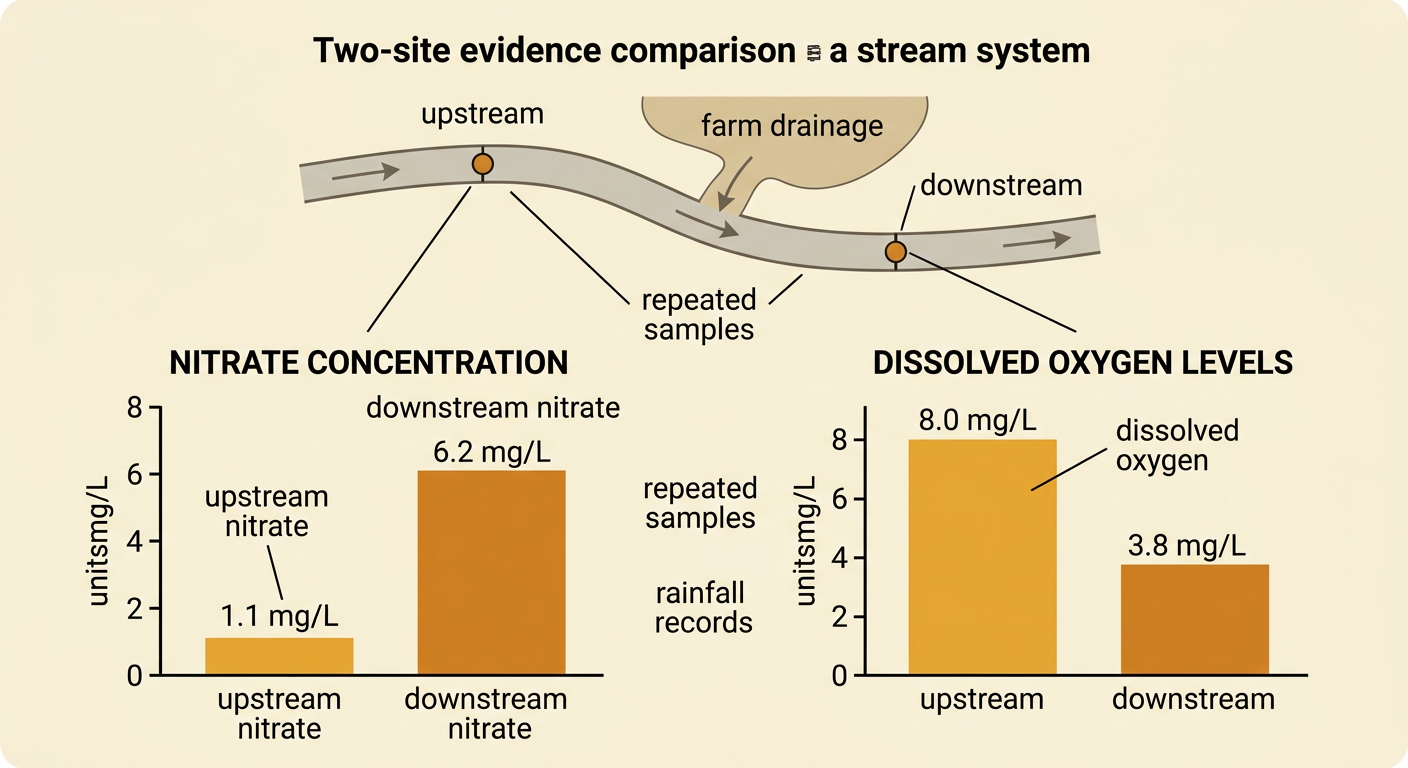
Scientific claims should be supported with specific evidence from trustworthy sources. Suppose a watershed report states that average nitrate was 1.1 milligrams per liter upstream and 6.2 milligrams per liter downstream from farm drainage. It also reports that afternoon dissolved oxygen at the downstream site fell from 8.0 to 3.8 milligrams per liter during a summer algal bloom. A student could cite the report by writing, “The downstream site had more than five times the upstream nitrate concentration.” The student should then explain that higher nutrient levels and lower oxygen match the predicted effects of nutrient runoff. One measurement does not prove the cause, so students should examine repeated samples, rainfall records, land-use maps, and data from multiple locations. They should also note the report title, author, date, and page or table number.
Compare Possible Solutions
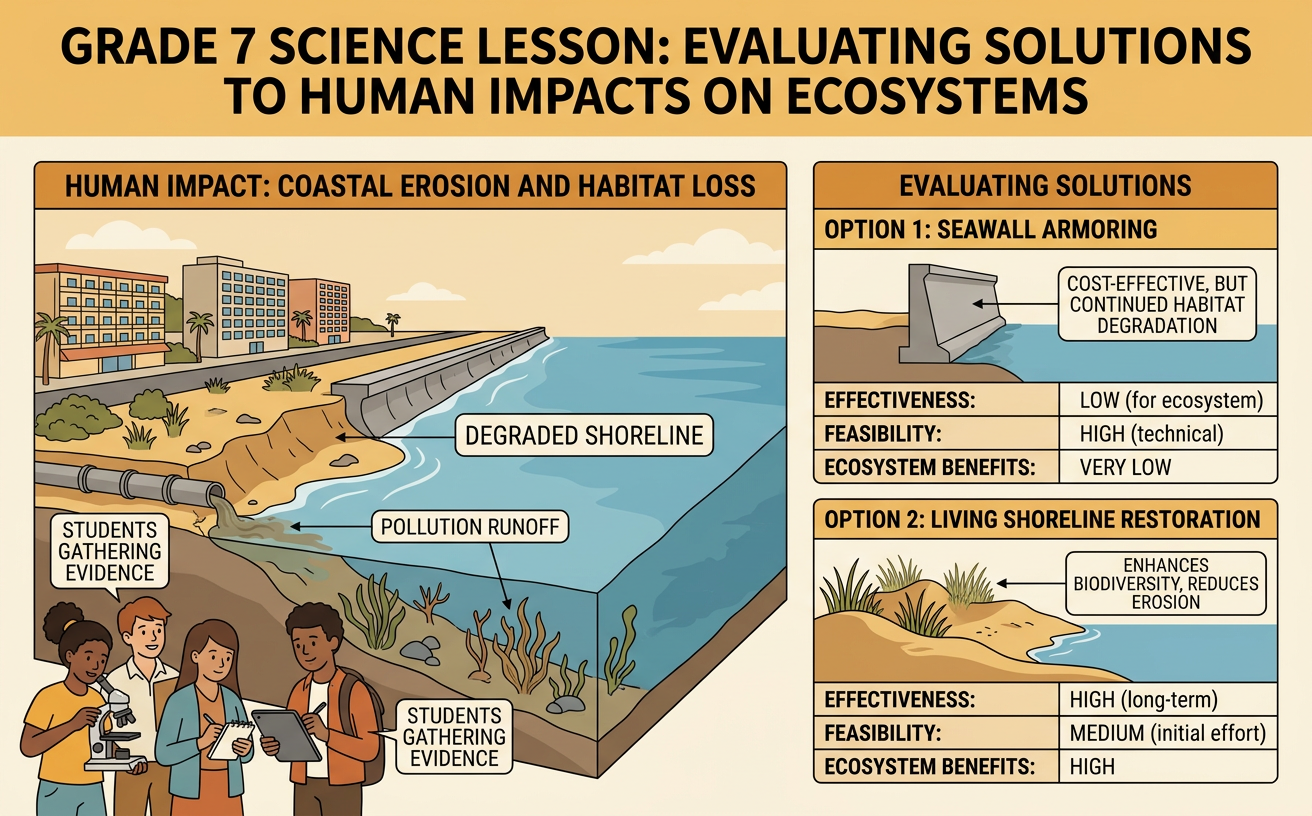
Possible solutions should be compared using the same criteria. Effectiveness asks how much a solution may reduce pollution. Feasibility considers cost, time, land, equipment, and community support. Ecosystem benefits include cleaner water, better habitat, and increased biodiversity. For the creek, one solution is to apply fertilizer only when soil tests show that crops need it. This prevents pollution at its source and may lower farm costs. A second solution is to plant vegetated buffer strips beside the creek. Their roots slow runoff, trap sediment, and absorb some nutrients, but buffers require land. A third solution is to restore a wetland that can hold water and remove nutrients through plant uptake and microbial processes. Wetlands provide strong habitat benefits but may be expensive. A decision matrix using evidence-based ratings makes the trade-offs visible rather than hiding them.

Select and Justify a Solution
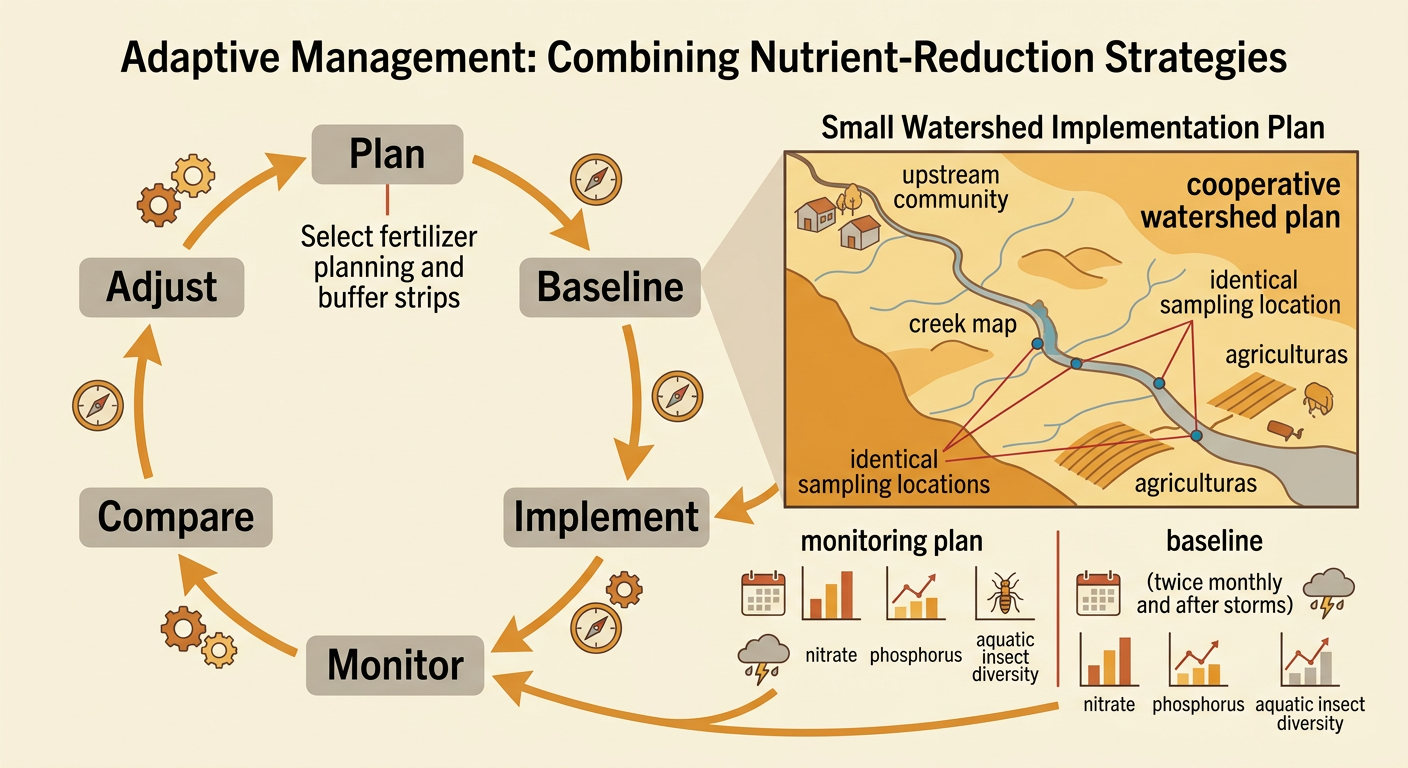
A strong recommendation names the preferred solution, cites evidence, explains trade-offs, and includes a monitoring plan. For the creek, students might select soil-test fertilizer planning combined with vegetated buffer strips. Fertilizer planning reduces excess nutrients at the source, while buffers intercept some runoff before it reaches the water. This choice is more feasible than restoring a large wetland and offers greater protection than either action alone. To test effectiveness, the community could measure nitrate, phosphorus, dissolved oxygen, algae coverage, and aquatic insect diversity at upstream and downstream sites twice each month and after major storms. Measurements collected before installation provide a baseline. After one year, the team would compare results from the same seasons and locations. If nutrient levels do not decrease, farmers, residents, and local officials could adjust fertilizer timing, widen buffers, or consider wetland restoration through a cooperative watershed plan.