
Evaluating the Credibility of Online Sources
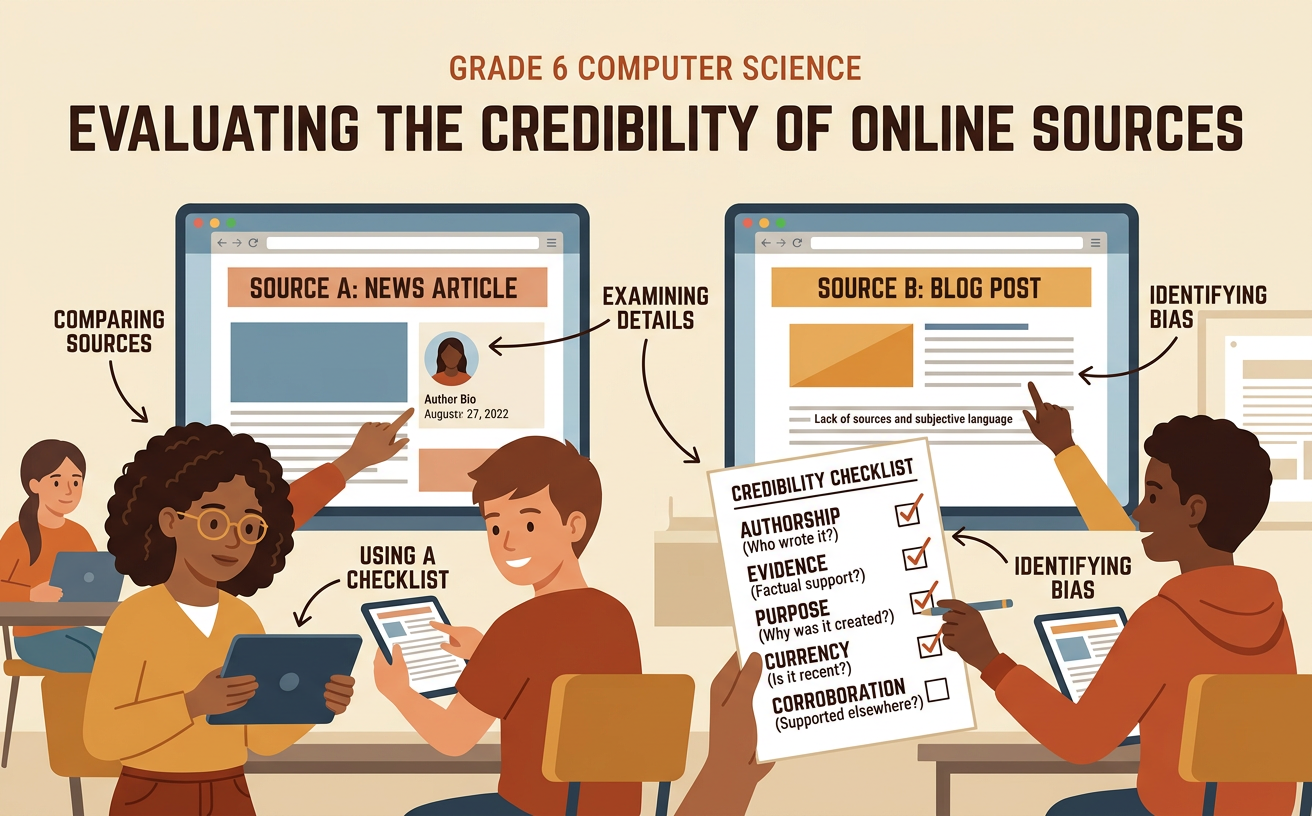
Students apply a credibility checklist to compare online sources by examining authorship, evidence, purpose, currency, and corroboration.
Illustrations are auto-generated and may be placeholders. They can be refreshed to match the narration.
Why Online Credibility Matters
Online information can help you learn, solve problems, and make decisions, but not every source is accurate or trustworthy. Anyone can create a website, video, or social media post. Some creators make honest mistakes, while others leave out facts or share false claims on purpose. Evaluating credibility means examining a source before accepting or sharing its information. Imagine that a post says drinking a certain juice prevents the flu. If the post gives no author, evidence, or reliable medical source, believing it could lead to an unsafe decision. A credible source clearly explains its claims and supports them with dependable evidence. Careful readers ask who created the information, why it was created, when it was published, and whether other trustworthy sources agree. These questions help separate strong information from unsupported claims.

Check the Author and Publisher
Begin by finding out who created and published the information. Look for the author’s name, education, job, experience, and connection to the topic. Then examine the publisher, such as a university, government agency, news organization, company, or personal blog. A source is stronger when the author has relevant expertise and the publisher explains its standards. For example, an article about earthquakes written by a geologist for the U.S. Geological Survey has clear authority on that subject. A shoe company employee may be knowledgeable about footwear but not about earthquakes. Authority also depends on context: even an expert can make claims outside their field. Check the About page, author biography, contact information, and editorial policy. Be cautious when authorship is missing or when a site imitates the name or design of a well-known organization.
Look for Evidence and Reliable Links
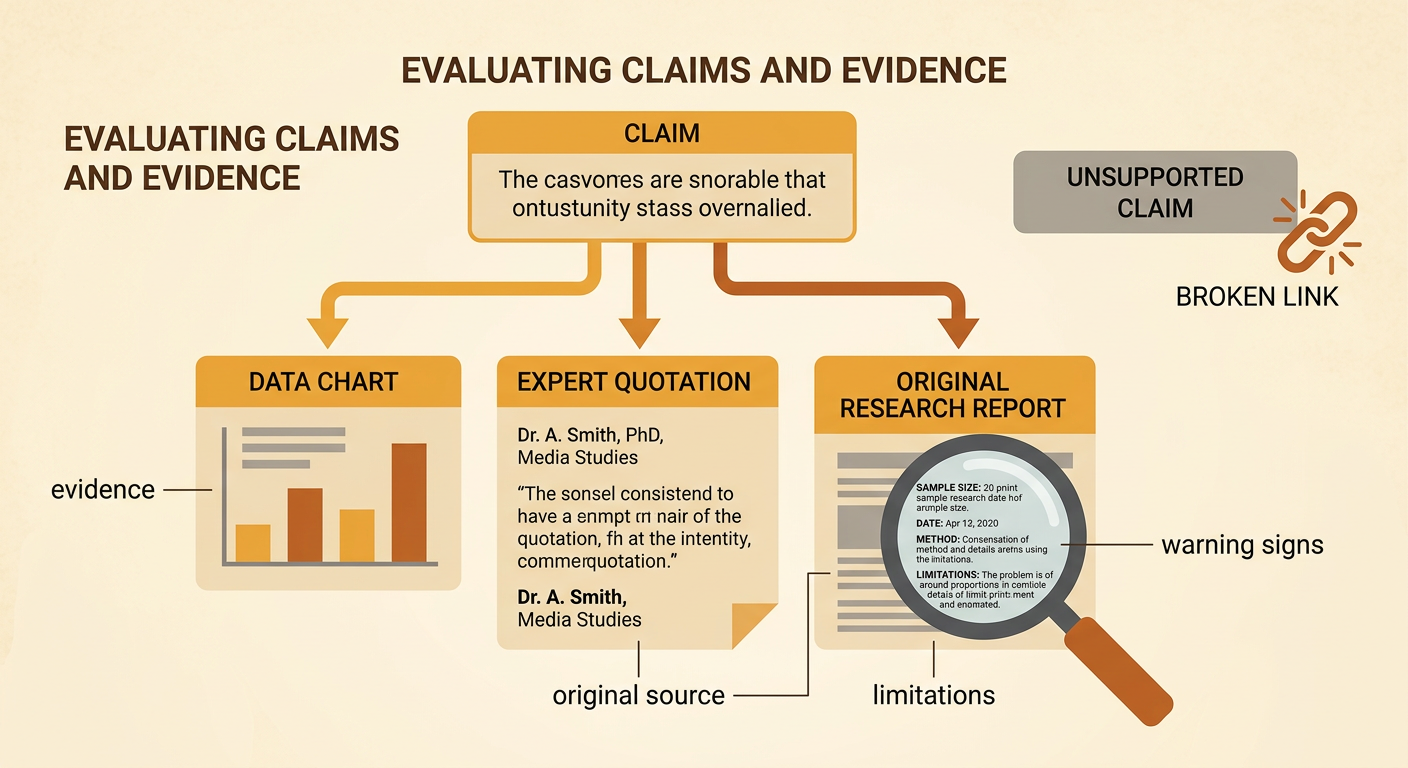
A trustworthy source supports its claims with evidence that readers can inspect. Evidence may include data, quotations from qualified experts, photographs with context, or findings from research. Strong sources explain where the evidence came from and link to original reports or studies. Follow important links instead of assuming they prove the claim. Check whether the linked page actually says what the author reports. For example, an article may claim that screen time always lowers grades and link to a study. The study might actually show only a possible relationship among one small group of students. That evidence does not prove that screen time caused lower grades for everyone. Notice the study’s size, date, methods, and limitations. Broken links, vague phrases such as “experts say,” or statistics without a source are warning signs that a claim may be weak.
Identify Purpose and Possible Bias
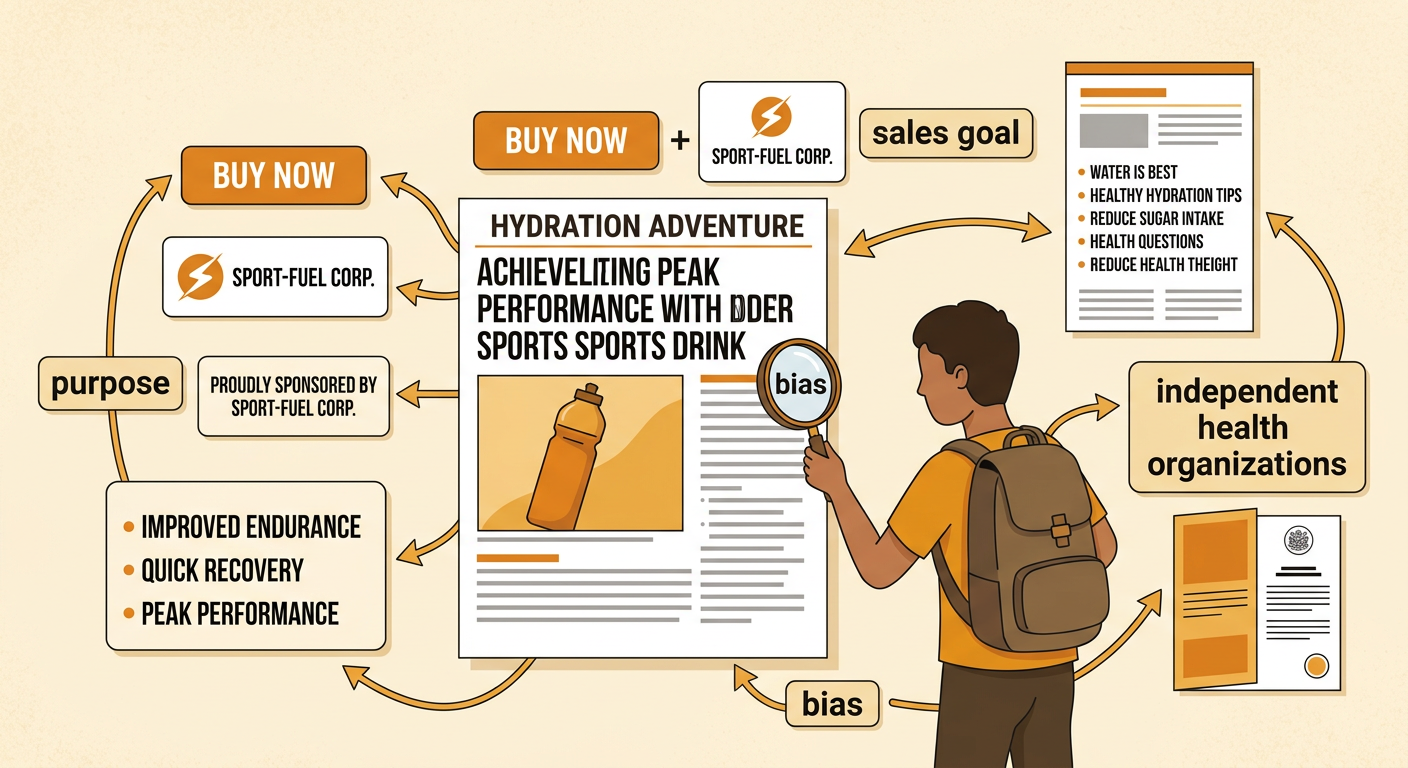
Every online source has a purpose. It may aim to inform, teach, persuade, entertain, sell something, or attract clicks. Purpose does not automatically make a source false, but it can shape which facts are included, emphasized, or omitted. Bias is a preference or point of view that can influence how information is presented. Look for emotional language, one-sided arguments, dramatic headlines, advertisements, sponsorships, and missing opposing evidence. For example, a sports drink company might publish an article claiming that students need its drink after every activity. The article may contain some accurate facts about hydration, but its sales goal creates a reason to promote one product. Compare the article’s language and evidence with guidance from independent health organizations. Ask who benefits if readers believe the message and whether the source clearly discloses financial or personal interests.
Confirm Claims with Other Sources
Corroboration means checking whether other independent and credible sources support the same claim. Do not rely on several pages that all copy information from one original post. Instead, compare sources created by different qualified authors or organizations. Look for agreement on key facts, and investigate meaningful differences. For example, suppose a website claims that a new city rule bans all bicycles downtown. Check the city government’s official rule, a reliable local news report, and another independent source. You may discover that bicycles are restricted only on two crowded streets during certain hours. The additional sources provide context that changes the meaning of the first claim. Corroboration does not mean choosing the claim that appears most often. Trace each source back to its evidence, consider its authority, and give more weight to sources with direct knowledge and transparent support.

Apply the Credibility Checklist
Use a consistent checklist when evaluating an online source. First, identify the author and publisher and decide whether they have relevant authority. Next, inspect the evidence and follow important links to their original sources. Determine the source’s purpose and look for possible bias or missing viewpoints. Check the publication date and update date because information can become outdated. Finally, corroborate major claims with independent credible sources. For example, when comparing two pages about a recent space mission, one page may name a science reporter, link to NASA data, explain its purpose, show a current date, and agree with other science sources. Another may have no author, old information, and no evidence. Record your findings for each category rather than judging by appearance alone. Then rate the source as strong, questionable, or unreliable and explain your decision with specific details.
