
Everyone Helps Our Community
Students identify how community helpers and other citizens work together to care for shared places, including reducing trash and keeping land and water clean.
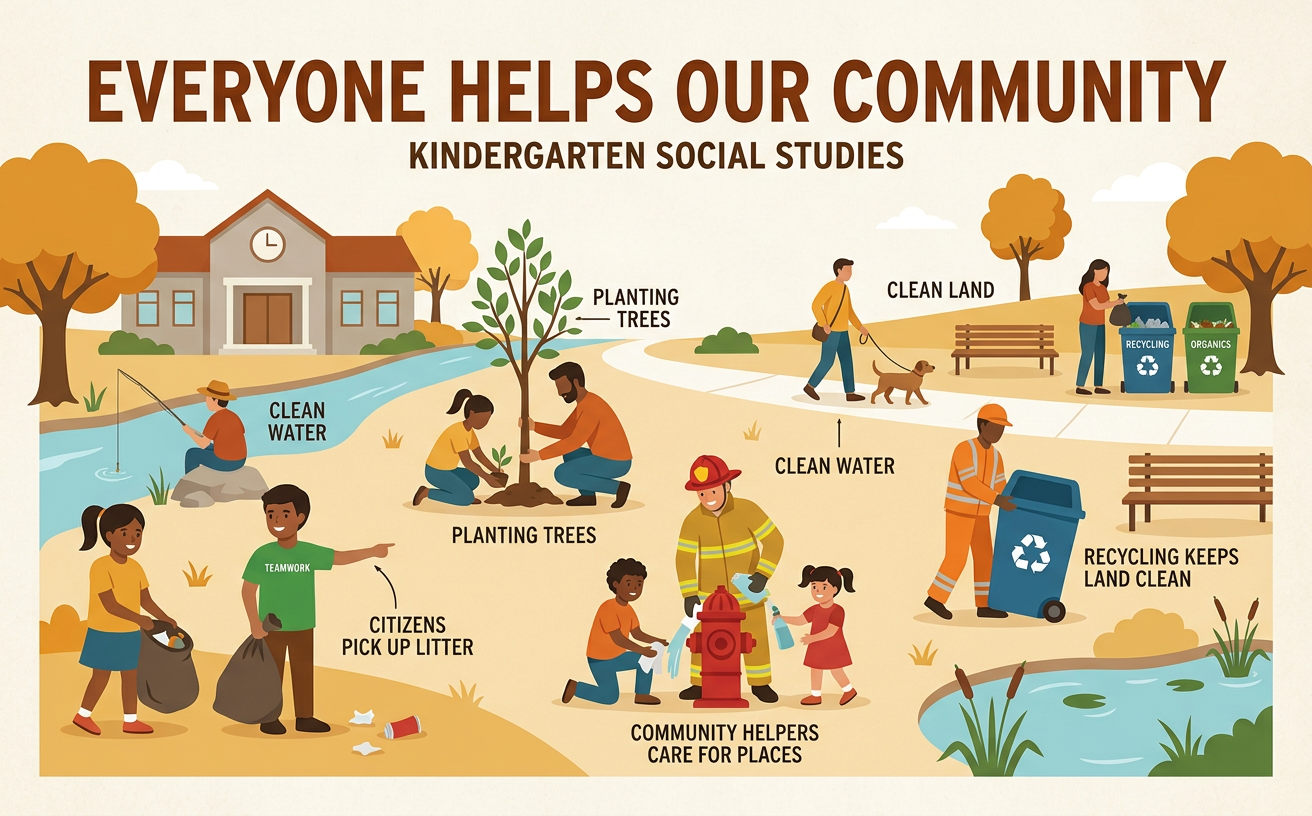
Illustrations are auto-generated and may be placeholders. They can be refreshed to match the narration.
What Is a Community?
A community is a group of people who live, learn, work, or play near one another. A community can include homes, a school, a library, stores, parks, roads, and ponds. People in a community share many of these places. A playground is for everyone, so everyone can help care for it. For example, Maya sees an empty bottle beside a park bench. She asks an adult for help and puts the bottle in the correct recycling bin. Her small action helps keep the park clean and safe for people, plants, and animals. When neighbors talk, listen, and work together, they can make their shared places better.

Meet Community Helpers
Community helpers are people whose work helps others. Firefighters put out fires and teach fire safety. Police officers help keep people safe. Teachers help children learn. Librarians help people find books and information. Sanitation workers collect trash and recycling so it does not pile up on streets or wash into water. Park workers care for paths, plants, and play areas. Many helpers work together. For example, after a windy day, a park worker may report a fallen branch. A city crew can move it, and a sanitation worker can collect nearby litter. Children and adults can thank helpers, follow safety rules, and place waste in the correct bins. These actions support the helpers’ work.

Everyone Has an Important Role
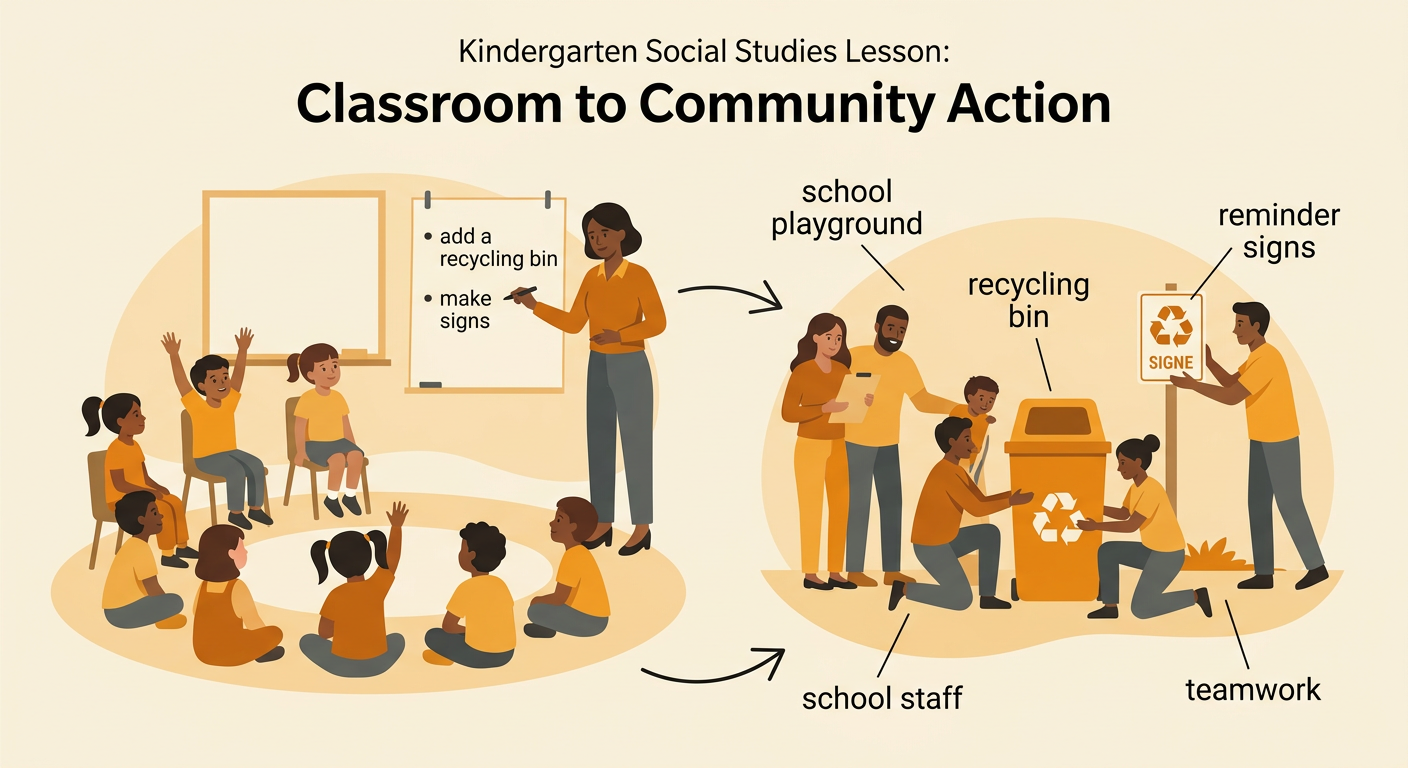
A community needs more than official leaders and workers. Every person can help, including children. Neighbors can pick up litter safely, plant flowers, save water, and tell an adult when something needs care. Children can share ideas and listen to others during a class conversation. For example, a class notices paper on the school playground. One child suggests adding a recycling bin. Another suggests making reminder signs. The class listens, takes turns speaking, and chooses both ideas with the teacher’s help. The teacher contacts the school staff, and families help make the signs. No one person does every job. When people share ideas and complete different tasks, they work as a team to improve their community.
Ways to Care for Shared Places
Shared places include sidewalks, parks, schoolyards, beaches, streams, and lakes. Trash left on land can blow or wash into water. It can harm animals and make places unpleasant. We can reduce this harm by using less, reusing items, recycling accepted materials, and putting trash in a bin. We can carry a reusable water bottle instead of taking a new plastic bottle each time. We can also turn off a faucet while soaping our hands and stay on park paths to protect plants. For example, Ben sees a snack wrapper near a storm drain. He tells an adult, wears gloves, and places the wrapper in a trash bin. Keeping litter away from the drain helps keep it from reaching a stream. Always ask an adult before touching litter.

Choose a Community Action
A community action is something people do together to solve a problem. First, notice a shared place that needs care. Next, talk about possible solutions. Listen to each person, ask questions, and take turns speaking. Then choose a safe action and ask an adult to help. A class might notice litter near the school garden. Students could make signs, add a covered trash bin, or plan an adult-led cleanup. They can choose one action by voting or reaching an agreement. Next, everyone takes a role. Some students make signs, some count the litter, and adults handle unsafe waste. Later, the group checks the area to see whether the action helped. If litter remains, the group can improve the plan. Working together turns a helpful idea into community care.
