Evidence of a Chemical Reaction
Students analyze observations and temperature data from substance interactions to determine whether a chemical reaction occurred and support their conclusions with evidence.
Illustrations are auto-generated and may be placeholders. They can be refreshed to match the narration.
Physical Change or Chemical Reaction?
A physical change alters a substance’s size, shape, or state without creating a different substance. For example, when an ice cube melts, solid water becomes liquid water, but it is still water. A chemical reaction occurs when atoms in the starting substances rearrange to form one or more new substances with different properties. For example, mixing baking soda and vinegar produces carbon dioxide gas along with other products. The bubbling suggests that a gas formed, but scientists consider all available observations before deciding that a reaction occurred. Melting, cutting, and dissolving can happen during physical changes, so one observation may not be enough. To identify a chemical reaction, compare properties before and after the interaction and look for evidence that new substances formed.

Observe Substance Properties
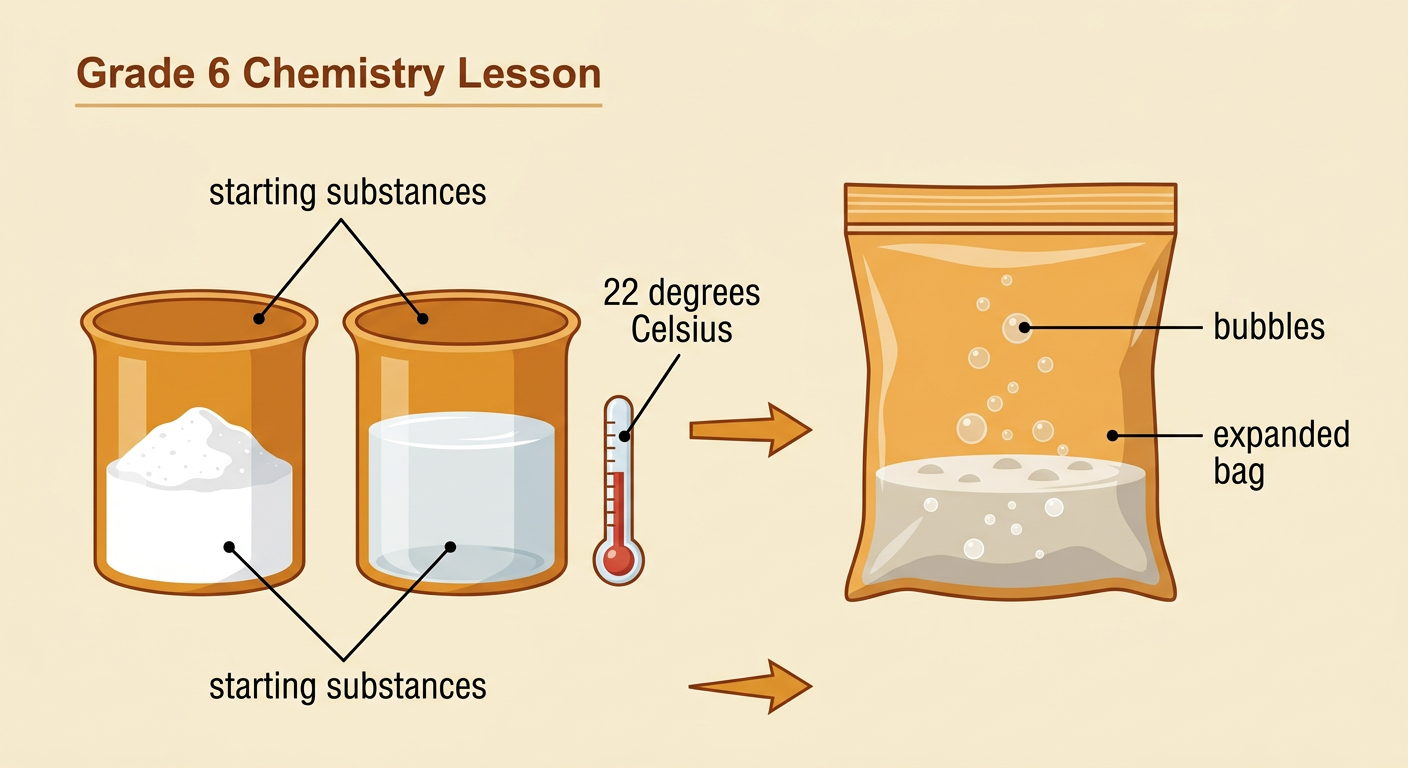
Before testing an interaction, record the properties of each starting substance. Useful properties include color, state of matter, texture, temperature, and whether the substance is clear or cloudy. Follow safety rules and never taste a substance or smell it directly. Suppose a student places white, powdery baking soda and clear, colorless vinegar in separate cups. The student records that both are at 22 degrees Celsius. After the substances are combined in a sealed plastic bag, bubbles appear and the bag expands. The mixture remains mostly colorless, but the solid powder disappears. These before-and-after observations create a useful record. The disappearing powder alone could indicate dissolving, which is not enough to prove a reaction. However, the formation of gas provides stronger evidence that a new substance may have formed.
Track Evidence of Change
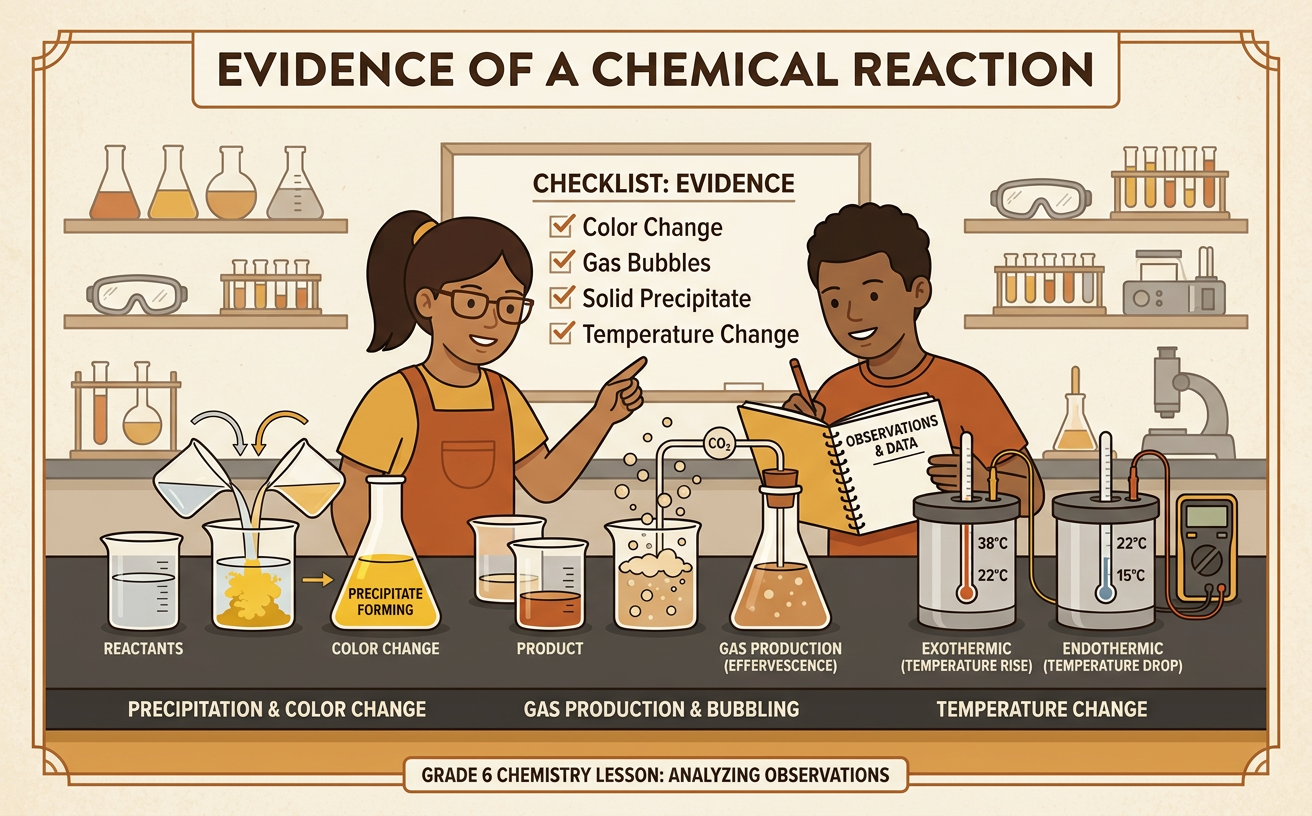
Several kinds of evidence can indicate that a chemical reaction occurred. These include unexpected gas production, formation of a new solid called a precipitate, a lasting color change, light production, or a temperature change caused by the interaction. Evidence is stronger when more than one change is observed and when simple physical changes have been ruled out. For example, when yeast is added to hydrogen peroxide, many bubbles and foam form because the hydrogen peroxide breaks down into water and oxygen gas. The container may also become warmer. The bubbles are not caused by boiling because the liquid is far below its boiling point. In contrast, bubbles in boiling water do not by themselves show a chemical reaction. Scientists track the timing, amount, and persistence of each change rather than relying on a single quick observation.

Analyze Temperature Data
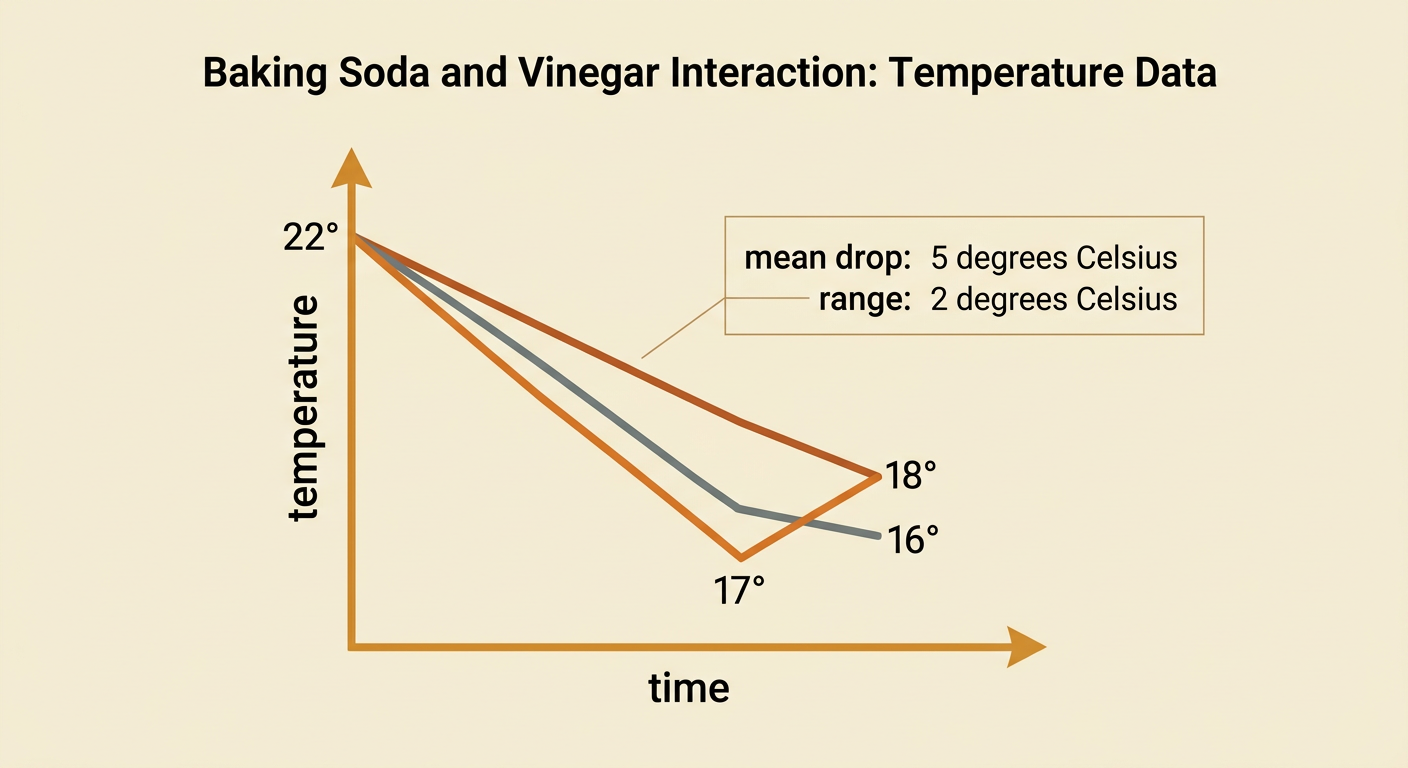
Temperature data can reveal energy changes during an interaction. First, record the starting temperature, measure at equal time intervals, and use the same method for every trial. In three trials of a baking soda and vinegar interaction, each mixture begins at 22 degrees Celsius. The lowest temperatures are 17, 16, and 18 degrees Celsius. The temperature drops are therefore 5, 6, and 4 degrees Celsius. The mean drop is 5 degrees Celsius, and the range of the drops is 2 degrees Celsius. These results show a consistent cooling pattern in the tested conditions. A graph with time on the horizontal axis and temperature on the vertical axis makes the trend easy to see. Temperature change supports a reaction claim, but it should be combined with property observations because temperature can also change during some physical processes.
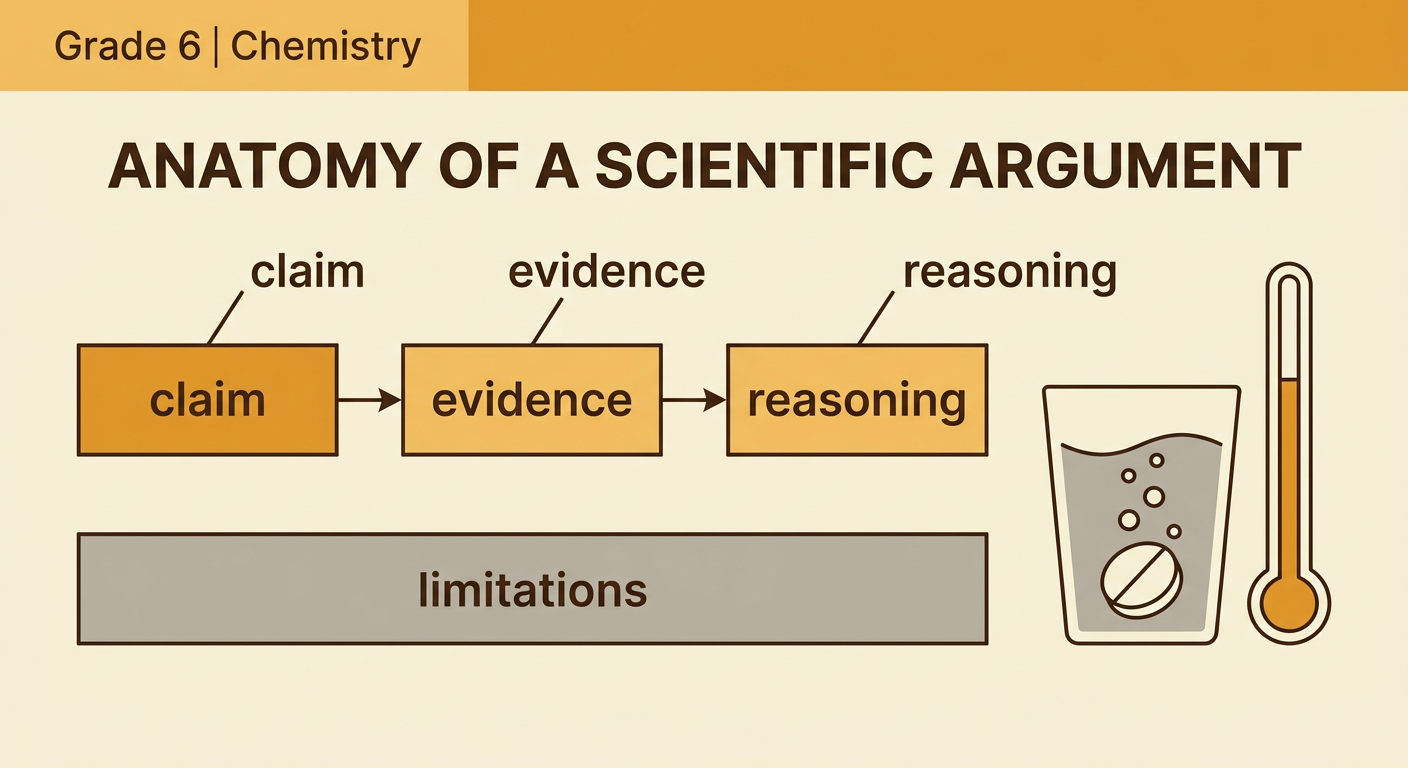
Make an Evidence-Based Claim
A strong scientific argument includes a claim, evidence, and reasoning. The claim directly answers whether a chemical reaction occurred. Evidence should include specific observations and numerical data. Reasoning explains why the evidence supports the claim. For example, a student might claim that an antacid tablet reacted chemically with water. The student’s evidence could state that bubbles formed for 45 seconds, the tablet changed into substances that were no longer visible as a solid tablet, and the temperature decreased from 21 to 19 degrees Celsius. The reasoning can explain that sustained gas production is evidence of a new gaseous substance. The temperature change adds support. The student should also acknowledge limitations: the disappearance of the tablet could partly involve dissolving, and only one trial gives limited data. Repeated trials and comparison tests would make the argument stronger.