
Exploring Rhythm and Meaning in Poetry
Students identify rhyme, rhythm, and repeated words in a poem and explain how these features shape its sound and meaning.
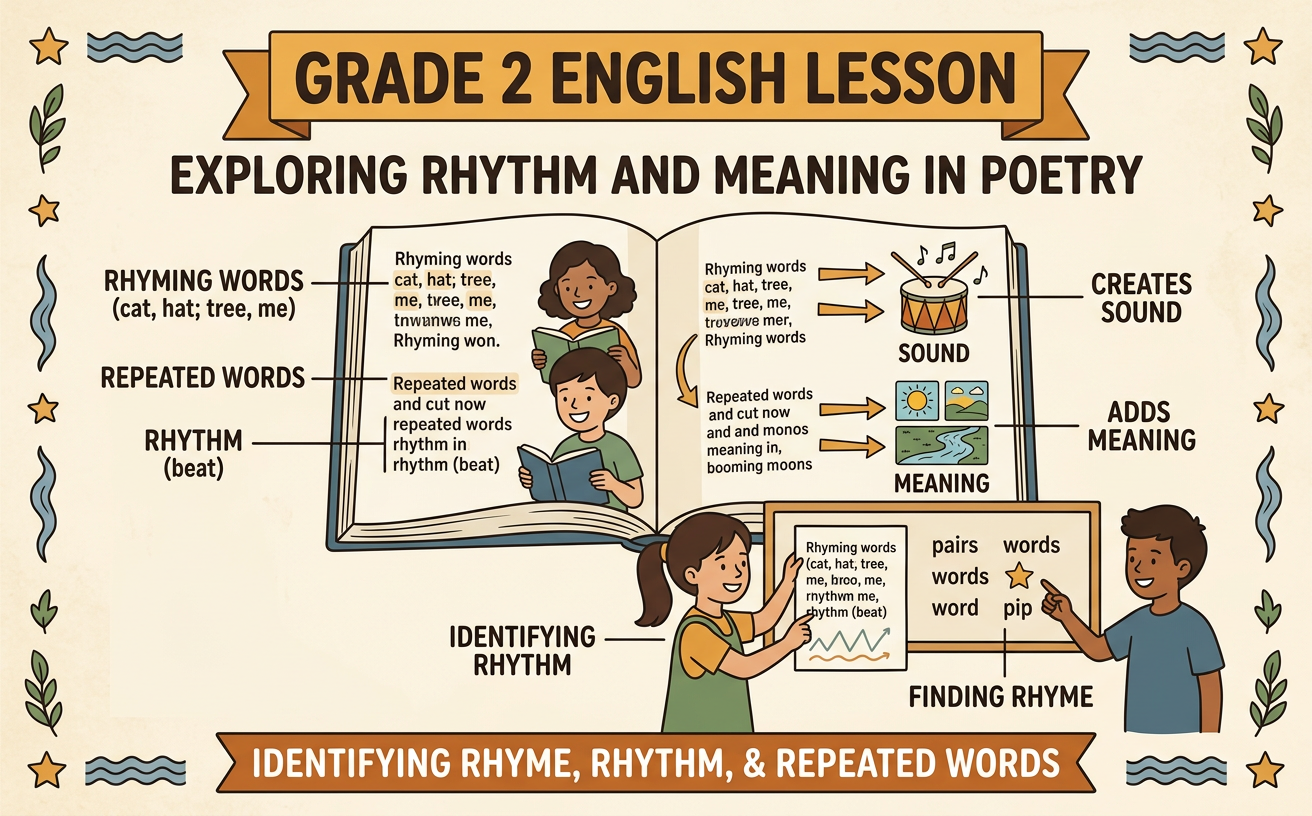
Illustrations are auto-generated and may be placeholders. They can be refreshed to match the narration.
Listen to the Poem
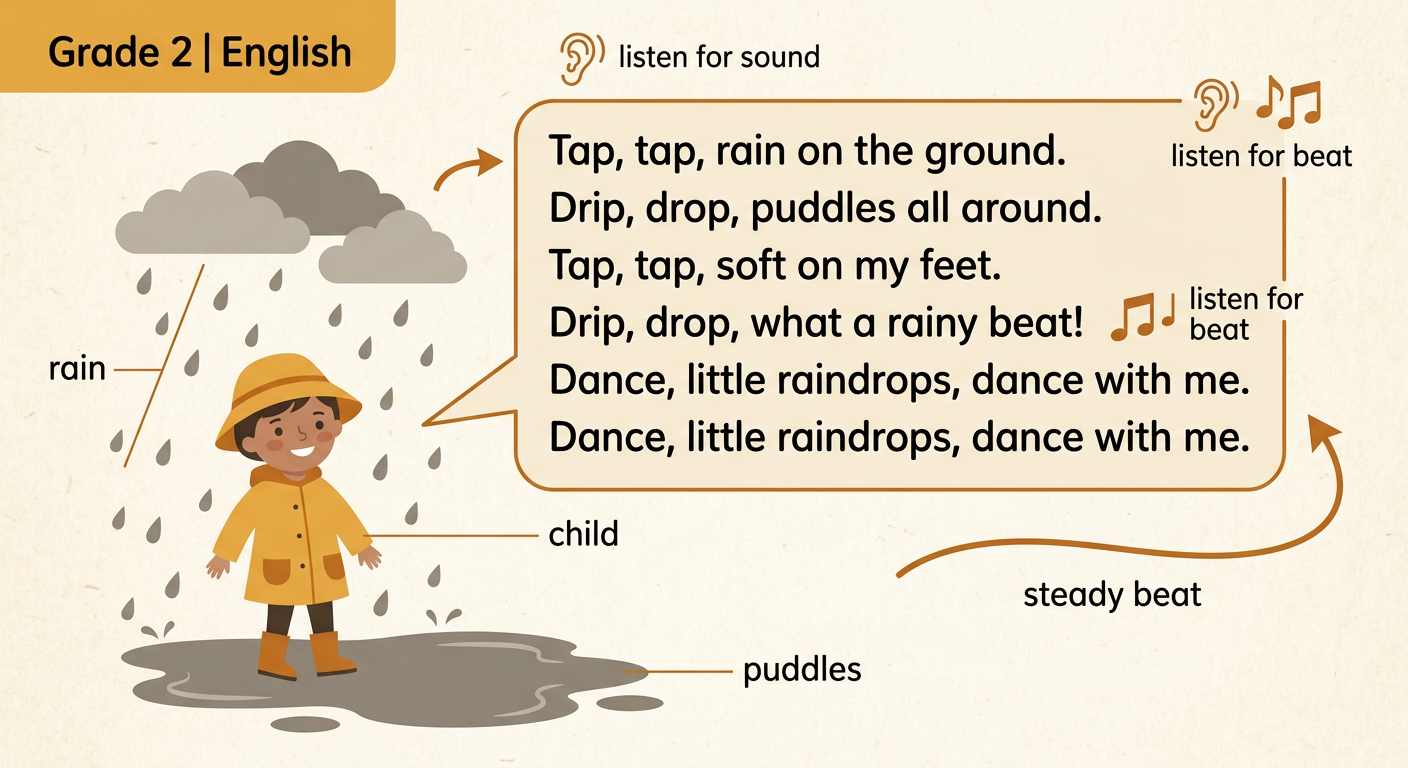
Poems are written to be heard as well as read. Listen for words that sound alike, words that repeat, and a steady beat. Here is a poem to explore: “Tap, tap, rain on the ground. Drip, drop, puddles all around. Tap, tap, soft on my feet. Drip, drop, what a rainy beat! Dance, little raindrops, dance with me. Dance, little raindrops, dance with me.” Read the poem aloud once without stopping. Picture the rain falling and a child moving through puddles. Then listen again. Do some words sound like raindrops? Do any line endings sound alike? Hearing the poem more than once helps you notice how its sounds create a playful, rainy feeling.
Find Rhyming Words
Rhyming words have the same or similar ending sounds. They often appear at the ends of lines in a poem. In the rain poem, ground rhymes with around. Say them slowly: ground, around. Both words end with the sound “ound.” Feet rhymes with beat because both words end with the long e sound followed by t. The words do not have to be spelled exactly the same to rhyme; their ending sounds must match. Rhyme helps connect lines and makes a poem pleasing and easier to remember. To find a rhyme, read the last word in one line and compare it with the last word in another line. Use your ears, not only your eyes.

Clap the Rhythm
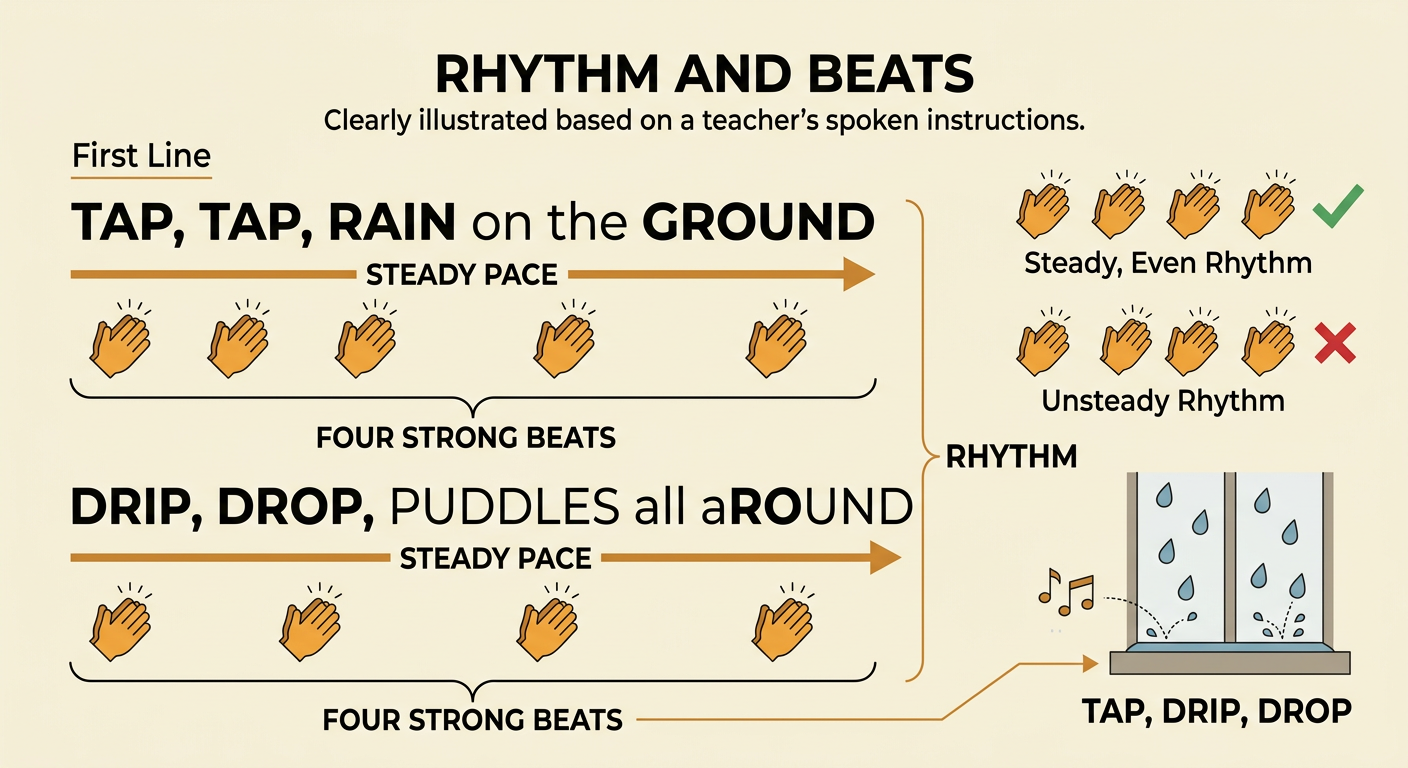
Rhythm is the pattern of strong and weak beats in spoken words. You can feel a poem’s rhythm by reading aloud and clapping on important words. Try the first line: “TAP, TAP, RAIN on the GROUND.” Clap four times, once on each capitalized word. Then try, “DRIP, DROP, PUDDLES all aROUND.” Clap on drip, drop, puddles, and the strong ending of around. The two lines have a similar pattern of four strong beats. The short words tap, drip, and drop make the rhythm sound like drops of water hitting a surface. Keep a steady pace as you clap. A regular beat can make a poem feel musical and can help readers imagine movement.
Notice Repeated Words and Lines
Poets repeat words or whole lines to draw attention to an idea, create rhythm, or help readers remember the poem. In the rain poem, “tap, tap” and “drip, drop” appear more than once. These repeated words copy the sounds of rain and keep the beat moving. The complete line “Dance, little raindrops, dance with me” is also repeated. Repeating this line shows that the child feels playful and wants the rain to seem alive. A repeated line is sometimes called a refrain. When you find repetition, ask why the poet used it. Does it make a sound stronger? Does it show an important feeling or action? Repetition is not an accident; it helps shape both the sound and meaning of the poem.

Explain How Sound Supports Meaning
Sound features help readers understand a poem’s meaning and mood. Rhyme connects ideas, rhythm creates movement, and repetition emphasizes important sounds or feelings. In the rain poem, ground and around rhyme, making the lines sound connected. The four strong beats suggest raindrops falling in a steady pattern. Repeated words such as “tap, tap” and “drip, drop” help readers hear the rain. The repeated line about dancing shows joy and excitement. You can explain the effect with this sentence: “The repeated words ‘drip, drop’ sound like falling rain, so they help me imagine the rainy scene.” Always name the sound feature, give an example from the poem, and explain what it helps you hear, picture, or understand.
