Fact-Check a Digital Habitat Claim
Students use webpage features, source clues, and evidence to decide whether an online claim about an animal habitat is trustworthy.

Illustrations are auto-generated and may be placeholders. They can be refreshed to match the narration.
Meet the Habitat Claim
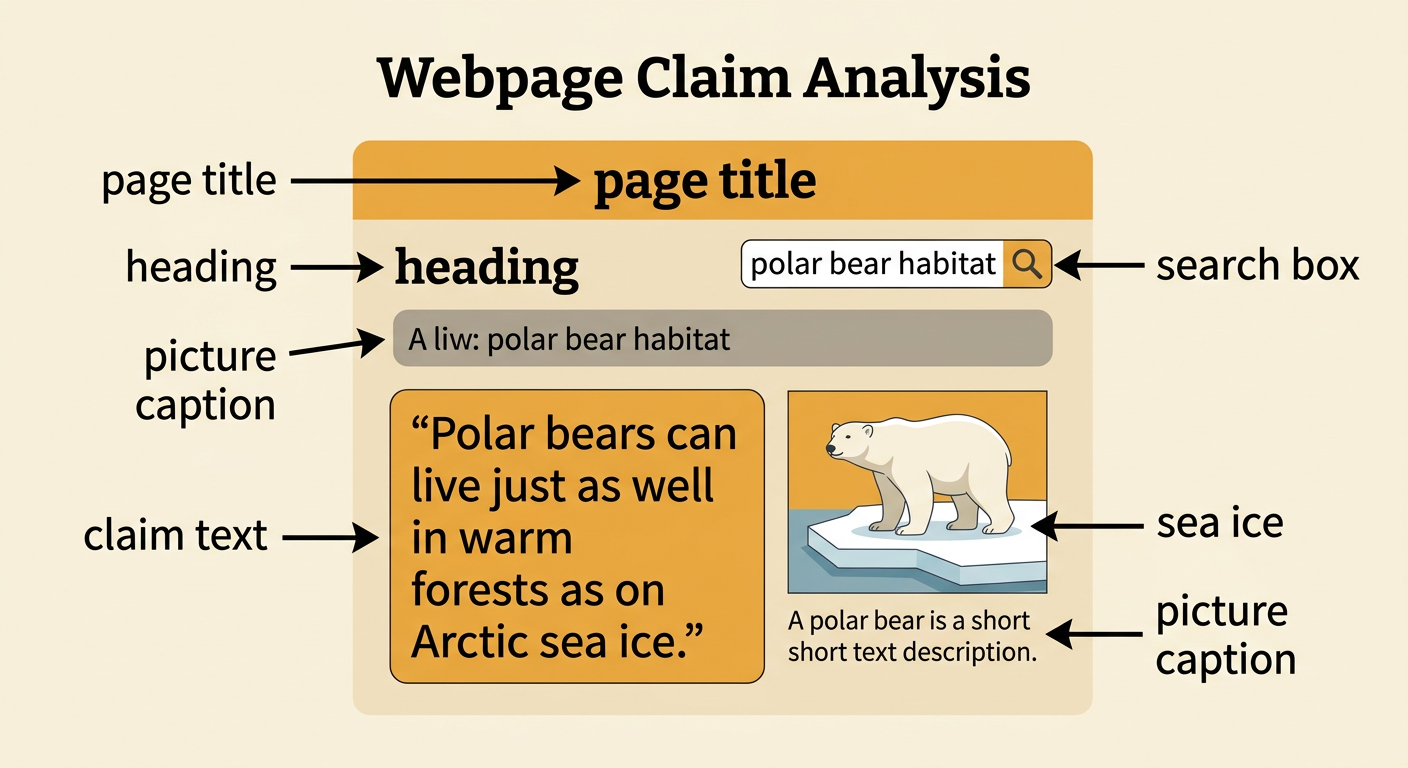
A claim is a statement that someone says is true. Before believing an online habitat claim, read it closely and identify exactly what it says. Imagine a webpage claims, “Polar bears can live just as well in warm forests as on Arctic sea ice.” Look at the page title, headings, picture captions, menus, and search box. These text features can help you find information quickly. Choose important search words from the claim, such as “polar bear habitat” and “sea ice.” Avoid searching with a full question that suggests the answer. As you read, ask, “What habitat is named?” and “What does the claim say about survival?” Do not decide whether the claim is trustworthy yet. First, make sure you understand it and know what evidence you need to find.
Find the Author and Date
Next, look for clues about who created the webpage and when it was published or updated. The author may be a person or an organization. Check the top and bottom of the page for an author name, organization name, publication date, update date, and links such as “About Us.” An article written by a wildlife scientist for a museum or government science agency may be more dependable than an unsigned post that gives no sources. Still, do not trust a page only because it looks professional. Check the author’s knowledge and evidence. The date matters because habitats and animal populations can change. For example, a page updated this year may include newer sea-ice measurements than a page from many years ago. An old source is not always wrong, but its information should be checked against newer reliable sources.

Separate Fact from Opinion
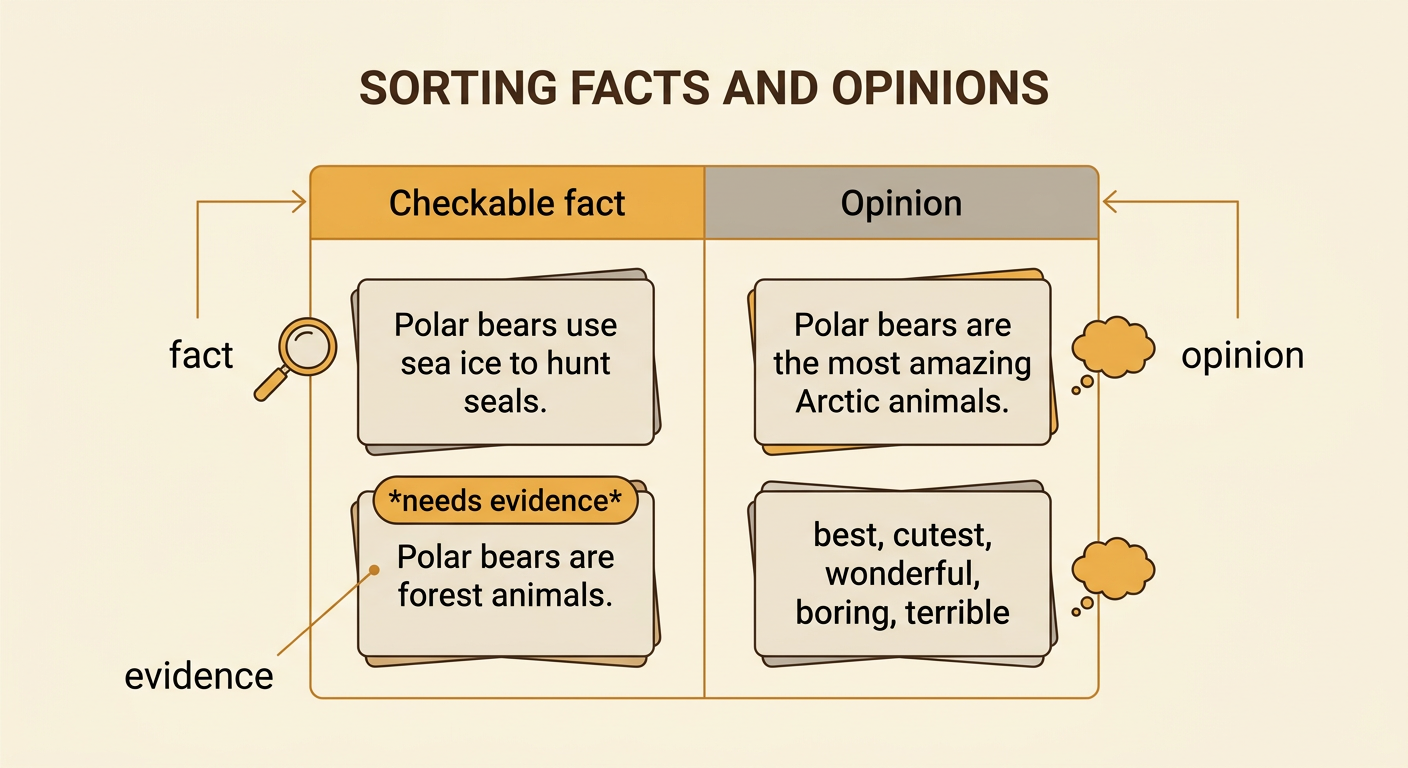
A fact can be checked with observations, records, or other evidence. An opinion tells what someone thinks, feels, or prefers. Webpages may include both. The sentence “Polar bears use sea ice to hunt seals” is a fact that scientists can check through observations. The sentence “Polar bears are the most amazing Arctic animals” is an opinion because “most amazing” expresses a personal judgment. Watch for opinion words such as best, cutest, wonderful, boring, and terrible. Also remember that a sentence can sound like a fact but still be false. “Polar bears are forest animals” can be tested, but reliable evidence does not support it. Labeling a statement as a fact means it is checkable, not automatically correct. Ask, “Could I prove this with evidence?” Then search for measurements, observations, maps, or expert explanations that confirm or challenge it.
Compare Evidence Across Sources
One webpage is usually not enough for a strong fact-check. Compare information from at least two trustworthy sources, such as a science museum, university, government wildlife agency, or respected conservation organization. Search for the same key idea in each source. For the polar bear claim, one source might explain that polar bears hunt seals from sea ice. Another might show a map of their Arctic range and describe how reduced sea ice can make finding food harder. These independent sources support the same conclusion: warm forests do not provide the sea-ice hunting habitat polar bears need. Notice whether each source gives observations, data, maps, or expert explanations. If sources disagree, check their authors, dates, and evidence. A repeated statement is not automatically true. Strong agreement matters most when reliable sources reach the same result using clear evidence.

Record a Trustworthiness Decision
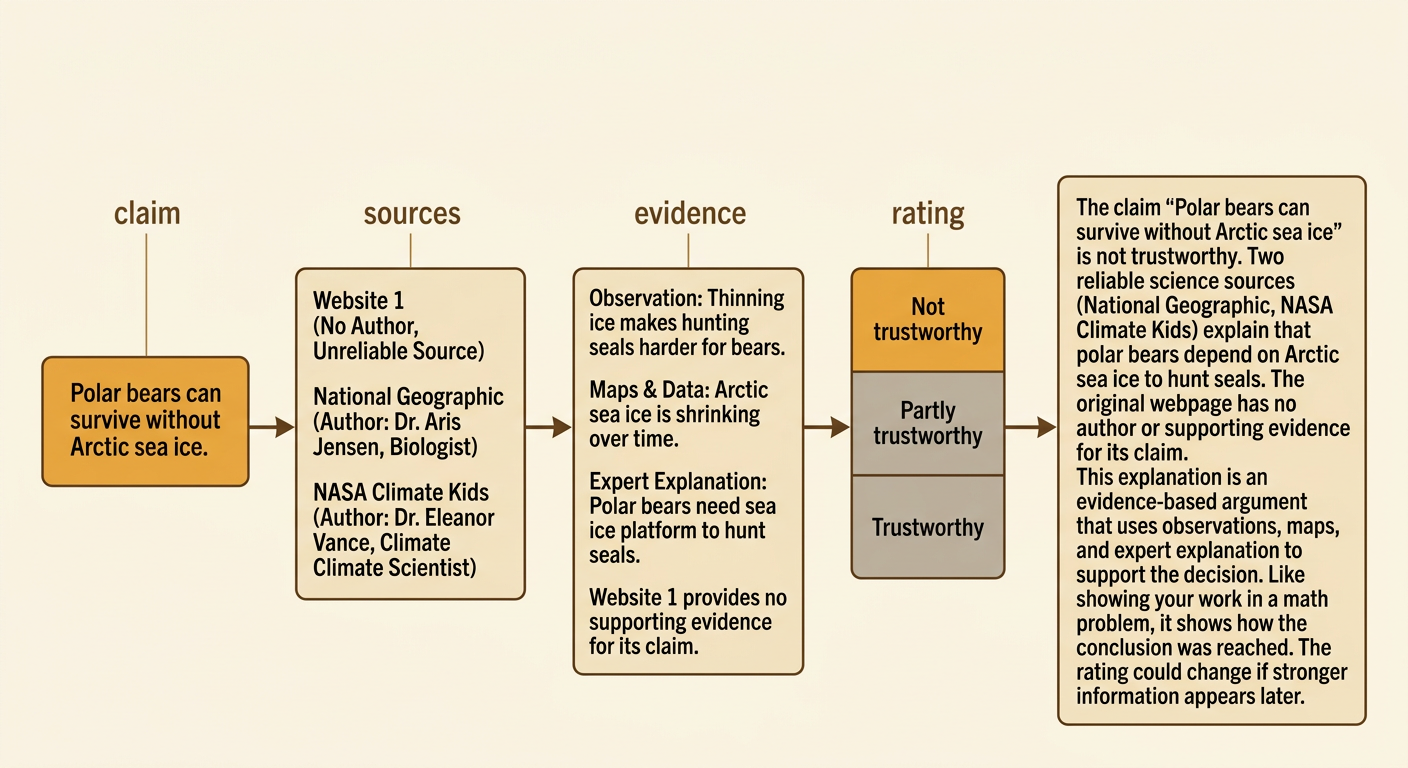
Finish by recording your decision in a fact-check chart. Write the claim, list the sources you checked, summarize the evidence, and choose a rating such as trustworthy, partly trustworthy, or not trustworthy. Then explain your rating with facts. For example: “The claim that polar bears live just as well in warm forests is not trustworthy. Two reliable science sources explain that polar bears depend on Arctic sea ice to hunt seals. The webpage gave no author or supporting evidence.” This is an evidence-based argument because it states a decision and supports it with information. You may also note limits. Perhaps the page has a recent date but no author, or one sentence is correct while another is not. A careful fact-checker does not judge only the whole website. Check each important claim, cite the evidence, and revise your decision if stronger information appears.