
Factories Transform Early American Life
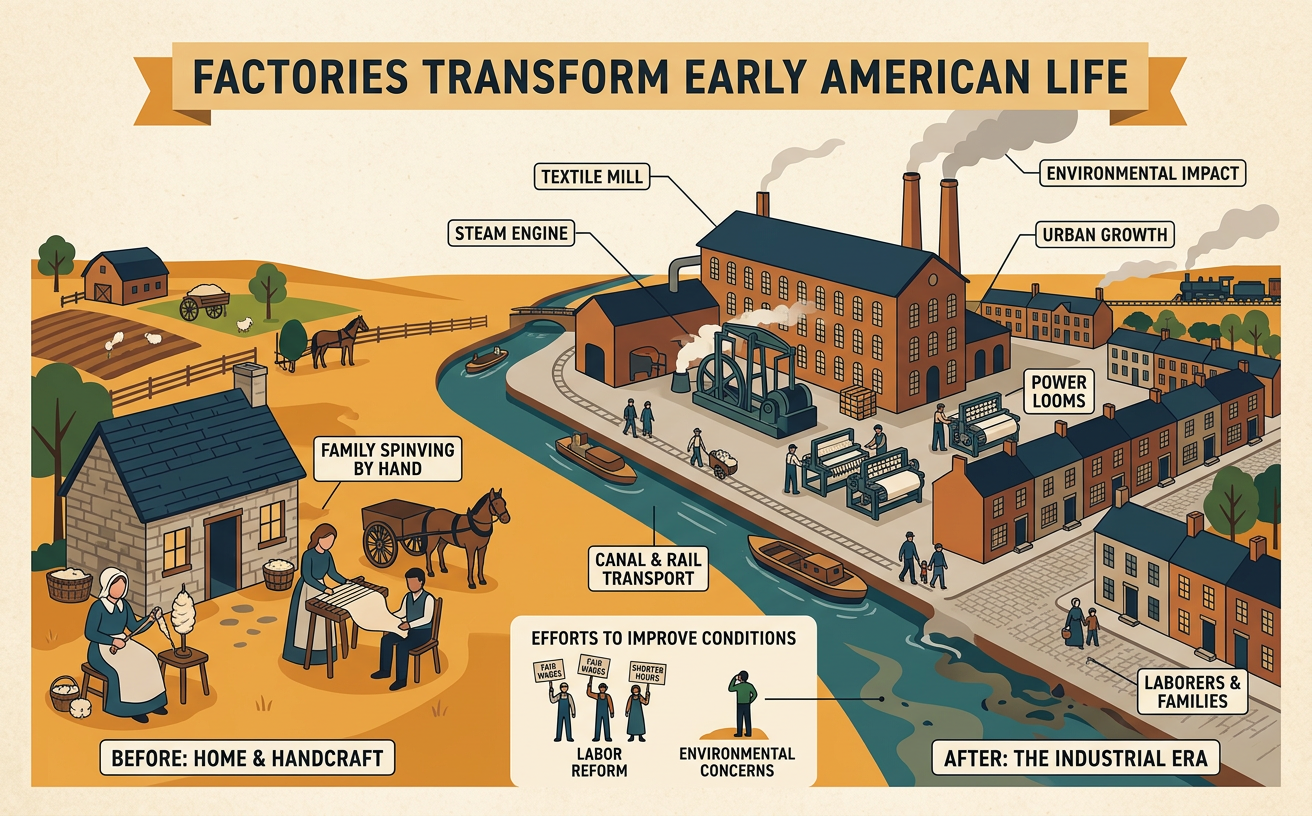
Students examine how early factories changed work, cities, natural resources, and daily life while prompting efforts to improve working and environmental conditions.
Illustrations are auto-generated and may be placeholders. They can be refreshed to match the narration.
From Workshops to Factories
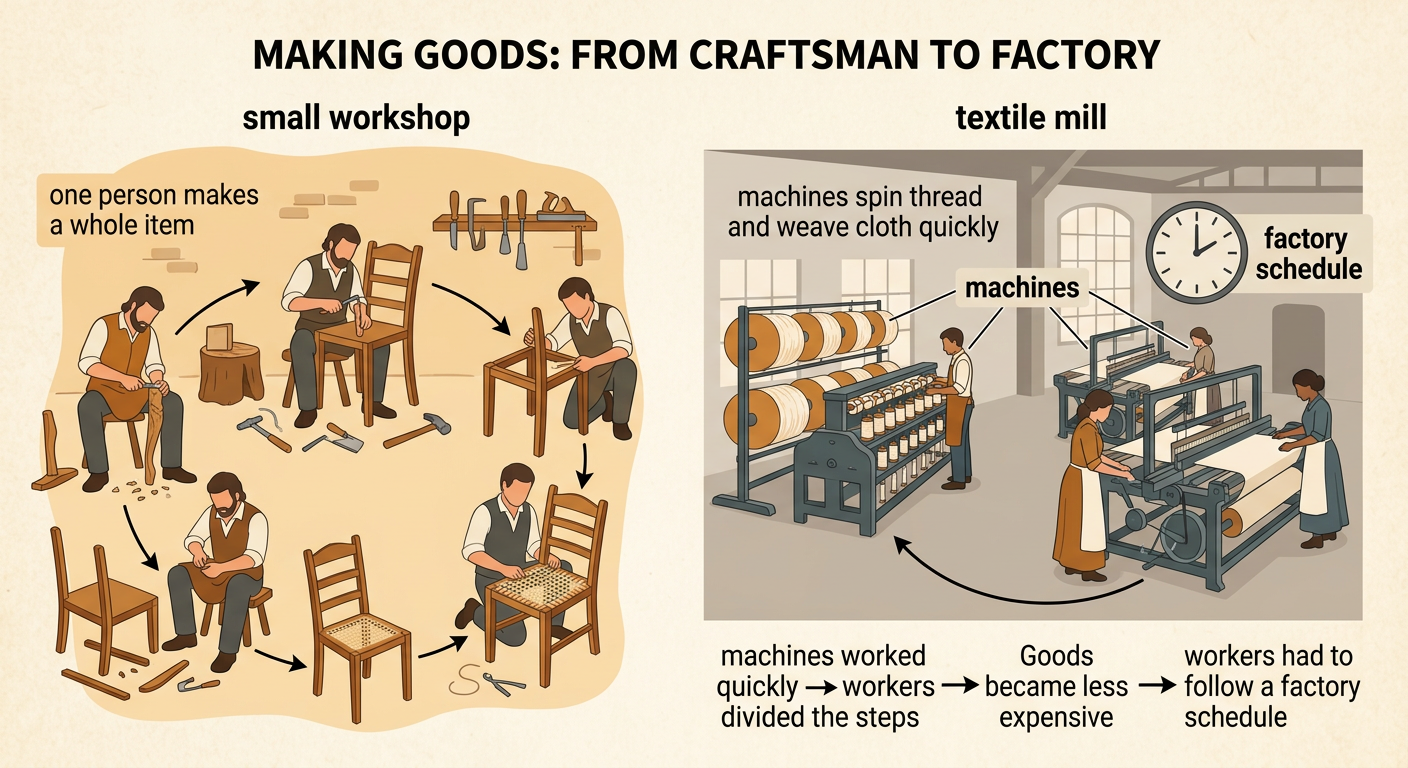
Before factories spread, many goods were made by skilled craftspeople in homes or small workshops. One person might complete most steps needed to make a shoe, chair, or tool. In a factory, owners brought workers, machines, and materials together in one building. Jobs were divided into repeated tasks, which increased the speed and number of goods produced. Workers followed factory schedules instead of setting their own hours. Textile mills provide a clear example. Machines could spin thread and weave cloth much faster than hand workers. At Lowell, Massachusetts, several mills combined machines and organized labor to produce large amounts of cloth. This factory system lowered the cost of many goods, but it also reduced some workers’ control over how and when they worked.
Waterpower, Coal, and Raw Materials
Early factories needed energy and large supplies of raw materials. Many textile mills were built beside fast-moving rivers. Flowing water turned a waterwheel, which powered gears, shafts, and belts connected to machines. Lowell’s mills used water from the Merrimack River through a system of canals. Later, coal-fired steam engines allowed more factories to operate away from strong rivers. Factories also depended on cotton for cloth, iron for tools and machines, and wood for buildings and fuel. Transportation improvements, including canals and railroads, carried these resources to factories. Because industrial growth required so much water, coal, timber, and metal, it increased pressure on natural resources. The location and growth of a factory therefore depended on connections among energy, materials, transportation, and the environment.

Changing Work and City Life
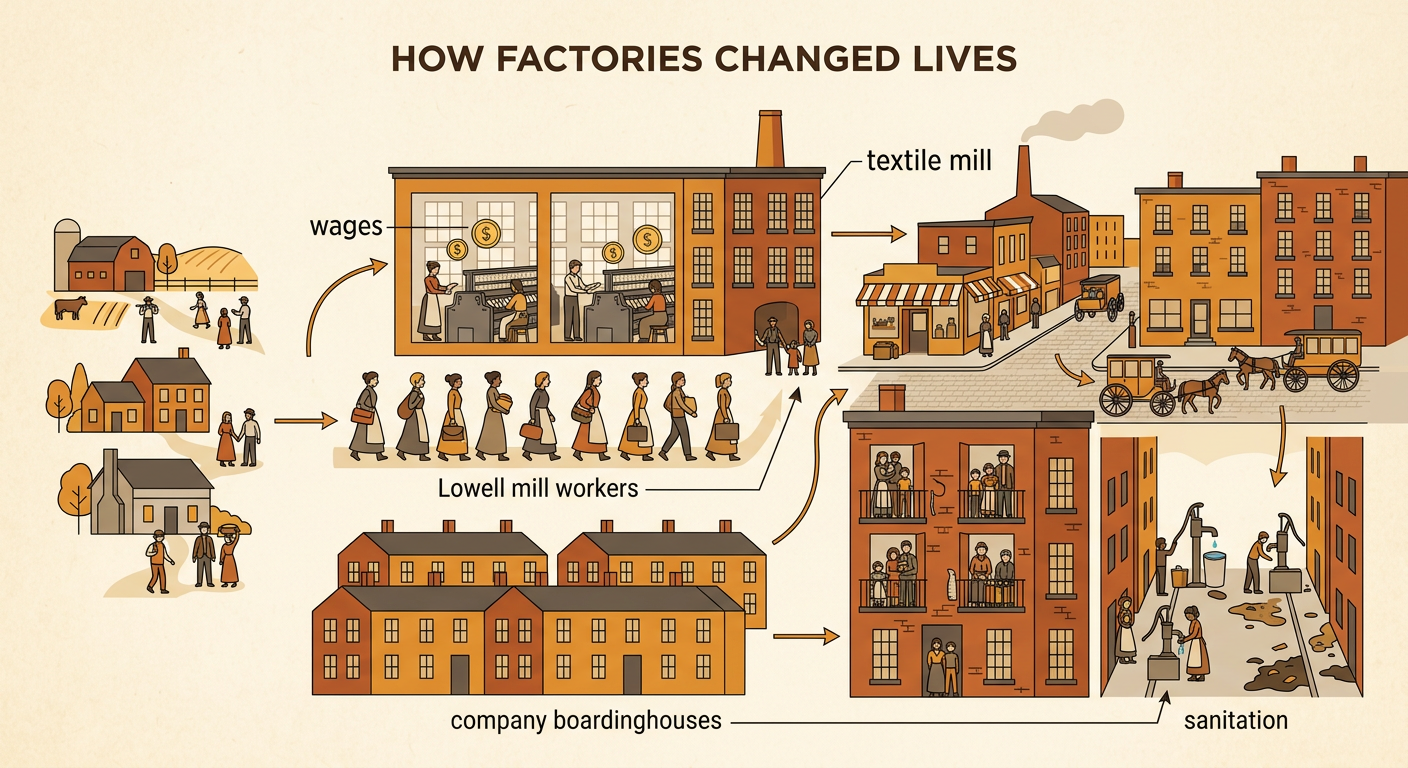
Factories changed where people lived and how they spent their days. Many people left farms and small towns to find wage-paying factory jobs. Growing industrial cities offered stores, transportation, and opportunities, but they could also become crowded. Workers often lived in boardinghouses or small apartments close to mills. Factory bells and clocks marked the beginning and end of long workdays. For example, young women known as Lowell mill workers moved from New England farms to work in textile mills and live in company boardinghouses. They earned wages and formed new friendships, but they followed strict rules and demanding schedules. As factories attracted workers, cities expanded quickly. Housing, roads, clean water systems, and waste removal did not always grow fast enough, creating health and sanitation problems.
Workers and Reform Efforts
Factory work could be noisy, tiring, and dangerous. Machines sometimes lacked protective guards, and dust or fibers filled the air. Many adults and children worked long hours for low pay. Workers responded by sharing information, signing petitions, forming labor groups, and going on strikes. In 1844, women workers organized the Lowell Female Labor Reform Association and supported a ten-hour workday. Reformers also pushed state governments to limit child labor and improve safety, although early laws were often weak or poorly enforced. These efforts were caused by harsh conditions and workers’ belief that conditions could change. They helped bring public attention to hours, wages, education, and safety. Improvements happened slowly, but organized action showed that workers could influence employers, voters, and lawmakers.

Pollution and Resource Use
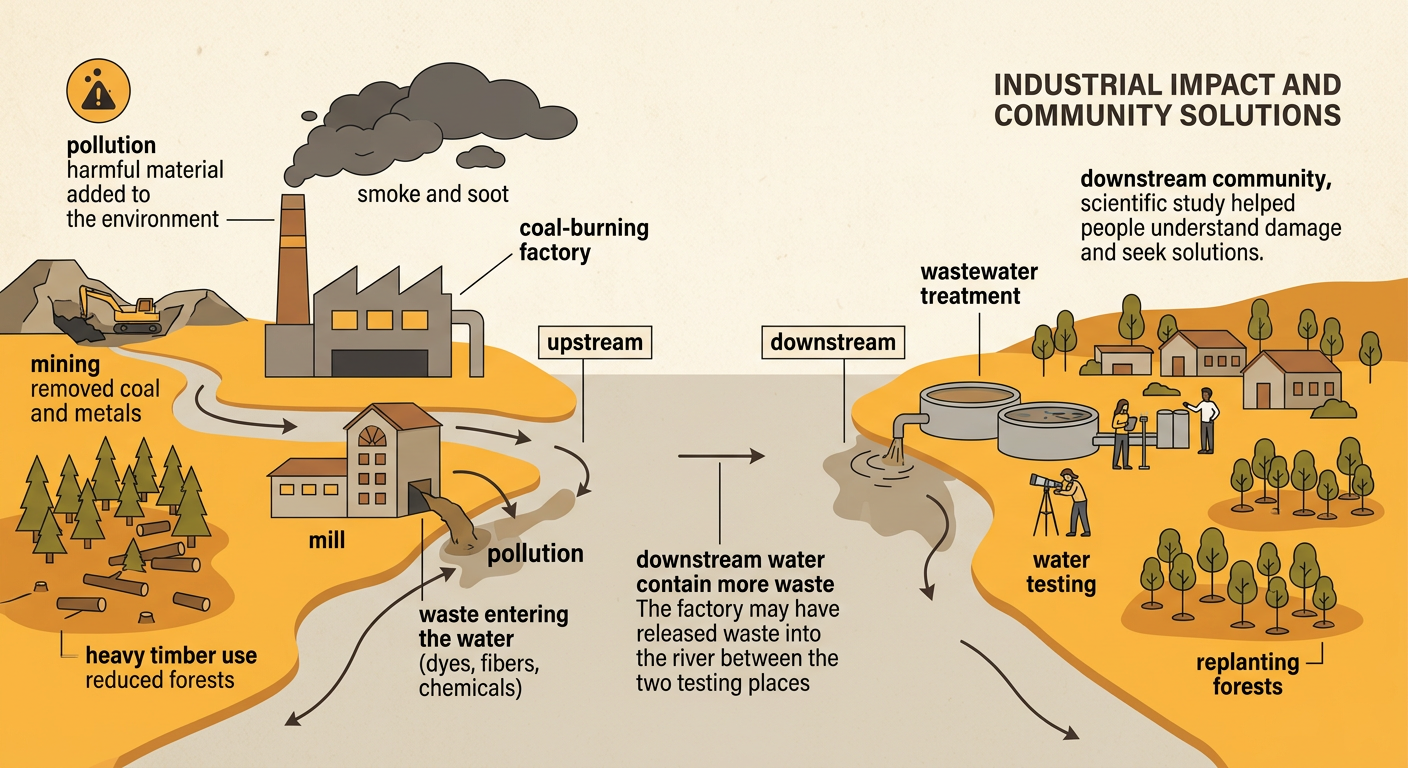
Industrial growth affected air, water, forests, and land. Coal-burning factories released smoke and soot into the air. Some mills dumped dyes, fibers, chemicals, and other waste into nearby rivers. Mining removed coal and metals from the ground, while heavy timber use reduced forests in some areas. Pollution could harm wildlife and make water unsafe for communities downstream. Over time, communities used scientific observations to understand these problems. They could compare water upstream and downstream from a factory, study how smoke affected breathing, and track the loss of trees. Such evidence supported efforts to treat wastewater, reduce smoke, protect drinking-water sources, and replant forests. These responses show how scientific ideas can help communities use resources while reducing damage to people and the environment.
Weighing the Costs and Benefits
Factories brought both benefits and costs to early American life. Machines produced cloth, tools, and other goods faster and often made them less expensive. Factories created wage-paying jobs, encouraged inventions, and helped cities and transportation networks grow. However, these changes also caused long workdays, unsafe conditions, crowded neighborhoods, pollution, and heavy resource use. The effects were not shared equally. Factory owners and consumers might benefit from higher production and lower prices, while workers or nearby communities carried more of the costs. For example, a textile mill could provide jobs and affordable cloth while also releasing waste into a river. To judge industrial growth fairly, historians compare evidence about production, workers, communities, and the environment. Reforms can preserve useful benefits while reducing harm.
